How to End an AI Microdrama Episode With a Strong Cliffhanger
A strong AI microdrama cliffhanger interrupts a consequential decision, not an ordinary action. This tutorial shows how to design the reveal, generate continuity-safe boundary frames, animate controlled reactions, and cut a vertical episode at the point of maximum unresolved pressure.
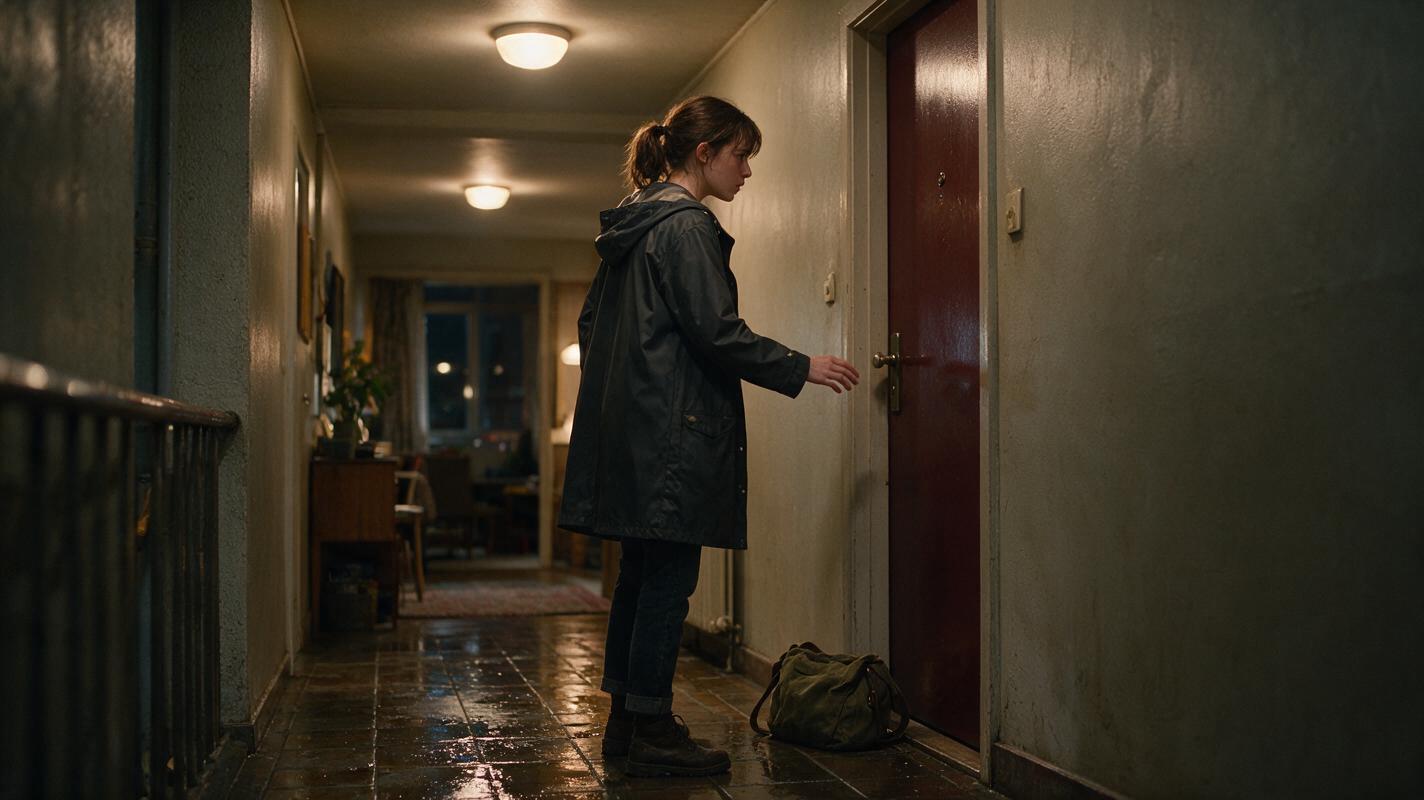
Table of contents
Build the cliffhanger before generating the episode
The most reliable AI microdrama cliffhanger combines an active goal, irreversible evidence, and a forced choice—then cuts before the character completes that choice.
This approach is more effective than adding a random threat at the end. It also gives an AI production workflow clear visual targets: the evidence, the reaction, the decision boundary, and the first frame of the next episode.
For the working example, Mara enters an apartment hallway to retrieve a hidden bag. She finds the bag outside the wrong door, still wet from the rain, while someone begins unlocking that door from inside. The episode ends when she reaches toward the handle—not after she opens it.
Cliffhanger formula: a character pursues a goal, discovers evidence that changes its meaning, and must act before the new danger fully reveals itself.
Step 1 — Define the unanswered decision
Write the final moment as a decision rather than a surprise. “A door opens” is an event. “Mara must choose whether to enter before the person inside sees her” creates unresolved dramatic pressure.
Use three questions to shape the ending:
- What did the character intend to do? Mara planned to retrieve the bag unnoticed.
- What new evidence changes the situation? The bag has been moved to a door she was warned never to open.
- What action can no longer be delayed? She must take the bag, enter the room, or escape before the lock turns.
If you are developing a short drama from script, isolate this decision before expanding dialogue or camera coverage. An ai script generator can help produce alternatives, but the selected ending should be expressible as one visible choice.
Rewrite the final beat of this vertical microdrama episode.

Character goal: retrieve a hidden bag without being seen.
New evidence: the bag is outside a forbidden apartment door.
Immediate pressure: someone inside begins unlocking the door.

Create five cliffhanger alternatives. Each alternative must:
- introduce one visible piece of evidence;
- force one immediate choice;
- avoid revealing who is behind the door;
- end before the protagonist completes the choice;
- require no explanatory narration.
Visual recreation prompt:
Photorealistic three-panel character reference sheet of the same 29-year-old woman named Mara, shoulder-length black hair with a blunt fringe, oval face, dark brown eyes, charcoal raincoat over a burgundy sweater, black trousers and worn leather ankle boots; front view, exact left side profile, exact back view; identical clothing, hair length, body proportions and neutral expression in every panel; neutral light-gray seamless studio background; soft even studio lighting; landscape 16:9 composition; panels evenly spaced with full body visible; MANDATORY CAMERA: eye-level orthographic-style reference views with no perspective exaggeration; no text, logos, interface elements, props or decorative borders.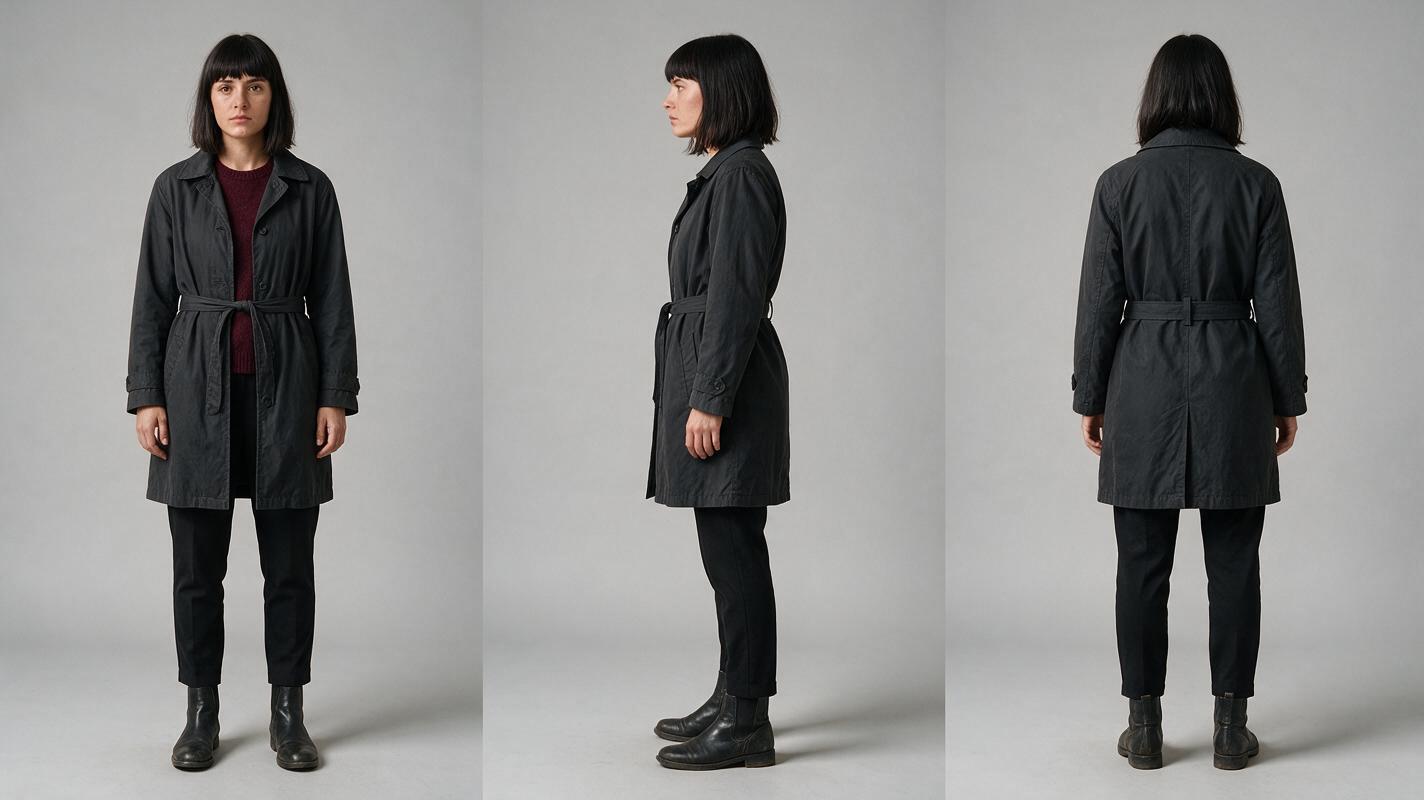
Step 2 — Build a six-beat ending ladder
A cliffhanger usually fails when the reveal arrives without preparation or when the scene continues long enough to release its tension. Prevent both problems by writing a compact ending ladder.
| Beat | Visible action | Story function |
|---|---|---|
| Goal | Mara approaches the hiding place. | Establishes what she expects. |
| Absence | The hiding place is empty. | Creates a specific problem. |
| Evidence | She sees the wet bag by another door. | Changes the meaning of the scene. |
| Pressure | The lock rotates from inside. | Removes time for reflection. |
| Choice | Her hand moves toward the bag and handle. | Makes the next action consequential. |
| Cut | End before contact. | Preserves the unanswered decision. |
Every beat should alter the situation. If two consecutive shots communicate the same information, merge them. In a short episode, repeated reaction shots often weaken the decision instead of intensifying it.
Step 3 — Lock the evidence frame before adding motion
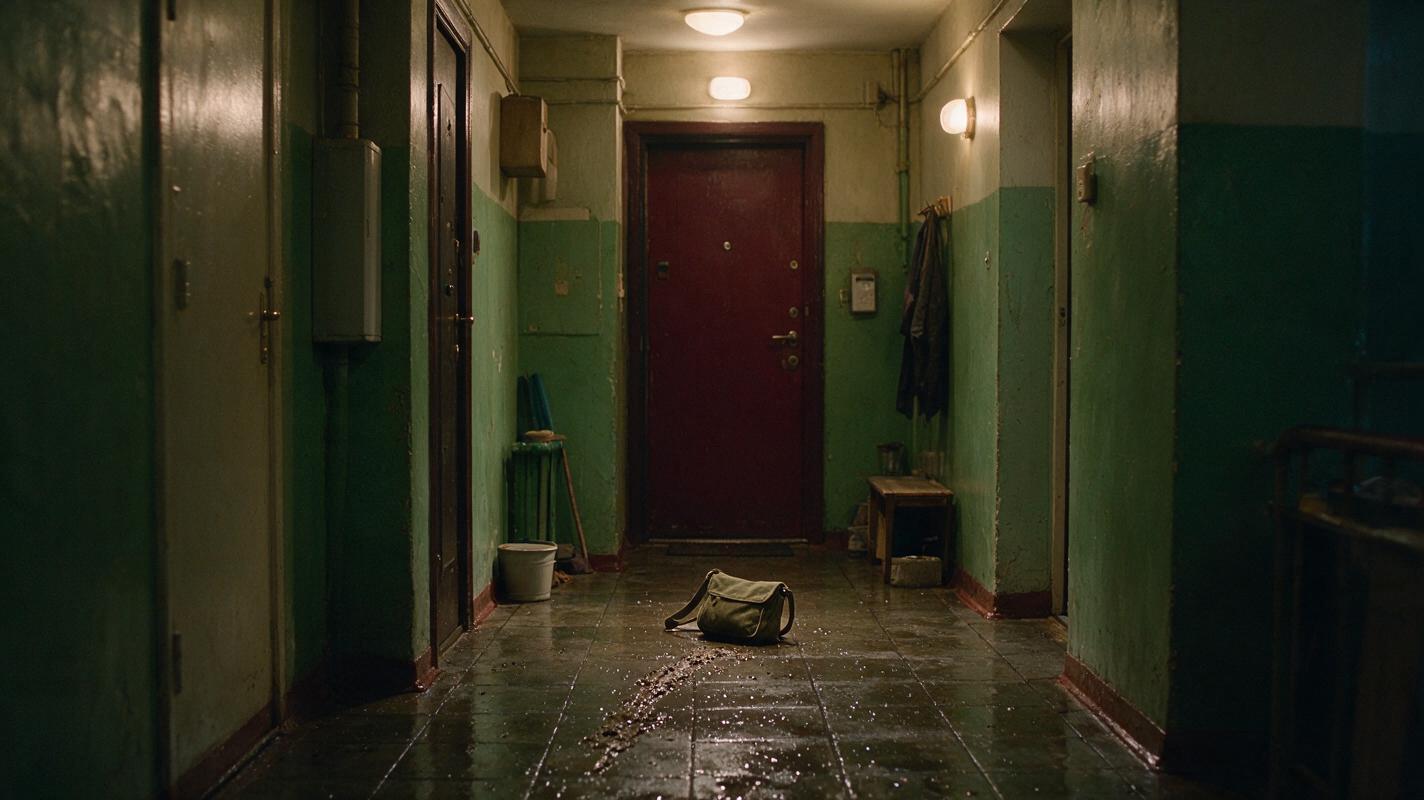
The evidence frame is the visual hinge of the ending. Generate it as a still before attempting video. This lets you control the bag, the forbidden door, the wet floor, and the distance Mara must cross.
Keep the evidence simple enough to read without captions. A distinctive bag beside a red service door is clearer than several ambiguous objects scattered through a dark hallway. Reserve one side of the vertical crop for Mara’s reaction and the other for the evidence.
Cinematic apartment hallway at night after heavy rain, lived-in older building, warm ceiling practical lights, faded green walls, dark red service door at the far end, one small olive canvas shoulder bag resting on the wet tile beside that door, visible water droplets and a short muddy drag mark leading from the bag, no other bags, no people, realistic wear and household details, restrained suspense, editorial realism, landscape 16:9 master location plate with the central door and bag protected inside a vertical 9:16 crop-safe zone; MANDATORY CAMERA: locked eye-level medium-wide view from the opposite end of the hallway, 35mm lens, straight vertical lines, deep enough focus to identify the bag and door; no text, logos, signage, UI or supernatural effects.Visual recreation prompt: Use the complete location prompt above. Generate the clean hallway plate first, then create a second version with Mara added from her approved character sheet. Do not regenerate the location independently for each shot.
Step 4 — Generate boundary frames for both episodes
Create two stills around the episode boundary:
- Episode A final frame: Mara’s hand is approaching the handle, but has not touched it.
- Episode B opening frame: the same composition, with her fingertips touching the handle as the lock turns.
The frames should match in wardrobe, hand choice, bag position, door angle, lighting, and camera height. This makes the cliffhanger a production seam rather than a continuity reset.
Choose a frame with a clear silhouette and then use image to video for the bounded action. Avoid asking one generation to cover the hallway approach, discovery, reaction, hand movement, opening door, and hidden-person reveal. Separate those changes into short clips.
Animate from the supplied reference frame.
Mara remains in the same hallway position and slowly extends her right hand toward the red door handle. Her eyes stay fixed on the handle. At the end, her fingertips remain two centimeters away and never make contact. The lock moves slightly from inside during the final moment. Keep the olive bag stationary. Preserve Mara's face, raincoat, hand anatomy, hallway lighting, door color and camera position. Locked camera, subtle breathing only, no zoom, no extra people, no door opening, no identity reveal.
Step 5 — Cut on commitment, not completion
Review the generated motion frame by frame. The best cut is usually the first frame where the audience understands what Mara has decided, while the physical outcome remains unknown.
Cut too early and the scene feels interrupted. Cut after she grabs the handle and sees who is inside, and the episode has already answered its own question. Preserve the narrow interval between decision and consequence.
Sound can sharpen that interval without adding another visual reveal. For example, let the lock click begin before Mara moves, then cut picture and sound together just before contact. Avoid ending with a long music sting after the decisive frame; extra time can dissipate the pressure.
Visual recreation prompt:
Two-column cinematic failure-versus-repair comparison with no labels: left sequence shows the same woman already holding an open red apartment door and relaxing after seeing an empty room, which resolves the event; right sequence shows her tense hand stopping just short of the closed door handle while the lock turns from inside, preserving uncertainty; maintain the same woman, charcoal raincoat, olive canvas bag, worn green hallway and warm practical lighting across both columns; six evenly sized vertical 9:16 film frames arranged as two groups of three on a neutral off-white background; MANDATORY CAMERA: consistent eye-level medium-close framing inside every panel, 50mm lens appearance, identical screen direction; cinematic editorial realism, anatomically correct hands, no text, arrows, logos, interface chrome or brand marks.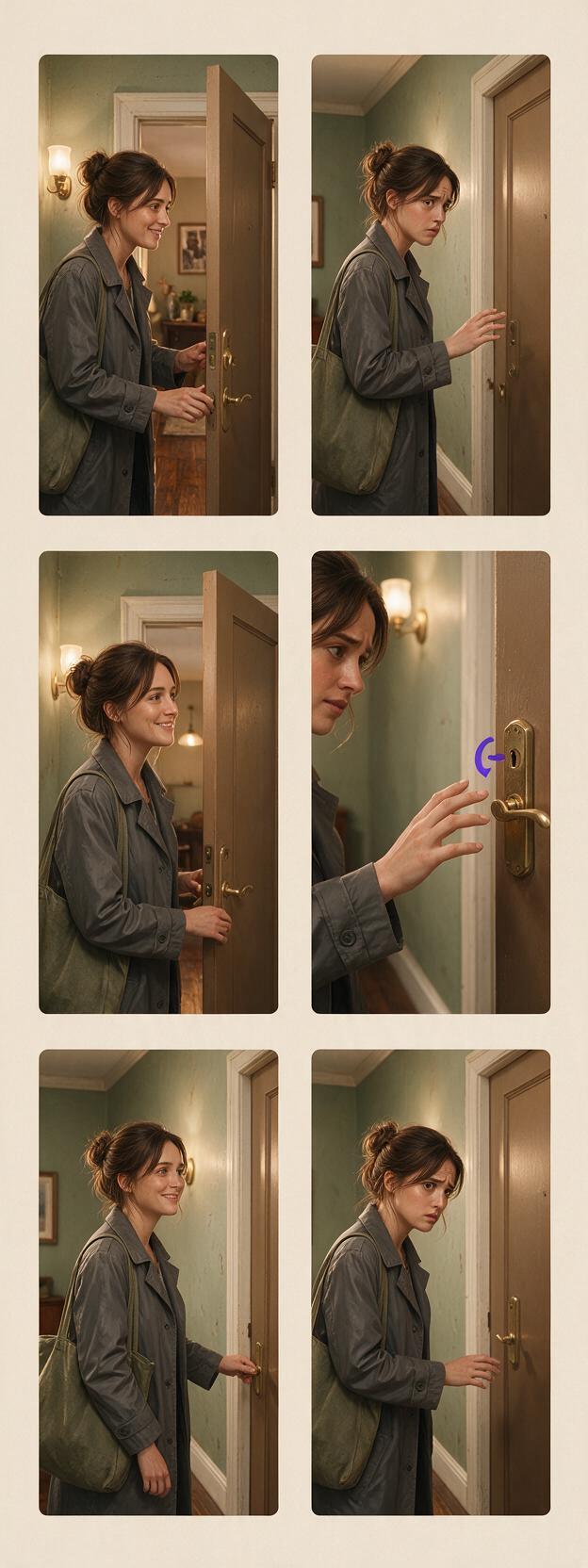
Step 6 — Test the handoff into the next episode
A cliffhanger is incomplete until its continuation works. Place the final clip of Episode A beside the opening clip of Episode B and test them as one sequence.
- Does the hand continue along the same path?
- Does the lock remain in the same state?
- Does the bag stay in the same position?
- Does the sound continue without an unexplained reset?
- Does Episode B deliver a consequence rather than replay the entire ending?
The continuation does not need to answer every question immediately. It does need to honor the action promised by the cut. Episode B might reveal that the door opens outward, forcing Mara to hide, while the occupant remains unseen. That advances the consequence without discarding the established setup.
When the boundary frames and motion prompts are ready, try these models for free and compare which result best preserves the face, hand trajectory, prop position, and lighting across the cut.
FAQ
Should every AI short drama episode end with a cliffhanger?
No. An episode can end on a revelation, emotional reversal, completed choice, or temporary resolution. Use a cliffhanger when the interrupted consequence naturally drives the next episode, not as a compulsory final shot.
How much information should the ending reveal?
Reveal enough to change the character’s immediate goal, but withhold the result of the forced choice. The audience should understand the problem even if they do not yet know its cause.
Can dialogue carry the cliffhanger?
Yes, but pair the line with visible evidence or behavior. A voice saying “Don’t open it” becomes stronger when the lock is already turning and the character’s hand is near the handle.
How do I adapt the workflow for vertical drama video?
Keep the face, hand, evidence, and interactive object inside one narrow story column. Test the 9:16 crop at the still-frame stage rather than cropping a wide composition after animation.
What is the easiest way to repair a weak ending?
Remove frames from the tail first. Many weak cliffhangers contain a usable moment but continue beyond it. If the decision is still unclear, add one evidence insert rather than generating a longer reaction.
Sources
Final checklist
- The protagonist has a visible goal before the ending changes it.
- One readable piece of evidence creates the reversal.
- The new situation requires an immediate decision.
- The final frame shows commitment without completing the action.
- Episode A and Episode B share matching boundary frames.
- The vertical crop preserves the face, hand, evidence, and interactive object.
- The continuation honors the promised action instead of resetting the scene.
Keywords
ai microdrama, ai short drama, ai series video, ai drama generator, short drama from script, vertical drama video