How to Structure a 60-Second AI Microdrama Episode
A practical workflow for structuring a 60-second AI microdrama around one irreversible story change. Build a six-beat spine, compress the dialogue, generate clear action-and-reaction shots, and edit backward from a strong cliffhanger.

Table of contents
The 60-Second Answer
A strong 60-second AI microdrama needs one urgent goal, one escalating obstacle, one reversal, and a final image that creates an unanswered question.
Do not treat the episode as a compressed short film. Treat it as a single dramatic turn: the situation at the end must be meaningfully different from the situation at the beginning.
This tutorial uses a six-beat structure designed for a one-minute episode. The running example is The Spare Key, a suspense story about a tenant who finds evidence that somebody has entered her locked apartment.
Step 1 — Choose One Irreversible Story Change
Before writing dialogue or generating footage, finish this sentence:
By the end of the episode, the protagonist discovers, loses, reveals, decides, or causes ________.
The blank should describe a visible change, not a topic. “She feels unsafe” is too vague. “She discovers a wet footprint inside her locked apartment” gives the episode an image, a consequence, and a question.
Keep the production footprint narrow:
- One protagonist: the person whose goal drives the episode.
- One immediate objective: what that person wants during this minute.
- One primary location: a space the viewer can understand quickly.
- One disruptive fact: the reveal that changes the meaning of the scene.
Use this prompt to test a premise before expanding it:
You are outlining one 60-second AI microdrama episode.

Premise: A tenant returns home and suspects someone has entered her locked apartment.
Genre: grounded suspense
Primary location: apartment hallway and entrance
Cast visible in this episode: one woman

Propose five irreversible story changes that can be shown visually within one minute. Each option must create a clear cliffhanger, require no exposition about the wider world, and avoid adding new locations or visible characters.
Select the option that produces the clearest final image. An AI drama generator can render atmosphere, but atmosphere alone cannot replace a dramatic event.
Step 2 — Build a Six-Beat, 60-Second Spine
Assign every part of the minute a specific job. The timing below is a writing constraint, not a universal platform rule; adjust individual beats after recording dialogue and reviewing generated shots.
| Time | Beat | Story job | Example |
|---|---|---|---|
| 0–5 seconds | Contradiction | Open on something that should not be true. | The tenant finds her door unlocked. |
| 5–13 seconds | Immediate goal | Show what the protagonist wants now. | She tries to determine whether anyone is inside. |
| 13–25 seconds | Pressure | Make waiting or retreating difficult. | Her phone rings from inside the apartment. |
| 25–38 seconds | Partial answer | Resolve the first question while opening a worse one. | Her own phone is still in her hand. |
| 38–52 seconds | Reversal | Change the meaning of earlier information. | The ringing comes from an identical phone on the floor. |
| 52–60 seconds | Cliffhanger | End on an action or image that demands continuation. | The duplicate phone displays a live image of her standing outside. |
Notice that the reveal is not saved entirely for the final second. The viewer receives a partial answer first, giving the cliffhanger a stronger foundation.
To produce alternative beat sheets, use:
Create three six-beat versions of this 60-second AI microdrama.

Story change: A tenant discovers that someone inside her apartment can see her before she enters.
Required beats: contradiction, goal, pressure, partial answer, reversal, cliffhanger.
Production limits: one visible actor, one doorway, no crowd, no flashback, no spoken exposition.

For each beat, provide:
- approximate duration
- visible action
- new information
- the question carried into the next beat

Make each version understandable with the sound muted.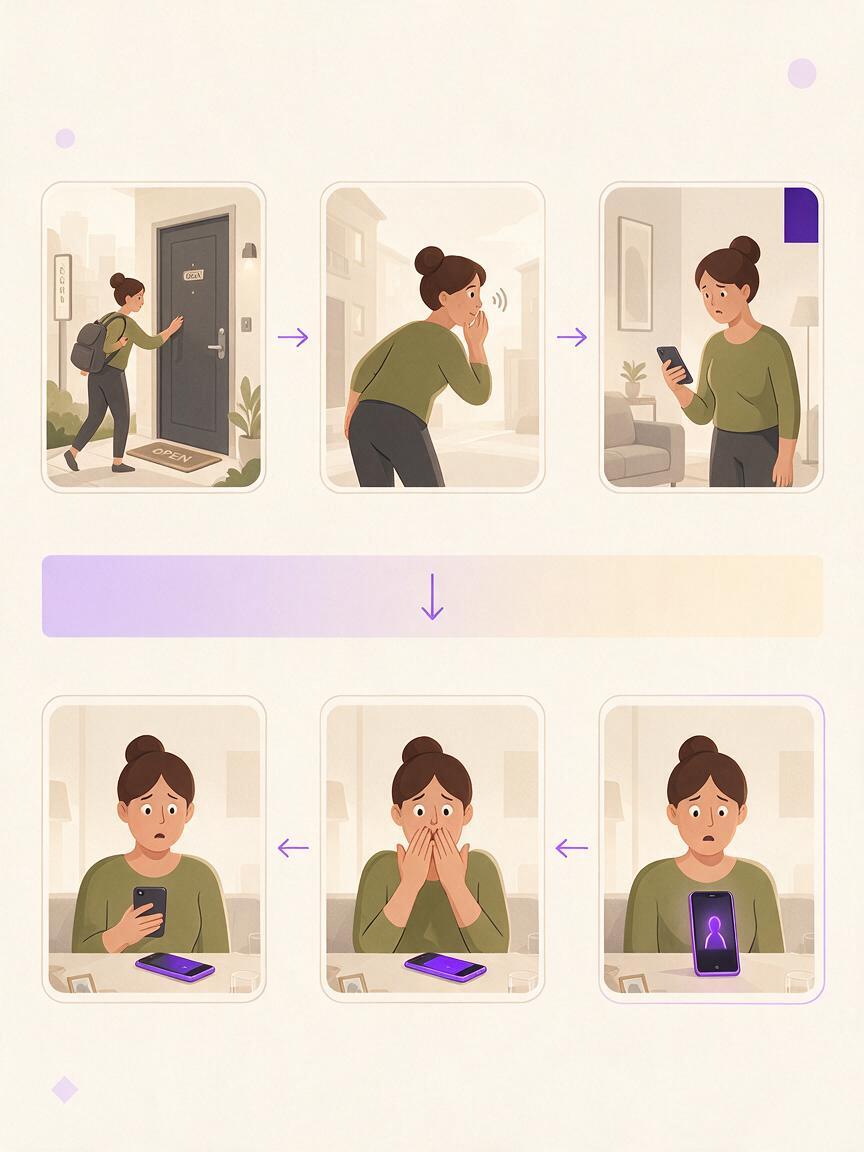
Step 3 — Compress Dialogue Into Decisions
Long conversational exchanges consume the minute without necessarily changing the story. In an AI short drama, dialogue should trigger a decision, expose a contradiction, or redirect attention.
Replace explanations with evidence wherever possible:
| Expository version | Dramatic replacement |
|---|---|
| “I know I locked this door before I left.” | She tests the loose handle, then checks the key still clenched in her hand. |
| “There is another phone inside.” | She raises her phone while the identical ringtone continues beyond the door. |
| “Someone is watching me.” | The duplicate phone shows a live view of her from behind. |
If a line remains, make it brief enough to survive a reaction pause. For example, “Who’s in there?” gives the character something active to do and creates silence in which the answer might arrive.
A useful dialogue pass is:
Rewrite the scene below for a 60-second suspense episode.

Keep only dialogue that causes an immediate decision, reveals a contradiction, or changes the protagonist's goal. Convert all other information into visible behavior, props, sound cues, or reactions. Limit each spoken line to one short sentence. Preserve natural pauses around discoveries.

Scene:
[PASTE SCENE HERE]
Step 4 — Prompt Action and Reaction as Separate Shots
A single overloaded generation prompt often asks for too many events: entering, noticing an object, reacting, speaking, turning, and revealing a threat. Divide each beat into action-and-reaction pairs instead.
- Action shot: show the event or clue.
- Reaction shot: show the character processing it.
- Confirmation shot: use only when a prop or spatial detail must be unmistakable.
For the ringing-phone beat, the sequence could be:
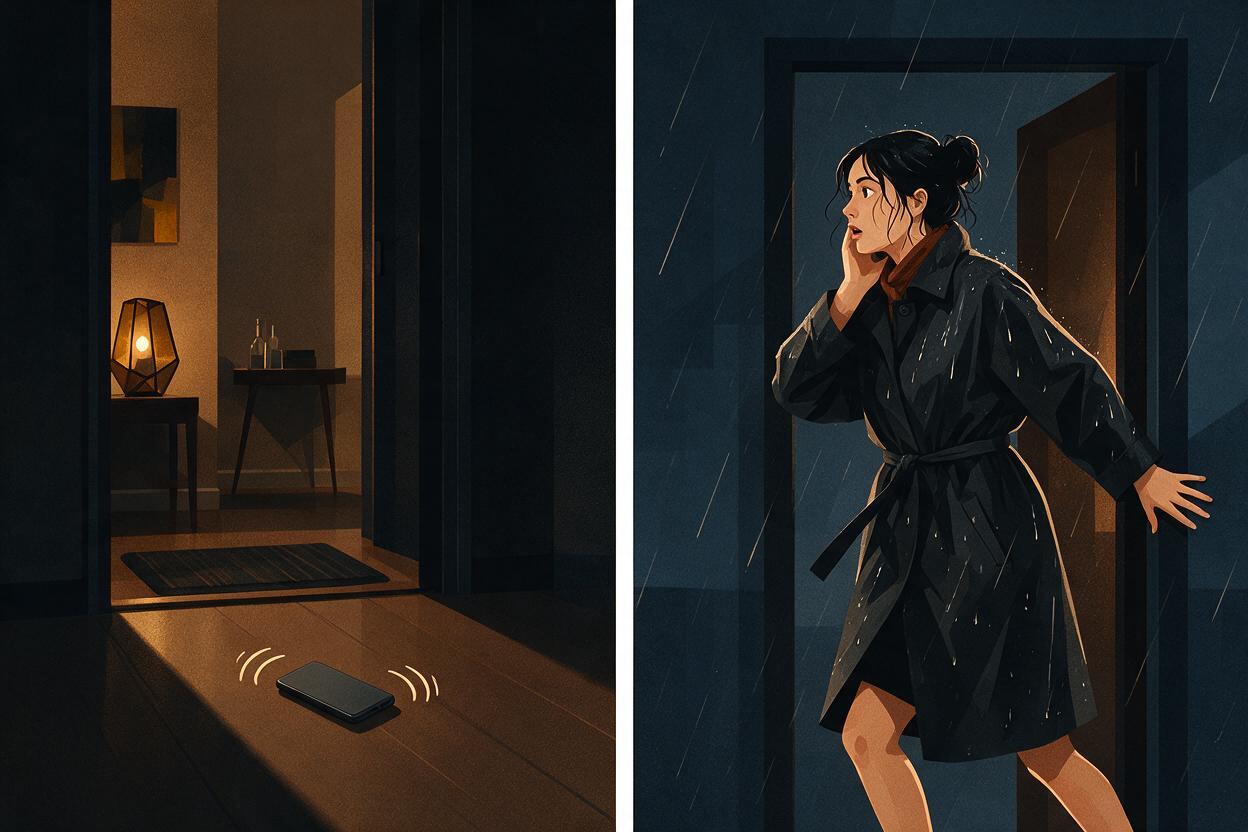
- Close view of the dark doorway as a ringtone begins inside.
- Medium close-up of the tenant freezing and looking at the phone in her hand.
- Insert of her lit phone screen receiving no call, with no readable brand or notification required.
Keep each generation prompt focused on one visible change:
Vertical cinematic suspense shot inside a dim apartment entrance at night. A woman in a charcoal raincoat stands motionless just outside the open doorway, holding her own phone near her chest. A ringtone sounds from deeper inside, and she slowly shifts her gaze from the phone in her hand toward the darkness. Restrained fear, realistic body movement, stable camera, medium close-up, shallow depth of field, cool hallway light, no additional people, no text, no logo.Repeat fixed details such as wardrobe, location lighting, and prop appearance in every relevant prompt. Change only the action, framing, or emotional state needed for the current shot.
Once the beat sheet and shot pairs are locked, you can turn the structured episode into an AI video draft and evaluate the story in motion rather than judging isolated frames.
Step 5 — Edit Backward From the Cliffhanger
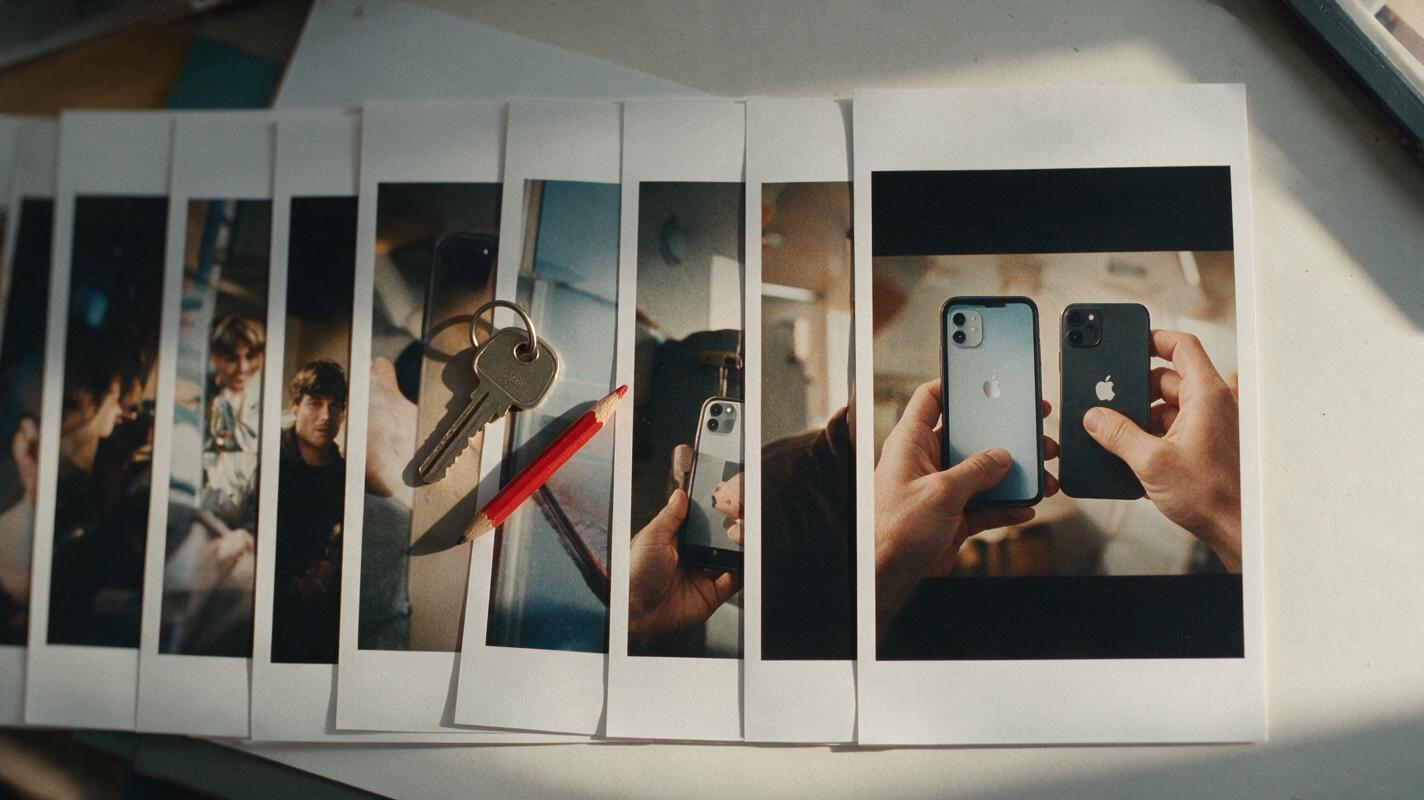
Place the cliffhanger first on the editing timeline, then protect enough time for the audience to recognize it. A reveal that appears only as a fleeting image may be technically present but dramatically unreadable.
Working backward, ask:
- What shot makes the final image legible?
- What earlier clue prevents the reveal from feeling arbitrary?
- What decision brings the protagonist into the reveal?
- What can be removed without breaking that chain?
For The Spare Key, the duplicate phone is easier to understand if the audience has already seen the protagonist holding her own phone. That earlier insert is therefore structural. A separate shot of her walking down the entire hallway is not.
Use sound as a bridge rather than an extra explanation. The ringtone can begin over the doorway shot, continue across her reaction, and lead into the duplicate-phone reveal. This creates momentum while allowing visual cuts to remain simple.
Cut repeated information before cutting the reaction. Recognition is part of the story, not empty space.
Review the draft once without sound. Then listen without watching. The silent pass tests visual causality; the audio-only pass reveals unnecessary dialogue, confusing sound cues, and pauses that are too short for the intended tension.
Step 6 — Test the Episode as Part of a Series
A cliffhanger should open the next dramatic action, not merely stop the current scene. Write one sentence describing the first action of the following episode.
For example:
Episode two begins when the live image on the duplicate phone turns toward the apartment bedroom, forcing the tenant to decide whether to enter.
If the next episode must introduce an unrelated mystery, the current cliffhanger is probably decorative. If it forces a clear choice, confrontation, escape, or investigation, it can support an AI series video rather than functioning as a disconnected short.
Before finalizing the episode, answer three continuity questions:
- What does the protagonist know at the final frame?
- What does the viewer know that the protagonist does not?
- What immediate action remains unfinished?
Final Checklist
- The episode contains one irreversible story change.
- The opening image presents a contradiction within the first beat.
- Every beat adds information or increases pressure.
- Dialogue produces decisions instead of explaining visible events.
- Complex moments are divided into action and reaction shots.
- The reveal receives enough screen time to be recognized.
- The cliffhanger forces the next episode’s opening action.
- The story remains understandable during a silent review.
FAQ
How many scenes should a 60-second AI microdrama contain?
Use as few locations and dramatic situations as the story allows. The six beats in this tutorial are story functions, not six required locations. Several beats can occur within one continuous doorway scene.
Should every AI short drama end with a cliffhanger?
An episodic drama benefits from an unresolved action or question, but the episode should still deliver a meaningful change. Avoid ending before anything happens solely to manufacture suspense.
Can this structure work for romance or comedy?
Yes. The reversal changes by genre. A romantic episode might reveal that a message was sent to the wrong person, while a comedy might expose the protagonist’s confident assumption as false. The six dramatic jobs remain useful.
Should I generate the full minute in one prompt?
Generate manageable shots centered on one action or reaction, then assemble them in the edit. This makes pacing easier to control and allows weak moments to be replaced without rebuilding the entire episode.
Do I need an AI short film generator before writing the beats?
No. Lock the irreversible change, beat order, and cliffhanger first. Generation becomes more efficient when each requested shot already has a precise narrative purpose.
Sources
Sources: None — practical guide based on the workflow described.
Keywords
ai microdrama, ai short drama, ai drama generator, ai series video, ai short film generator, vertical drama video, microdrama episode structure