Why AI Salad Photos Look Wilted (And How to Get Crisp, Vibrant Results)
AI-generated salad photos often fall flat with wilted greens, gloppy dressing, and randomly scattered toppings that fail to entice restaurant customers. This troubleshooting guide breaks down the root causes of these common AI food photography failures and shares reusable prompt templates, model-specific settings for Nano Banana Pro, and targeted inpainting fixes to create crisp, vibrant salad visuals. It also includes tips for repurposing static salad photos into short social media clips with Vidu.
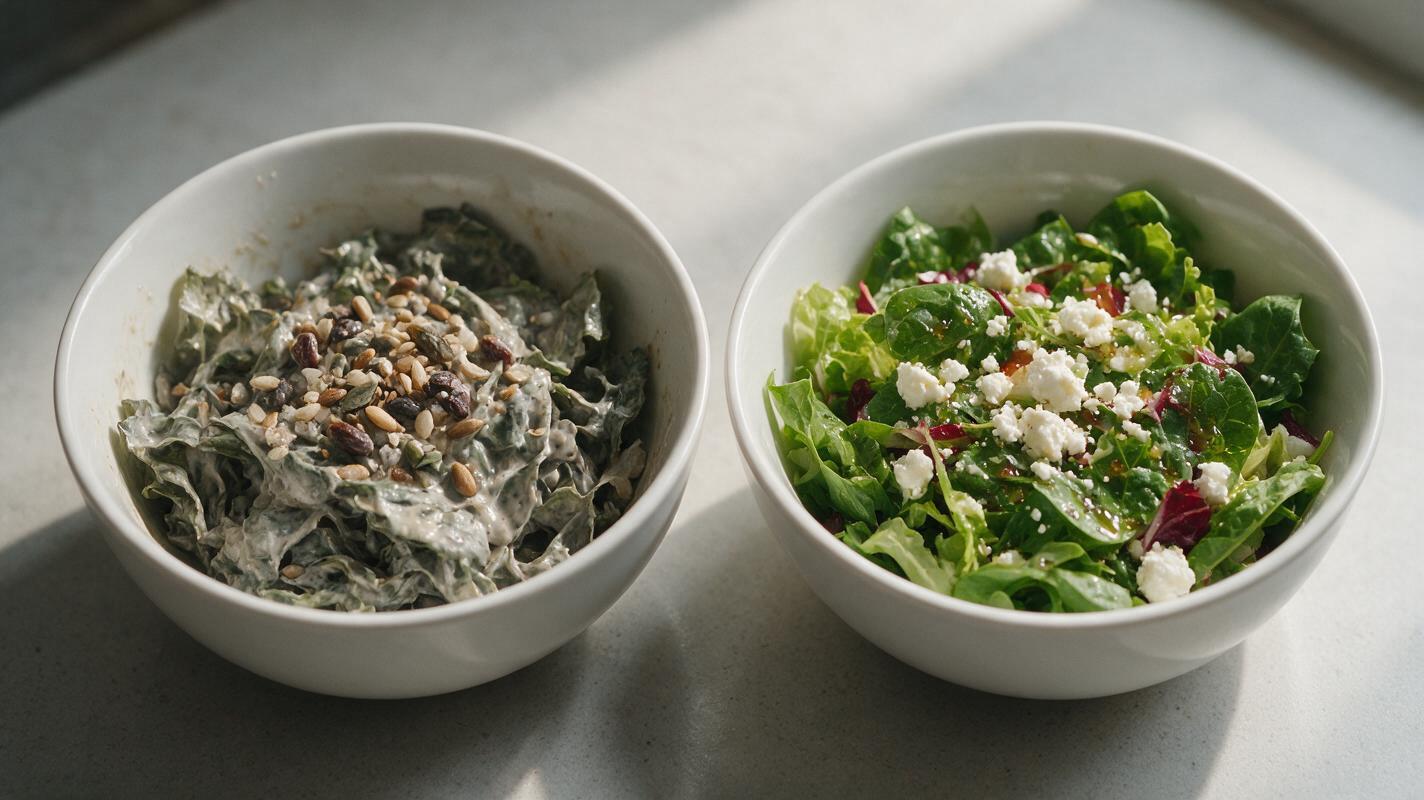
Table of contents
The problem with AI-generated salad photos
If you’ve ever used AI to generate salad photos for a restaurant menu or social media post, you’ve probably seen it: limp, graying greens, dressing that looks like thick glue, toppings scattered so randomly they look unappetizing, and leaves that feel more like wet paper than crisp, fresh produce. These fails don’t just look unprofessional — they can actually turn customers away from healthier, higher-margin menu items.
Salads are uniquely tricky for AI because they’re made of dozens of small, delicate, translucent ingredients with complex textures and subtle color variations. Unlike a burger or a slice of pizza, which have clear, defined layers, salads rely on a sense of freshness and crunch that’s hard for AI to replicate without specific guidance.
Root causes of wilted, flat salad renders
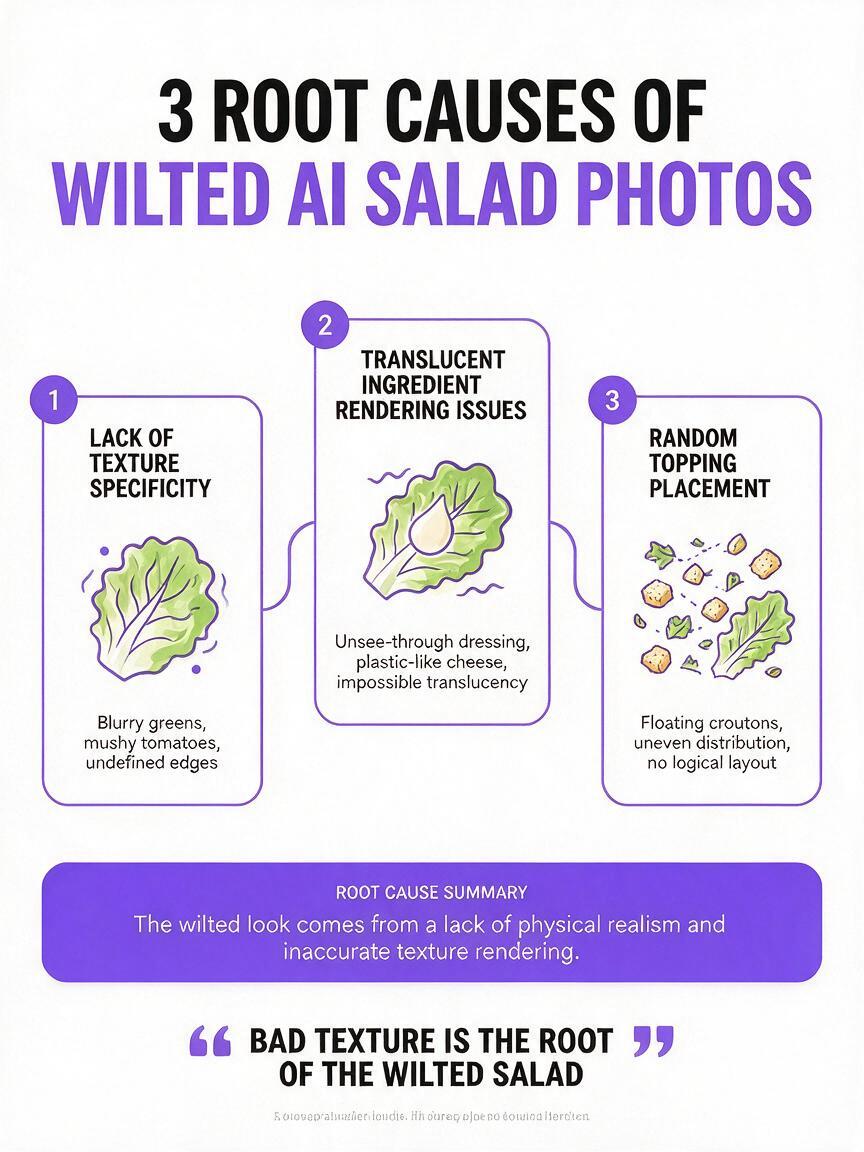
Most AI salad failures boil down to three core issues, all tied to how generative models interpret complex, multi-ingredient fresh produce:
- Lack of texture specificity: Generic prompts like “fresh salad” don’t give AI enough detail about leaf crispness, dressing sheen, or topping texture. Models default to soft, blended textures that read as wilted rather than fresh.
- Translucent ingredient rendering issues: Lettuce, spinach, and other greens are partially translucent, especially when coated in dressing. Most AI models struggle to render this thin, light-permeable structure correctly, leading to flat, opaque leaves that look dead or soggy.
- Random topping placement: AI tends to scatter toppings evenly across the salad surface, which looks unnatural and unappetizing. Real salads have intentional clumps of cheese, clusters of croutons, and patches of exposed greens that feel hand-tossed and fresh.
Prompt templates for crisp, vibrant salad photos
The key to getting realistic salad photos is to be hyper-specific about texture, color distribution, and lighting. These reusable prompt templates are optimized for fine detail and freshness, and work well with most food-focused AI image tools.
Base garden salad prompt:
Crisp fresh garden salad in a matte white ceramic bowl, close-up food photography, bright natural north light, crisp romaine leaves with visible vein texture and translucent edge highlights, light balsamic vinaigrette coating with tiny oil droplets, halved cherry tomatoes with juicy seed-filled interiors, crumbled feta cheese in uneven clumps, toasted sourdough croutons with golden brown crusts, a sprinkle of fresh basil leaves, shallow depth of field, f/2.8, 50mm lens, restaurant menu quality, no wilted leaves, no mushy dressing, no uniform topping distributionCaesar salad variation:
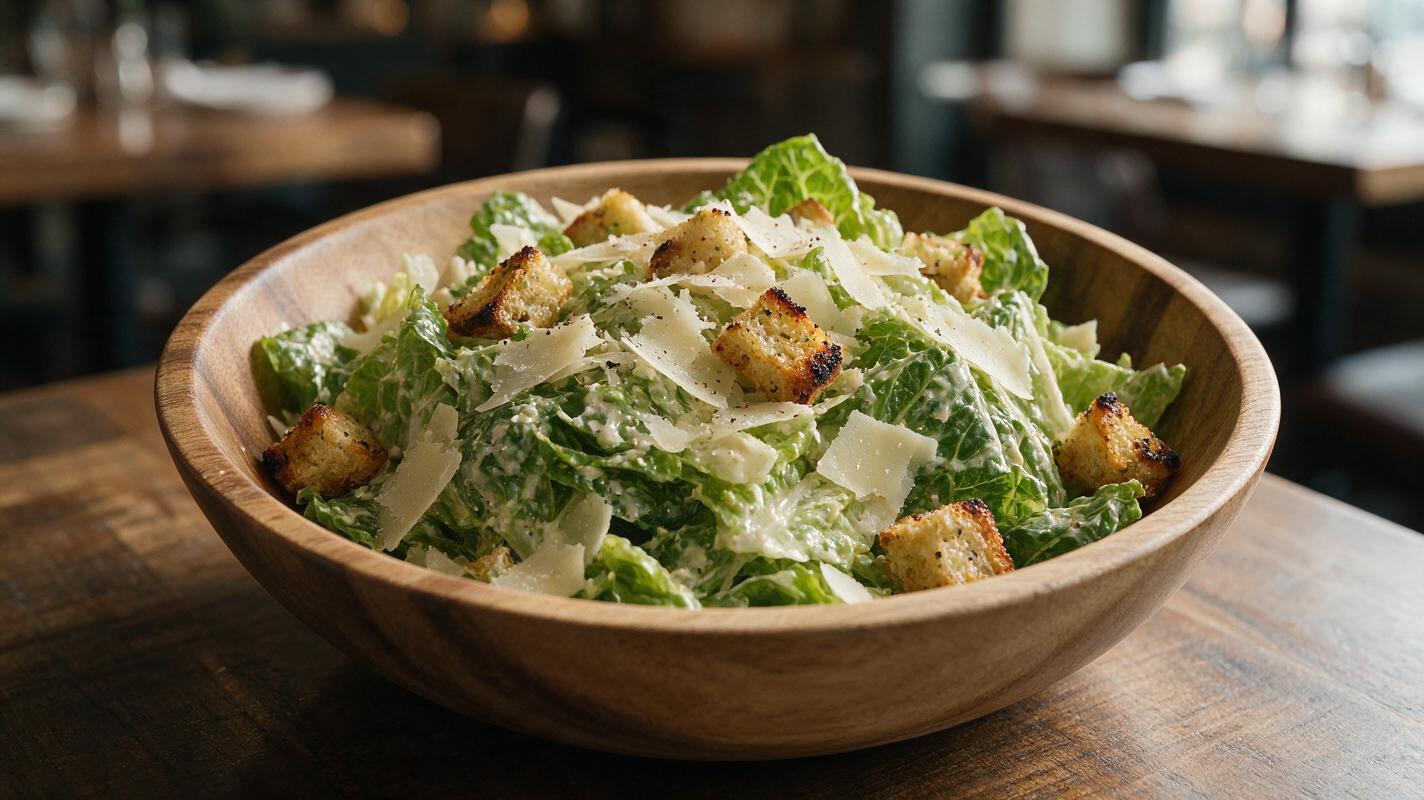
Classic Caesar salad in a shallow acacia wood bowl, professional food photography, warm soft side lighting, crisp romaine leaves coated in creamy Caesar dressing with subtle sheen, shaved parmesan curls of varying thickness, garlic croutons with charred edges, a light sprinkle of fresh cracked black pepper, slight natural leaf curl at edges indicating crispness, shallow depth of field, f/4, 60mm macro lens, restaurant social media quality, no soggy leaves, no clumpy dressingWhether you’re building a full menu of salad options or testing a new seasonal special, a reliable ai image generator can cut down photoshoot time from days to minutes.
Nano Banana Pro settings for consistent salad results
Nano Banana Pro excels at rendering fine, natural textures, making it a strong choice for salad photography. For the most consistent, crisp results, adjust these settings before generating:
- Aspect ratio: 4:5 for Instagram and social media, 3:2 for printed menu photos
- Style strength: 0.7 — high enough to preserve photorealistic food styling, low enough to retain all the specific texture and placement details from your prompt
- Detail level: High — this setting boosts leaf vein definition, dressing droplet clarity, and crouton crispness
- Negative prompt: wilted leaves, mushy dressing, uniform topping distribution, grayish greens, plastic texture, blurry edges, unidentifiable ingredients
Inpainting fixes for stubborn salad flaws
Even with perfect prompts and settings, you may run into small flaws: a single wilted leaf, a clump of gloppy dressing, or a missing topping. Inpainting lets you fix these small areas without regenerating the entire image, saving time and preserving your overall composition.
Common fixes and their inpainting prompts:
- Wilted leaf patch: Mask the discolored or limp area, then prompt: “crisp romaine leaf with visible veins, light vinaigrette coating, matching surrounding leaf color and lighting, natural edge shape”
- Gloppy dressing spot: Mask the thick clump of dressing, then prompt: “thin vinaigrette coating with tiny oil droplets, smooth even application, matching surrounding dressing sheen and color”
- Missing topping cluster: Mask a small patch of bare greens, then prompt: “crumbled feta cheese in uneven clumps, same color and texture as existing feta, natural hand-tossed placement”
Repurpose salad photos into short social clips with Vidu
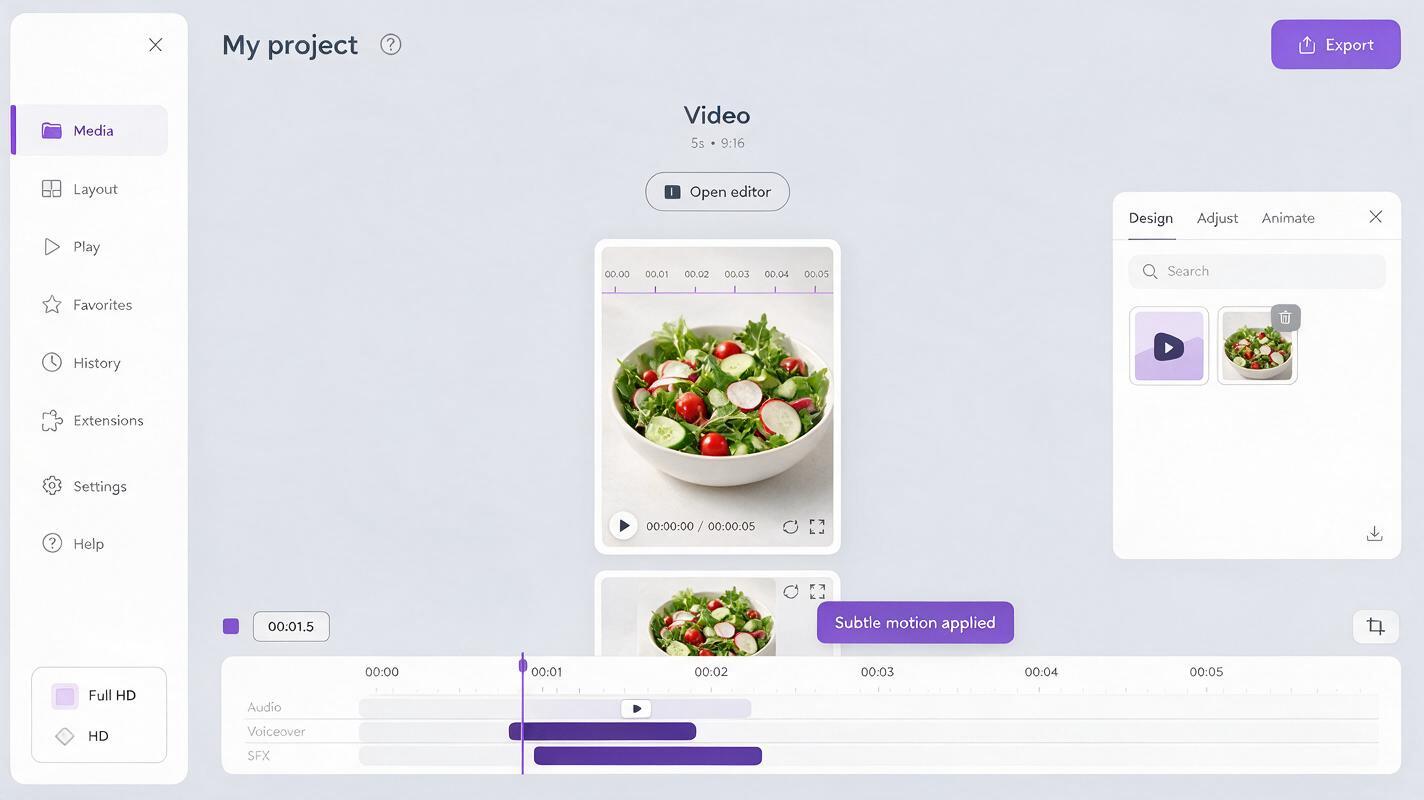
Static salad photos work well for menus and websites, but short, subtle video clips perform 2–3x better on Instagram Reels and TikTok for restaurant social content. You don’t need a full video shoot — you can turn your best static salad photo into a dynamic clip in minutes.
A simple image to video tool can add gentle motion, like a slow zoom or a subtle leaf flutter, to make your salad feel fresh and dynamic without a full video shoot. Vidu does an especially good job of preserving original image details while adding natural, subtle motion, with minimal risk of food morphing or warping.
Vidu image-to-video prompt for salad clips:
Subtle motion food video, slow gentle zoom in on a crisp garden salad in a white bowl, one small basil leaf flutters slightly as if from a soft breeze, dressing glistens in natural light, stable camera, no warping, no morphing ingredients, 3-second vertical 9:16 clip, social media readyFinal quality checklist for AI salad photos
Before using any AI-generated salad photo for your restaurant or brand, run through this quick checklist to make sure it looks fresh and appetizing:
- Greens have visible vein texture and translucent edge highlights (no flat, opaque leaves)
- Dressing has a natural sheen or visible droplets (no thick, glue-like clumps)
- Toppings are distributed unevenly, with clumps and patches of exposed greens (no uniform scattering)
- Colors are vibrant, with bright greens and richly colored toppings (no graying or dullness)
- No random, unidentifiable ingredients (AI sometimes adds odd bits to complex salads)
- Lighting is consistent and flattering, with soft shadows that add depth (no harsh, flat light)
Ready to test these prompts and settings for your next salad campaign? try these models for free to generate crisp, restaurant-quality salad visuals in minutes.
Keywords
ai salad photography, food image generator, restaurant marketing ai, menu photo generator, ai food photos, salad marketing visuals, nano banana pro