Hailuo Prompts for Faceless Horror Story B-Roll
Create short horror cutaways that support a narrated story without showing a host or revealing the threat too early. These Hailuo prompts cover establishing shots, clues, suspense transitions, and endings, with practical guidance for matching visuals to the script.
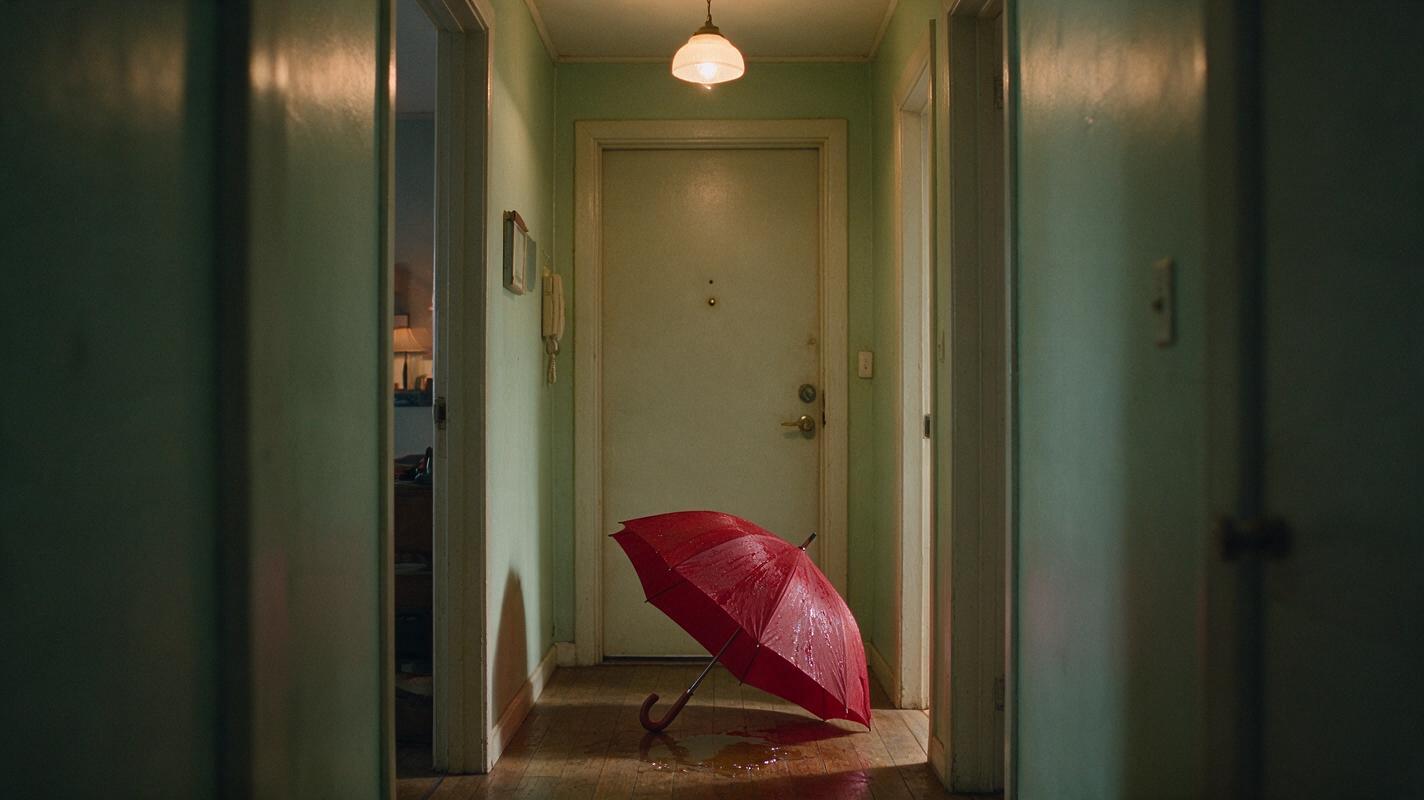
Table of contents
Give the story a visual without giving away the scare
A faceless horror video needs more than a sequence of dark rooms. The best B-roll makes a specific line of narration feel unsettling while leaving viewers room to imagine what happens next. If your script says someone hears footsteps upstairs, show the empty staircase and a small change in the light—not a monster at the top.
Use Hailuo to generate brief, story-specific cutaways, then place them under your recorded narration. The prompts below are written for fictional stories. They favor controlled movement, recognizable locations, and a single unsettling detail per shot.
Build a visual rulebook before writing prompts
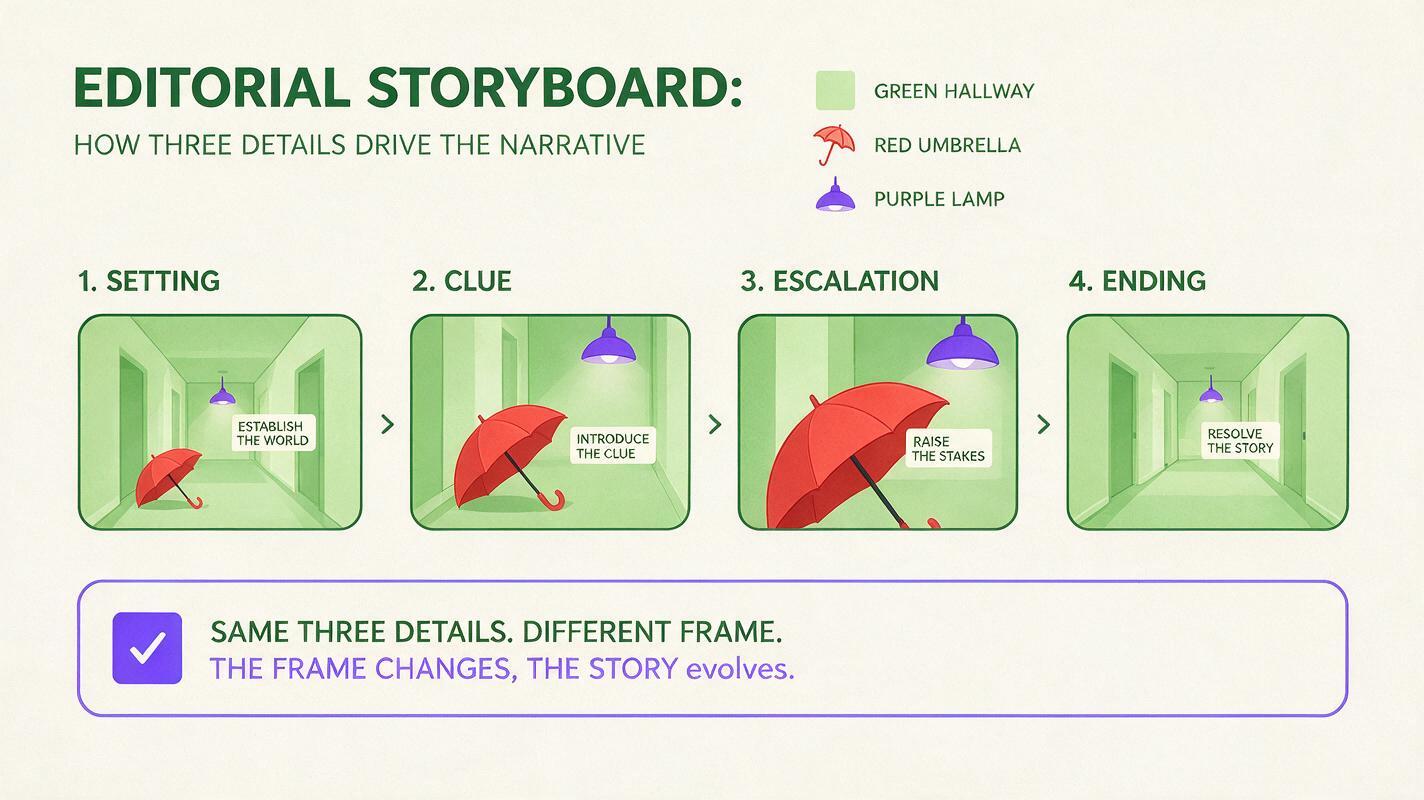
Choose three details from your script that must remain recognizable: a location, a recurring object, and a lighting condition. For example, a narrow apartment hallway, a red umbrella, and a flickering ceiling lamp give separate clips something in common. Repeat their descriptions rather than replacing them with vague phrases such as ‘the same place.’
Keep each shot focused on one action. A prompt asking for a camera move, a door opening, a figure appearing, and a sudden chase invites continuity problems—and gives away several beats at once. If the story has a reveal, save it for the line that earns it.
Working example: The narrator returns home, finds a wet red umbrella in a dry hallway, and hears a door close in an empty room. The prompts below follow that fictional setup; replace its details with those from your own script.
A simple ai video storyboard can help you assign one visual purpose to each narration beat before generating clips. Mark a shot as setting, clue, escalation, or reveal. If two consecutive shots do the same job, keep the stronger one.
Establish the place before anything moves
An establishing shot tells viewers where the story happens. It should be legible on a phone screen and quiet enough to sit beneath the opening sentence. Avoid a camera that races through the location; a slow push gives viewers time to notice what matters.
Fictional horror story B-roll. A narrow apartment hallway at night, viewed from the open front door. Pale green walls, a single flickering ceiling lamp, and a closed bedroom door at the far end. A wet red umbrella rests against the wall. Slow, steady camera push into the hallway. No people, no creature, no captions, no sudden reveal. Maintain the hallway layout throughout the shot.Use text to video when you need an original location rather than footage of a real apartment. If the resulting hallway changes shape mid-shot, shorten the usable portion or simplify the camera movement. The location needs to feel dependable before you ask viewers to notice something wrong with it.
Make the clue visible but easy to miss
A clue shot should reward attention without announcing itself. Give the audience a clear object and a small contradiction. In this story, the wet umbrella matters because the narrator insists it has not rained. Frame it as an insert that can play exactly when that line is spoken.
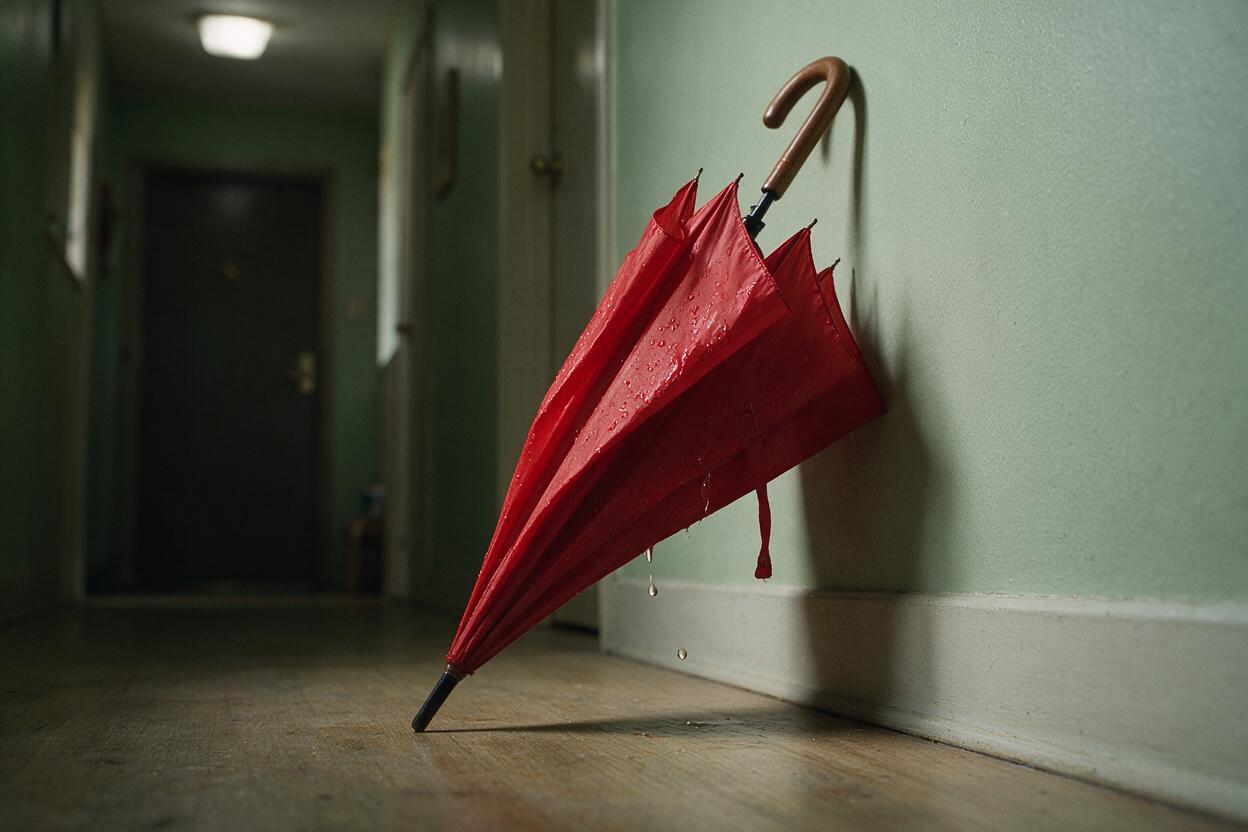
Close-up fictional story insert: a wet red umbrella leaning against the pale green wall of a narrow apartment hallway. Several drops fall from the fabric onto a dry wooden floor. The umbrella remains in place; only the drops move. Dim light from a flickering ceiling lamp. Locked camera, shallow depth of field, restrained suspense. No hands, no person, no text, no extra objects appearing.Do not ask the model to display a readable address, police report, or newspaper headline unless you plan to add verified text yourself in the edit. Generated writing can be unreliable, and a document-like prop may make fictional imagery look like evidence.
Build tension with an empty frame
When the narration reaches ‘I heard the bedroom door close,’ resist showing who closed it. The uncertainty is the point. Let a small movement happen inside an otherwise stable composition, then cut back to darkness, your narrator’s pause, or a different angle.
Fictional suspense cutaway in the same narrow apartment hallway: pale green walls, flickering ceiling lamp, wet red umbrella against the wall, bedroom door at the far end. Static wide shot. After a quiet moment, the bedroom door moves slightly toward its frame and settles shut. No visible person, shadow figure, creature, camera shake, dramatic zoom, or text. Keep the hallway and objects consistent.Review the frame just before the door moves. If an unexpected silhouette or warped wall appears, do not use the clip simply because the closing motion looks good. A clean two-second excerpt is more useful than a longer shot with an accidental ‘reveal.’
Save the strongest image for the final line
An ending shot should pay off the detail you planted, not introduce a completely new visual idea. Suppose the final line is, ‘In the morning, the umbrella was dry—but the floor beneath it was still wet.’ You can return to the same composition and let the contradiction carry the ending.
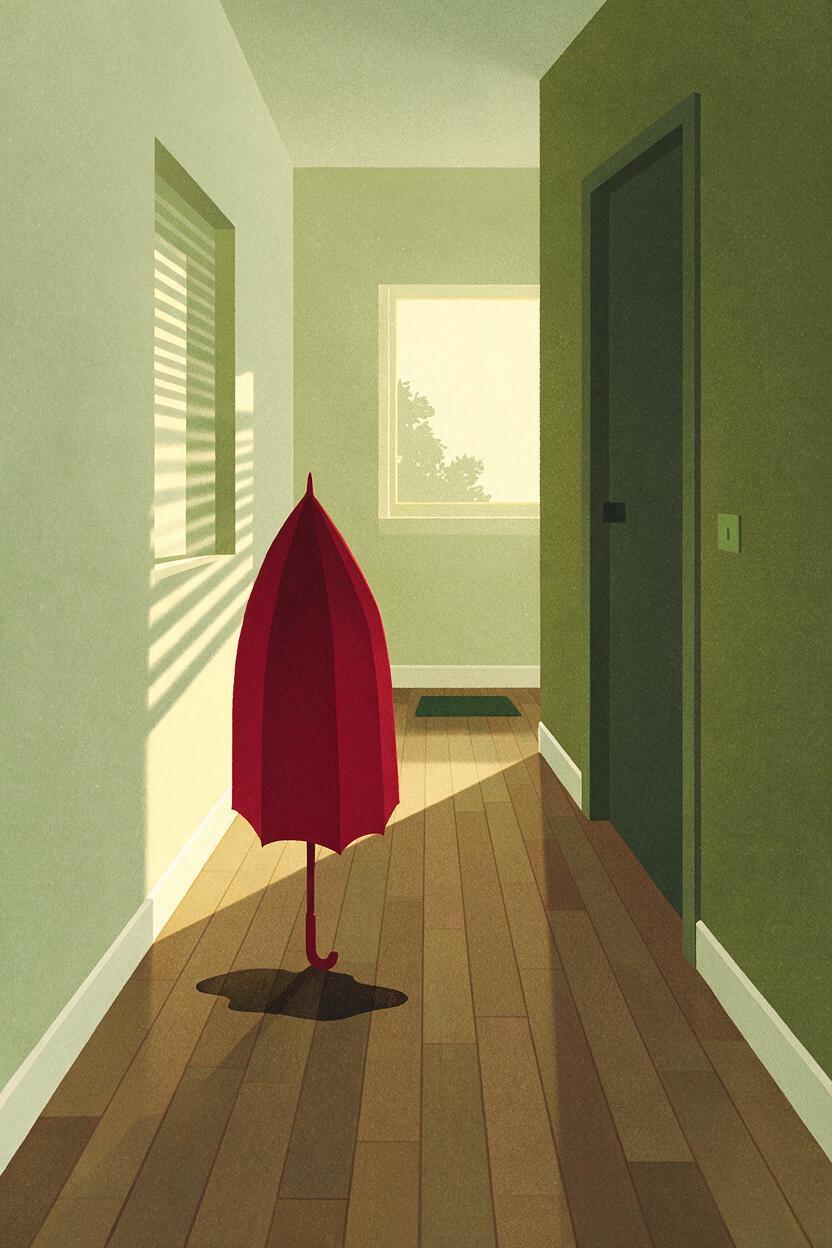
Final shot for a fictional horror story. Morning light enters the same narrow apartment hallway with pale green walls and a bedroom door at the far end. A closed red umbrella leans against the wall; its fabric appears dry. A small, unmistakable wet patch remains on the wooden floor beneath it. Still camera, natural quiet, no person, no creature, no text, no new prop, no dramatic camera move.If that distinction is not clear at phone size, use two shots: a close-up of the dry fabric followed by the wet floor. The edit can express a precise story beat more reliably than asking one generated frame to communicate every detail.
Cut the clips to the voice, not the other way around
Record or finalize the narration first. Place each visual on the timeline where its corresponding fact becomes known: hallway at the introduction, umbrella on the no-rain line, moving door after the sound is mentioned, and wet floor at the ending. Leave space between clues so the viewer can process them.
- Trim to the stable frames: Discard the beginning or end of a clip if an object changes shape or an unrequested detail appears.
- Keep the sound purposeful: Let the voice carry essential information. Add a door sound only when the script calls for one; do not use a loud sting to compensate for an unclear image.
- Check visual continuity: Compare the umbrella color, wall color, door position, and apparent time of day across clips.
- Label fiction where needed: If your format could be mistaken for documentary footage, make its fictional nature clear in the video or description.
The reusable idea is simple: give every cutaway one narrative job and one controlled movement. To adapt these prompts to your own story, replace the hallway, umbrella, and lamp with your three recurring details, then test this prompt yourself against a short passage of narration.
Final checklist
- Each shot supports a specific spoken line.
- The location and recurring object stay recognizable.
- No clip reveals the threat before the script does.
- Generated text or document-like props cannot be mistaken for evidence.
- The final visual is readable at phone size and pays off an earlier clue.
Keywords
hailuo prompts, faceless horror video, horror story b-roll, ai horror video, youtube story visuals, horror video prompts, faceless storytelling