Holiday Ad Creative Prompts That Avoid Generic AI Clichés
Generic snowflakes, gift boxes and gold sparkles make seasonal ads blend together. Use these reference-led Nano Banana Pro prompts to build distinctive holiday campaign creatives while preserving the product, offer space and variables needed for meaningful testing.

Table of contents
Make seasonal ads recognizable without making them predictable
Seasonal campaigns need an immediate visual cue, but filling every image with snowflakes, gift boxes and gold sparkles makes competing ads look interchangeable. The better approach is to build the season around a specific buying moment, preserve the approved product reference and leave promotional copy to the final layout.
For this workflow, nano banana pro can create reference-led campaign images from an approved packshot and a tightly controlled scene description. The prompt patterns below are designed for paid social, display ads and landing-page hero images rather than decorative holiday artwork.
The core rule: communicate the occasion through human context, materials, light and composition before adding obvious seasonal symbols.
Build a seasonal concept from buying context
A useful holiday concept starts with the reason someone is buying. “Christmas scene” describes a theme, but “last-minute premium gift for a remote colleague” describes a marketing situation. The second direction gives the model more meaningful details and gives the campaign team a clearer message to test.
Define five inputs before writing the generation prompt:
- Buying moment: early planning, last-minute purchase, self-gifting, hosting or post-holiday reset.
- Audience: who is buying and who will use or receive the product.
- Seasonal signal: one or two cues such as warm window light, winter textiles, travel preparation or a dinner table being set.
- Product role: hero object, item in use, gift being prepared or product awaiting discovery.
- Copy zone: the exact area that must remain visually quiet for the headline and offer.
A practical prompt architecture looks like this:
Create a [placement and aspect ratio] advertising image for [buying moment].
Use the uploaded product image as the exact product reference.
Show [specific scene and audience action].
Communicate [season or occasion] through [one or two restrained cues].
Place the product [position, scale and orientation].
Reserve [location] as uncluttered negative space for campaign copy.
Use [lighting], [color palette] and [photographic treatment].
Do not add text, logos, extra products, gift-box clichés or decorative borders.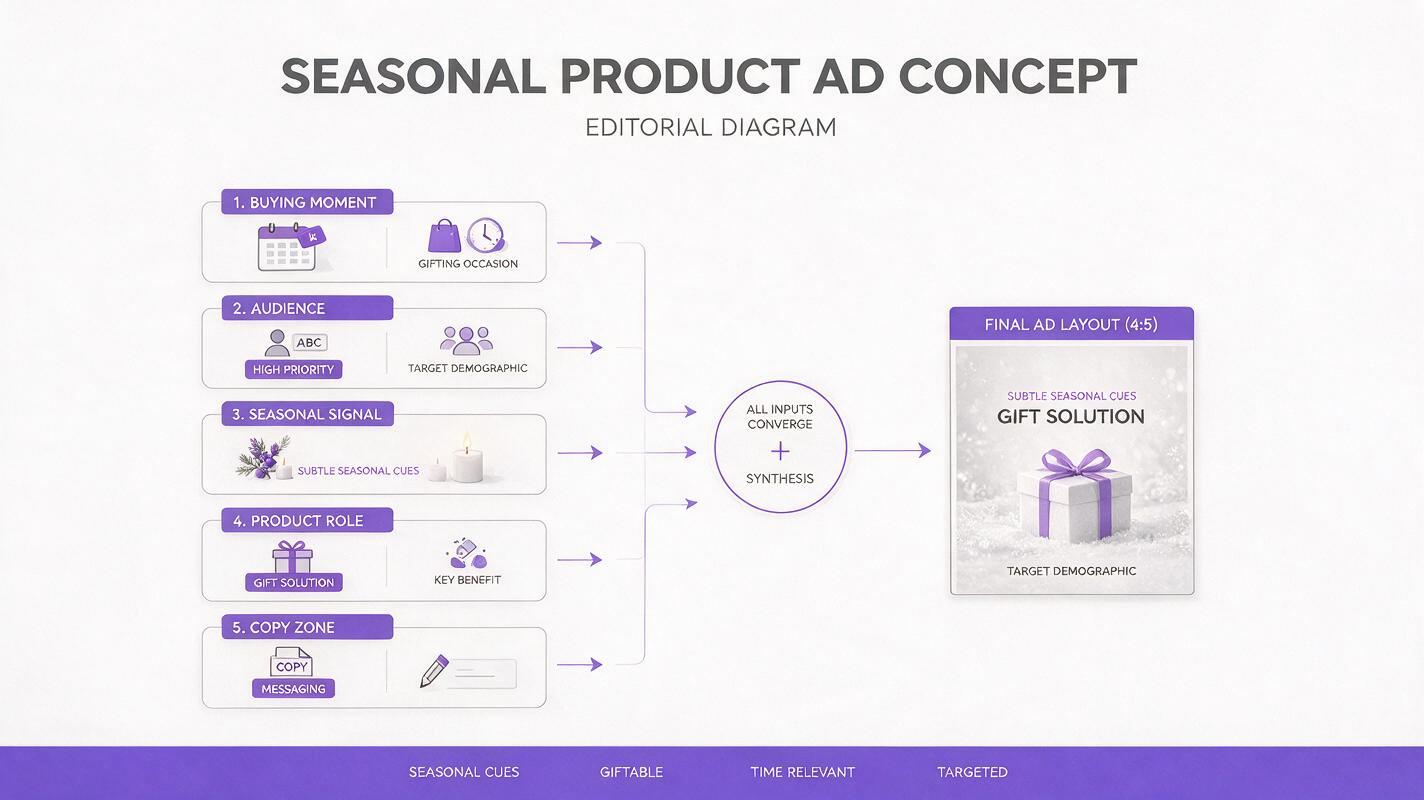
Prompts for six campaign moods
Each prompt below isolates a different emotional angle. Replace bracketed details with your product, audience and brand palette, then attach an approved product reference.
Quiet premium gifting
Create a vertical 4:5 premium advertising photograph using the uploaded [product] as the exact product reference. Place it on a refined stone console beside partially folded natural wrapping paper and a single fabric ribbon. Suggest an intimate winter evening through warm side light and a softly blurred window, not through snowflakes or ornaments. Keep the product fully visible, accurately scaled and facing the camera at the same angle as the reference. Reserve the upper-left third as clean negative space. Palette: warm ivory, charcoal and muted [brand color]. No text, no hands covering the product, no extra packaging and no gold glitter.Last-minute convenience
Create a 9:16 paid social image about solving a last-minute gift need. Preserve the uploaded [product] exactly. Show the product ready beside a coat, keys and a simple blank gift bag near an apartment doorway, as if the buyer is about to leave for a gathering. Use crisp evening light, realistic proportions and an energetic but organized composition. Keep the lower third clear for an offer overlay. Avoid clocks, panic expressions, holiday typography, snow and excessive red or green decoration.Seasonal self-reward
Create a square lifestyle ad presenting the uploaded [product] as a personal year-end reward. Show a calm home setting after a busy day, with the product in active use by [audience description]. Suggest the season through soft knit texture, low afternoon sunlight and a warm drink in the background. The product must remain the sharp focal point with unchanged shape, color and visible details. Leave quiet space on the right for copy. No gift box, no tree, no festive text and no additional product variants.Hosting and shared moments
Create a horizontal landing-page hero featuring the uploaded [product] during preparation for a small seasonal gathering. Show only the hands and natural actions needed to establish the setting, with realistic food, tableware or room details appropriate to the product. Use warm practical lighting and subtle [brand color] accents. Position the product in the right third and preserve the left half as low-detail headline space. Keep the scene contemporary and attainable. Do not use staged cheering, confetti, floating objects or oversized decorations.Fresh-start campaign
Create a clean 4:5 advertising image for a post-holiday reset campaign. Use the uploaded [product] as the exact visual reference. Place it in a bright, organized morning environment associated with [desired habit or outcome]. Use cool natural light, restrained materials and one subtle sign of a new routine, such as a prepared notebook, packed gym bag or tidy workspace. Leave the upper third clear for copy. Avoid fireworks, calendars with readable dates, motivational text and unrealistic perfection.Warm-weather holiday campaign
Create a vertical seasonal ad for customers experiencing the holidays in warm weather. Preserve the uploaded [product] exactly and place it in a relaxed outdoor gathering with sunlit natural materials, light fabrics and restrained festive color accents. Make the atmosphere celebratory without snow, fireplaces, winter clothing or northern-hemisphere imagery. Keep the product prominent in the lower center and reserve the upper-left area for campaign copy. Use realistic midday light softened by shade. No text or invented branding.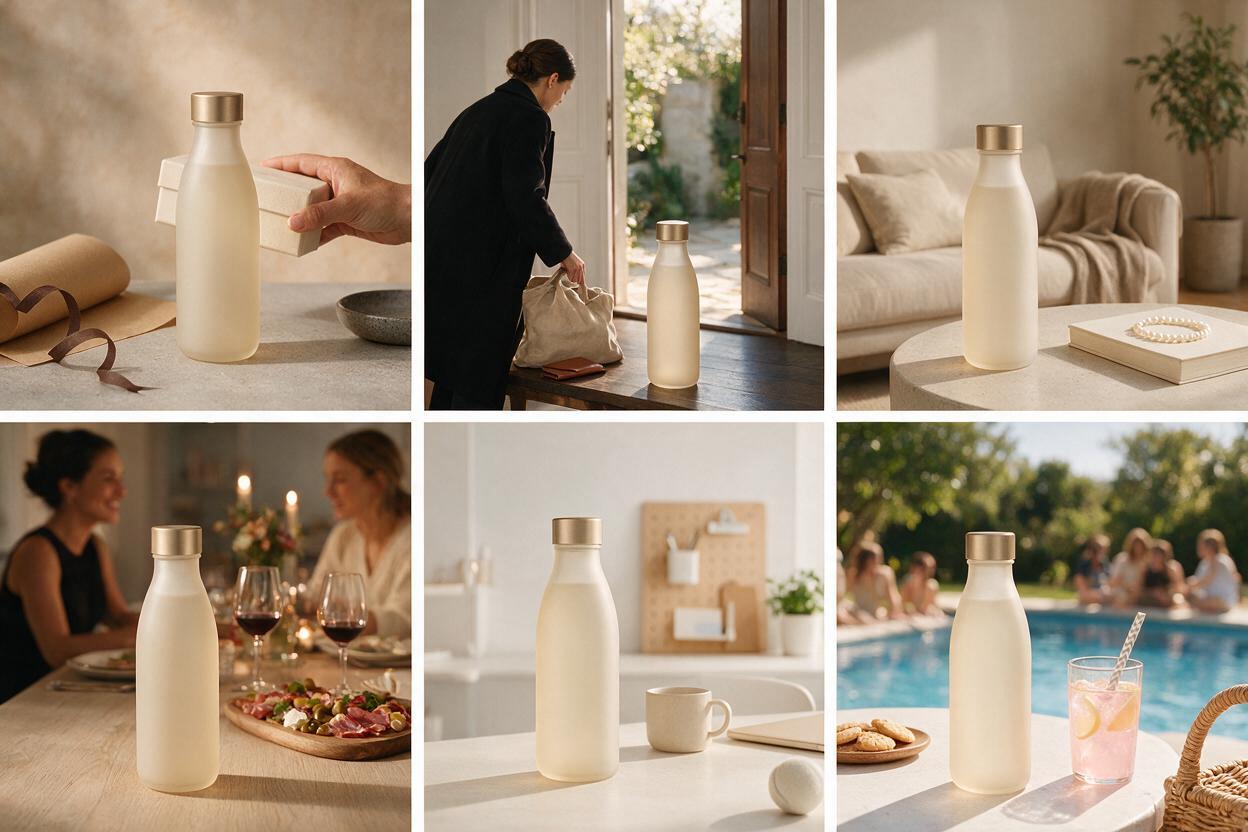
Protect the product before polishing the atmosphere
A compelling scene is unusable if the product changes between outputs. Compare every candidate against the approved reference before evaluating mood or aesthetics.
| Inspection area | Acceptable result | Reject when |
|---|---|---|
| Shape and proportions | Silhouette and dimensions match the reference | The package becomes wider, taller or structurally different |
| Color | Product and brand colors remain consistent | Seasonal lighting changes the core product color |
| Label and logo area | Placement and major visual blocks are preserved | Letters, symbols or label geometry are invented |
| Product count | Only the requested quantity appears | Duplicate products or accessories are introduced |
| Physical interaction | Hands, surfaces and shadows look plausible | Fingers merge into packaging or the product floats |
| Copy space | The intended zone has low detail and usable contrast | Props, faces or bright highlights compete with the headline |
Generate the image without promotional text whenever exact wording matters. Add the approved headline, price, terms and call to action in your design tool afterward. This keeps campaign claims editable and prevents an otherwise strong image from being rejected because of malformed typography.
Turn one concept into a clean creative test
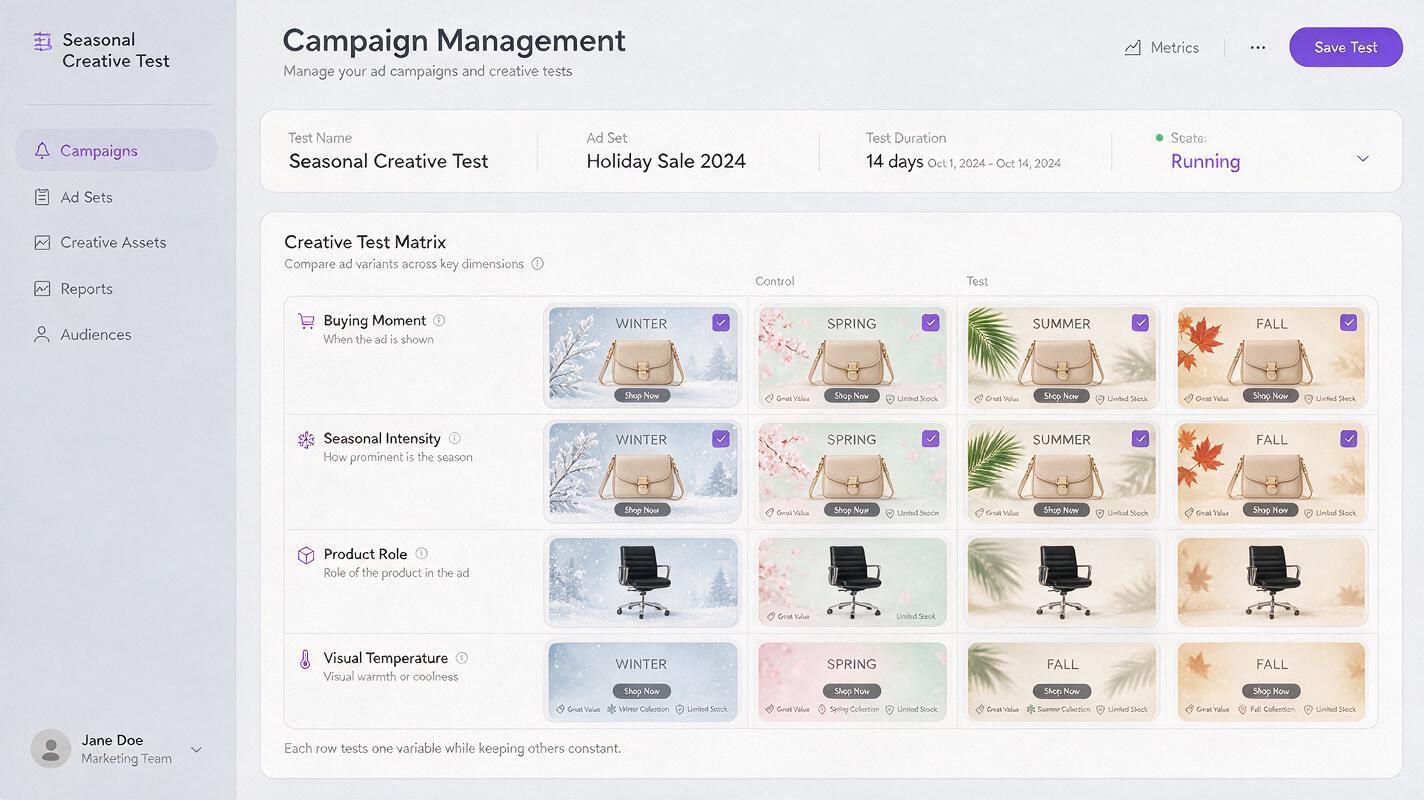
Do not generate six completely different seasonal ads and call the result an A/B test. Choose one baseline composition, then alter one meaningful variable at a time.
| Test | Keep fixed | Change | Question answered |
|---|---|---|---|
| Buying moment | Product, layout, palette, offer | Gifting versus self-reward context | Which motivation attracts the audience? |
| Seasonal intensity | Scene, product position, copy | Subtle versus obvious seasonal cues | How much seasonal signaling is useful? |
| Product role | Audience, setting, message | Packshot hero versus product in use | Does clarity or demonstration perform better? |
| Visual temperature | Composition, product, headline | Warm evening versus bright morning light | Which mood supports the offer? |
For a controlled variant, repeat the baseline prompt and append a narrow instruction:
Keep the product, camera angle, crop, background layout, copy space and overall color balance unchanged. Alter only the seasonal intensity: replace the visible ribbon and wrapping paper with one subtle warm-light cue. Do not redesign or reposition any other element.Name files by the variable rather than by subjective labels. For example, use gifting_subtle_v1 and gifting_explicit_v1 instead of good_ad and better_ad. A simple naming convention makes it easier to connect platform results to the creative decision that produced them.
Adapt the concept across placements without cropping blindly
Create a dedicated composition for each major aspect ratio instead of cutting every placement from one master image. The product may need to move, but its scale, lighting and visual identity should remain consistent.
- 1:1 feed: use a centered or balanced composition with compact copy space.
- 4:5 feed: prioritize product visibility and leave headline room above or beside it.
- 9:16 stories and reels: protect interface-safe areas and avoid placing essential details at the extreme top or bottom.
- Horizontal hero: separate the product and headline zones so the page remains readable on wider screens.
A reference-led ai image generator is most useful here when you explicitly describe what may be recomposed and what must remain fixed. Review each placement independently; a clean square result does not guarantee a usable vertical version.
Final checklist
- The concept reflects a specific buying moment, not just a named holiday.
- Seasonal cues support the product instead of overwhelming it.
- The approved product shape, color and quantity remain intact.
- No generated promotional text or invented logo is present.
- Every placement includes deliberate, low-detail copy space.
- Test variants change one strategic variable at a time.
- The creative works for the audience’s actual climate and cultural context.
- Final claims, prices and offer terms have been manually verified.
Attach one approved product image, choose the campaign mood that matches your audience, and try these models for free to create a controlled first batch.
Keywords
holiday ad creative prompts, AI marketing creative, seasonal campaign creative, AI advertising images, Nano Banana Pro, creative testing, performance ad creative