Imagen Prompts for Comic Expression Sheets Without Face Drift
Build a comic expression sheet in Imagen without letting the character’s face, hairstyle, or costume drift between emotions. This guide provides a reference-first workflow, reusable prompts, intensity controls, and practical checks for production-ready webtoon and manga expressions.
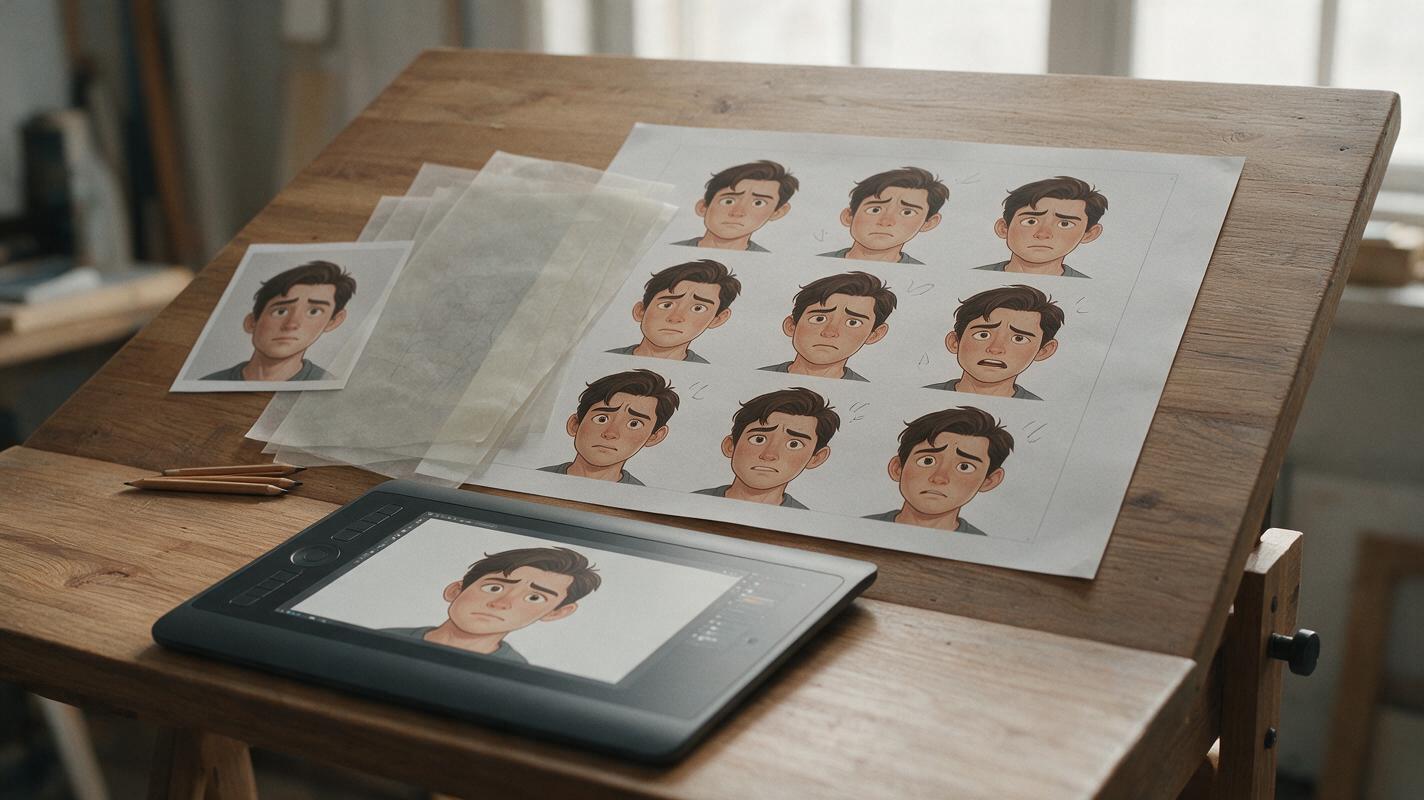
Table of contents
Build expressions without redesigning the character
An expression sheet fails when every emotion looks like a different actor. The happy face gains a smaller nose, the angry face acquires thicker eyebrows, and the shocked face changes the character’s age entirely. For comic artists, that is not useful variation—it is identity drift.
A more reliable approach is to treat emotion as a controlled edit applied to a fixed character design. Use Imagen through ai image generator to establish a neutral identity anchor, generate expressions as separate portraits, and assemble only the approved results into a production sheet.
The goal is not maximum emotional intensity. The goal is the widest usable acting range that still looks like one character.
Define what must remain unchanged
Before writing emotion prompts, separate the character into identity constants and expression variables. This prevents a broad prompt such as “make her furious” from changing every facial feature at once.
| Identity constants | Expression variables |
|---|---|
| Face shape and jaw width | Eyebrow angle and tension |
| Eye shape, spacing, and iris design | Eyelid openness and gaze direction |
| Nose length and construction | Mouth shape and lip compression |
| Hairline, bangs, and side locks | Cheek lift, blush, or stress marks |
| Age, proportions, and identifying marks | Head tilt and subtle neck tension |
| Costume collar and accessories | Emotion-specific symbolic effects |
Write the constants once and reuse them without paraphrasing. If one prompt says “narrow almond eyes” and another says “large expressive eyes,” the model receives conflicting character definitions. Even attractive outputs may no longer match.
A compact identity block might read:
CHARACTER IDENTITY:
young adult woman, long oval face, narrow almond-shaped dark brown eyes,
straight medium-width eyebrows, short rounded nose, small mouth,
black bob haircut ending at the jaw, blunt bangs split above the right eye,
one small beauty mark beneath the left eye, white high collar with black trim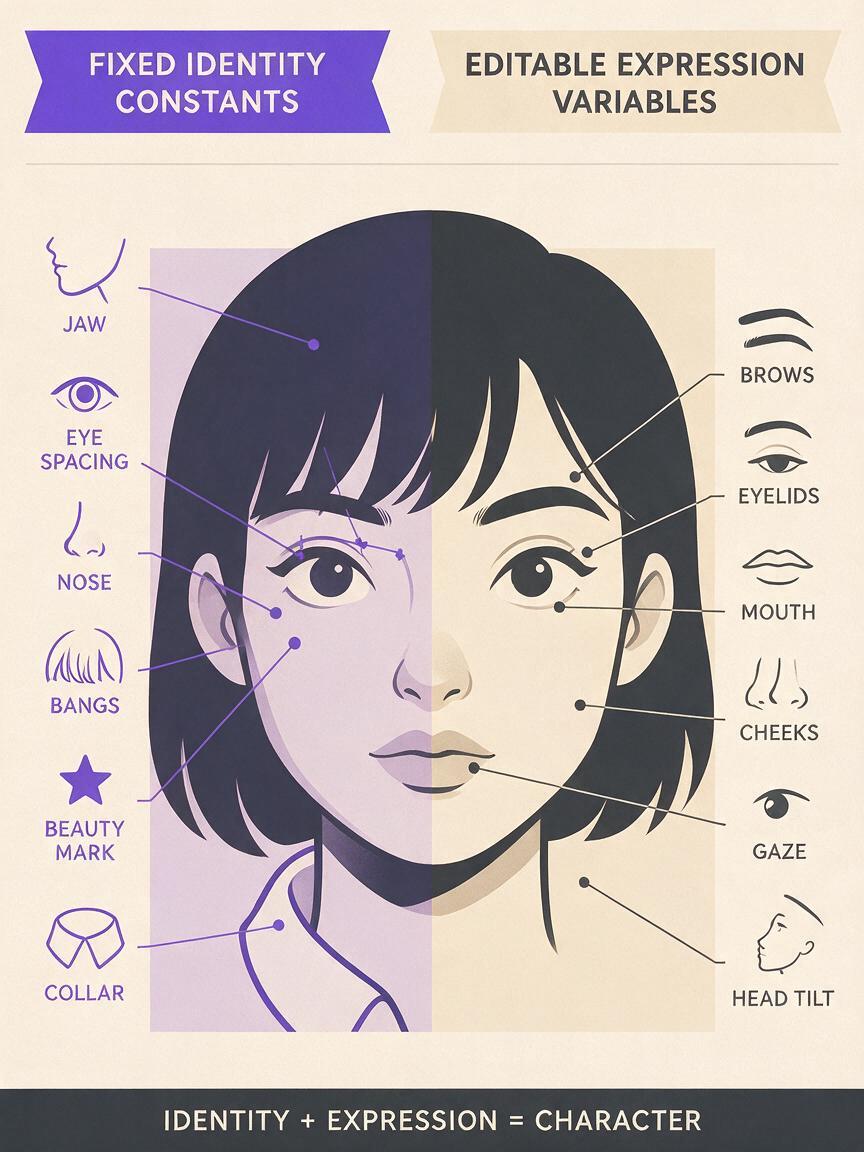
Create a neutral identity anchor
Start with a neutral front-facing portrait rather than asking for a complete twelve-expression grid immediately. A grid prompt creates many simultaneous decisions, increasing the chance that eye spacing, hair strands, earrings, or facial proportions will vary from cell to cell.
Generate a clean anchor with an uncomplicated camera setup:
Character reference portrait for a serialized webtoon.
[CHARACTER IDENTITY]
Front-facing head-and-shoulders view, eye-level camera, neutral relaxed expression,
closed mouth, symmetrical resting eyebrows, direct gaze, even soft lighting,
clean controlled ink lines, flat cel colors, plain light background.
Preserve natural facial proportions and clearly show the hairline, ears, jaw, and collar.
No text, no speech balloon, no decorative frame.
Select the result with the clearest construction, not simply the prettiest rendering. The anchor should make it easy to judge the jaw contour, distance between the eyes, bang placement, and relationship between the head and neck.
Keep the crop, image ratio, and rendering language stable for every later generation. Changing from a front portrait to an extreme three-quarter close-up while also changing the emotion makes drift harder to diagnose.
Use an expression formula instead of emotion labels
Words such as “sad,” “angry,” and “excited” are open to interpretation. Describe the visible mechanics of the performance instead: brows, eyelids, pupils, mouth, cheeks, jaw, gaze, and head angle.
This modular prompt formula works across most comic acting needs:
[CHARACTER IDENTITY]
Same character as the supplied neutral reference, same face geometry, age,
hairstyle, beauty mark, collar, line weight, and color palette.

EXPRESSION: [emotion and intensity]
BROWS: [shape and tension]
EYES: [openness, focus, gaze]
MOUTH: [shape, openness, tension]
CHEEKS/JAW: [muscle or symbolic cue]
POSE: [small head movement only]

Front-facing head-and-shoulders portrait, eye-level camera, plain background.
Change only the facial performance. Do not redesign facial features or costume.
For restrained suspicion, replace the variables with specific cues:
EXPRESSION: restrained suspicion, low intensity
BROWS: inner ends slightly lowered, left eyebrow subtly raised
EYES: upper eyelids mildly lowered, gaze shifted to the right
MOUTH: closed, one corner compressed by a few millimeters
CHEEKS/JAW: jaw relaxed, no smile crease
POSE: chin lowered slightly, head otherwise still
This is more controllable than “suspicious anime girl,” which may invite a dramatic pose, genre stereotype, costume change, or exaggerated smirk.
Build three intensity levels for recurring emotions
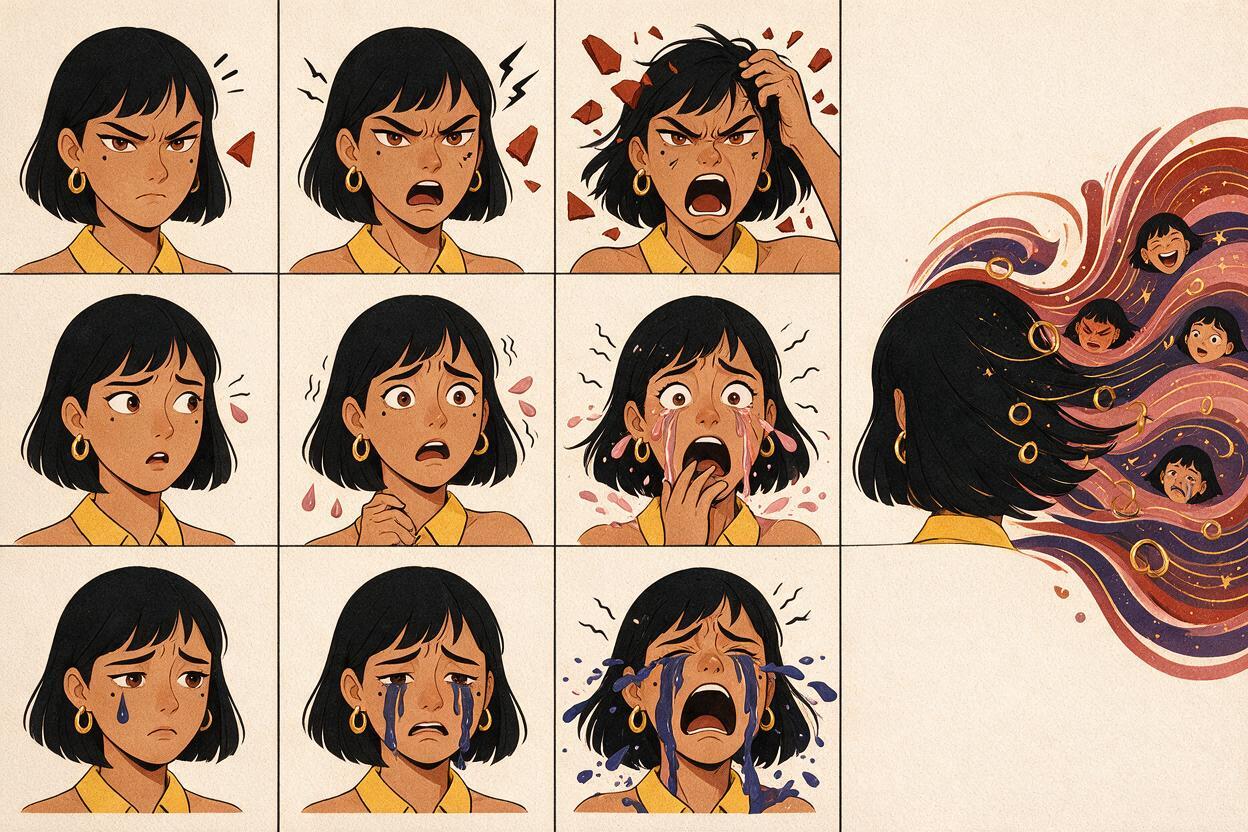
Serialized comics rarely need only one version of an emotion. A character may be mildly irritated in one panel, openly angry in the next, and furious at the climax. Create an acting ladder with low, medium, and high intensity while preserving the same emotional family.
| Emotion | Low intensity | Medium intensity | High intensity |
|---|---|---|---|
| Anger | Compressed lips, slight brow tension | Lowered brows, fixed stare, tight jaw | Open shout, visible teeth, strong facial tension |
| Fear | Alert eyes, shallow brow lift | Raised inner brows, parted lips | Wide eyes, dropped jaw, rigid neck |
| Joy | Small closed-mouth smile | Lifted cheeks, open smile | Eyes compressed, broad laugh |
| Sadness | Downturned gaze, softened mouth | Raised inner brows, trembling lips | Tears, compressed chin, disrupted breathing |
Generate the lowest intensity first. If the character already drifts during a subtle eyebrow or mouth change, a more extreme expression will magnify the problem. Approve the low-intensity portrait before increasing the performance.
Generate each expression as a separate portrait
A finished sheet may contain nine or twelve faces, but those faces do not need to be generated on one canvas. Separate generation gives each emotion enough resolution and makes failed cells replaceable without sacrificing successful ones.
Use the same neutral reference and identity block for each portrait. Change only the expression section. A practical starter set for webtoon production is:
- Neutral: the canonical resting face.
- Warm smile: friendly dialogue and reassurance.
- Polite smile: social masking without genuine warmth.
- Concern: subtle tension before overt fear.
- Suspicion: narrowed attention and asymmetry.
- Irritation: low-level conflict that can escalate.
- Anger: direct confrontation.
- Shock: a readable reaction without comic distortion.
- Grief: emotional collapse while retaining identity.
Assemble the approved portraits manually afterward. Labeling and layout are editorial tasks; keeping them separate from facial generation avoids malformed text and gives you control over the final sheet.
Protect asymmetrical identity markers
Beauty marks, scars, parted bangs, earrings, and colored eye details are useful identity anchors, but they are also prone to mirroring. Describe the side from the character’s perspective and reinforce it with a visible reference.
For example:
Keep the beauty mark beneath the character's left eye.
Keep the bang opening above the character's right eye.
Do not mirror, relocate, duplicate, or remove either identifying feature.
If the result still flips a marker, do not regenerate the entire sheet. Correct that portrait locally or choose another candidate with accurate orientation. A tiny continuity repair is safer than asking the model to reinterpret every approved expression.
Test the face inside real comic panels
A clean reference sheet can hide weaknesses that appear at storytelling scale. Before approving the design, place several expressions into panel-like crops:
- A small head in a medium dialogue shot
- A three-quarter reaction close-up
- A downward-looking face with partially hidden eyes
- A profile with an open mouth
- A shadowed face in a dramatic panel
The expression must remain readable after reduction. Tiny mouth-corner changes may vanish on a phone screen, while detailed stress lines can turn into visual noise. Preserve the character’s established anatomy, but simplify cues when the panel is small.
Also test pairs of expressions that could become visually identical. Concern should not look exactly like sadness; irritation should not become full anger; a social smile should differ from genuine joy. The expression sheet is valuable only when each option communicates a distinct story beat.
Diagnose drift before generating more faces
| Visible failure | Likely cause | Useful correction |
|---|---|---|
| Eyes become larger in emotional faces | The emotion label is overpowering the identity description | Restate eye shape and describe eyelid movement instead of “very expressive eyes” |
| Character looks younger when smiling | Cheek and jaw geometry changed together | Lock jaw width, chin length, and age while allowing cheek lift |
| Hair changes around the forehead | The prompt does not define bang construction | Specify the number, direction, and opening of major bang sections |
| Anger resembles a different art style | Intensity introduced heavier rendering | Repeat the line-weight, shading, and color instructions |
| High-intensity faces become distorted | Too many variables changed simultaneously | Reduce the head movement and generate mouth, eyes, and brows with moderate limits |
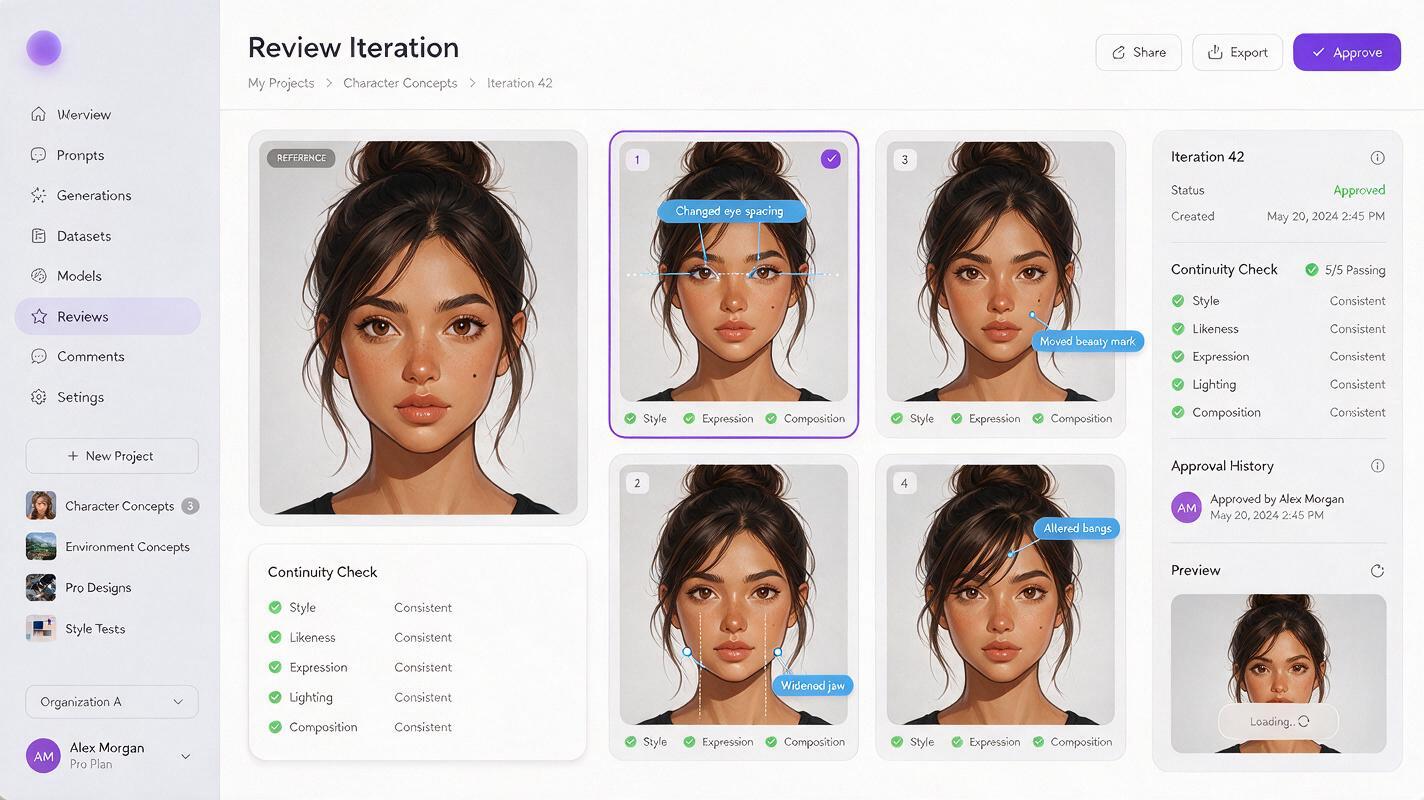
Compare every candidate directly with the neutral anchor. Check feature spacing before judging emotional appeal. A powerful expression with the wrong skull shape should not enter the final character library.
Format the final sheet for production
Arrange approved portraits in a consistent grid with the same head size and eye line. Place the neutral face first, then group related emotional families so artists can scan the sheet quickly during production.
- Use short labels such as anger 1, anger 2, and anger 3.
- Record which expressions are approved for close-ups and which remain readable in small panels.
- Include a profile mouth reference if the character frequently speaks in profile.
- Save the original neutral anchor beside the assembled sheet.
- Keep generated portraits on separate layers for easy replacement.
The result should function as an acting guide, not merely a gallery of attractive faces. If you are ready to test the identity block and expression formula, create your own version with a neutral portrait and one low-intensity emotion before expanding the set.
Final checklist
- The same identity description appears in every prompt.
- Face shape, eye spacing, nose, age, and hairstyle match the neutral anchor.
- Each expression is described through visible facial mechanics.
- Low, medium, and high intensity remain recognizably related.
- Asymmetrical marks stay on the correct side.
- Expressions remain readable at actual webtoon or comic-panel size.
- Only approved portraits are assembled into the final sheet.
Keywords
Imagen prompts, comic expression sheet, consistent character AI, character sheet AI, webtoon expressions, comic prompts, face consistency