Kling Prompts for Comic Reaction Shots Without Overacting
Animate subtle comic reaction shots with Kling while preserving facial identity, line art, and the original panel composition. These practical prompt patterns separate emotional beats from physical motion so a glance, blink, or held breath does not become an exaggerated performance.
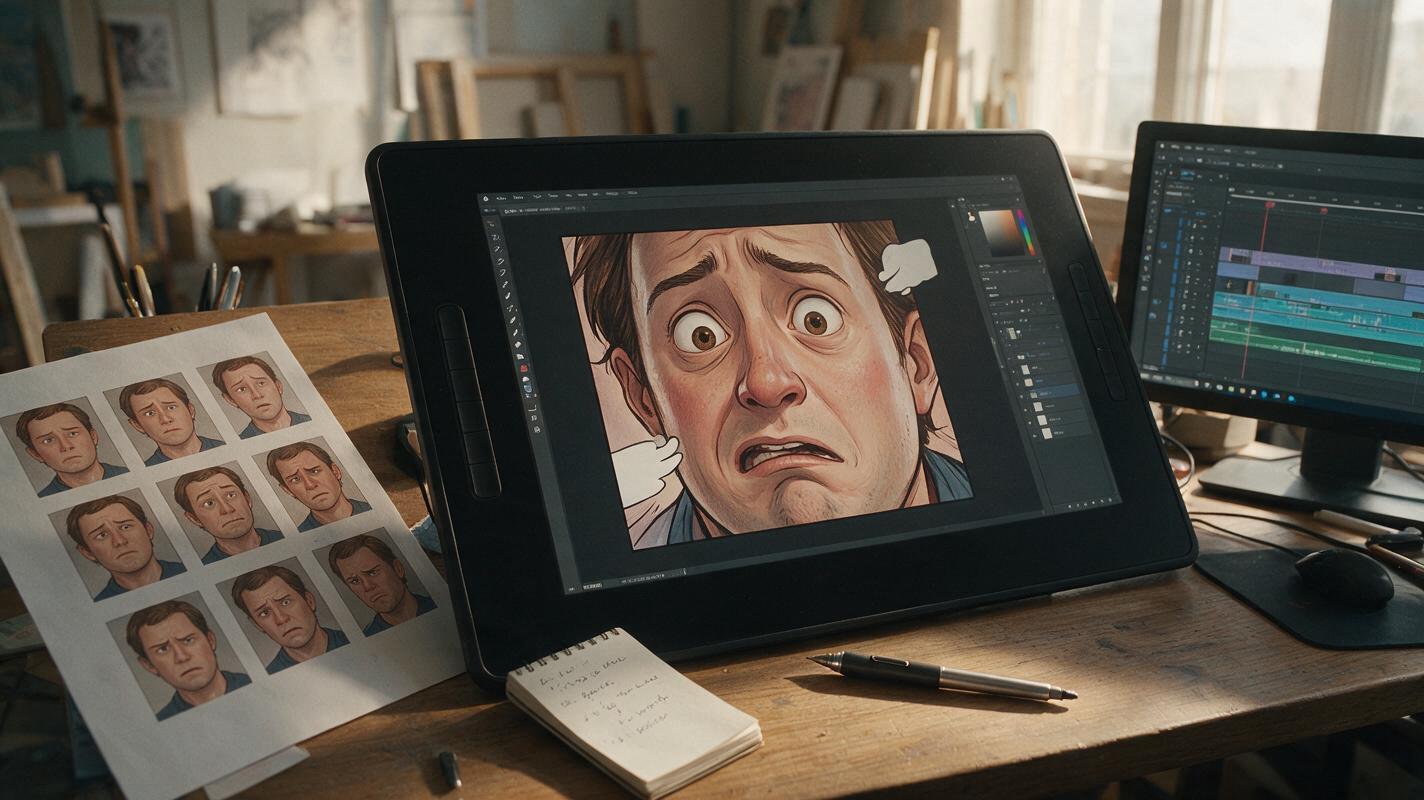
Table of contents
Make reaction shots move without changing the drawing
A successful animated reaction panel may contain only a glance, a delayed blink, and one controlled breath. The challenge is stopping the video model from adding a head turn, talking mouth, dramatic camera push, or unrelated body movement.
Kling is useful for this task when the finished panel provides the visual identity and the prompt describes a small sequence of observable actions. Instead of asking for an emotion such as “she looks suspicious,” direct the exact change the reader should notice—and state what must remain still.
A reaction shot is not empty time. It shows the moment a character receives information, suppresses an impulse, or changes their interpretation of the scene.
Choose a panel built for restrained facial acting
Begin with a clean, readable image rather than expecting motion to rescue an ambiguous drawing. Medium close-ups and close-ups usually provide enough facial area for subtle acting, but they still need a stable neck, clear eyes, and an unobstructed silhouette.
A strong source panel should have:
- One dominant emotional question: What has the character just heard, seen, or realized?
- Visible pupils and eyelids: Tiny gaze changes depend on clearly drawn eye geometry.
- A settled mouth shape: Closed or slightly parted lips are safer than an ambiguous speaking pose.
- Room around moving features: Hair, glasses, hands, and speech balloons should not crowd the eyes or mouth.
- Final color and line work: Animate the approved panel, not an unfinished sketch with unresolved contours.
Remove lettering before animation whenever possible. Generate the motion from the clean artwork, then restore speech bubbles and captions in the edit. This prevents letters from wobbling as the face changes.
Separate the held pose from the emotional change
The most reliable reaction prompts distinguish between the character’s base pose and the new information entering the performance. The base pose remains locked; only selected features communicate the beat.
| Story beat | Useful visible change | Motion to avoid |
|---|---|---|
| Recognition | Eyes refocus, pupils settle, breath pauses | Sudden backward recoil |
| Suspicion | Gaze shifts sideways, one eyelid narrows | Large head turn or angry grimace |
| Contained fear | Shallow inhale, shoulders become slightly tense | Screaming, shaking, or widened mouth |
| Relief | Held breath releases, brow tension softens | Broad smile or full-body slump |
| Decision | Eyes steady, chin firms by a minimal amount | Dramatic pose change |
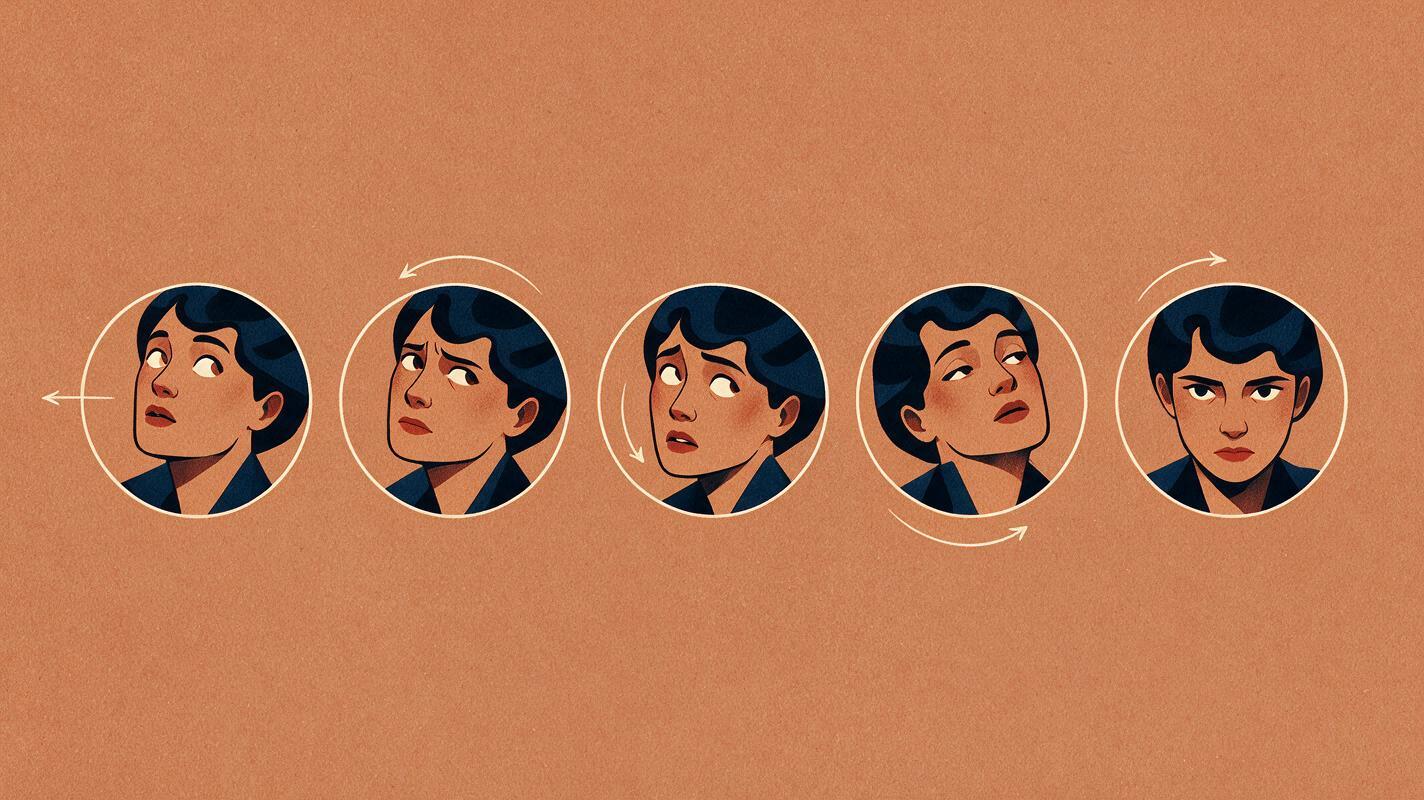
Write the emotional beat for yourself first, but translate it into anatomy for the generation prompt. “She becomes worried” is open-ended. “Her gaze drops slightly, her lower eyelids tighten, and she holds her breath” gives the model a visible performance to construct.
Write Kling prompts around visible beats
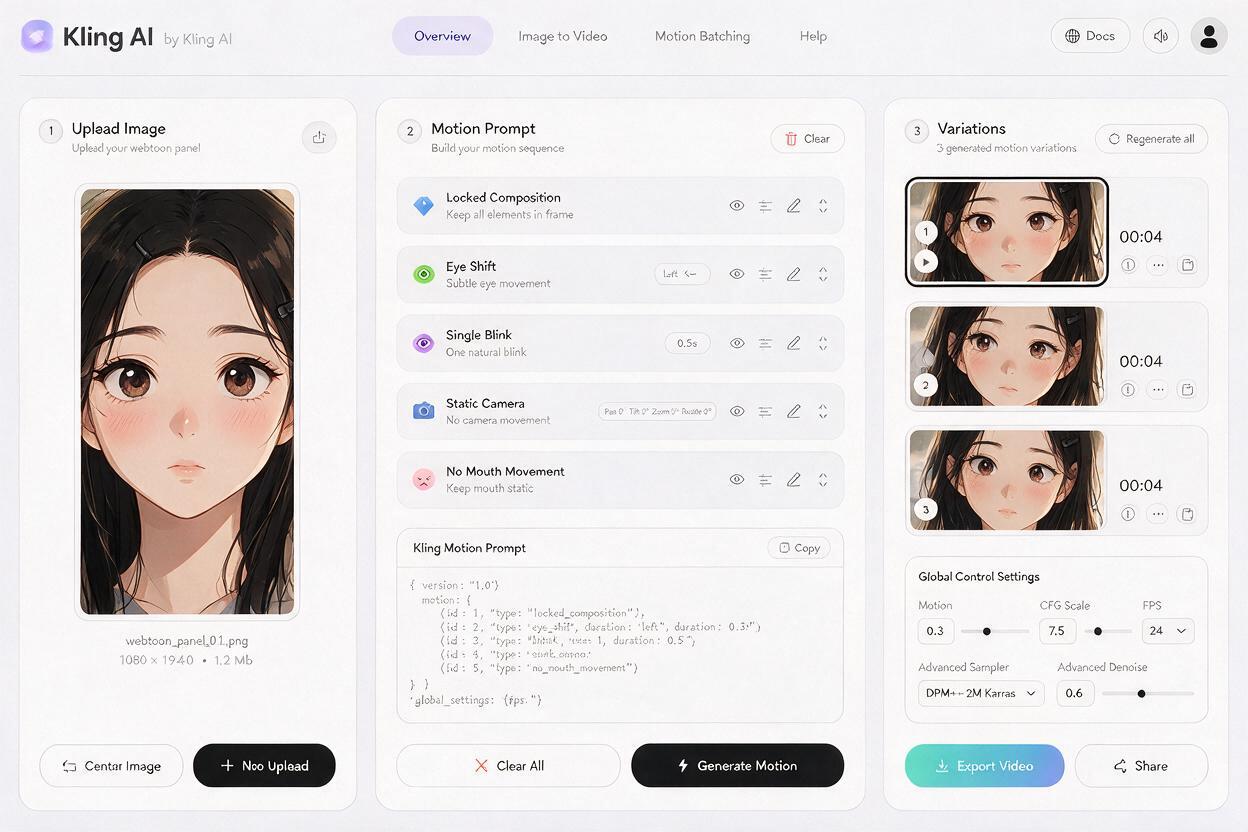
For image to video, use a compact prompt with four parts: the held composition, the primary action, one secondary reaction, and a stability instruction. Avoid long lists of emotional adjectives because they can produce conflicting facial signals.
Locked illustrated close-up, preserve the original face, costume, line art, colors, and framing. [PRIMARY FACIAL ACTION]. [SECONDARY PHYSICAL RESPONSE]. The head and torso remain nearly still. Static camera, no speaking, no new objects, no style change.Suspicion after hearing an excuse
Locked comic close-up, preserve the original facial proportions, hairstyle, ink lines, flat colors, and composition. Her eyes shift slowly toward the off-screen speaker, then one upper eyelid lowers slightly. Her lips remain closed and her head stays still. Minimal breathing only, static camera, no dialogue, no zoom, no expression exaggeration.Quiet recognition
Hold the illustrated medium close-up exactly as drawn. The character looks at the object in front of him; his pupils refocus and his breath pauses for a moment. A single natural blink follows, then his gaze settles. Preserve face identity, clothing, background, line weight, and camera position. No mouth movement and no head turn.Relief that remains emotionally guarded
Preserve the original webtoon panel and character design. The character releases a small held breath; tension around the eyebrows softens slightly while the mouth keeps its original shape. Shoulders lower by an almost imperceptible amount. Static framing, restrained motion, no smile, no talking, no hair redesign, no added camera movement.A decision made in silence
Locked manga-style reaction shot. The character completes one slow blink, opens her eyes with a steady forward gaze, and firms her chin very slightly. Keep the pose, face shape, costume details, screentones, and background unchanged. No dramatic movement, no lip motion, no camera push, no flickering line art.Generate separate takes for different readings instead of combining suspicion, fear, recognition, and resolve in one clip. A clean two-second idea is more useful in an edit than a longer clip containing several uncontrolled emotions.
Control motion by region
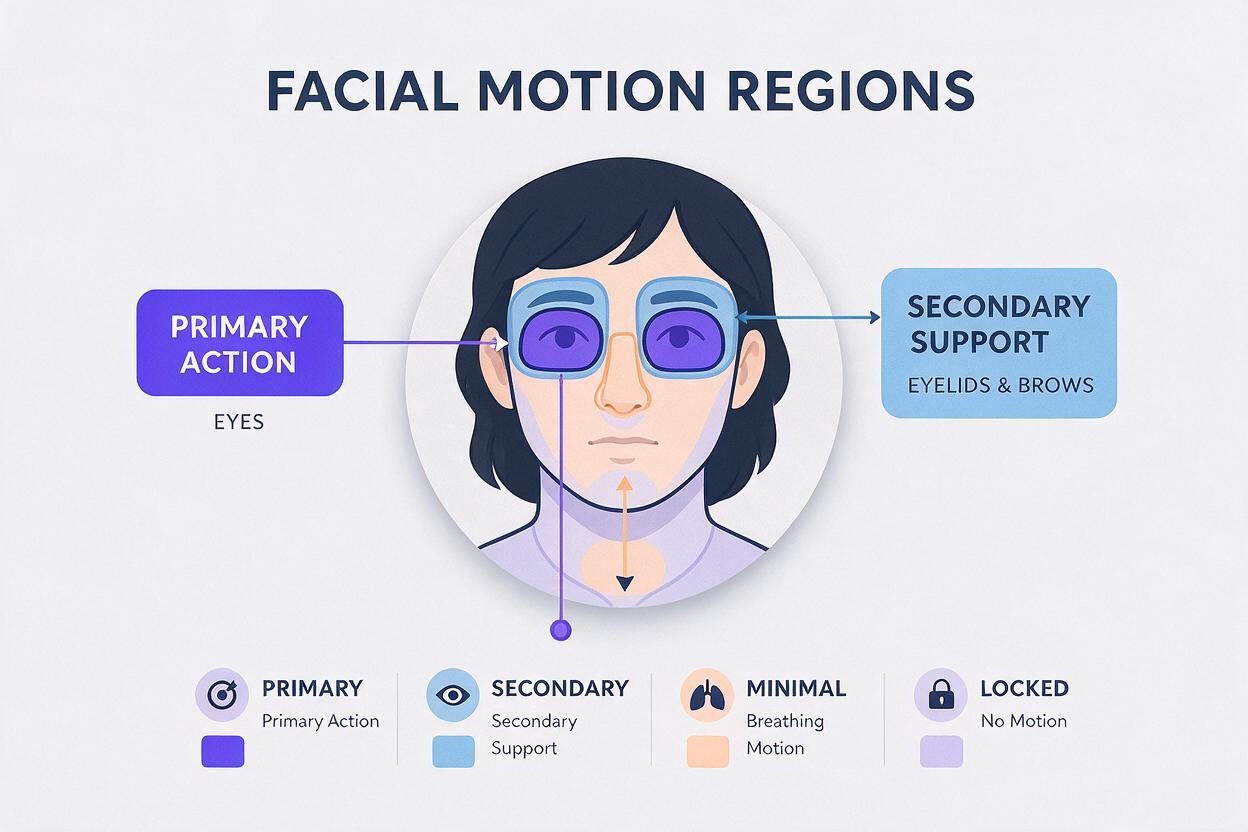
Facial animation often fails because every movable region responds at once. Treat the panel as a hierarchy. The eyes carry the main beat, the eyelids or brow support it, and the breath provides barely visible life. Everything else protects continuity.
- Eyes: Describe direction and timing, such as “gaze shifts left, pauses, then settles.”
- Eyelids: Request one blink or a slight narrowing, not constant blinking.
- Brows: Use softening or tightening rather than large lifts.
- Mouth: Explicitly keep it closed when no dialogue occurs.
- Head: Lock it unless a small tilt is essential to the story beat.
- Hair and clothing: Keep them still indoors; unnecessary flutter competes with the acting.
- Camera: Use static framing for most reaction inserts.
If a gesture must accompany the face, choose one low-risk movement. Fingers tightening around a cup may support anxiety, but combining that with eye movement, a head turn, wind-blown hair, and a camera push gives the model too many opportunities to alter the drawing.
Use short takes and edit around the best moment
Generate reaction shots as short performance units. The usable moment may be the half-second before a blink, the pause after a gaze shift, or the instant the character’s breathing stops. Trim around that moment instead of keeping the entire generated clip.
A practical editorial rhythm is:
- Hold the original pose long enough for the audience to read it.
- Introduce one visible emotional change.
- Let the changed expression settle briefly.
- Cut to the speaker, object, memory, or next panel before drift appears.
This approach preserves the timing language of comics. The motion enriches the panel without replacing the reader’s interpretive pause. For a vertical webtoon teaser, the reaction can also sit between two faster shots as a deliberate moment of stillness.
Fix common reaction-shot failures
The character starts talking
Add “mouth remains closed,” “no dialogue,” and “no lip movement.” If the source drawing has parted lips, consider repairing the mouth into a clearly held shape before animation.
The expression becomes theatrical
Replace abstract intensity words with small anatomical actions. Remove terms such as “shocked,” “terrified,” or “extremely suspicious” unless exaggeration is intentional. Add “restrained performance” and name the features that remain unchanged.
The head turns when only the eyes should move
State the contrast directly: “eyes move toward screen right while the head, chin, neck, and shoulders remain fixed.” A gaze target also helps: “toward the off-screen doorway” is clearer than “looks aside.”
The face changes after blinking
Ask for one natural blink and reinforce identity preservation immediately afterward. If blinking repeatedly causes drift, omit it and build the beat from a pupil shift, eyelid tension, or breath change instead.
The camera zooms into the face
Use “static camera,” “fixed crop,” and “preserve the exact framing.” Do not mix these instructions with cinematic phrases such as “dramatic reveal,” which may imply camera movement.
Line art flickers around the eyes
Reduce the number and amplitude of requested facial changes. Eye motion, brow movement, blinking, and a smile can force too much redrawing into a small region. Generate each performance as a separate variation and retain the simplest successful take.
Judge the acting at comic-reading size
Review the clip once at full resolution for drawing defects and again at its intended display size. Subtle animation that feels almost invisible on a large monitor may read perfectly in a mobile webtoon teaser. Conversely, a tiny eye distortion can become conspicuous when the reaction shot fills a vertical screen.
Compare every take with the source panel and ask:
- Does the character still look like the same person?
- Can the emotional change be understood without dialogue?
- Is there one clear performance focus?
- Does any motion pull attention away from the eyes?
- Would the shot still work if it ended half a second earlier?
Keep the least animated take that communicates the intended thought. When you are ready to compare variations, try these models for free using the same source panel and beat-focused prompt.
Final checklist
- Use a clean close-up or medium close-up with readable eyes.
- Remove speech bubbles before generating motion.
- Define the internal story beat before writing the prompt.
- Translate emotion into visible facial and breathing changes.
- Assign one primary action and one subtle supporting response.
- Lock the head, torso, camera, costume, and drawing style.
- Generate short variations rather than one complicated performance.
- Restore typography after selecting and trimming the best take.
- Review the final animation at its real publishing size.
Keywords
kling prompts, comic reaction shots, comic panel animation, illustration to video, subtle facial animation, webtoon animation, character acting