Kling Prompts for Realistic Skincare Before-After Videos (No Fake Airbrushed Skin)
This article shares reusable Kling prompt templates for creating realistic skincare before-after ad videos that preserve face identity, natural skin texture, and believable transformation pacing. It includes a 4-part prompt framework, troubleshooting fixes for common AI rendering issues like over-airbrushed skin and face drift, and reference image prep tips for brand consistency. Beauty marketers and content creators can use these prompts to generate high-converting before-after video assets without costly multi-week photoshoots.
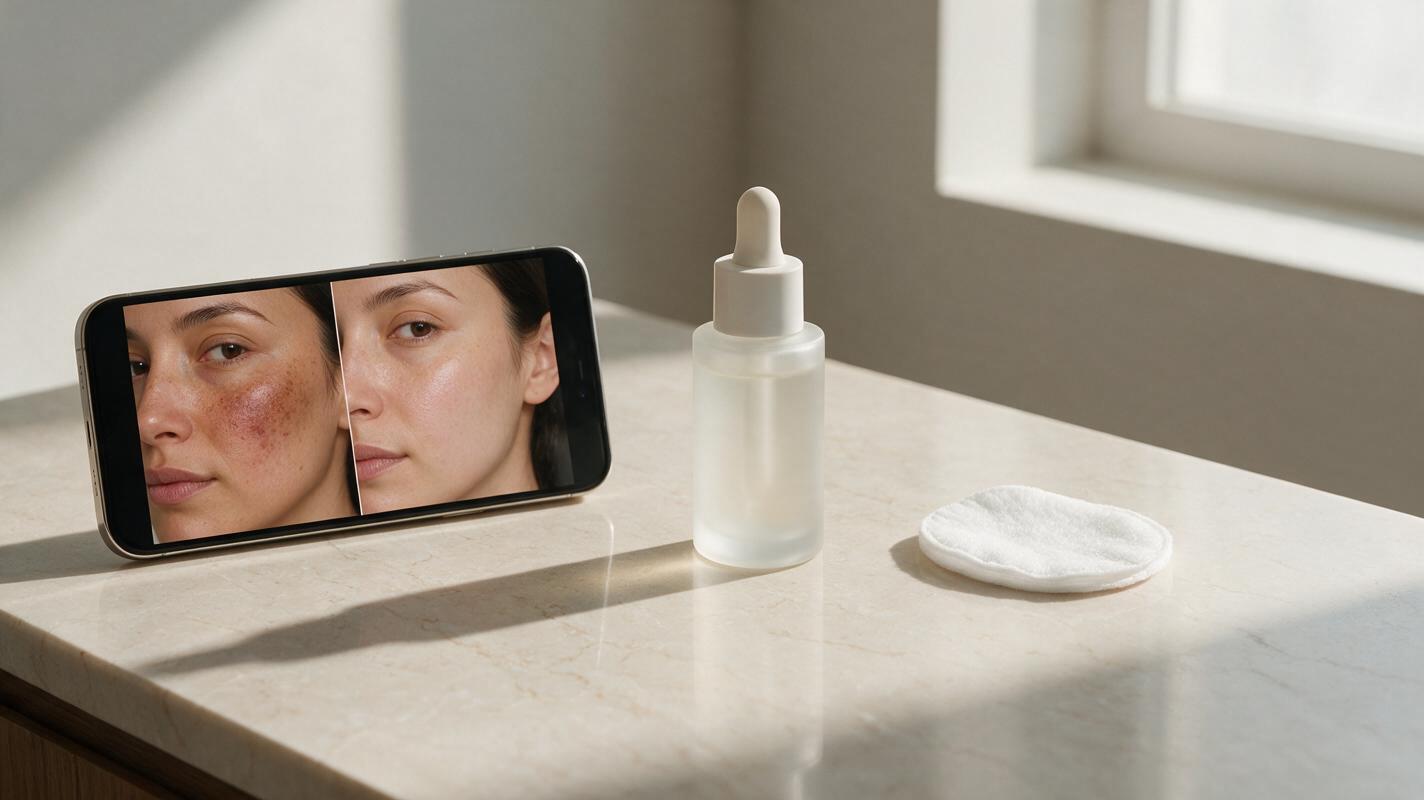
Table of contents
The challenge with believable skincare before-after video content
Skincare before-after videos are some of the highest-converting assets for beauty brands, but creating authentic, believable content often requires costly multi-week photoshoots with real participants. Many AI tools produce fake-looking results: over-airbrushed plastic skin, inconsistent face identity, jarring jump cuts, and unrealistic transformations that consumers immediately spot as inauthentic. Kling is a powerful ai video generator built for consistent character rendering and smooth, natural motion, making it an ideal tool for creating before-after content that feels real — if you use the right prompts.
Core Kling prompt framework for natural before-after transformations
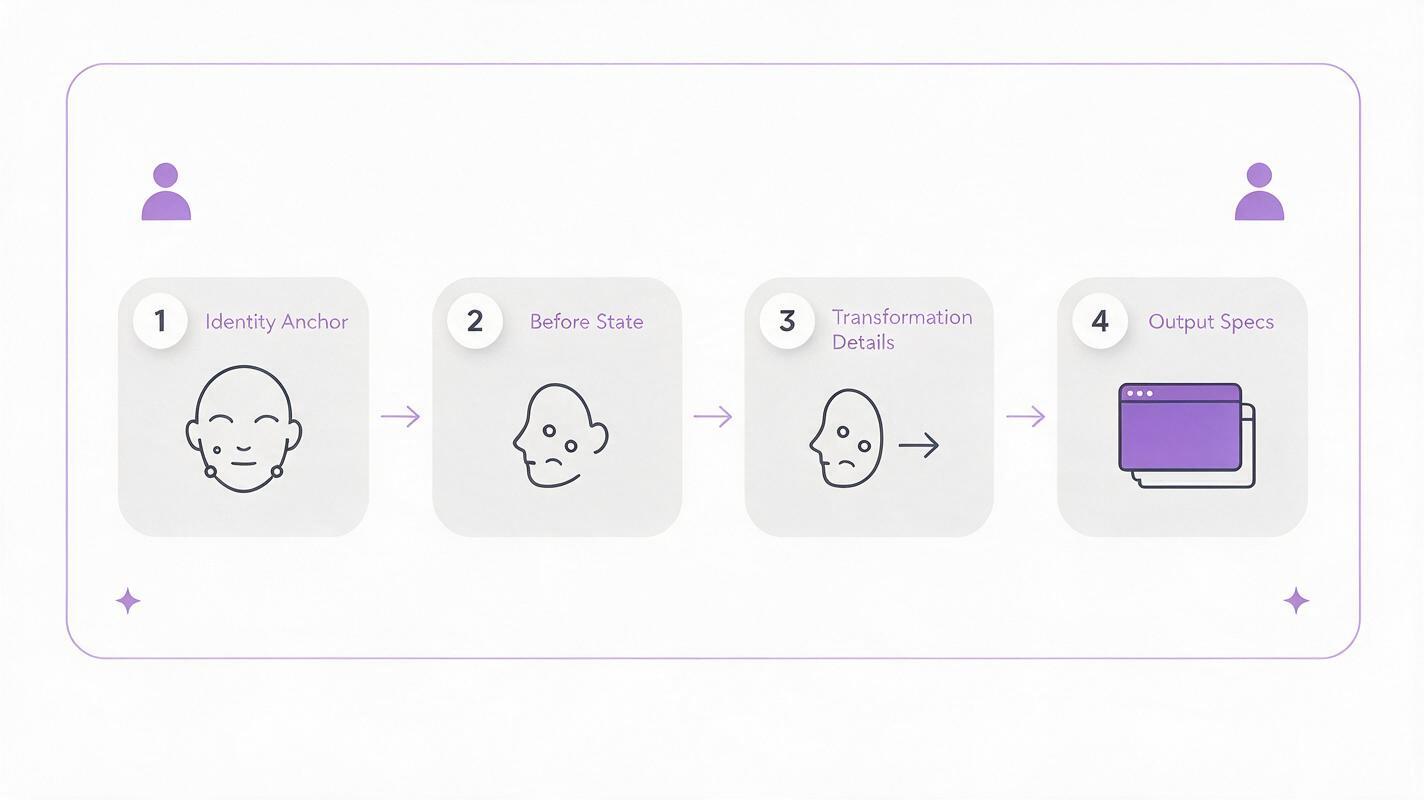
The biggest mistake creators make with AI before-after videos is writing vague prompts that leave too much room for interpretation. A structured, detailed prompt anchors the subject’s identity and defines clear boundaries for the transformation, resulting in far more believable output. The framework below breaks down every critical element to include:
- Identity anchor: Specific details about the subject (age, skin tone, face angle, hair style) to prevent facial drift between before and after frames.
- Before state: Exact skin concerns, texture details, and lighting conditions for the starting frame.
- Transformation details: Pacing, transition style, level of improvement, and texture preservation rules to avoid fake-looking results.
- Output specs: Video duration, aspect ratio, lighting consistency, and campaign style to match your brand’s aesthetic.
Use case-specific Kling prompt templates
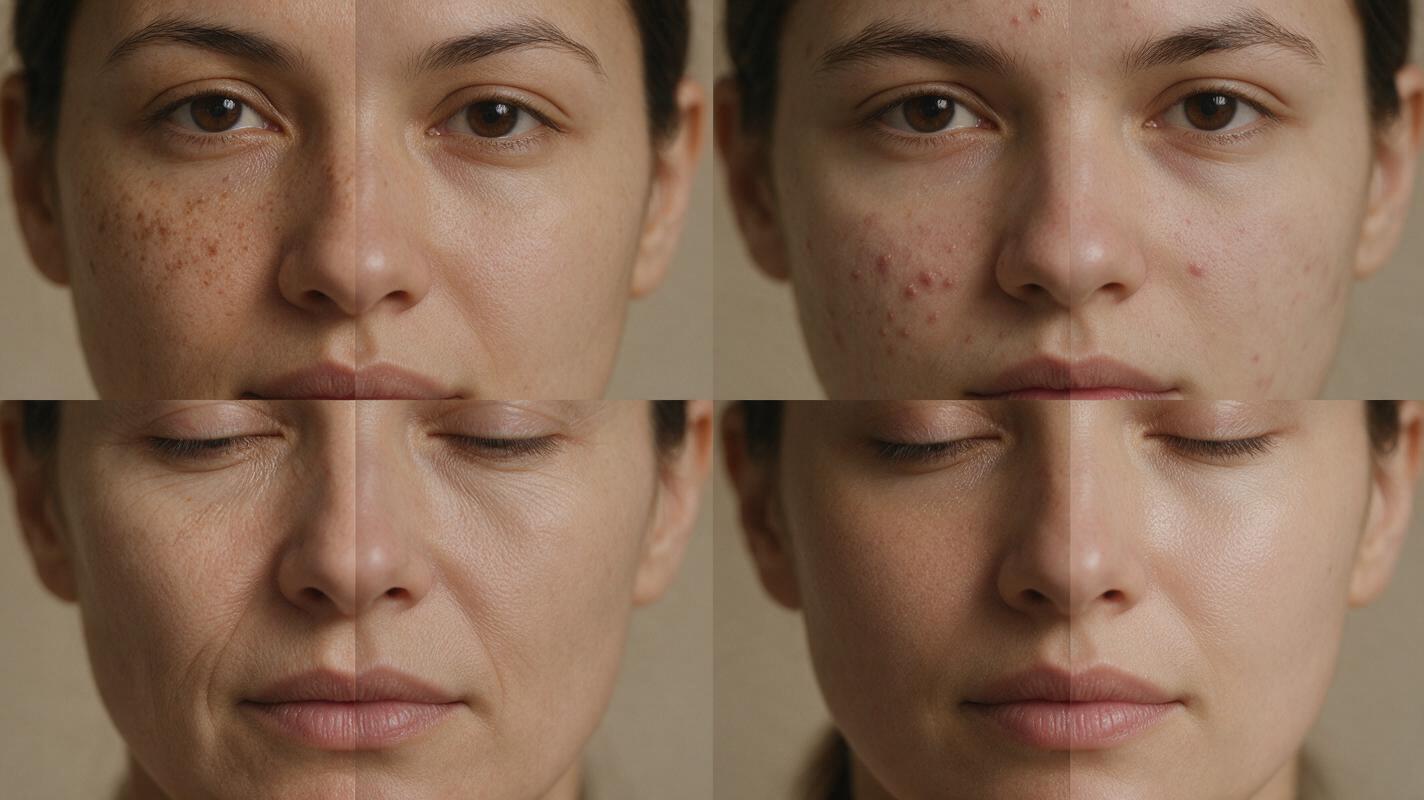
Below are ready-to-use, tested prompt templates for the most common skincare before-after campaign use cases, optimized for popular social media and ad formats. Swap out subject details, skin concern severity, and timing to match your brand’s specific product claims.
Hyperpigmentation correction (15-second vertical TikTok)
15-second vertical TikTok skincare before-after video, front-facing close-up of a 28-year-old woman with medium olive skin, soft neutral studio lighting, consistent white balance. Before state: mild post-inflammatory hyperpigmentation on both cheeks, visible pores, natural skin texture, no makeup. Gradual 3-second cross-dissolve transition: dark spots fade subtly, skin tone evens out, no aggressive smoothing. After state: 70% reduction in hyperpigmentation, natural skin texture preserved, visible pores, subtle glow, no plastic-like finish. No text overlays, no music indicators, realistic 4-week skincare results.test this prompt yourself by uploading a clear reference photo of your subject to lock in facial identity and reduce the risk of drift.
Acne clearing (30-second YouTube Shorts ad)
30-second vertical YouTube Shorts skincare ad, close-up of a 22-year-old man with fair combination skin, soft natural window light, uniform lighting throughout. Before state: mild inflammatory acne on forehead and chin, redness, visible pores, no skincare products on skin. Slow gradual transformation over 8 seconds: pimples reduce in size, redness fades, skin calms down, no sudden changes. After state: significantly reduced acne, faint residual redness, natural skin texture preserved, no over-airbrushing. Realistic 6-week acne treatment results, no text, no filters.Fine line reduction (20-second Instagram Reels)
20-second horizontal Instagram Reels skincare before-after video, 3/4 angle close-up of a 45-year-old woman with dry mature skin, warm golden studio lighting, consistent color temperature. Before state: fine lines around eyes and mouth, dull skin, visible texture, no makeup. Gentle 5-second transition: fine lines soften, skin looks plumper, subtle radiance, no erasure of natural wrinkles. After state: reduced appearance of fine lines, natural skin texture intact, realistic 8-week anti-aging serum results. No product placement, no text overlays, authentic beauty campaign style.Dull skin brightening (10-second TikTok in-feed ad)
10-second vertical TikTok in-feed ad, close-up of a 32-year-old woman with deep brown skin, bright even studio lighting, no color shift. Before state: dull, uneven skin tone, slight ashiness, natural skin texture. Fast but smooth 2-second cross-fade transition: skin brightens, glow returns, even tone, no bleaching effect. After state: radiant, hydrated-looking skin, natural glow, preserved skin texture and undertones, realistic 2-week vitamin C serum results. No text, no logos, clean minimalist aesthetic.Troubleshooting common Kling before-after rendering issues
Even with well-structured prompts, you may run into common rendering quirks that make your before-after video feel fake. Use these targeted fixes to adjust your output without starting from scratch:
- Over-airbrushed, plastic-looking skin: Add "preserve natural skin texture, visible pores, fine peach fuzz, no aggressive smoothing, realistic skin imperfections" to the end of your prompt. Avoid terms like "flawless skin" which trigger over-editing.
- Face identity drift between before and after: Upload 1-2 clear reference photos of the same subject (front-facing, neutral expression, no makeup) as image input. Add "consistent face shape, eye color, hair style, no facial feature changes" to your prompt.
- Inconsistent lighting or color shift: Specify exact lighting conditions (e.g., "soft north-facing studio light, 5500K white balance, warm neutral tone") and add "no color temperature shift between before and after frames, uniform lighting throughout".
- Jarring, jump-cut transitions: Add "gradual 3-second cross-dissolve transition, slow natural fade of skin concerns, no sudden cuts, smooth transformation pacing" to your prompt to create a believable, gradual change.
- Unrealistically perfect results: Specify the timeline of improvement (e.g., "4-week skincare results, subtle improvement, not complete eradication of dark spots") to avoid over-the-top transformations that look fake to consumers.
Reference image prep for brand consistency
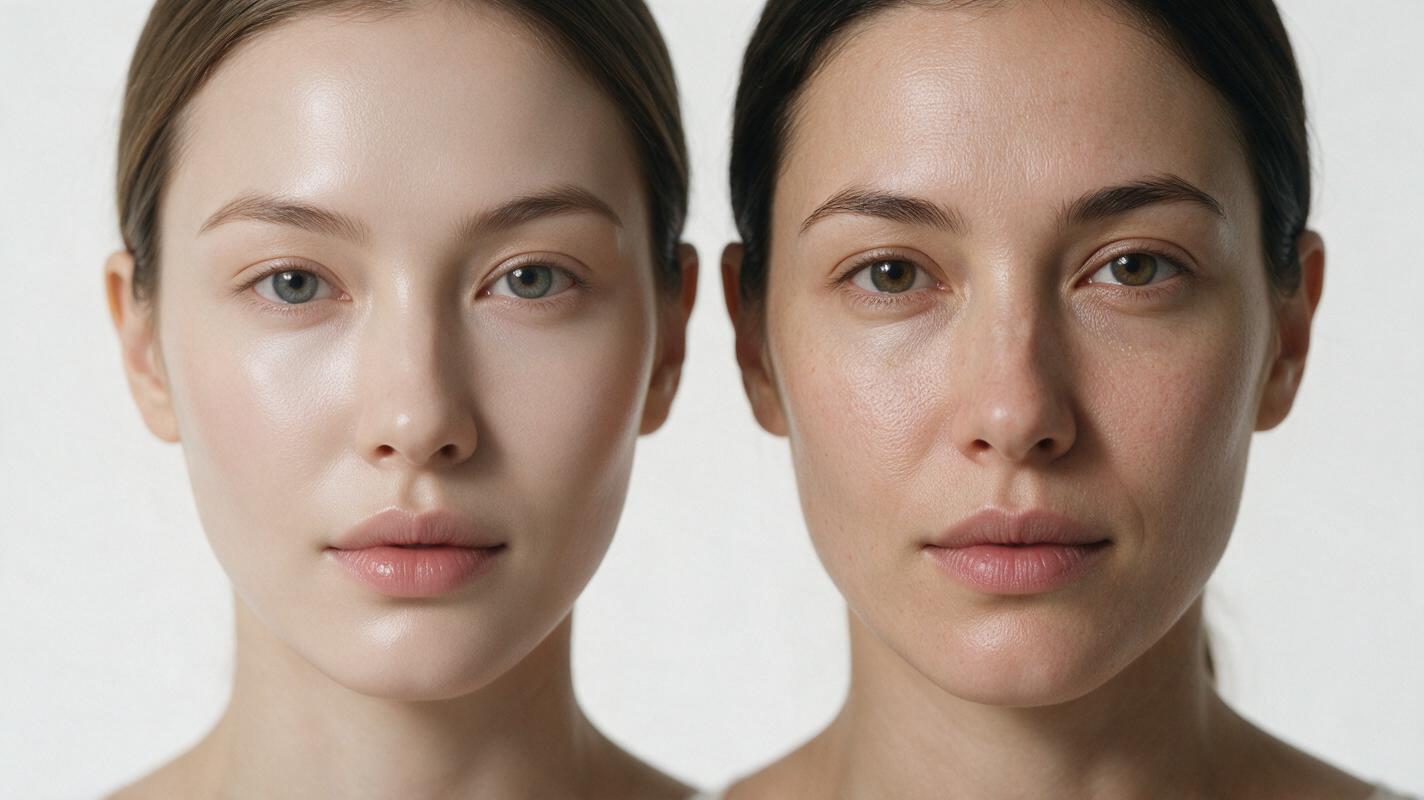
For campaigns that need to match existing brand assets or feature a specific model or ambassador, reference images are critical for consistent, on-brand results. Kling’s image-to-video capability works best with high-quality, well-prepared reference inputs:
- Use high-resolution, well-lit before photos with the subject facing forward, neutral expression, and no makeup or filters.
- If using a brand ambassador, upload 2-3 angles (front, 3/4, side) to help Kling lock in facial identity more reliably.
- Match the lighting description in your prompt to the lighting in your reference photo to avoid color or shadow inconsistencies.
- Avoid cropped or low-quality reference images, as these increase the risk of face drift or distorted features.
Once you have your reference images sorted and your prompt customized, try these models for free to generate your first batch of high-quality before-after video assets.
Final checklist
- Anchor subject identity with clear physical descriptions and reference photos to prevent face drift.
- Define specific, realistic transformation scope (timeline, level of improvement) to avoid fake-looking results.
- Add texture preservation language to your prompt to keep skin looking natural, not airbrushed.
- Specify transition pacing and lighting consistency for a smooth, believable video.
- Match prompt details to your reference image's lighting and angle for brand consistency.
- Test small adjustments to transformation severity to find the right balance between impressive and authentic.
Keywords
kling prompts, skincare before after video, ai beauty ad, realistic skincare video, before after beauty content, cosmetic product video, ai video generator