Luma Prompts for Rack Focus Shots Without Subject Drift
Learn how to prompt controlled rack-focus shots in Luma while keeping composition, subjects, and camera position stable. This practical guide includes reusable prompts, failure fixes, and a review checklist for cinematic previsualization.
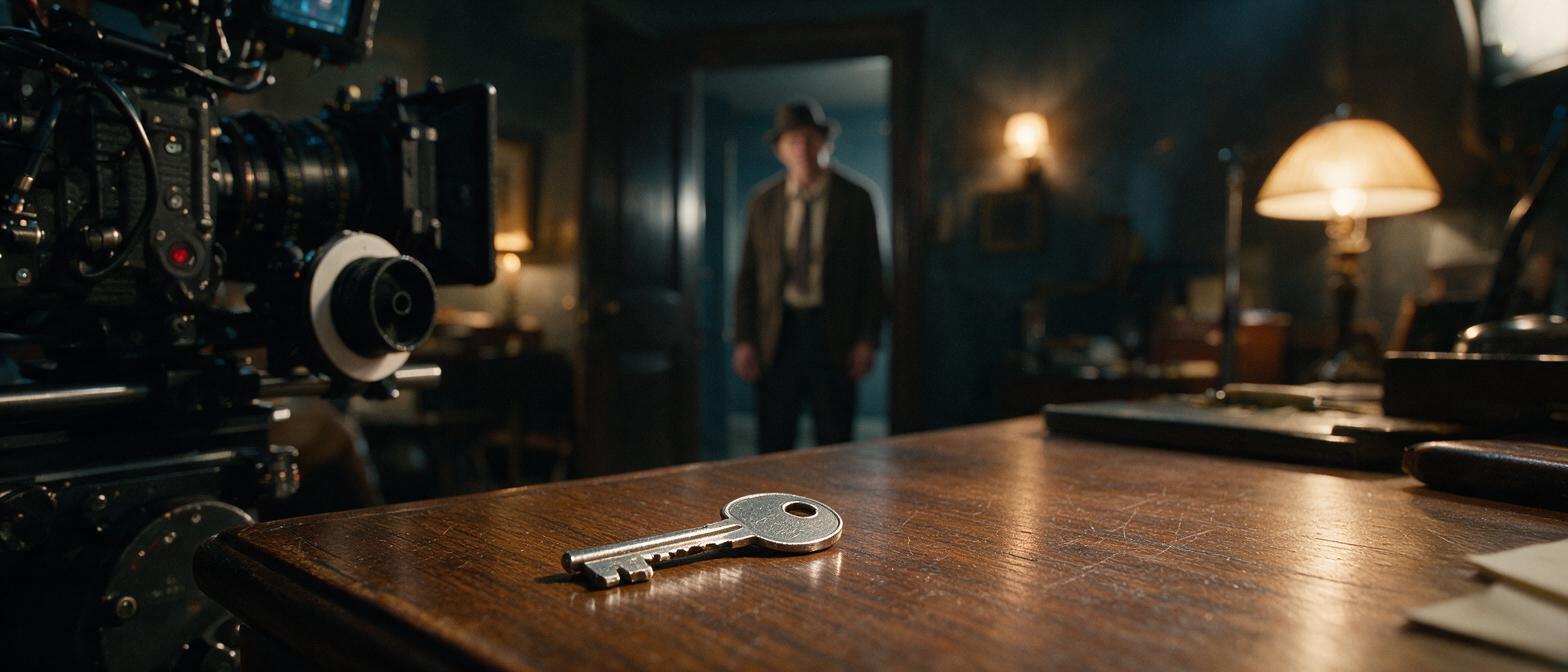
Table of contents
Create a focus pull without accidentally redesigning the shot
A convincing rack focus should redirect attention from one subject to another while everything else remains stable. In AI-generated video, however, a focus change can trigger facial distortion, unwanted camera movement, shifting props, or a complete change in composition. The solution is to describe the shot as two fixed focus states connected by one controlled optical transition.
This guide uses Luma to build rack-focus previsualization from a prepared cinematic frame. The method is especially useful for dialogue reveals, suspense inserts, reaction shots, and visual transitions in which depth of field carries the story.
The central rule: prompt what changes, what remains fixed, and exactly when the audience's attention should move.
Build the shot around two visible focus planes
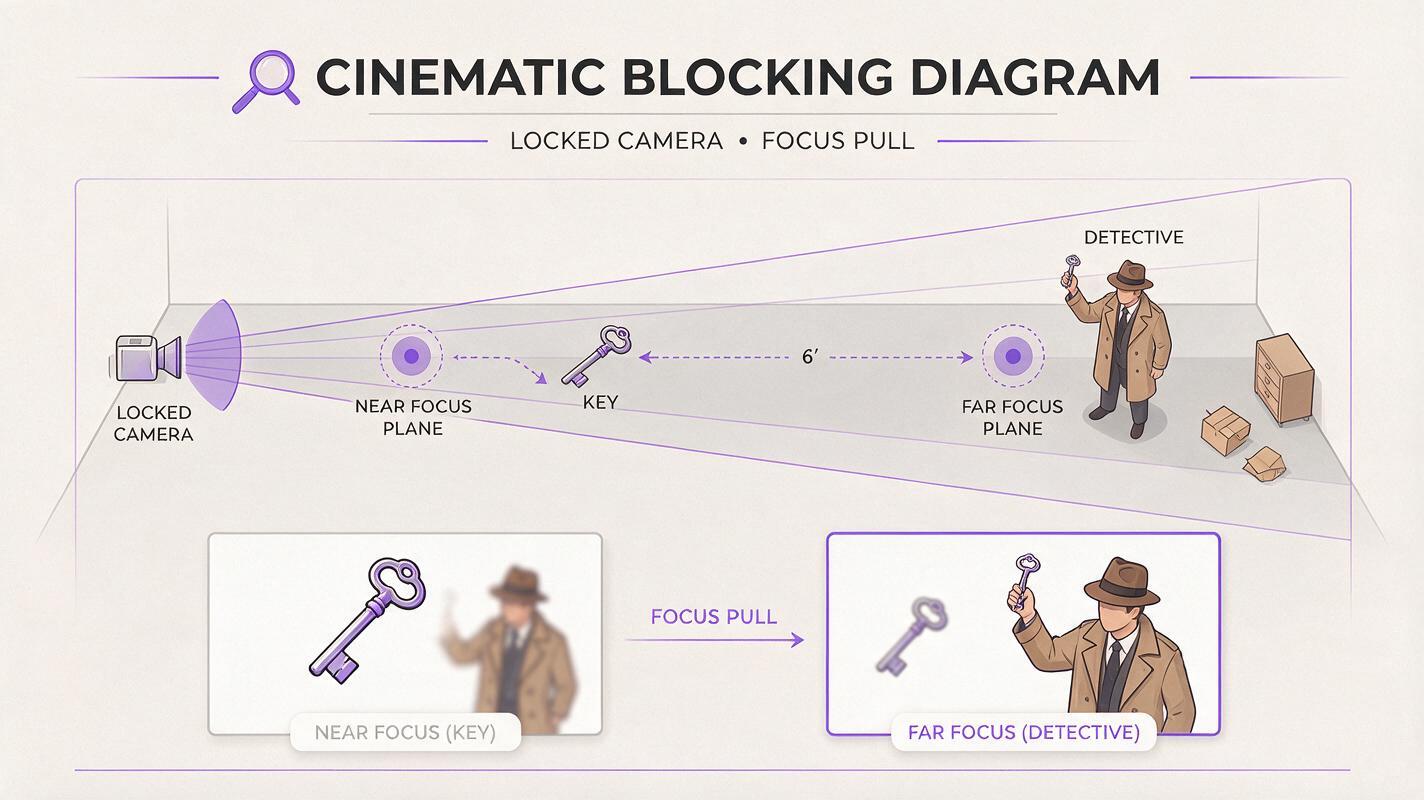
Rack focus works only when the frame contains distinct subjects at different distances from the camera. If both subjects occupy approximately the same focal plane, the generated blur transition may appear weak or arbitrary.
Design the starting frame with three layers:
- Foreground: the initial subject, such as a telephone, weapon, photograph, shoulder, or reflection.
- Midground or background: the destination subject, usually a face, doorway, vehicle, or significant story detail.
- Separation cues: practical lights, perspective lines, haze, or overlapping objects that make depth readable.
A useful test is to reduce the frame to a thumbnail. You should still be able to identify the near subject and the distant subject immediately. Avoid clutter that creates several competing focus targets.
| Shot design | Likely result | Better choice |
|---|---|---|
| Two faces standing side by side | Weak or inconsistent focus change | Place one face close to the lens and the other deeper in the set |
| Foreground object partly cropped | Clear near-plane target | Keep its defining shape visible |
| Busy background with many faces | Focus may jump unpredictably | Use one dominant background subject |
| Strong handheld pose | Model may prioritize camera motion | Begin with a locked composition |
Choose a stable reference frame
For this effect, a reference-driven image to video workflow offers more control than asking for the entire composition from text. Begin with a frame that already contains the intended lens height, blocking, lighting, and foreground-to-background relationship.
The reference image should be sharp enough to preserve identity but visually communicate the initial focus state. If the foreground object begins sharp, render the background with moderate optical softness rather than extreme blur. Luma still needs enough information to understand the destination subject.
Use these preparation guidelines:
- Keep the camera position plausible and clearly defined.
- Avoid motion blur in the source image.
- Give the destination face or object a recognizable silhouette.
- Keep hands away from faces when possible.
- Use restrained depth of field instead of dissolving the background into featureless color.
- Remove text, watermarks, and tiny repeating patterns that may deform during generation.
If you generate the source frame with an AI image generator, describe both depth planes in the still-image prompt. State which plane is initially sharp and preserve enough detail in the soft plane for the later transition.
Cinematic interior at night, locked medium close-up composition. In the extreme foreground, a scratched silver key lies on a dark wooden table, sharply focused. Six feet behind it, a worried detective stands in a doorway, recognizable but softly out of focus. Strong visual separation between foreground and background, practical tungsten lamp, restrained teal shadows, realistic 50mm lens perspective, shallow but not extreme depth of field, natural film grain.Write the prompt as a timed optical event
Do not fill the motion prompt with story exposition. Describe the visible operation: the starting focus target, the transition, the ending focus target, and the elements that must not move.
A reliable structure is:
Locked-off [shot size] with [foreground subject] close to the lens and [background subject] deeper in the scene. Begin with focus sharply on [first target] while [second target] is softly blurred. After a brief hold, perform one smooth, deliberate rack focus from [first target] to [second target]. End with [second target] crisp and [first target] naturally defocused. Camera position, framing, lighting, subjects, props, and facial features remain unchanged. No camera movement and no subject movement.The hold at the beginning matters because it establishes the first visual idea before attention moves. The ending state should also settle long enough to be readable. Phrases such as smooth, deliberate, and one continuous focus pull generally communicate the intended rhythm better than vague instructions such as “cinematic focus.”
Describe a single optical action. Adding a dolly, head turn, hand gesture, light flicker, and focus pull to the same short clip gives the model too many competing changes.
Luma prompt templates for common story beats
Reveal the character behind an important object
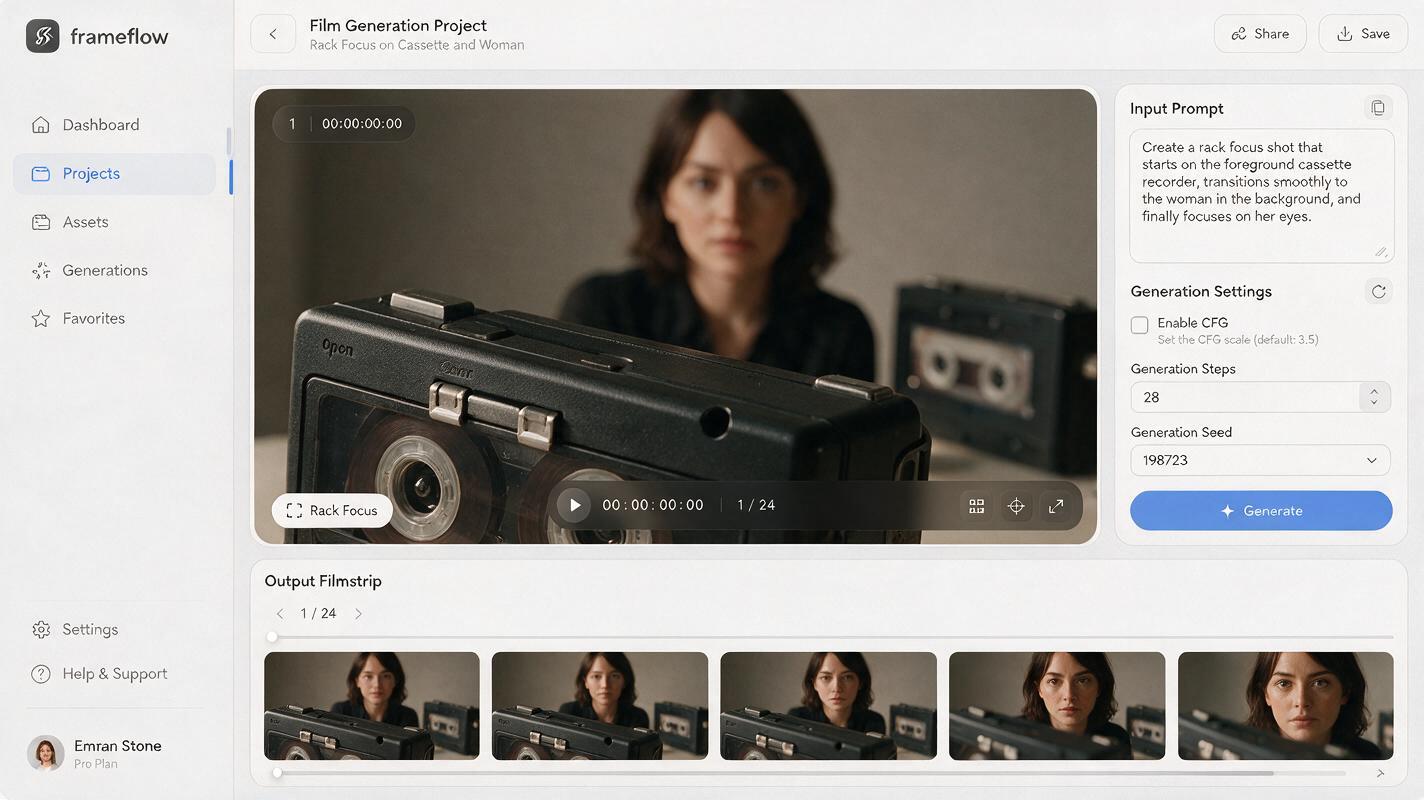
Locked-off cinematic close-up. Begin with the old cassette recorder in the foreground perfectly sharp while the woman standing across the room is softly out of focus. Hold briefly on the recorder, then execute one slow, smooth rack focus to the woman's eyes. End with her face crisp and the recorder naturally blurred. Preserve her identity, expression, wardrobe, body position, room geometry, lighting, and framing. No camera movement, no zoom, no object movement.Shift suspicion between two characters
Static over-the-shoulder composition with the near character's profile occupying the left foreground and the second character seated deeper in the right background. Start focused on the foreground profile. Perform one restrained rack focus to the seated character as he remains completely still. Finish with the seated character's eyes sharply focused and the foreground profile softly defocused. Maintain exact composition, facial features, eyelines, lighting, and screen direction. No pan, dolly, zoom, or reframing.Expose a threat in the background
Locked medium shot in a dim parking garage. A nervous driver beside the car is sharp in the foreground; a motionless silhouette near a concrete pillar is visible but softly blurred in the deep background. Hold on the driver, then pull focus steadily to the distant silhouette. The driver becomes optically defocused without changing pose. Keep the camera fixed and preserve all people, vehicles, architecture, shadows, and proportions. One focus transition only.Move from a reflection to the real subject
Static close-up containing a sharply focused face reflected in a cracked mirror in the foreground and the real person standing deeper in the room. Begin on the mirror reflection, then perform a slow rack focus to the real person's eyes. End with the real person crisp and the reflection softly blurred. Preserve the reflection's alignment, the person's identity, the cracks in the mirror, lighting continuity, and framing. No camera movement or facial motion.Replace only the subjects, environment, and dramatic pace while retaining the focus logic. When your reference frame is ready, test this prompt yourself with the simplest version before adding secondary performance.
Match the focus speed to the dramatic beat
The speed of the transition changes its meaning. A slow pull can suggest realization or dread, while a fast snap can expose danger or redirect attention during a tense exchange. Prompt timing in editorial language rather than relying on unsupported technical precision.
| Dramatic purpose | Prompt language | Editorial use |
|---|---|---|
| Quiet discovery | Slow, patient rack focus after a brief hold | Let the audience notice the connection |
| Sudden threat | Quick, decisive focus pull to the background figure | Cut near the reveal for impact |
| Dialogue tension | Restrained, smooth transition between the two faces | Shift power without changing camera angle |
| Clue recognition | Measured focus pull from the character to the object | Connect reaction and evidence within one shot |
Generate the clean optical transition first. If the final scene also needs an eye movement or a subtle change in expression, treat that as a later variation rather than loading it into the initial prompt.
Diagnose subject drift before generating more versions
When a result fails, identify whether the problem affects focus, geometry, performance, or framing. Repeating the same overloaded prompt rarely fixes the underlying conflict.
The camera pushes forward instead of changing focus
Remove movement terms such as push in, approach, dynamic, or reveal shot. Repeat “locked-off camera” and “camera position remains unchanged.” Avoid describing the destination subject as getting closer.
The background character changes identity
The reference probably hides too much facial information. Reduce the initial blur, enlarge the destination subject slightly, or create a cleaner source frame. Add “preserve exact facial features, hair, wardrobe, and body position,” but do not bury that instruction under unnecessary aesthetic language.
Both subjects remain equally sharp
Strengthen the spatial contrast in the source image and name both focus states explicitly. Instead of requesting “shallow depth of field,” state which target begins sharp and which target ends sharp.
The foreground object melts during defocus
Defocus should alter optical sharpness, not object structure. Add “the foreground object remains physically unchanged and becomes only optically defocused.” Use a reference in which the object has a clean silhouette without intricate transparent edges.
The actor moves during the pull
Remove performance verbs and request a completely still subject. If the shot requires acting, first secure the stable focus version, then test one small action such as a blink or slight eye movement in a separate generation.
The focus jumps back at the end
Specify a settled ending: “complete the focus pull once and hold final focus on the background subject.” Avoid words such as pulsing, searching, or breathing unless lens hunting is intentional.
Review the shot like an editor, not a prompt writer
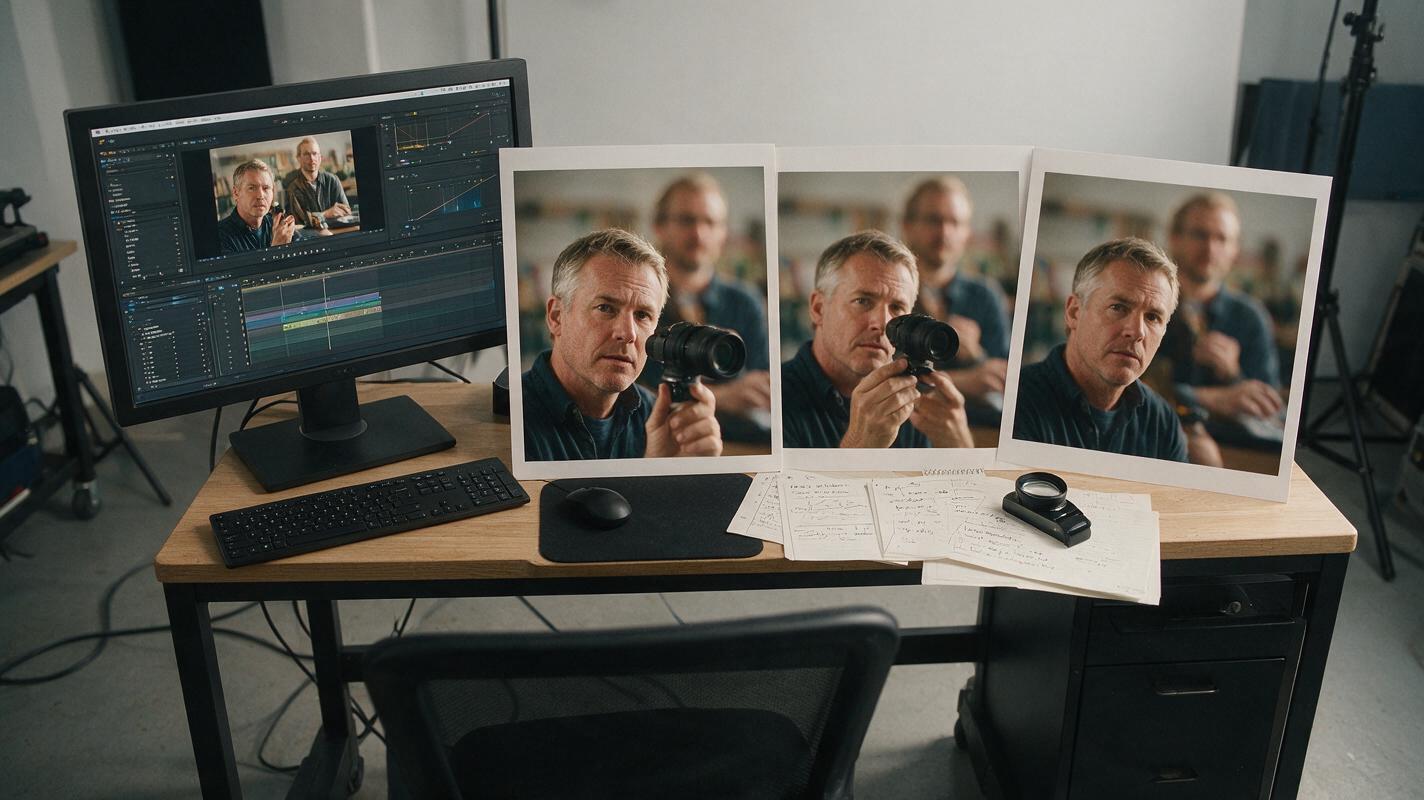
A technically successful clip may still fail as storytelling. Watch the result once without pausing and ask where your attention goes. Then inspect the beginning, midpoint, and ending frames separately.
- Opening: Is the first subject clearly readable before the transition begins?
- Midpoint: Does focus travel continuously rather than cutting or pulsing?
- Ending: Does the destination subject become unmistakably dominant?
- Continuity: Do faces, hands, props, reflections, and background lines retain their forms?
- Framing: Is the camera genuinely locked, without a hidden digital push?
- Story value: Does the focus change reveal information or alter the emotional emphasis?
For previsualization, a clean and legible result is more valuable than a heavily stylized clip. The goal is to communicate lens intent to the director, cinematographer, focus puller, editor, and production team.
Final checklist
- Place the two focus targets at visibly different depths.
- Use a stable reference frame with readable destination details.
- Name the initial and final focus targets explicitly.
- Request one continuous optical transition.
- Lock camera position, framing, lighting, and subject poses.
- Generate the focus pull before adding performance or camera motion.
- Check identity, object geometry, and composition at both endpoints.
- Choose a transition speed that supports the dramatic beat.
Keywords
luma prompts, rack focus, focus pull, cinematic previs, image to video, camera focus, subject drift