Midjourney Prompts for Editorial Portrait Lighting Moodboards
Build an editorial portrait lighting moodboard that communicates more than a vague aesthetic. These Midjourney prompts explore four distinct lighting directions and show photographers how to turn generated references into practical decisions for a real shoot.
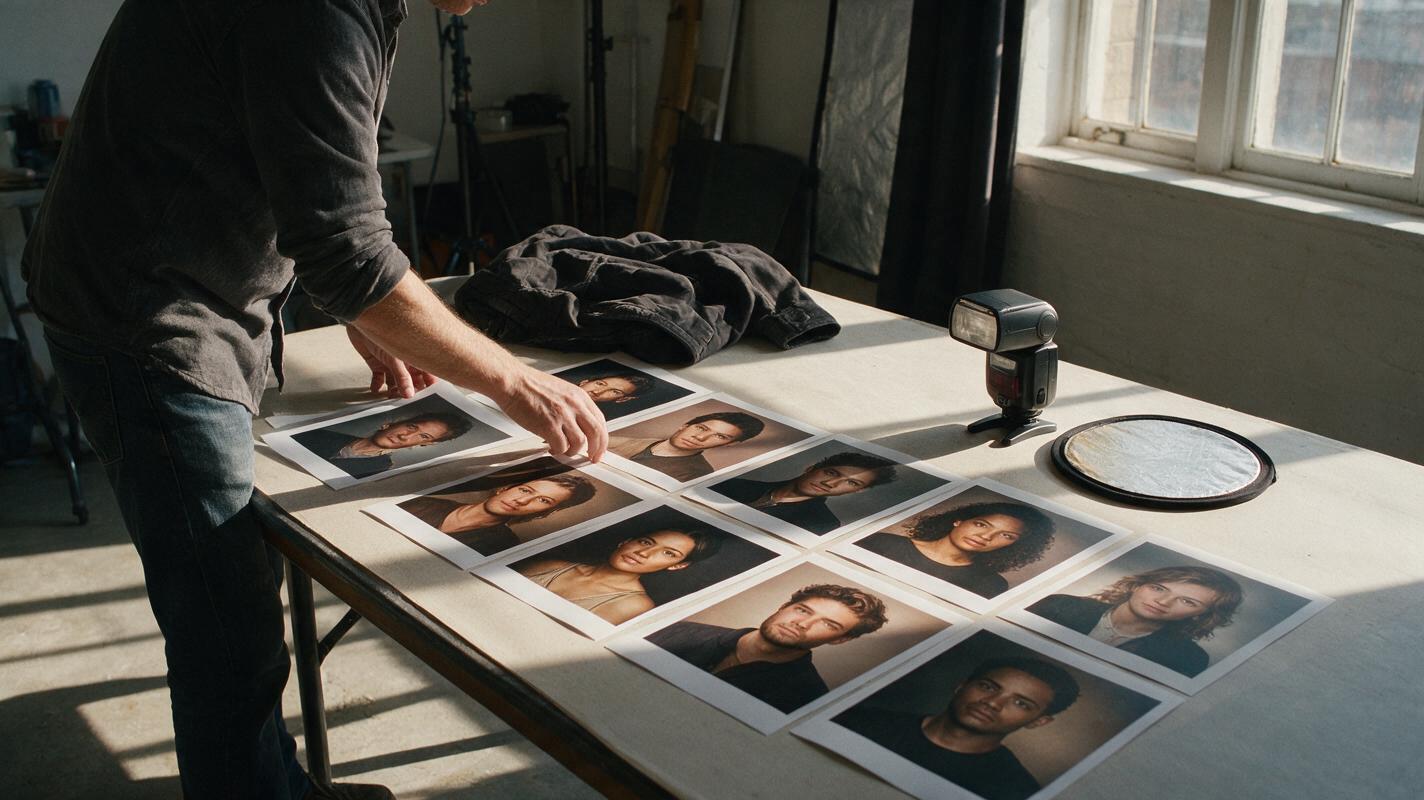
Table of contents
Make the lighting decision before the shoot
A useful portrait moodboard should tell your team where the light comes from, what it does to the face, and which shadows you intend to keep. If every reference simply looks cinematic, it is difficult to translate the board into a lighting setup. The Midjourney prompts below generate distinct editorial lighting directions you can compare before booking a studio, choosing a location, or briefing a crew.
Use the results as preproduction concepts, not as photographs of your client or proof that a setup will behave exactly as pictured. Generated skin, fabric, reflections, and catchlights need scrutiny. The goal is to make your creative decisions clearer—not to replace a test shoot.
Give every prompt the same editorial brief
Comparisons work best when the subject, styling, framing, and background stay broadly consistent. Write a short fictional brief first: for example, an adult subject in a charcoal jacket, waist-up framing, neutral makeup, and a plain studio background. Then change the lighting instructions while leaving the rest of the brief alone.
Use an ai image generator to make a small set of candidates for each direction. Select references for their light behavior, not because the generated face or clothing happens to look appealing. If a result hides the shadows you need to evaluate, adjust the prompt and generate again.
Reusable brief: Adult editorial portrait subject wearing a charcoal tailored jacket, waist-up composition, neutral makeup, relaxed posture, plain studio background, natural facial proportions, photographic texture. Lighting direction: [insert one of the descriptions below]. No text, logos, or magazine cover layout.
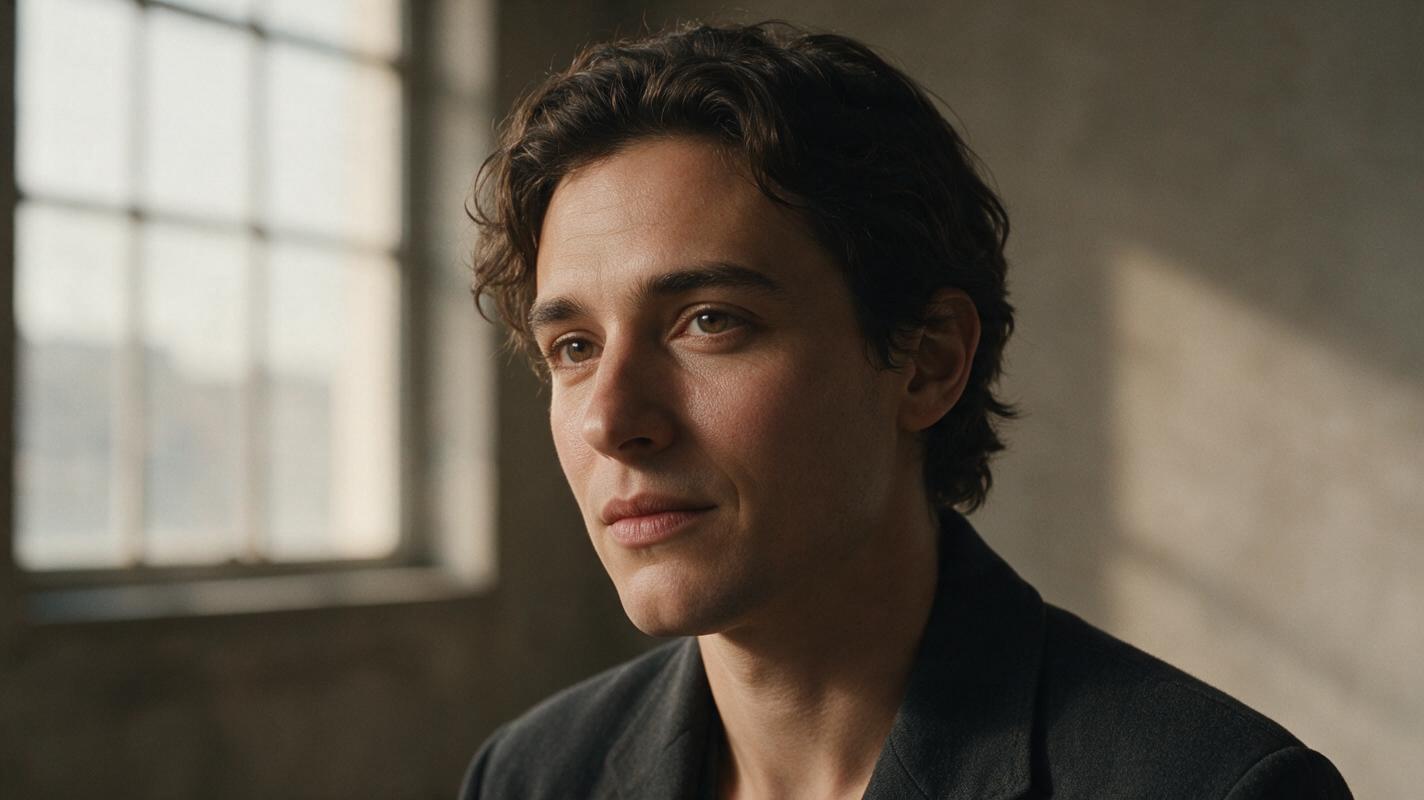
Window light with shape, not flatness
This direction suits a quiet portrait story where the face needs dimension without looking heavily lit. Ask for a specific window position and a darker side of the face; otherwise, the result may default to evenly flattering light that tells you little about placement or contrast.
Editorial waist-up portrait of an adult subject in a charcoal tailored jacket, neutral makeup, plain warm-gray studio background. One large north-facing window to camera left, subject turned slightly toward the window, soft highlight across the near cheek, gentle but visible shadow on the far cheek, restrained contrast, subtle falloff across the background, natural skin texture, believable catchlight from one window, photographic realism. No text or logos.What to take into the shoot: Note the window height, subject-to-window distance, and whether you need a white reflector to open the shadow. Do not assume the exact catchlight or skin tone in a generated image will recur on set.
Hard flash with intentional shadows
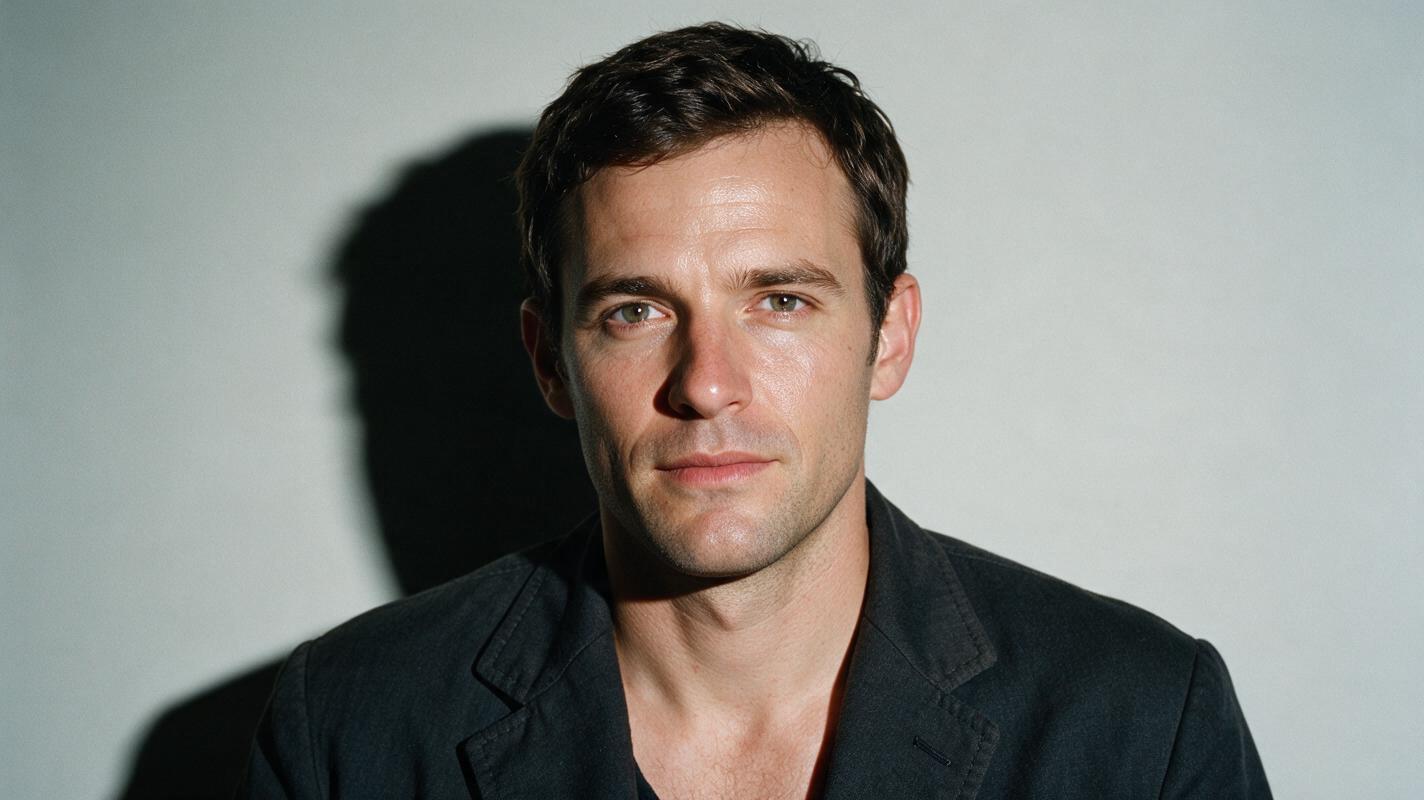
Hard light can give an editorial portrait a graphic edge, but prompts often produce unrelated bright highlights and soft fill at the same time. Specify one apparent source, the direction of its shadow, and how much of the background it reaches.
Editorial waist-up portrait of an adult subject in a charcoal tailored jacket against a plain pale-gray wall. One small direct flash positioned high and slightly camera right, crisp nose and jaw shadows falling down toward camera left, defined shadow of the subject visible on the wall, minimal ambient fill, controlled bright highlights without clipped skin, natural facial proportions, photographic realism. No colored lights, text, or logos.What to take into the shoot: Decide whether the wall shadow is part of the composition. If it is, your subject’s distance from the wall matters as much as the flash position. Test the placement with a stand-in before your subject arrives.
Softbox edge light for a dark backdrop
A dark-background reference becomes more actionable when it shows how the jacket separates from the background. This prompt asks for a controlled edge highlight rather than a glowing outline around the entire person.
Editorial waist-up portrait of an adult subject wearing a charcoal tailored jacket against a deep charcoal studio backdrop. Large soft key light just left of camera, moderate contrast on the face; narrow softbox behind the subject on camera right creating a restrained highlight along the right shoulder and outer hair only, jacket still dark with visible fabric texture, background unlit, believable studio lighting, natural skin texture. No halo, text, or logos.What to take into the shoot: Check whether the edge light is doing a real job. If the subject already separates cleanly from the backdrop, the second source may add complexity without improving the portrait.
Late-afternoon light with a controlled face
For an outdoor editorial session, a reference should communicate what happens to the face—not merely show a warm sky. This direction keeps the sun behind the subject and calls for a readable expression without pretending that backlight alone illuminates it.
Editorial waist-up portrait of an adult subject in a charcoal tailored jacket at a simple outdoor location in late afternoon. Low sun behind the subject and slightly camera left, warm rim light on hair and jacket shoulder, face softly illuminated by open sky from camera right, natural shadow detail, restrained warm color, background unobtrusive and darker than the sky, photographic realism. No artificial sun flare, text, or logos.What to take into the shoot: Scout the direction of the sun at the time you plan to photograph. Bring a reflector or a small light if open-sky fill does not give you enough detail in the eyes.
Build a board that a crew can actually use
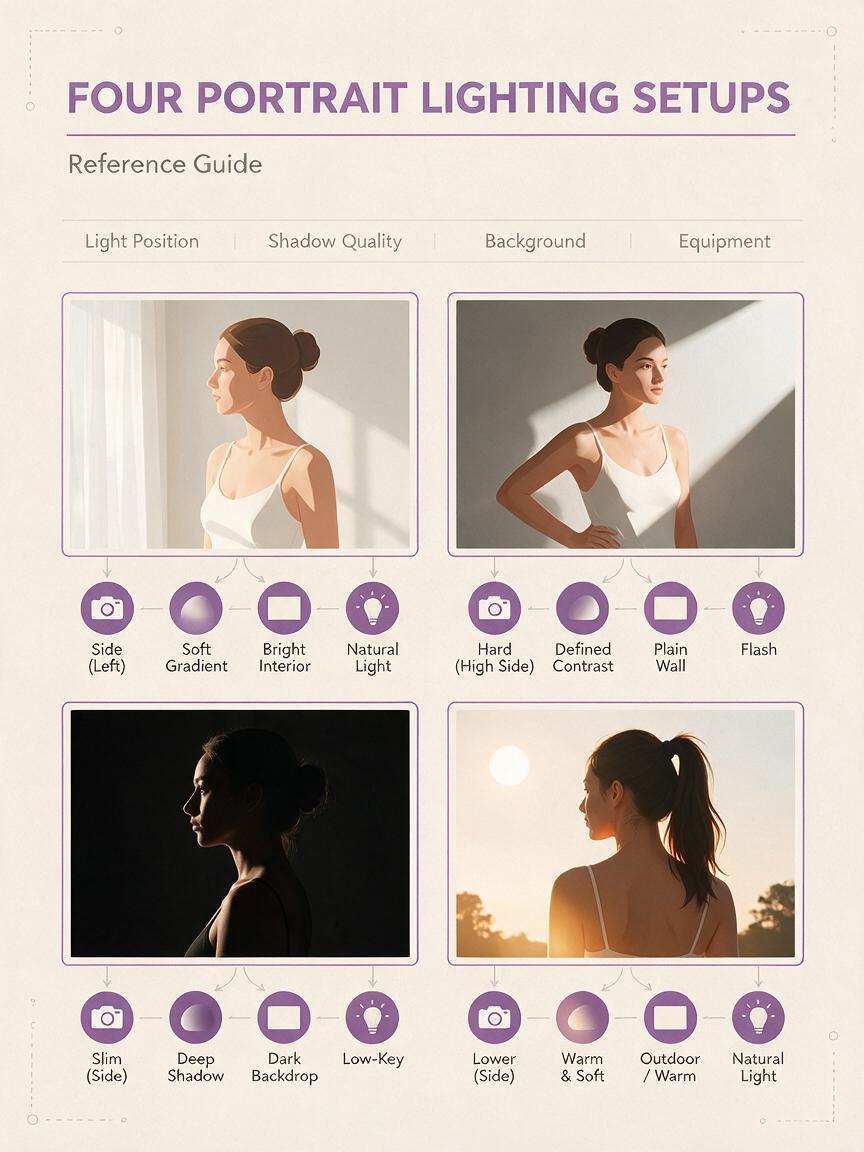
Choose one or two images per lighting direction, then add a short note beneath each: source position, shadow quality, background treatment, and likely equipment. That turns the board from an aesthetic collage into a conversation about production. If two images require incompatible light positions, separate them into alternate looks rather than presenting them as one setup.
| Direction | Visual decision | Practical question |
|---|---|---|
| Window light | Soft cheek-to-cheek falloff | Is the location window large enough? |
| Hard flash | Crisp face and wall shadows | How far must the subject stand from the wall? |
| Dark backdrop | Subtle shoulder separation | Does the edge light improve the jacket outline? |
| Late afternoon | Warm rim, readable face | What will provide fill when the sun drops? |
Before sharing the board with a client, label its images as generated concepts. Do not present them as portfolio photographs or imply that the pictured person, garment, or location is booked for the shoot. When the lighting direction is agreed, make a quick camera test with your actual subject or stand-in and revise the plan around what the real light does.
Want to compare directions against your own brief? Replace the jacket, framing, and background in the reusable prompt, then test this prompt yourself. Keep the lighting descriptions separate so each result answers a clear production question.
Final checklist
- Keep subject, styling, and framing consistent while comparing lighting directions.
- Select references for source position, shadow shape, and background behavior—not generated facial details.
- Annotate each selected image with the equipment or location condition it suggests.
- Label generated references as concepts and confirm the look with a real lighting test.
Keywords
midjourney portrait prompts, editorial portrait lighting, portrait lighting moodboard, editorial photography prompts, photoshoot lighting ideas, ai image generator