Midjourney Prompts for Garment Construction Without Warped Seams or Details
Midjourney is a popular ideation tool for fashion designers, but generated editorial images often suffer from warped seams, misplaced hardware, and incorrect tailoring that make them unusable for technical presentations. This collection of reusable prompt templates and fine-tuning tips helps creatives produce construction-accurate garment visuals for campaigns, lookbooks, and mood boards, with specific guidance for tailored suiting, couture gowns, denim, and knitwear.
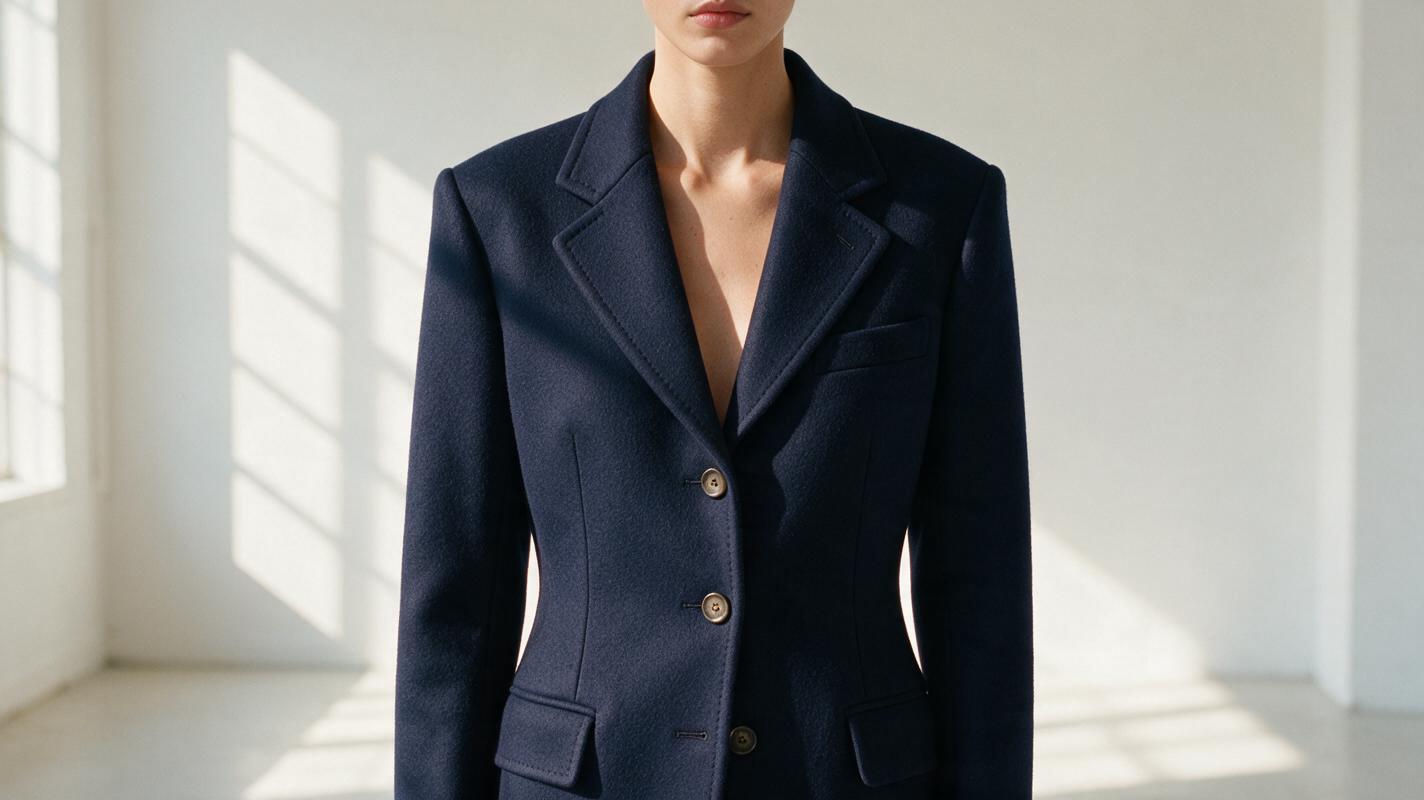
Table of contents
Garment construction accuracy: the missing piece in Midjourney fashion ideation
Midjourney is a fast, flexible tool for sketching out editorial fashion concepts, campaign mood boards, and collection ideas. But for fashion designers, the excitement of a quick visual often fades when you zoom in: warped lapels, misaligned side seams, buttons that float off plackets, and hems that dip unevenly across the body.
These construction errors aren’t just minor flaws—they make generated images useless for presenting technical concepts to clients, pattern makers, or production teams. The good news is that you can fix most of these issues with targeted, technical prompt structure that tells the model exactly how the garment is built, not just how it looks.
Why Midjourney generates warped seams and misplaced details
Most Midjourney fashion prompts focus on aesthetic details: “minimalist white dress, soft lighting, editorial vibe”. But the model’s training data pulls from millions of fashion photos, most of which are styled, retouched, or shot at angles that hide technical construction details.
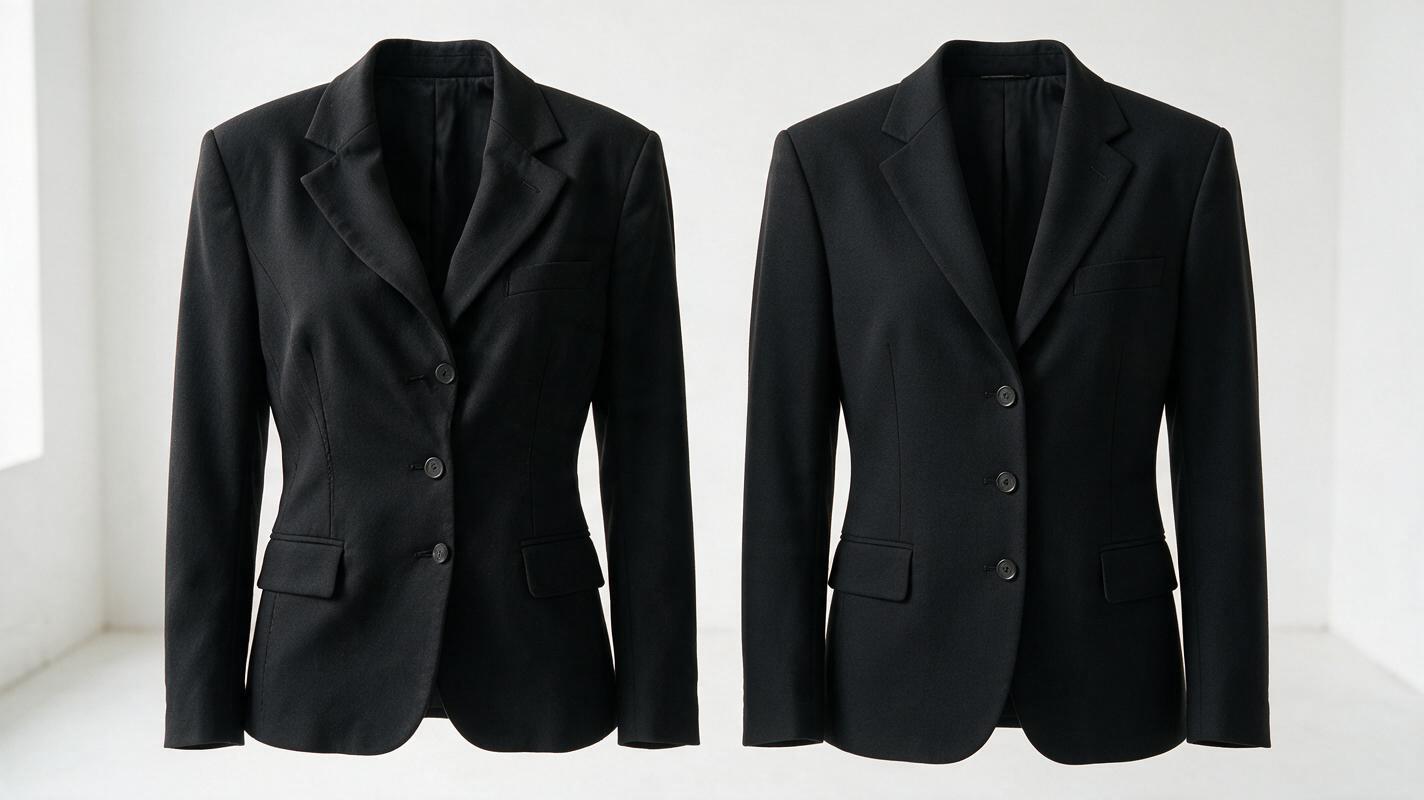
When you don’t specify how a garment is built, the model fills in gaps with averages from its training data—leading to mismatched seams, incorrect pocket placement, and tailored pieces that look limp or misshapen. This is especially noticeable with structured garments like blazers, corsets, and denim, where construction is central to the design.
The biggest mistake designers make is using only aesthetic adjectives. AI needs technical, pattern-making level detail to render a garment correctly.
Core prompt framework for construction-accurate garments
This framework works because it gives the ai image generator explicit technical context instead of relying on vague aesthetic descriptions, which the model often interprets through the lens of most common (but not construction-accurate) fashion photos.
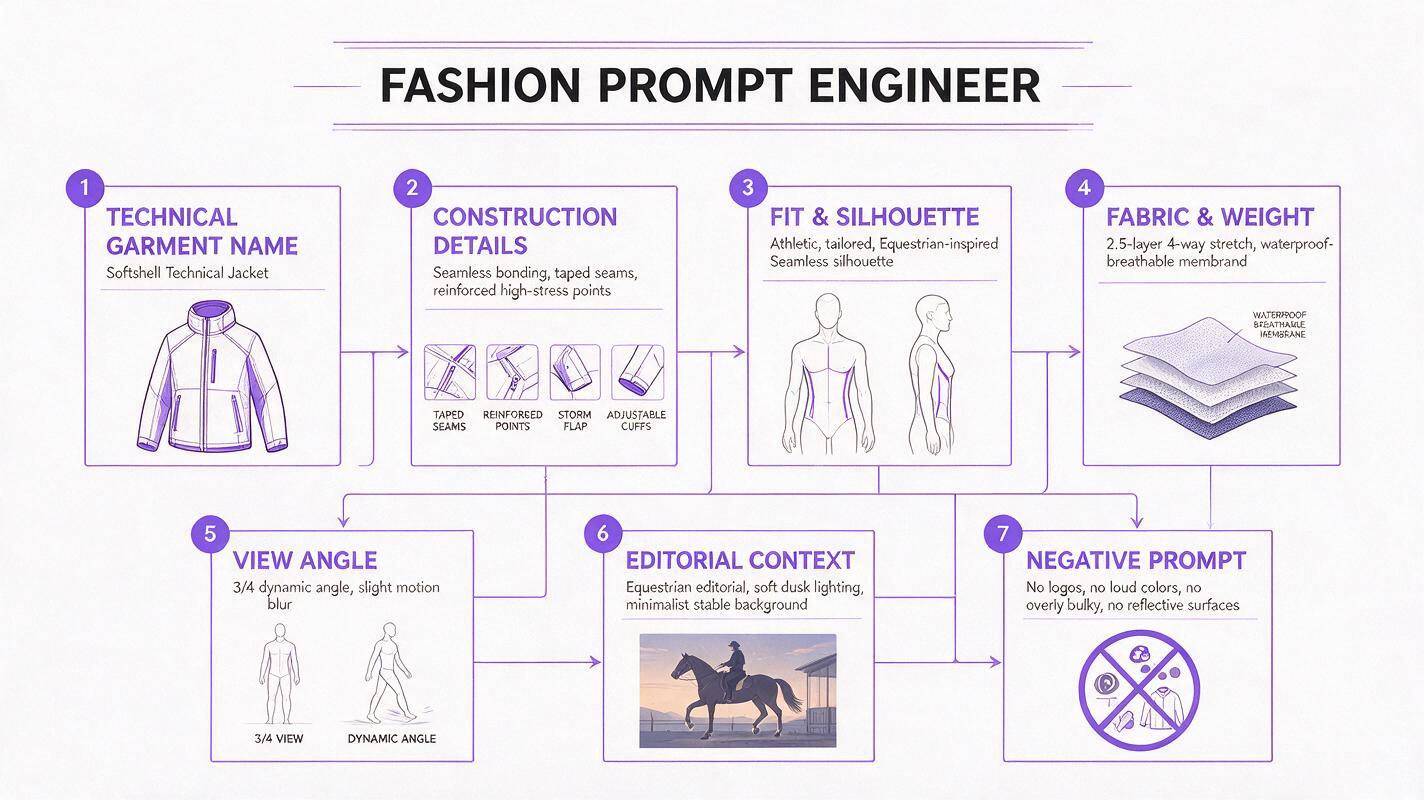
Every construction-focused prompt should include these components, in this order:
- Technical garment name: Use industry terms (e.g., “single-breasted notched lapel blazer” instead of “blazer”)
- Construction details: Seam placement, pocket type, closure style, hardware specifics (e.g., “princess seams, flap pockets, horn button closure”)
- Fit and silhouette: Exact fit language (e.g., “slim fit, structured shoulder pad, 28-inch length from shoulder to hem”)
- Fabric and weight: Specify fabric type and weight to enforce drape (e.g., “heavyweight 12oz wool suiting”)
- View angle: Pick one clear view (front, 3/4, side) so the model doesn’t mix details from multiple angles
- Editorial context: Lighting, setting, style reference (e.g., “editorial studio shot, soft north light, Vogue quality”)
- Negative prompt: Explicitly list common construction errors to exclude
Reusable prompt templates by garment type
Below are tested prompt templates for the garment types that most often suffer from construction errors. Swap out the fabric, color, and detail fields to match your collection.
Tailored blazers and suiting
Blazers are the most common source of frustration because their structured design relies on precise seam and lapel placement. This template enforces correct tailoring details:
single-breasted notched lapel blazer, structured shoulder pads, princess seams on front body, two flap pockets at hip level, four-button sleeve cuff, horn button closure at center front, slim fit, 27 inch length from shoulder to hem, heavyweight 12oz navy wool suiting, 3/4 front view, editorial studio shot, soft north light, high fashion magazine quality, sharp focus --ar 3:4 --style raw --no warped lapels, misaligned seams, floating buttons, uneven hem, lumpy shouldersUse --style raw to reduce over-styling that can warp structural details, and stick to one view angle to avoid mixed construction.
Couture gowns with structured seaming
Corseted and seamed gowns often end up with uneven boning or misaligned panel seams. This template prioritizes construction over flowy aesthetic language:
floor-length couture gown, structured corset bodice with 8 vertical boning channels, sweetheart neckline, fitted waist, A-line skirt with center front seam, floor-length hem with 2 inch train, duchess satin in ivory, built-in bra support, invisible zipper at center back, front view, editorial beauty shot, soft golden hour light, crisp detail, Vogue couture quality --ar 3:4 --style raw --no misaligned seams, uneven boning, lopsided neckline, wrinkled fabric, distorted waistDenim and workwear with hardware
Denim pieces often have misplaced rivets, uneven pocket bags, and warped plackets. This template calls out every hardware and construction detail explicitly:
high-waisted straight leg jeans, 12oz rigid indigo selvedge denim, five-pocket construction, copper rivets at pocket corners, button fly with five brass buttons, belt loops at waistband, 32 inch inseam, raw hem, front view, flat lay editorial shot, white studio background, sharp detail, denim campaign quality --ar 3:4 --style raw --no misaligned pockets, missing rivets, warped fly, uneven hem, distorted waistbandKnitwear with consistent stitch detail
Knitwear often ends up with random stitch patterns or distorted ribbing. This template specifies knit structure and gauge:
oversized crewneck sweater, 7 gauge chunky merino wool, fisherman knit pattern on body, 2x2 ribbing at cuffs and hem, dropped shoulder, relaxed fit, cream color, 3/4 front view, editorial lifestyle shot, natural window light, soft focus background, minimalist fashion campaign quality --ar 3:4 --no uneven knitting, distorted ribbing, lopsided neckline, mismatched sleeve lengthOnce you pick a template that matches your garment type, test this prompt yourself and adjust the technical details to match your collection specifications.
Fine-tuning results without rewriting your entire prompt
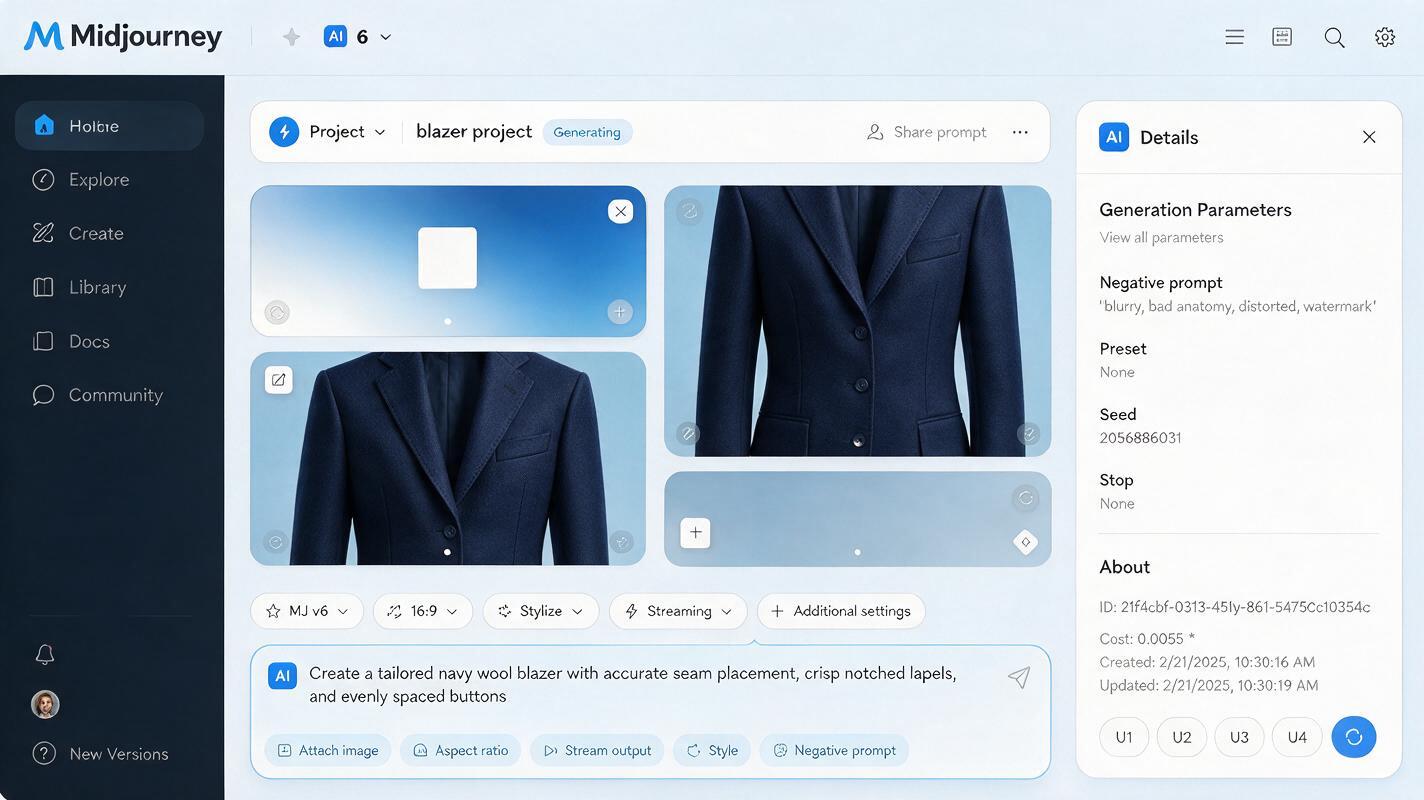
If your first generation is close but has small construction flaws, you don’t need to start from scratch. Use these targeted adjustments to fix specific issues:
- Use a technical sketch as image reference: Upload a flat technical sketch of your garment and add
--iw 1.2to--iw 1.8to enforce the exact construction lines. This works better than photo references because technical sketches show clean, unobscured seam placement. - Vary (Subtle) for small fixes: If a lapel is slightly warped or a button is misplaced, use the Vary (Subtle) option instead of regenerating from scratch. It preserves most of the image while tweaking small details.
- Add weight to construction terms: If a key detail is missing, repeat it in the prompt or add ::2 after the term (e.g.,
princess seams::2) to increase its priority. - Expand the negative prompt: If you keep seeing the same flaw, add it to the negative prompt with a weight (e.g.,
--no warped lapels::2).
For collections that need consistent garment details across multiple images, use Midjourney’s style reference (--sref) with a correctly generated first image to keep construction consistent across shots.
Key takeaways
- Midjourney’s construction errors come from vague, aesthetic-only prompts that don’t give the model technical context.
- Structure every prompt with technical garment names, specific construction details, fit specifications, and a clear single view angle.
- Use
--style rawto reduce over-styling that warps structural details, and add a detailed negative prompt to exclude common flaws. - For precise results, use a flat technical sketch as an image reference with increased image weight.
- Test small adjustments with Vary (Subtle) instead of rewriting the entire prompt for minor construction fixes.
Keywords
midjourney prompts, garment construction, editorial fashion images, fashion ideation, tailored garments, ai image generator, fashion design tools