Midjourney Prompts for Luxury Perfume Campaign Images
Create luxury perfume campaign images with Midjourney prompts designed for polished hero shots, botanical stories, reflective sets, and atmospheric launch visuals. The guide also explains how to control bottle geometry, leave room for copy, and prevent AI styling from overwhelming the fragrance.
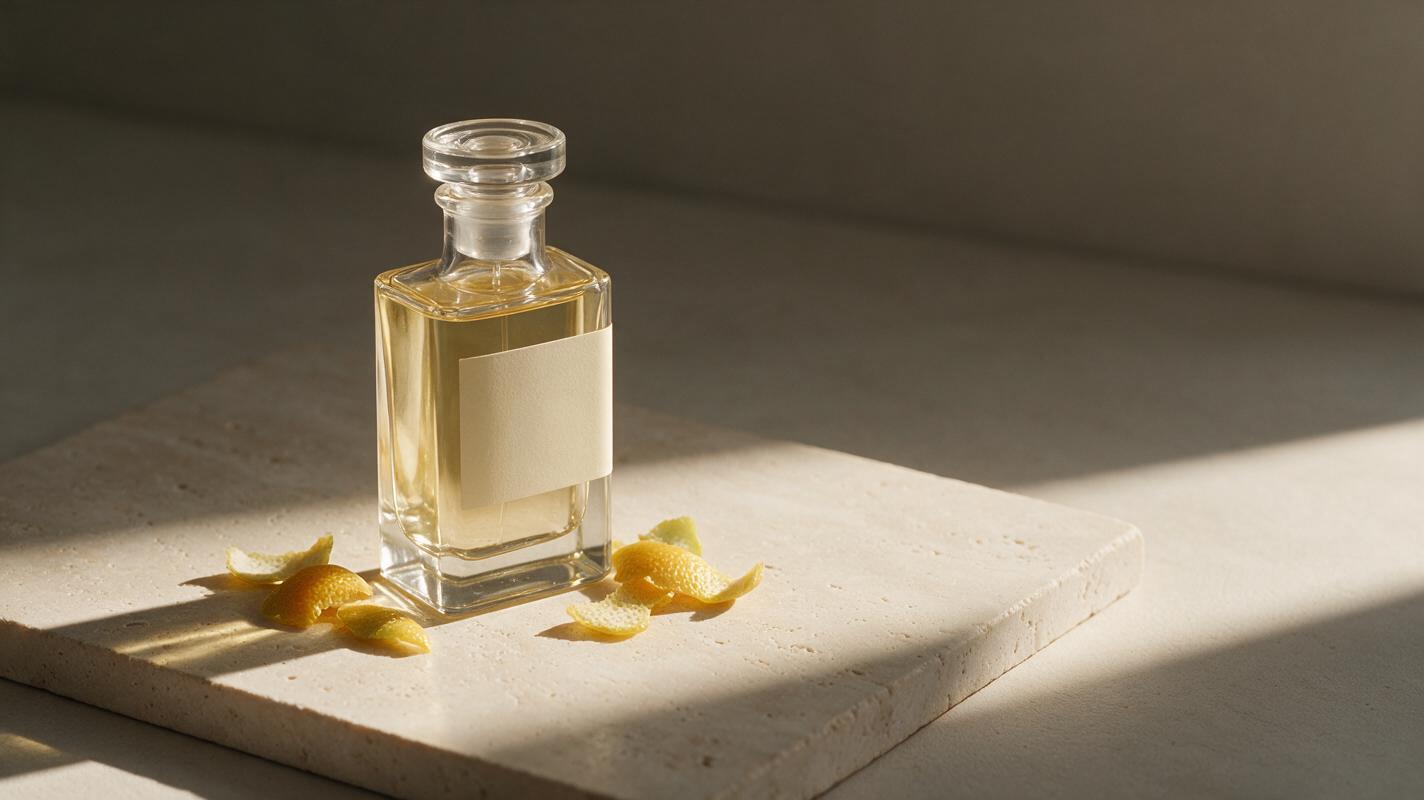
Table of contents
Create fragrance visuals that look art-directed, not randomly generated
A strong perfume campaign image must communicate a fragrance mood while keeping the bottle recognizable, desirable, and visually dominant. The usual AI failures are predictable: distorted glass, unreadable labels, oversized flowers, implausible reflections, and backgrounds that compete with the product.
The Midjourney prompts below are built for specific commercial outcomes, including launch key visuals, social ads, editorial scenes, and seasonal campaign concepts. They work best during concept development, when a beauty brand or creator needs to explore several visual territories before producing final advertising assets.
Important: Treat generated packaging as concept artwork unless every logo, label, bottle dimension, color, and regulatory detail has been checked against the real product.
Build the prompt around the fragrance story
Generic phrases such as “luxury perfume advertisement” leave too many decisions to the model. A more useful prompt defines the bottle, fragrance character, physical set, lighting, composition, and intended placement.
Use this structure as a starting point:
[bottle description], [fragrance mood and notes], staged with [specific materials and props], [lighting direction and quality], [camera angle and composition], [background treatment], premium fragrance campaign photography, realistic glass, controlled reflections, product remains dominant, clean negative space for copy, no extra bottles, no hands, no warped labelFragrance mood should affect the scene rather than merely appear as text. A fresh citrus scent might use condensation, translucent yellow glass, and hard morning light. A smoky evening fragrance may call for dark stone, amber highlights, and restrained haze.
Physical materials also shape perceived value. Polished travertine feels different from wet black rock; crumpled silk communicates something different from brushed steel. Name two or three materials instead of asking for an undefined premium background.
Prompt for a clean luxury hero image
The hero image is the safest place to begin because it establishes the campaign’s visual rules. Keep the bottle centered or slightly offset, use one primary surface, and limit props to subtle supporting details.
A rectangular clear-glass perfume bottle with a thick transparent base and minimal ivory label, centered on pale cream travertine, one soft architectural shadow crossing the background, warm diffused side light, eye-level product camera, precise upright geometry, quiet contemporary luxury, realistic glass refraction, restrained beige palette, generous negative space above and to the right for campaign copy, premium fragrance advertising photography, single bottle only, label area flat and unobstructedFor a vertical social placement, request a 4:5 composition and reserve copy space deliberately. “Negative space” alone may produce an empty area in the wrong location, so specify whether the headline belongs above, beside, or below the bottle.
- Use eye-level framing for clear bottle recognition.
- Request one bottle only to reduce accidental duplicates.
- Describe the label as flat, centered, and unobstructed.
- Keep decorative elements away from the cap and silhouette.
Turn fragrance notes into a botanical campaign
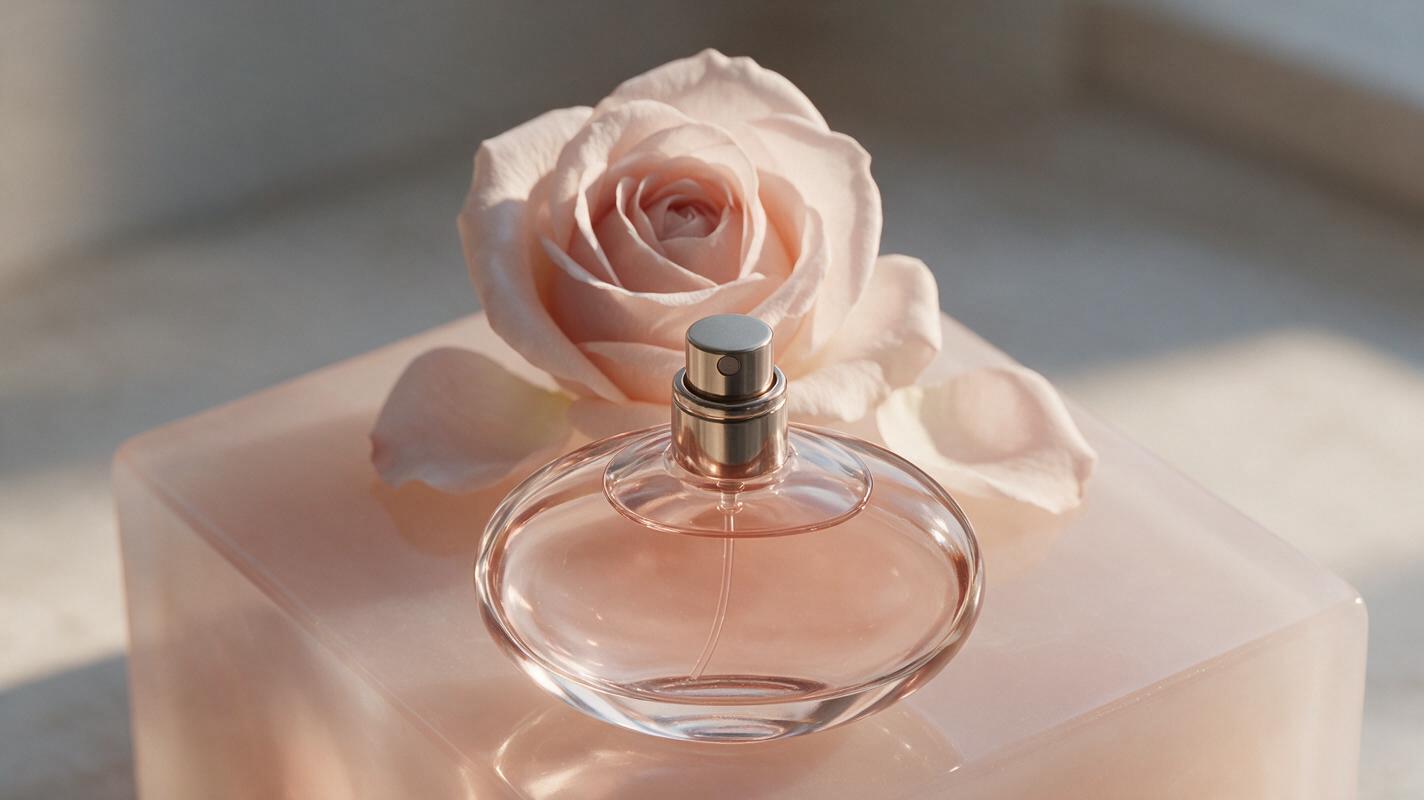
Botanical campaigns often fail because AI fills the frame with flowers and reduces the perfume to a background prop. Instead of listing every fragrance note, select one hero ingredient and one supporting material.
A refined oval perfume bottle containing pale rose-colored fragrance, standing on a translucent blush resin plinth, three fresh rose petals and one sculptural rose bloom placed behind the bottle without covering it, tiny water droplets on the plinth, soft dawn light from the left, delicate shadows, close product framing, realistic glass thickness and liquid line, modern floral fragrance campaign, muted pink and burgundy color harmony, bottle occupies forty percent of the frame, clear negative space at top, no floral overload, no floating petals, no duplicate bottleReplace rose with a precise ingredient—bergamot peel, iris, fig leaf, jasmine, cedar, or vanilla pod—but preserve the compositional limits. This gives the ingredient a storytelling role without turning the image into a botanical still life.
When using an ai image generator for campaign exploration, create one controlled ingredient variation at a time. Changing the flower, lighting, surface, palette, and camera angle simultaneously makes it difficult to identify which choice improved the result.
Create a dark evening fragrance visual
Dark perfume photography needs separation between the bottle edges and the background. A black bottle against a black set can disappear unless the prompt includes rim lighting, translucent highlights, or a lighter material behind part of the silhouette.
A deep amber perfume bottle with a glossy black cap on wet charcoal stone, narrow golden rim light tracing both sides of the glass, subtle reflection directly beneath the bottle, faint atmospheric haze behind the product, background fading from espresso brown to black, low three-quarter camera angle, sophisticated evening fragrance campaign, cinematic but physically plausible lighting, amber liquid glowing through the lower glass, controlled highlights, crisp bottle silhouette, space on the left for white headline text, no fire, no excessive smoke, no extra objectsWords such as “cinematic” can encourage dramatic effects that overwhelm a small cosmetic product. Counterbalance them with practical constraints: controlled highlights, faint haze, crisp silhouette, and physically plausible lighting.
Use reflective metal without losing the bottle
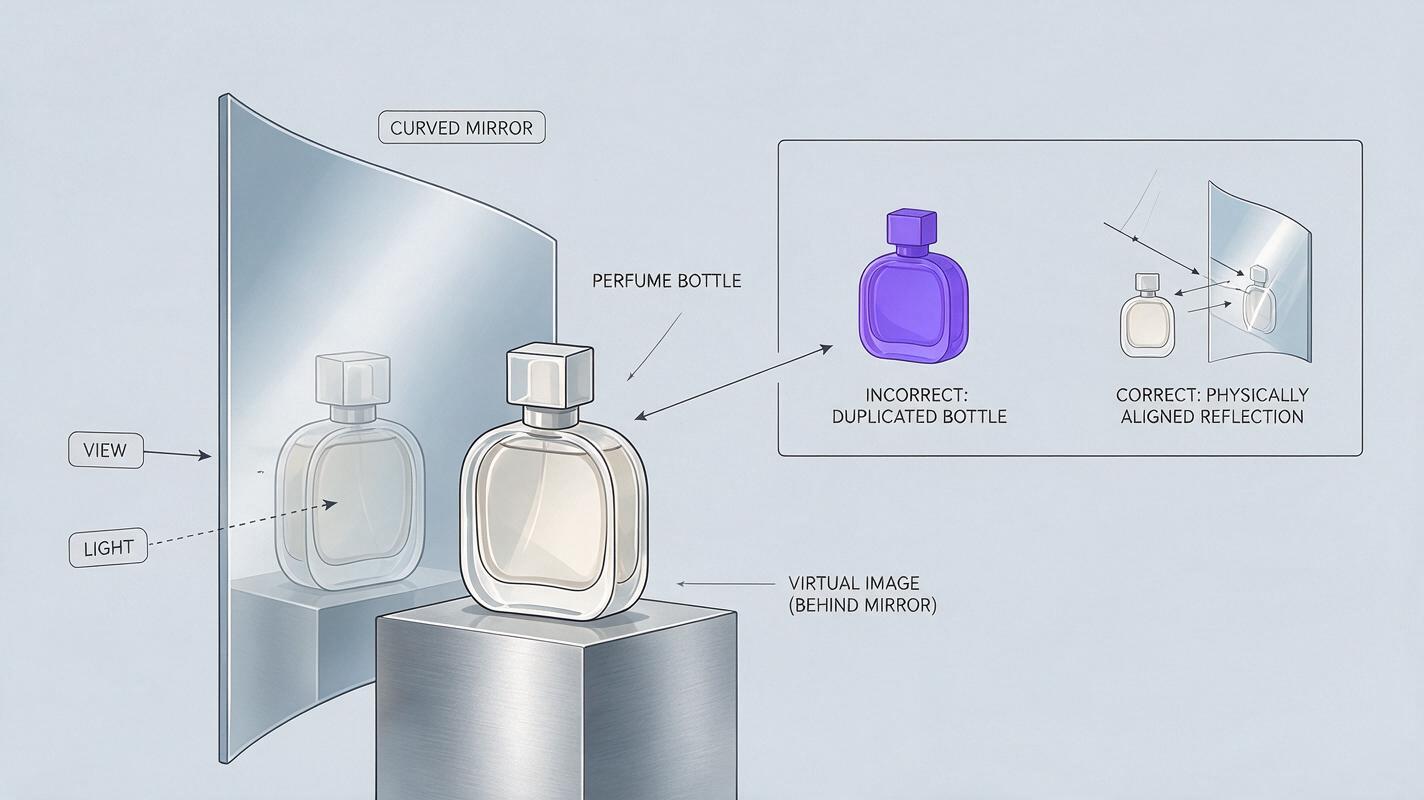
Chrome and mirrored sets can feel futuristic, but they create some of the hardest reflection problems. The model may invent a second bottle inside the reflection or merge the bottle base with the surface.
A sculptural transparent perfume bottle on a brushed silver pedestal, curved mirror panel positioned behind and to the left, reflection shows only one partial side view of the same bottle, cool white studio lighting with a thin lavender accent, clean high-fashion beauty campaign, precise product edges, realistic transparent glass, subtle silver gradient background, asymmetrical editorial composition, reflection physically aligned with the bottle, no duplicated product, no kaleidoscope effect, no warped capAsk for a partial side reflection rather than a full mirrored duplicate. Brushed metal is generally easier to control visually than a perfect mirror because its softened reflection does not need to reproduce every detail.
| Set material | Visual result | Main risk | Useful prompt control |
|---|---|---|---|
| Brushed silver | Modern and technical | Harsh highlight bands | Soft gradient reflection |
| Black acrylic | Dramatic and polished | False duplicate bottle | Subtle reflection directly below |
| Rippled chrome | Editorial and surreal | Distorted silhouette | Keep metal behind the product |
| Frosted glass | Airy and minimal | Weak product separation | Defined rim light on bottle edges |
Develop a seasonal fragrance launch without clichés
Seasonal imagery does not need obvious snowflakes, autumn leaves, or holiday ornaments. Translate the season into light, color, temperature, and texture while allowing the bottle to remain suitable for premium advertising.
A minimal perfume bottle with soft gold fragrance on a frosted translucent plinth, cool blue-gray background, low winter sunlight creating one long clean shadow, a fine layer of condensation around the base but not on the label, quiet cold atmosphere, refined seasonal fragrance launch visual, realistic studio product photography, balanced silver and champagne palette, bottle sharply focused, open area above for launch date and headline, no snowflakes, no gift box, no holiday decorationsFor summer, replace frost with sunlit water caustics and pale mineral stone. For autumn, use smoked amber glass, warm directional light, and dry textured paper rather than scattered leaves. A seasonal campaign feels more sophisticated when the season is communicated indirectly.
Protect the real bottle and label
Midjourney is useful for art direction and visual exploration, but a generated bottle should not automatically replace approved product photography. Even an attractive result may subtly alter the cap height, glass thickness, atomizer, liquid color, or typography.
A dependable commercial workflow separates scene generation from packaging approval:
- Generate the desired environment with a simple concept bottle or a clear bottle-shaped placeholder.
- Select a scene with plausible perspective, light direction, and contact shadows.
- Place the approved product packshot into the scene using professional compositing or controlled image editing.
- Match the bottle shadow, edge light, color temperature, and reflected surface tones.
- Review the final asset at full size and at the small size used in social feeds.
If you use a reference image, crop it cleanly and remove unrelated props. The reference should communicate silhouette, proportions, cap shape, and color—not force the model to interpret an entire existing advertisement.
Fix the most common perfume image failures
The bottle shape keeps changing
Reduce decorative complexity and describe the geometry in plain language: rectangular, oval, cylindrical, thick base, short neck, square cap. Keep the camera near eye level until the silhouette is stable.
The label becomes unreadable
Do not rely on generated label text for final advertising. Ask for a clean, flat label area, then replace it with approved artwork during post-production. Avoid flowers, glare, condensation, and shadows across that area.
The glass looks like plastic
Add physical cues such as realistic glass thickness, internal refraction, a visible liquid line, crisp edge highlights, and a transparent heavy base. Remove conflicting requests such as matte bottle, crystal transparency, and soft blurred edges in the same prompt.
The props overpower the fragrance
State the bottle’s approximate share of the frame and limit the scene to one hero prop plus one supporting texture. If the result still feels crowded, regenerate the set without the bottle and simplify it before compositing.
Every result feels like the same generic luxury ad
Replace vague luxury adjectives with art-direction choices. Specify the surface, light angle, palette, camera height, negative-space position, and emotional temperature. These decisions distinguish a fragrance concept more effectively than repeatedly adding “premium” or “elegant.”
Adapt one concept across a full campaign
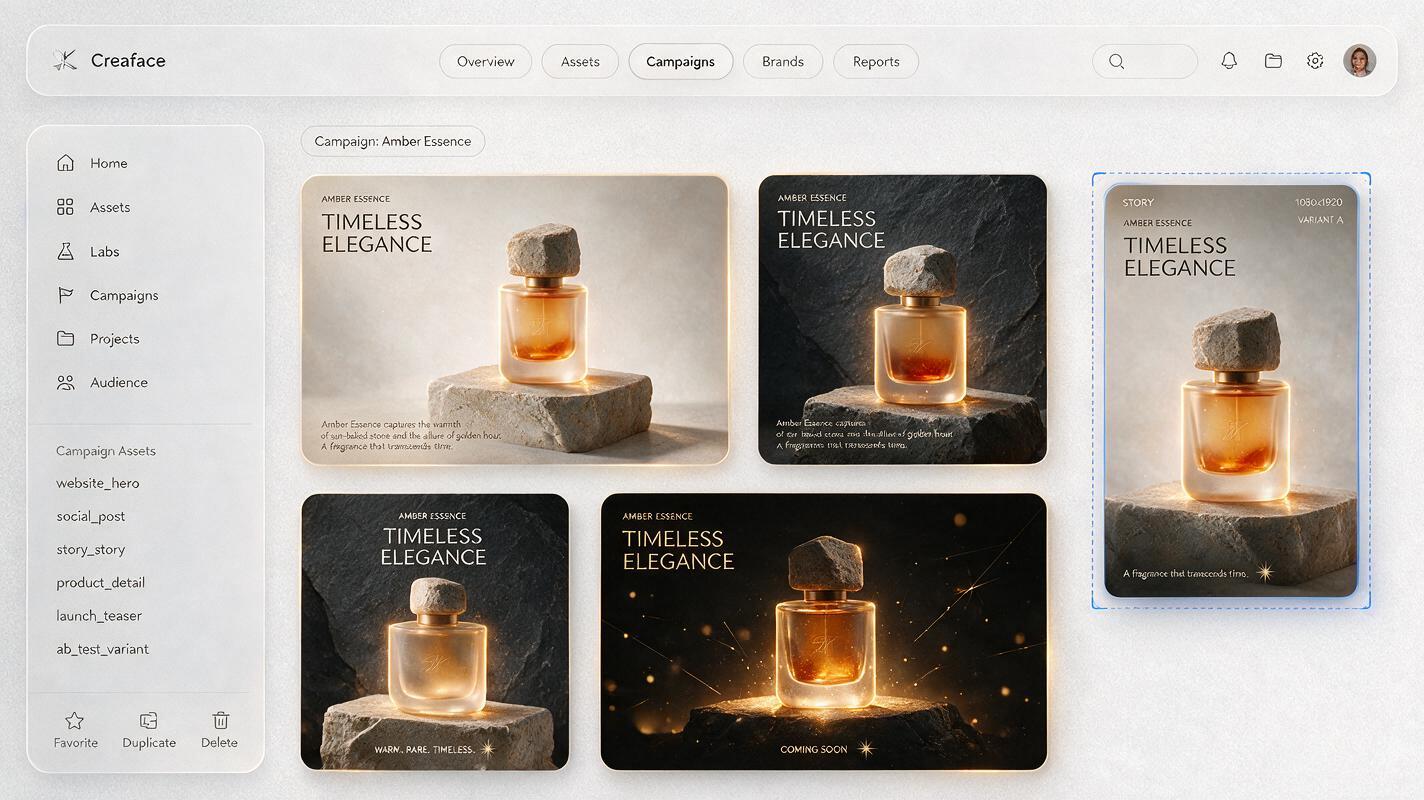
Once a visual direction works, preserve its core design language across placements. Keep the same background family, primary material, light direction, and accent color while changing the crop and amount of copy space.
- Website hero: wide composition with open space beside the bottle.
- Social feed: vertical crop with a larger product and shorter copy zone.
- Story placement: tall composition with safe space at the top and bottom.
- Editorial detail: close crop of the cap, glass edge, liquid, or hero ingredient.
- Launch teaser: partial silhouette or shadow while preserving recognizable colors.
Do not generate each placement from an unrelated prompt. Reuse the same material and lighting language so the campaign feels intentional. When the still direction is approved, subtle motion can be developed separately rather than asking one prompt to solve both product design and animation.
Ready to explore a visual direction? Test this prompt yourself, compare several restrained variations, and take only the strongest scene into packaging review.
Final checklist
- The fragrance bottle is the clear focal point.
- The scene expresses a specific scent mood or campaign territory.
- Props do not cover the cap, label, or silhouette.
- Glass, liquid, shadows, and reflections appear physically plausible.
- Negative space matches the intended ad placement.
- Only one bottle appears unless multiples are an intentional concept.
- Approved packaging artwork will replace any generated typography.
- The final image will be reviewed for product and advertising accuracy.
Keywords
midjourney perfume prompts, perfume campaign images, cosmetic product photography, AI beauty ad, luxury fragrance photography, beauty campaign AI, perfume product image