Novel to Video: Turn Letters and Diaries Into Cinematic Scenes
Learn how to adapt letters, diary entries, and messages from a novel into visual scenes instead of static text screens. This workflow converts written testimony into filmable actions, consistent storyboard frames, controlled AI clips, and voiceover-led sequences.
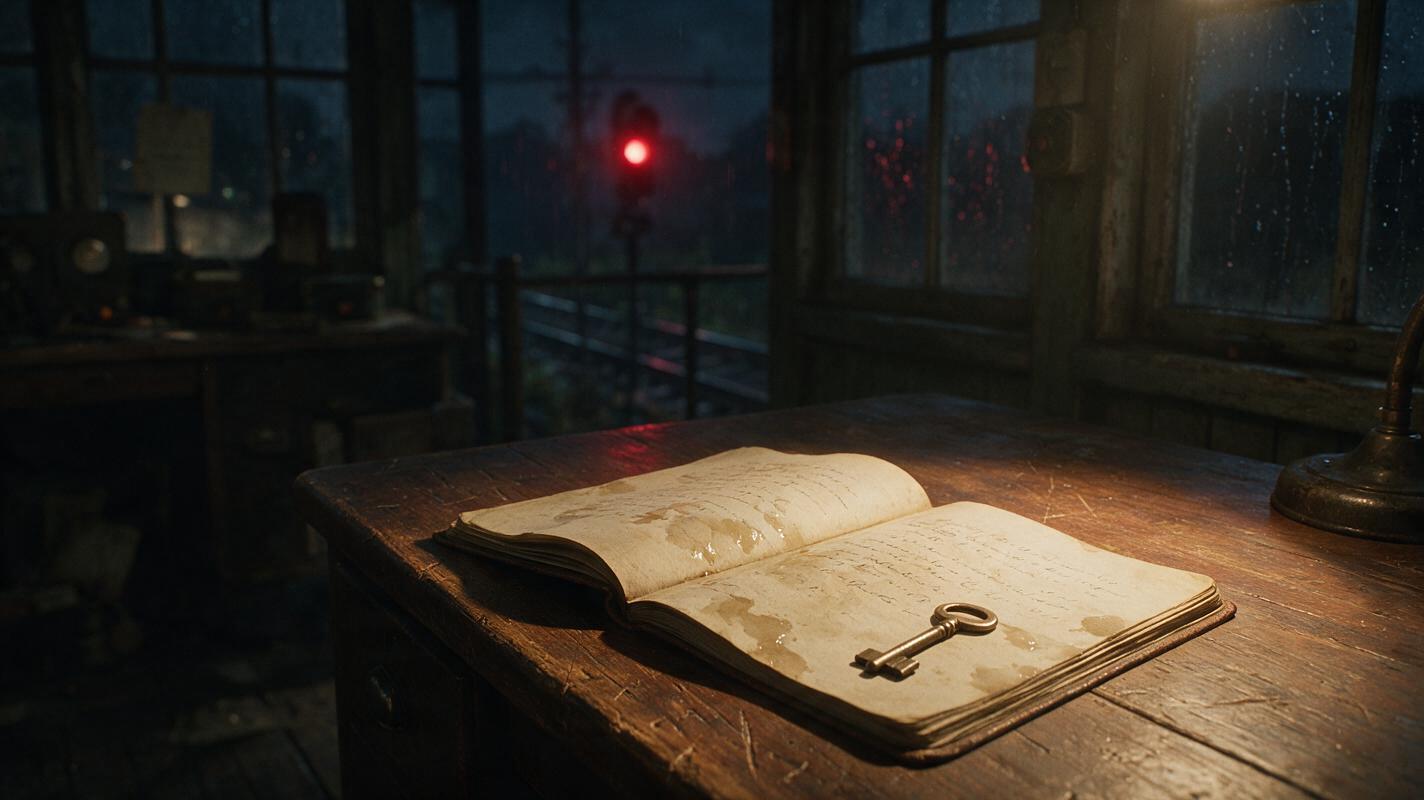
Table of contents
Turn written documents into scenes the audience can experience
The strongest way to adapt an epistolary novel is not to photograph every letter or display paragraphs on screen. Convert each written passage into three cinematic layers: the present-day act of reading, the remembered or imagined event, and the reader’s visible reaction.
This novel to video tutorial shows how to make that conversion while preserving the uncertainty that makes letters and diaries compelling. The result is a sequence driven by evidence, memory, and emotion rather than scrolling text.
Working rule: show the physical document briefly, let voiceover carry only the essential language, and use images to reveal what the words omit.
Step 1 — Extract the document’s dramatic evidence
Begin with one short passage rather than an entire chapter. Mark what the document explicitly states, what it implies, and what the reader can physically observe.
For example, consider this original diary excerpt:
October 14. I returned the station key before sunset.
No one saw me enter the signal room.
The red lamp was already burning when I left.
The passage contains three different kinds of material:
- Filmable fact: a key is returned and a red lamp is burning.
- Claim that may be unreliable: no one saw the writer enter.
- Unanswered question: who lit the lamp, and why?
Build a document-evidence table before writing shots. It prevents the adaptation from treating every sentence as objective truth.
| Source detail | Screen treatment | Certainty |
|---|---|---|
| Returned station key | Close-up of a brass key placed on a counter | Visible evidence |
| Entered signal room | Fragmented memory with an obstructed face | Writer’s account |
| Red lamp burning | Repeated visual motif in present and memory | Important but unexplained |
Step 2 — Build a visual identity before generating scenes
A letter-based story often moves between several times and versions of the same event. Lock the principal character before producing any memory images. Define age, facial structure, hair, wardrobe, and one or two identifying objects that remain visible across shots.
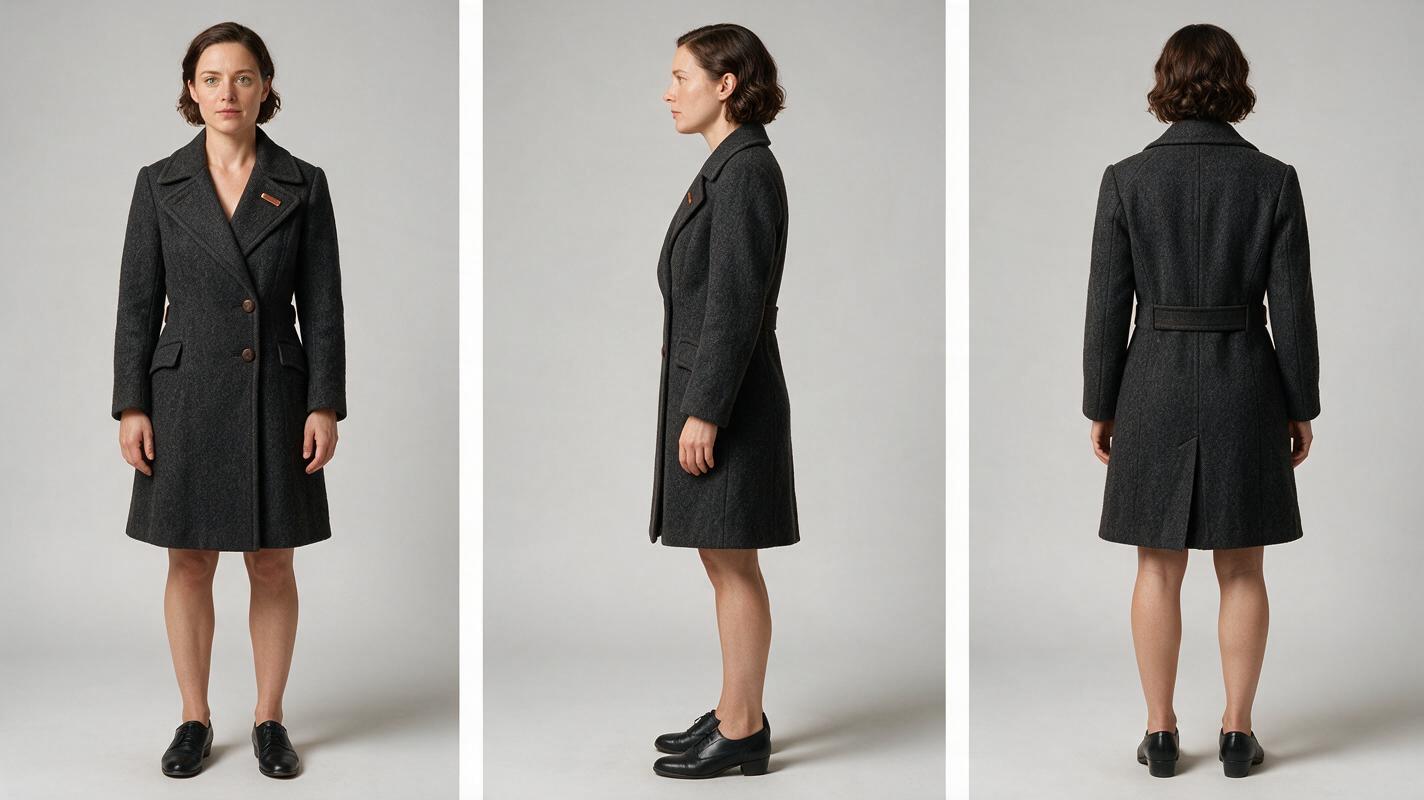
For this example, the writer is Eliza Hart, a railway clerk in a charcoal wool coat with a narrow copper brooch. Generate a neutral reference sheet first, then use it as the identity reference for every storyboard frame.
Photorealistic three-panel character reference sheet of the same fictional woman, Eliza Hart, age 32, oval face, gray-green eyes, short dark-brown waved hair tucked behind the ears, charcoal 1930s wool railway clerk coat, narrow copper brooch on the left lapel, practical black shoes. MANDATORY LAYOUT: exactly three full-body views arranged left to right — front view, true side profile, back view. MANDATORY CAMERA: eye-level 85mm studio portrait perspective, identical scale and neutral posture in all panels. Neutral light-gray seamless background, soft even studio lighting, landscape 16:9, photorealistic fabric and skin, no text, no labels, no logo, no interface, no extra person, no props.A stable sheet also makes it easier to separate intentional changes from accidental character drift. If the memory version needs a different coat or hairstyle, record that variation as a deliberate story state rather than changing it casually between generations.
Step 3 — Rewrite the passage as a three-layer screen sequence
Convert the excerpt into a compact shooting script. Alternate among the reader, the document, and the event described by the document. This gives the sequence visual movement while maintaining the written source as its narrative anchor.
INT. ABANDONED STATION OFFICE — NIGHT

Eliza opens a water-stained diary beneath a desk lamp.

ELIZA (V.O.)
I returned the station key before sunset.

MEMORY — A brass key touches the ticket counter.
Eliza's hand withdraws, but a second shadow crosses the wall.

ELIZA (V.O.)
No one saw me enter the signal room.

MEMORY — Eliza passes through a narrow doorway.
The camera remains outside. Her face is hidden by frosted glass.

PRESENT — Eliza stops reading.
Across the tracks, a red signal lamp switches on.
Notice that the images do not merely repeat the voiceover. The second shadow challenges the diary, while the final lamp connects the old account to the present. That visual disagreement is the engine of the scene.
Step 4 — Design storyboard frames around certainty and doubt
Create an ai storyboard with a distinct visual grammar for each narrative layer. Present-day shots can be stable and observational. Claimed memories can use partial obstruction, reflections, shallow focus, or off-center framing. Avoid relying only on color filters to explain the timeline.
A practical six-frame board could include:
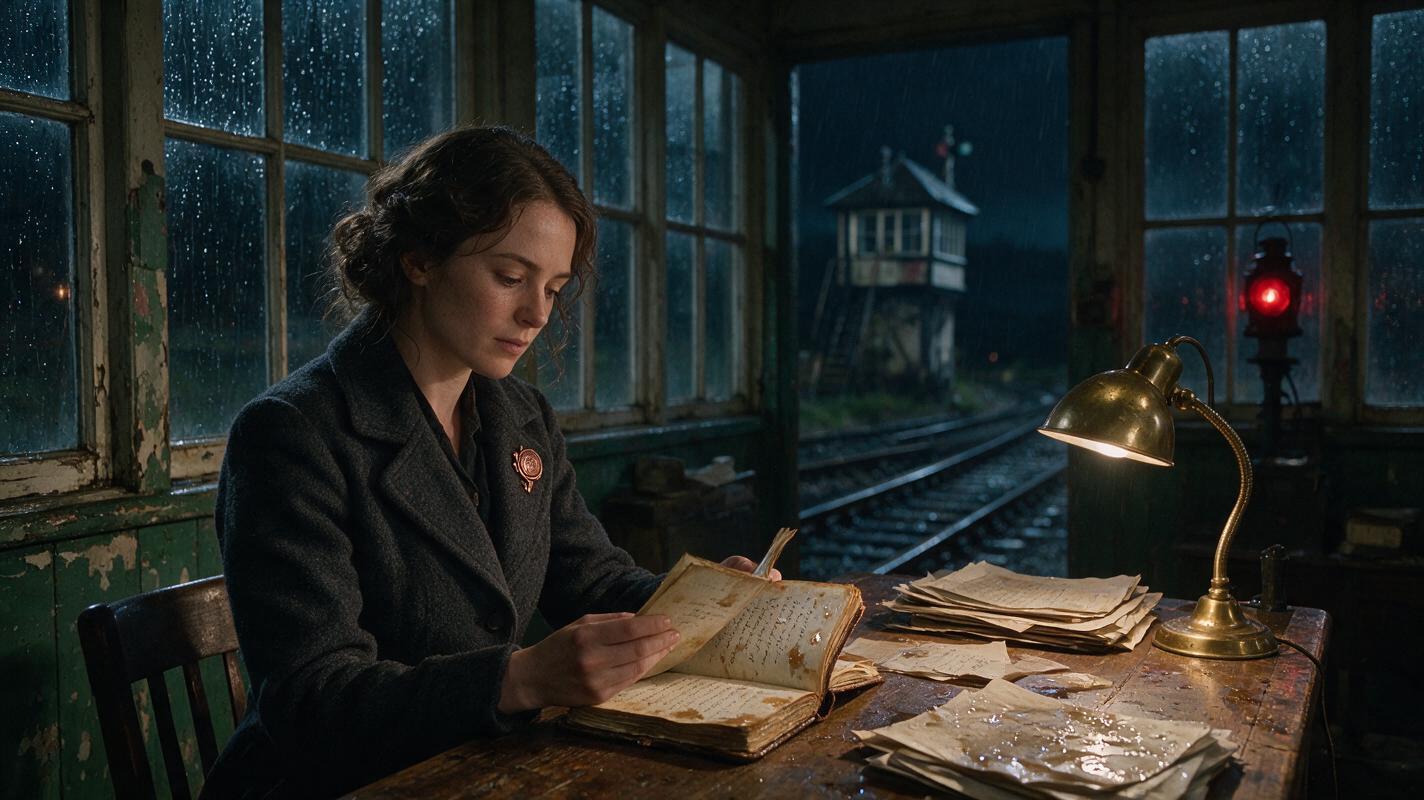
- Wide view of Eliza alone in the abandoned office.
- Insert of the diary and water-damaged page edges.
- Memory close-up of the brass key reaching the counter.
- Wall shadow suggesting an unseen observer.
- Obstructed view through the signal-room glass.
- Present-day reaction as the distant red lamp illuminates.
Cinematic editorial-realism frame inside a lived-in abandoned rural railway office at night, peeling green paint, scarred wooden desk, damp paper files, brass desk lamp, rain on tall windows, an old signal tower visible across the tracks. Eliza Hart sits at the desk reading a water-stained diary, matching the supplied character reference exactly, charcoal wool coat and copper brooch. MANDATORY CAMERA: true three-quarter wide shot from the doorway, eye level, 35mm lens, desk in the left foreground and red railway lamp deep in the right background. Naturalistic tungsten and rainy blue lighting, restrained film grain, believable period details, landscape 16:9, no text, no logo, no interface, no additional people.Keep the location description identical across prompts. Change only the shot size, camera position, character action, and story-critical prop. This preserves geography while giving the edit enough coverage.
Step 5 — Generate controlled clips from selected frames
Do not animate every storyboard panel immediately. Select the frames that contain a meaningful change: the key touching the counter, the shadow crossing the wall, the page turning, and the signal lamp switching on.
Use image to video for shots where identity, costume, or production design must remain tightly anchored. Describe one principal action and one restrained camera behavior per clip.
Animate this exact reference frame. Eliza slowly turns one brittle diary page and freezes halfway through the motion when a red light appears across the tracks. Preserve her face, short waved hair, charcoal coat, copper brooch, hand anatomy, desk position, diary shape, and railway-office layout. MANDATORY CAMERA: locked true three-quarter shot with a very slow five-percent push-in only. Natural breathing, subtle eye movement toward the window, realistic paper physics, stable background, no speaking mouth movement, no new objects, no duplicated fingers, no additional person, cinematic landscape 16:9.Generate short action units that can be trimmed around their cleanest movement. A clip does not need to represent an entire paragraph; it only needs to deliver one readable beat.
Step 6 — Use visual contradiction instead of exposition
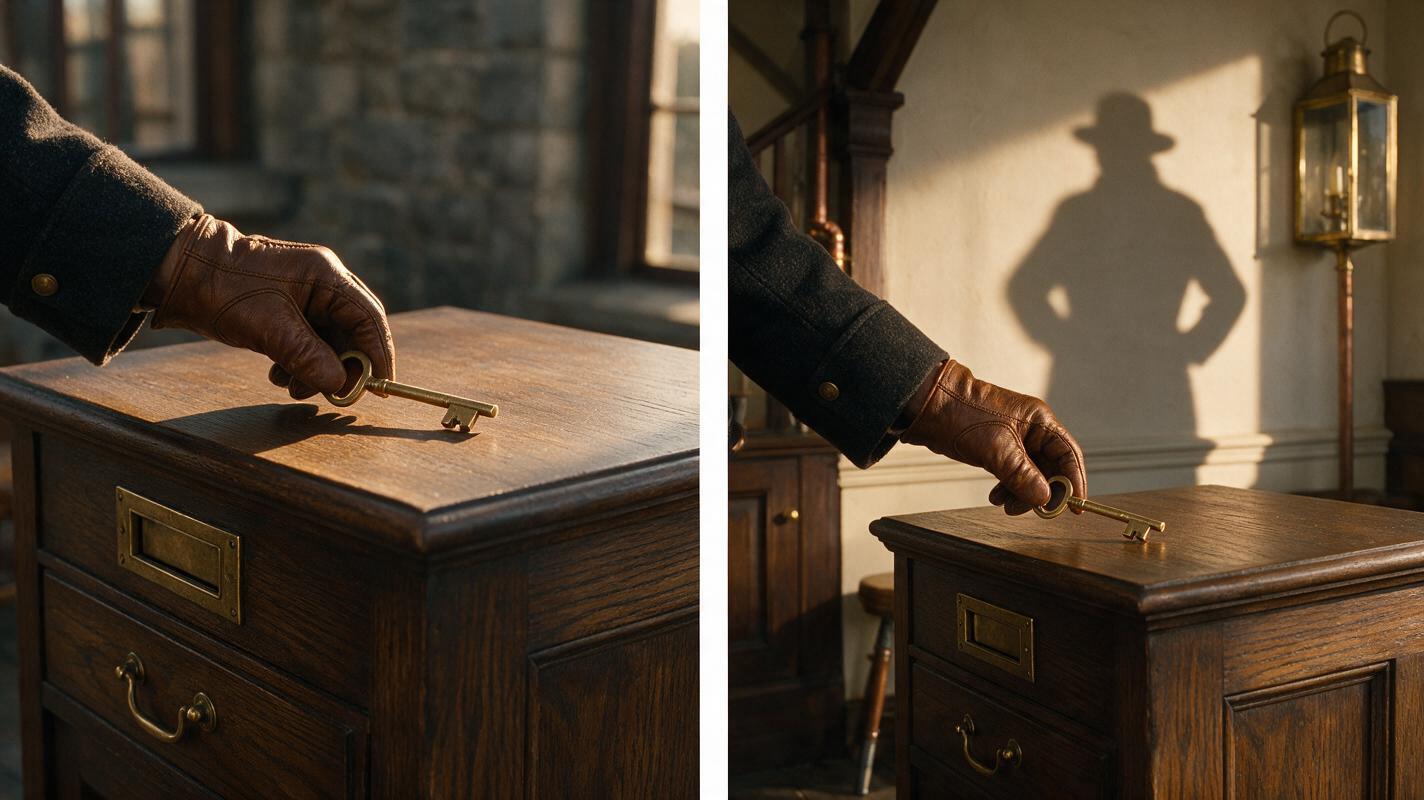
The adaptation becomes cinematic when the picture adds information unavailable in the document. Create paired frames showing the stated account and the suspicious detail that undermines it.
Wordless cinematic comparison presented as two equal side-by-side landscape frames with a clean central division. LEFT FRAME: close-up of Eliza Hart's gloved hand placing a brass railway key on an empty wooden ticket counter before sunset, calm and orderly composition. RIGHT FRAME: the same location and instant from a lower true three-quarter angle, revealing a second human shadow stretching across the wall behind her while no second person is directly visible. Preserve the same hand, key, counter, warm sunset light, wardrobe sleeve, and period setting in both frames. MANDATORY CAMERA: left frame 50mm overhead three-quarter close-up; right frame 35mm low three-quarter view. Photorealistic editorial cinema, landscape 16:9, no text, no labels, no arrows, no logo, no interface.Useful contradictions include:
- A voice says the room was empty while a curtain moves behind the character.
- A diary claims an object was destroyed, but it appears in the present-day scene.
- A letter describes calm behavior while the writer’s hand visibly trembles.
- Two accounts show the same event with different blocking or props.
Keep each discrepancy legible but restrained. If the suspicious detail dominates the frame, the audience no longer has the pleasure of discovering it.
Step 7 — Edit voiceover, document inserts, and reactions
Record voiceover after the visual structure is stable. Retain phrases with personality, evidence, or ambiguity; remove sentences that the picture already communicates clearly.
A useful rhythm is to begin a line over the present-day reader, continue it across the memory image, and end on a reaction or contradictory detail. Leave short pockets without narration so viewers can inspect the evidence themselves.
| Element | Best use | Avoid |
|---|---|---|
| Voiceover | Subjective claims and distinctive language | Describing every visible action |
| Document insert | Signature, date, stain, torn edge, key phrase | Full pages that require prolonged reading |
| Memory scene | Embodied action and disputed evidence | Presenting uncertain testimony as neutral fact |
| Reader reaction | Changing the meaning of the preceding line | Generic surprise after every sentence |
Once the character sheet, storyboard, and motion prompts are ready, try for free and test the sequence with only three shots before committing to the full chapter.
Final checklist
- Separate visible evidence from the narrator’s unverified claims.
- Lock recurring character and costume details with a three-view reference sheet.
- Give present events and uncertain memories different camera grammars.
- Use voiceover for subjectivity, not for actions already visible on screen.
- Animate one important action per clip.
- Plant visual contradictions that reward attentive viewing.
- Test a three-shot sequence before adapting the full passage.
FAQ
Should the complete letter or diary entry appear on screen?
Usually not. Show enough of the physical page to establish authorship, age, and authenticity, then let selective voiceover and dramatized images carry the passage. A signature, date, stain, or crossed-out sentence is often more cinematic than a full readable page.
How do I show that a memory may be false?
Use restricted viewpoints rather than exaggerated dream effects. Obstruct the face, keep a crucial action off-screen, reveal a conflicting shadow, or repeat the event later with altered blocking. These choices preserve uncertainty without confusing the basic action.
Can this workflow adapt emails or text messages?
Yes. Treat the device as a story prop, extract only the decisive wording, and move quickly to physical consequences and reactions. Avoid building the sequence around invented interfaces or long message screens.
How much voiceover should an AI story video use?
Use enough to preserve the document’s voice but leave room for images, sound, and silence to contribute new information. If removing a sentence does not change the scene’s meaning or personality, it can probably be cut.
Sources
Keywords
novel to video, script to video ai, ai storyboard generator, ai movie maker, create ai video from script, ai story video generator