Runway Prompts for 3-Second Product Ad Hooks That Stop the Scroll
Use Runway to create controlled three-second product ad hooks without changing the product, offer or audience. This guide includes reusable prompts, hook concepts and a testing framework for identifying motion that improves attention rather than merely looking cinematic.
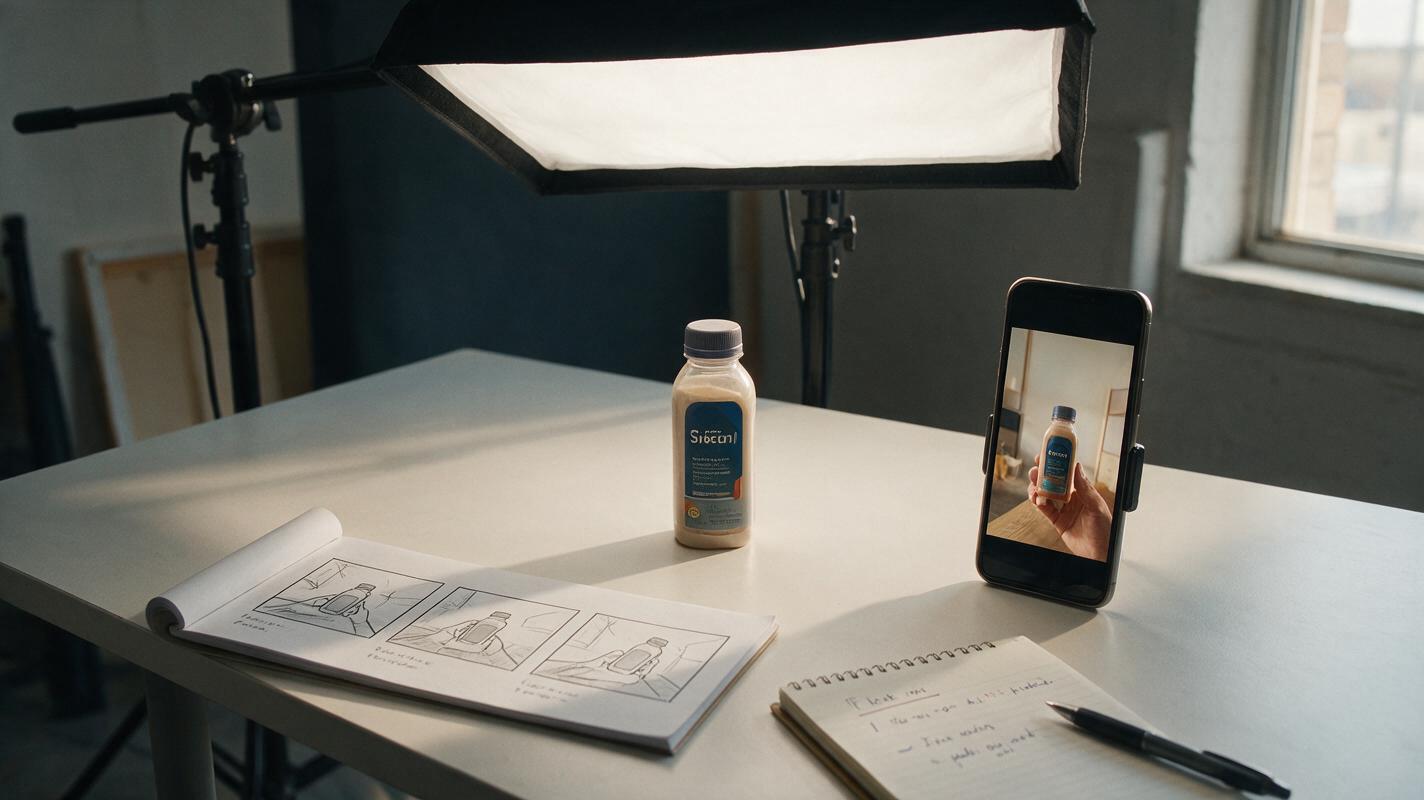
Table of contents
Build a better opening without rebuilding the whole ad
If viewers leave before your product or benefit appears, changing the final call to action will not rescue the ad. A more useful test is to generate several three-second openings from the same approved product image, then attach each opening to an identical ad body. Runway can help create these short motion variants quickly, but the prompts must control product identity, camera movement and the final transition.
The objective is not to make every hook more dramatic. It is to discover which visual event earns attention from the right audience while keeping the rest of the experiment comparable.
What makes a product ad hook testable
A testable hook changes one primary motion idea while preserving the variables that already define the campaign. The product, offer, body sequence, voiceover, audio mix, caption style and call to action should remain unchanged.
For example, one variant might reveal a running shoe through a fast lateral light sweep. Another might begin with a close texture detail and pull back to the same packshot. Those are meaningfully different opening devices. Changing the shoe color, setting, headline and camera direction at the same time would create two unrelated ads rather than a clean hook test.
Testing rule: change the attention mechanism, not the marketing proposition.
Before generating anything, define the opening as a compact creative hypothesis:
- Audience state: What is the viewer doing or feeling before the ad appears?
- Interrupt: What visual change is supposed to earn the first glance?
- Product arrival: When does the product become clearly recognizable?
- Exit frame: What composition must connect to the unchanged ad body?
Choose a source frame that can survive motion
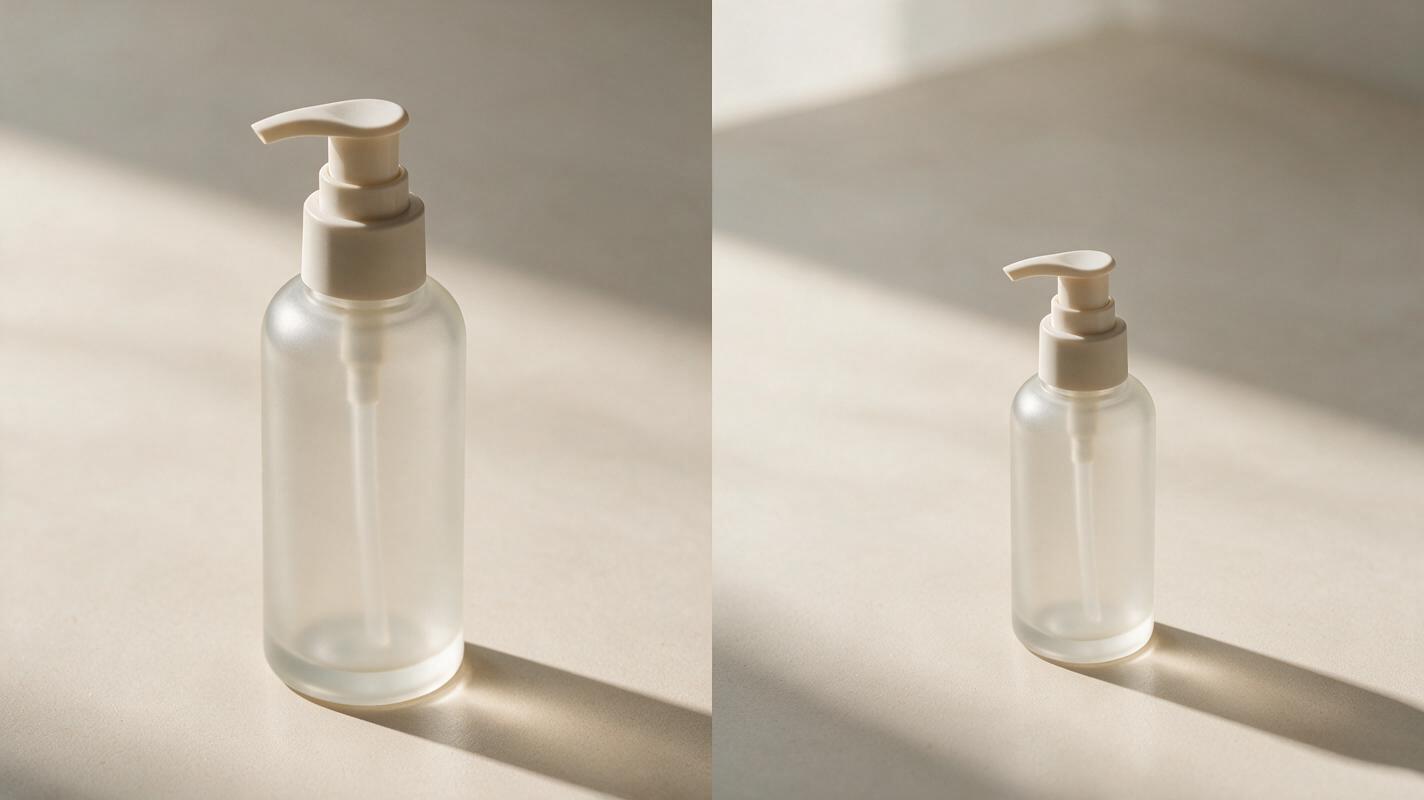
Start with an approved product image that has clean edges, believable geometry and enough surrounding space for movement. A tightly cropped packshot gives the model little room to push, orbit or reveal without inventing missing product details.
For an image to video workflow, the source frame should establish the product more precisely than the prompt does. Treat the image as the identity reference and the prompt as the motion brief.
- Use the real packaging, colorway and surface finish.
- Remove temporary badges or legal copy that should not be animated.
- Leave negative space in the direction of the planned camera move.
- Avoid overlapping props that obscure important product edges.
- Prepare the source in the final placement ratio, such as 9:16 for vertical feeds.
If a label or interface must remain perfectly readable, plan to composite the verified asset back into the generated clip. Generative motion should not be the final authority for regulated copy, prices, logos or functional UI.
Use a prompt structure built around motion control
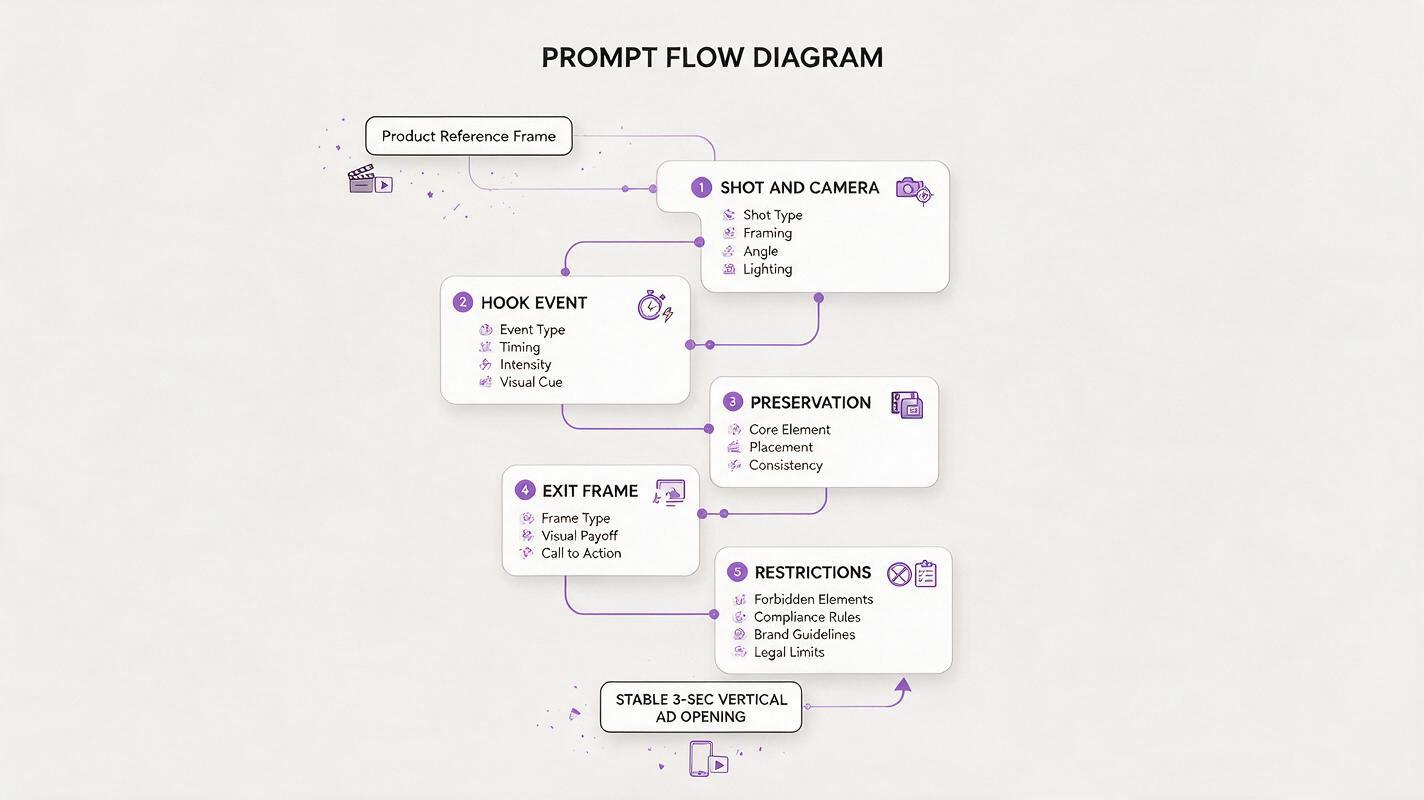
A useful Runway prompt for a short performance-ad opening should describe a single visual event. Long lists of cinematic adjectives often introduce extra movement without making the marketing idea clearer.
[SHOT AND CAMERA]
The camera [one controlled movement] while [product] remains [position and orientation].

[HOOK EVENT]
[One visual change] happens during the opening beat, revealing [specific benefit cue].

[PRESERVATION]
Preserve the exact product shape, packaging, logo placement, color and proportions from the reference image.

[EXIT FRAME]
End on [composition matching the first frame of the existing ad body].

[RESTRICTIONS]
No extra products, no package redesign, no warped text, no new labels, no hands unless specified, no scene cut.
The exit-frame instruction is especially important. A hook that ends on an incompatible angle creates a visible jump when it is attached to the existing ad. Define the destination composition before describing decorative effects.
Runway prompts for distinct hook hypotheses
Rapid benefit reveal
Use this when the product has a feature that can be communicated visually, such as water resistance, cooling or compact storage.
Vertical product commercial. Begin on an extreme close-up of the product surface. The camera pulls back smoothly as a controlled sheet of water moves across the surface and clears away, revealing the complete product centered in frame. Preserve the exact product shape, materials, logo placement, color and packaging details from the reference. End on a stable front three-quarter packshot with clean copy space above. No redesign, no duplicate product, no warped label, no scene cut.Pattern interruption through scale
This hook creates contrast by moving from an ambiguous detail to a recognizable product. It can work when the product has distinctive texture, construction or ingredients.
Open on a macro view of the product texture filling the vertical frame. Hold briefly, then execute one fast but smooth pullback to reveal the entire product in its original orientation on the same background. Keep the product geometry, material, color and branding identical to the reference image. End centered and motionless on the approved packshot composition. No added objects, no new text, no rotation, no morphing.Problem-to-product transformation
Use this structure when a common frustration can be shown without making an unsupported product claim. The problem cue should be recognizable but restrained.
Begin with the product partially obscured by a neat cluster of relevant everyday clutter in the foreground. The clutter slides outward in one coordinated motion, revealing the unchanged product as the camera makes a subtle forward push. Preserve every product and packaging detail from the reference. End with the product fully visible in the same scale and angle as the next ad shot. No explosions, no floating objects, no package changes, no additional claims or text.Fast environmental transition
This tests whether context earns more attention than a studio opening. Keep the product stationary so the environment is the only major variable.
The product remains locked in the center at the exact reference angle while the background transitions from a neutral studio surface into a realistic use-context environment through one sweeping light-and-shadow change. Maintain accurate contact shadow and product scale. Preserve the exact product design, logo, color and proportions. Finish on a stable contextual product shot with clear negative space on the upper left. No product movement, no duplicate objects, no distorted text, no camera orbit.These prompts can also be adapted inside an ai video generator, but compare models using the same source frame and motion brief. Otherwise, model differences become mixed with concept differences.
Build a hook matrix instead of generating random variations
A small matrix produces more actionable results than a large folder of unrelated clips. Begin with three hook mechanisms and one control. Generate multiple candidates for quality assurance, but advance only one representative from each concept into paid testing.
| Variant | Primary variable | What remains locked | Question answered |
|---|---|---|---|
| Control | No generated opening | Original ad | Does any new hook improve attention? |
| A | Macro pullback | Product, copy, body and CTA | Does visual ambiguity earn a longer look? |
| B | Benefit reveal | Product, copy, body and CTA | Does an immediate benefit cue attract qualified viewers? |
| C | Context transition | Product, copy, body and CTA | Does use context outperform a studio opening? |
Keep duration close across variants. A one-second hook and a three-second hook change pacing as well as concept, making the result harder to interpret. Use the same music entry, voiceover start and transition point wherever possible.
Reject attractive clips that damage the experiment
A generated clip can look polished and still be unsuitable for performance testing. Review it frame by frame before editing it into the campaign.
- Identity drift: The product changes shape, color, cap, controls or package proportions.
- Label instability: Branding bends, disappears or turns into invented text.
- Unmotivated motion: The product floats, rotates or pulses when the prompt did not request it.
- False demonstration: The animation implies a capability or result the product cannot substantiate.
- Transition mismatch: The final frame does not connect cleanly to the existing ad body.
- Competing focal points: Effects or props attract more attention than the product.
Repair a failed generation by simplifying the brief. Remove secondary effects, specify one camera move and repeat the preservation language. If the logo remains unstable, generate the motion plate without relying on the rendered label and restore the approved branding during editing.
Measure whether the hook attracts useful attention
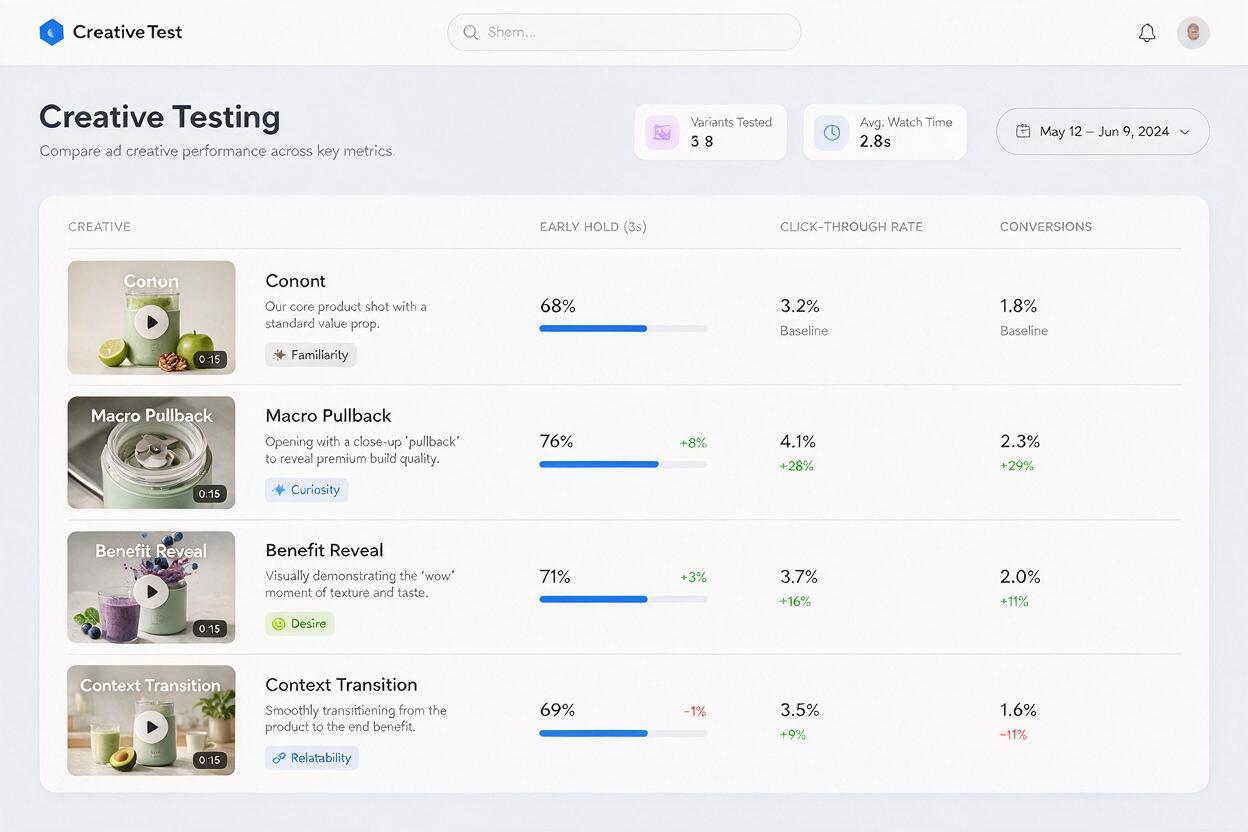
Do not select the winner from aesthetics alone. Evaluate each variant using the earliest reliable attention metric available in the ad platform, then connect it to downstream behavior.
A hook that increases short views but reduces landing-page visits may be attracting curiosity without communicating relevance. Conversely, a less spectacular opening can be more valuable if it maintains qualified watch time and improves conversion efficiency.
- Compare early hold or view-through behavior.
- Check whether click-through rate changes in the same direction.
- Monitor conversion rate and cost after the click.
- Break results down by placement when delivery volume allows.
- Document the mechanism, not merely the winning file name.
Once one mechanism wins, test a narrower variation within that family. For example, compare a macro pullback based on texture against one based on a functional detail. This turns a single winner into a reusable creative principle.
Final checklist
- Use one approved product image as the identity reference.
- Change only the opening motion hypothesis.
- Describe one camera move and one hook event per prompt.
- Specify the exit frame that connects to the existing ad.
- Reject product drift, false demonstrations and unstable branding.
- Keep the body, offer, CTA, audio and duration comparable.
- Judge early attention alongside clicks and conversions.
When your source frame and test matrix are ready, test this prompt yourself and generate a small set of controlled hooks before spending budget on broader variations.
Keywords
Runway prompts, product ad hooks, AI marketing video, performance ad creative, creative testing, image to video, social media ads