Seedream 4.5 Prompts for Skincare Ingredient Hero Images
Create premium skincare ingredient hero images without losing packaging accuracy or turning the formula story into a generic science graphic. These reusable Seedream 4.5 prompts cover hydration, brightening, barrier-care and nighttime-renewal concepts, plus practical fixes for floating products, illegible labels and artificial textures.
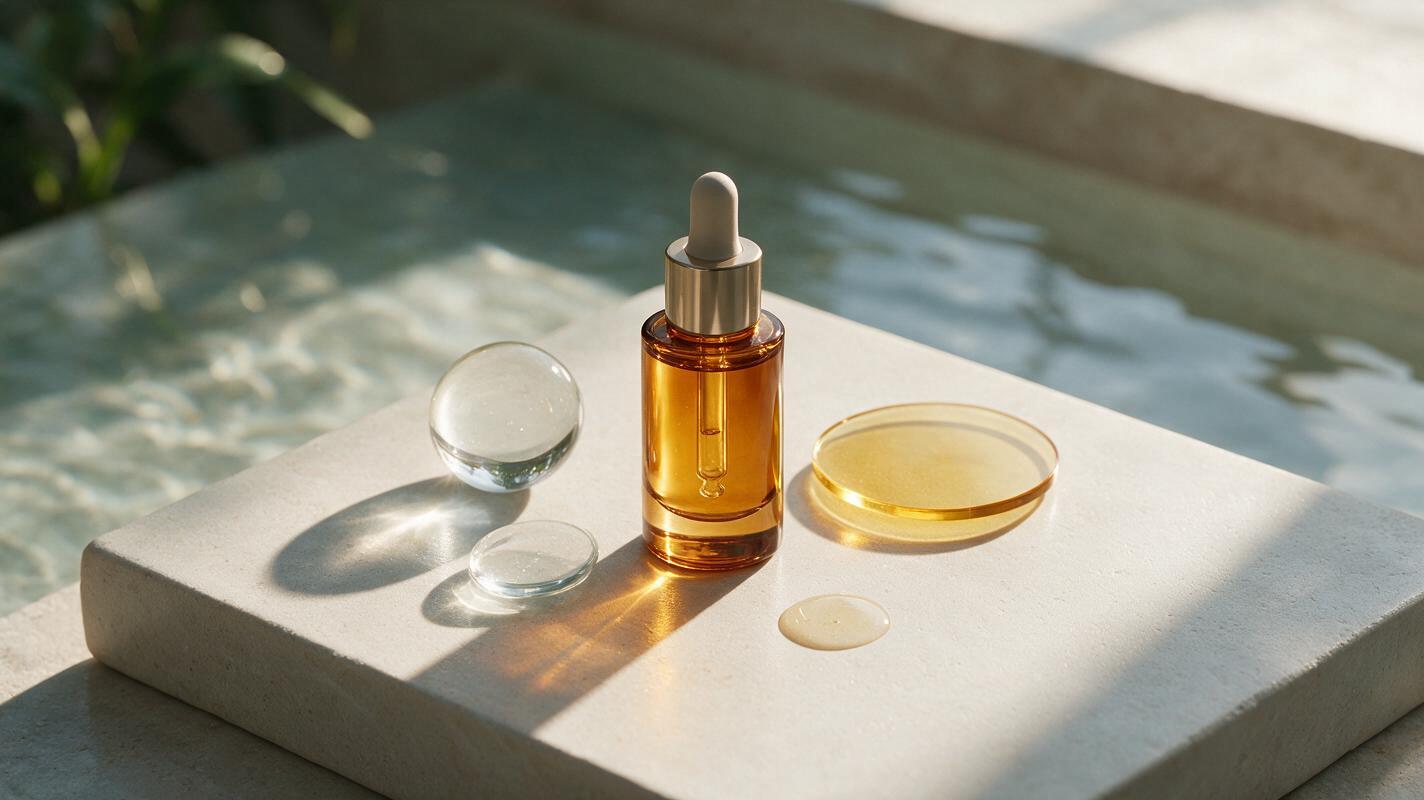
Table of contents
Turn an ingredient claim into a premium product visual
A skincare ingredient hero image should make the formula story instantly understandable while keeping the real product recognizable. The difficult part is balancing those goals: overly literal prompts produce laboratory clichés, while highly artistic prompts can distort the bottle, invent label text or suggest effects the product cannot substantiate.
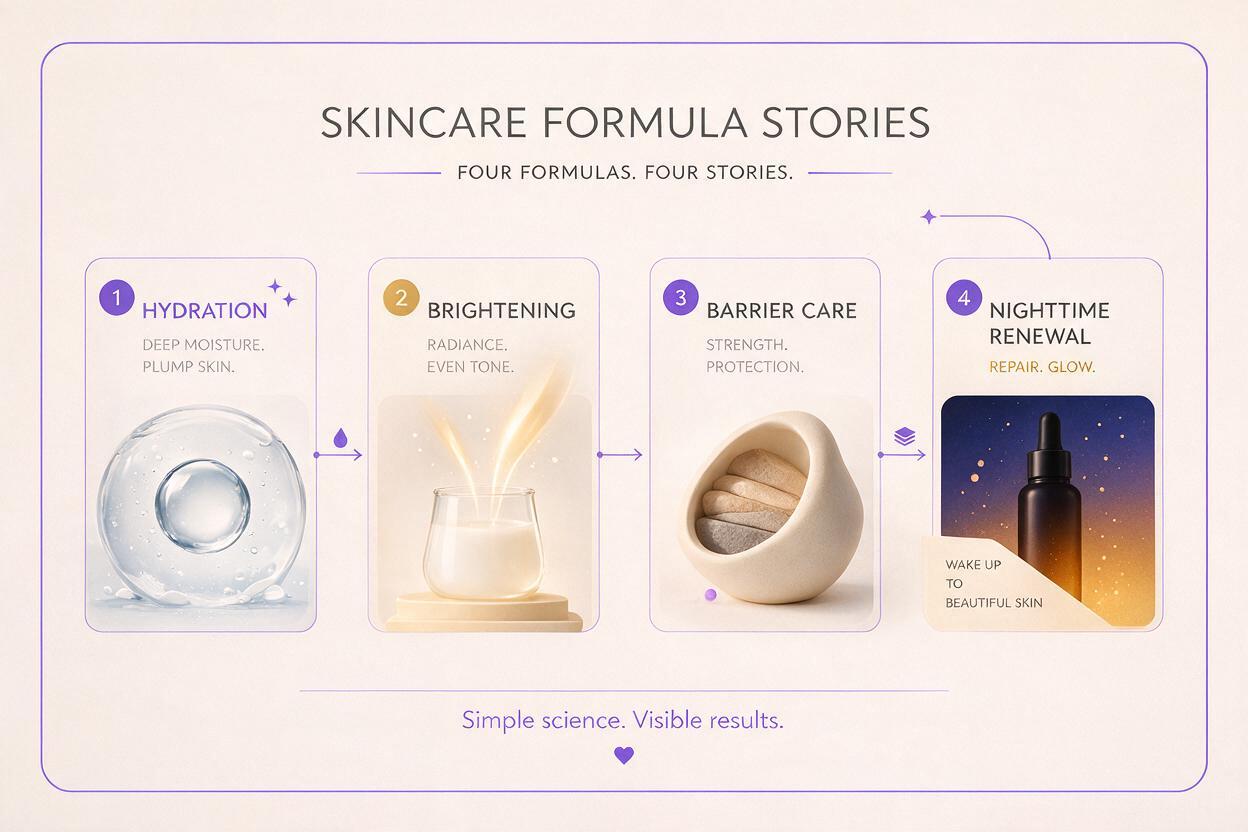
Seedream 4.5 can be used to develop controlled campaign concepts from a clean packshot and a concise visual brief. The strongest workflow treats ingredients as art direction rather than asking the model to illustrate scientific efficacy. Water ripples can communicate hydration; amber light can suggest a brightening story; soft ceramic layers can evoke barrier care. None needs to depict an unverified biological process.
Translate the ingredient into a visual metaphor
Start by separating the product's approved message from the image treatment. An ingredient name alone is not enough direction. A prompt such as luxury niacinamide serum ad leaves the model to invent the setting, color palette, texture and scientific symbolism.
A more useful brief connects four elements:
- Product truth: the real package, formula color, applicator and finish.
- Ingredient cue: a recognizable botanical, mineral, liquid or color reference.
- Consumer result: hydration, radiance, comfort or nighttime care, expressed as mood rather than proof.
- Campaign language: clinical, botanical, sensorial, minimalist or editorial.
| Formula story | Useful visual language | Visuals to treat cautiously |
|---|---|---|
| Hydration | Clear water lenses, condensation, translucent gel and cool highlights | Liquid penetrating skin or dramatic medical diagrams |
| Brightening | Warm citrus light, luminous glass and a clean sunrise gradient | Extreme skin-color transformation |
| Barrier care | Protective layers, soft ceramic forms and cocoon-like fabric | Literal repaired skin tissue without substantiation |
| Nighttime renewal | Deep indigo, controlled amber light and gradual shadow-to-light transitions | Instant wrinkle removal or altered facial anatomy |
Use ingredient symbolism to establish category and mood. Use approved copy, product documentation and human review to establish what the product may actually claim.
Prepare references that protect the real product
A polished source image improves the odds of a usable result. Choose a front-facing or three-quarter packshot with readable label hierarchy, neutral lighting and enough resolution to inspect the cap, pump, dropper or jar rim. Avoid supplying only a small ecommerce thumbnail.
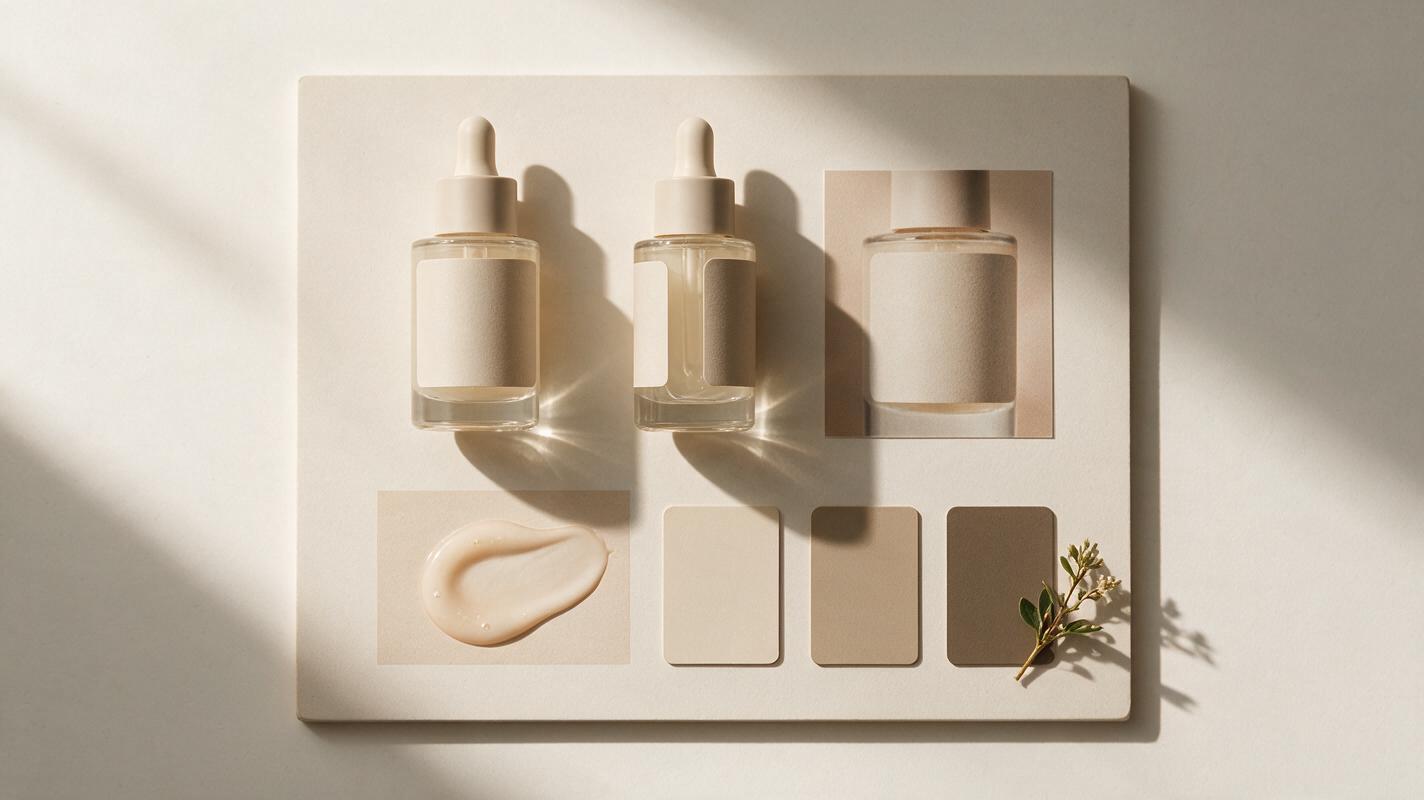
Alongside the packshot, prepare a compact reference sheet containing:
- The package photographed from the front and side.
- A close crop of the logo and essential label details.
- A true-to-life swatch of the formula outside the container.
- Brand colors represented as clean color blocks.
- One approved ingredient cue, such as a citrus slice, oat stem or water texture.
Decide which areas must not change before generation. For most beauty campaigns, that protected list includes the logo, package proportions, closure design, label layout and net-content area. Small legal text is better added or restored during final production than trusted to a generated image.
Use a prompt structure that separates product from atmosphere
When working with an ai image generator, describe the commercial photograph first and the ingredient world second. This makes the package the subject rather than a decorative object lost inside the scene.
Premium skincare campaign hero image using the supplied product packshot as the primary reference.

PRODUCT LOCK:
preserve the bottle silhouette, cap or pump design, material, logo position, label hierarchy and package color; product remains front-facing and recognizable

INGREDIENT STORY:
[ingredient or formula cue] represented through [visual metaphor], communicating [approved consumer benefit or mood] without anatomical or medical imagery

ART DIRECTION:
[campaign style], [background materials], [color palette], [lighting direction]

COMPOSITION:
product occupies [percentage] of frame, clear negative space on [side] for headline, realistic contact shadow, physically plausible reflections

CAMERA AND FINISH:
commercial tabletop photography, [lens perspective], crisp package edges, controlled highlights, realistic formula texture, premium retouching

AVOID:
redesigned packaging, invented label text, duplicate products, floating bottle, distorted cap, excessive splash, fake molecular symbols, human skin transformation, clutter
Keep the first generation visually simple. Once the package, lighting and metaphor work together, create controlled variations by changing only one variable at a time: background color, ingredient placement, camera height or headline space.
Hydration serum prompt with clear water optics
This direction suits hyaluronic-acid serums, moisture essences and lightweight gels. It communicates freshness without requiring a face or a literal skin demonstration.
Create a premium hero photograph from the supplied hydration serum packshot. Preserve the exact bottle proportions, frosted glass appearance, dropper geometry, logo placement and label hierarchy. Place the bottle upright on a pale translucent surface surrounded by two restrained water lenses and a small swatch of clear viscous serum. Cool white and soft aqua palette, diffused daylight from the upper left, precise contact shadow, realistic refraction through the glass, minimal condensation only on the background surface. Product fills 55 percent of the frame with clean headline space on the right. Sophisticated clinical beauty campaign, not a beverage ad. Avoid giant splashes, floating objects, blue formula inside the bottle, bubbles covering the label and invented text.Brightening serum prompt without exaggerated results
For vitamin C or radiance-led creative, use light as the central metaphor. This avoids the compliance and credibility problems of generating an implausible before-and-after complexion.
Create an editorial skincare product photograph using the supplied brightening serum as the exact packaging reference. Keep the amber bottle, closure, label placement and glass transparency unchanged. Position the product on a warm ivory stone plinth with a narrow band of golden morning light passing behind it, one subtle translucent citrus-colored glass disc in the background and no literal fruit touching the package. Warm cream, soft amber and muted yellow palette; crisp controlled highlights; realistic shadow; elegant negative space above the product for campaign copy. Communicate luminosity through lighting only. Avoid glowing liquid, neon orange, exploding citrus, altered packaging, whitening imagery, faces and medical symbols.Barrier-care cream prompt with protective layers
Barrier-care packaging often benefits from a quieter composition. Rounded forms, matte surfaces and layered materials can express comfort while leaving room for the product's approved copy to explain the formula.
Generate a calm luxury campaign image from the supplied barrier-care cream jar. Preserve the exact jar width, lid depth, material finish, logo scale and label layout. Place the closed jar on overlapping matte ceramic platforms with rounded edges, forming a gentle protective enclosure around the product without covering it. Add one small cream swatch beside the jar with realistic dense emulsion texture and a clean spatula trail. Soft oat, warm white and pale beige palette, broad diffused studio lighting, low contrast, natural contact shadows and tactile detail. Front three-quarter camera angle with copy space on the upper left. Avoid cracked skin imagery, medical diagrams, floating layers, oversized cream peaks, duplicated lids and altered text.Night serum prompt with controlled contrast
Nighttime campaigns can become visually heavy, making dark bottles disappear. Use edge light and reflective separation instead of asking for a brighter or redesigned package.
Create a high-end nighttime skincare hero image using the supplied serum bottle as the locked reference. Preserve the bottle shape, dark glass tone, cap, label hierarchy and logo position. Set the bottle on smoked glass against a deep indigo gradient, with a restrained warm amber halo behind the upper bottle and a narrow cool rim light separating both edges from the background. Include one subtle curved shadow suggesting a gradual night-to-morning transition. Product remains fully legible and occupies 60 percent of the frame; negative space on the left for a short headline. Premium cinematic tabletop photography with realistic reflections. Avoid stars, moons, fantasy particles, glowing formula, blacked-out labels, anti-aging transformations and fake scientific graphics.If one of these directions fits your campaign, test this prompt yourself with a clean product reference and replace every bracketed or product-specific detail with information from the real formula brief.
Fix the failures that make ingredient ads look synthetic
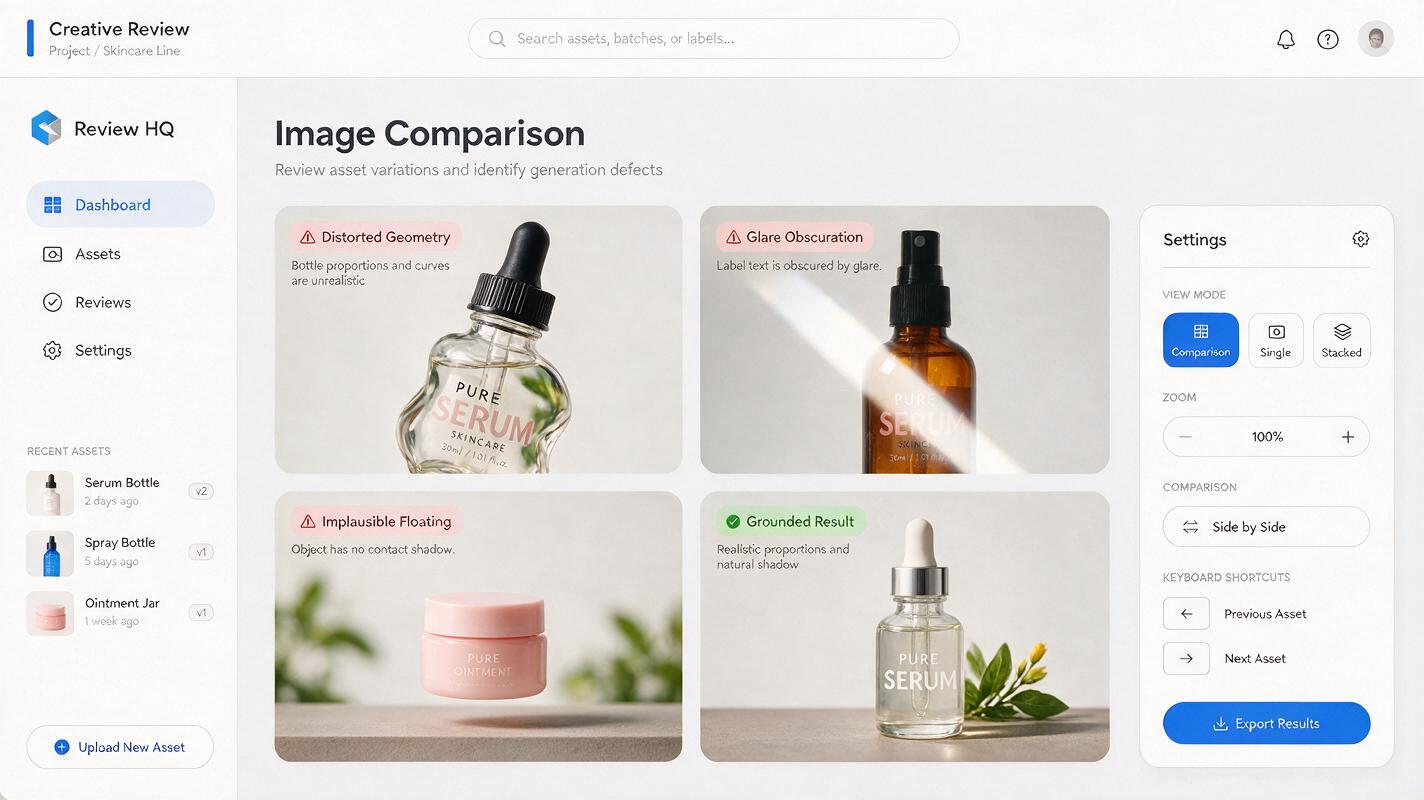
| Problem | Likely cause | Prompt correction |
|---|---|---|
| The package has changed shape | The atmosphere received more detail than the product lock | Move package constraints to the opening lines and specify silhouette, closure and viewing angle |
| The label is unreadable | Too much glare, condensation or foreground texture | Request a clear label plane, controlled highlight and unobstructed front face |
| The scene resembles a beverage ad | Large splashes, fruit and saturated liquid dominate | Reduce the ingredient cue to one supporting object and name the intended skincare category |
| The product appears to float | No surface relationship or shadow was specified | Add a defined tabletop, realistic contact shadow and physically plausible reflection |
| The image makes an aggressive efficacy claim | The prompt depicts biological change instead of campaign mood | Replace anatomy and transformation with lighting, material or color metaphors |
| Every variation looks like a different campaign | Too many variables changed simultaneously | Lock palette, camera angle and lighting; vary only one prop or composition element |
Adapt one approved concept across campaign formats
Once an ingredient hero passes brand and compliance review, build the campaign family from that approved frame rather than restarting the concept. Generate a wide version with headline space, a vertical social crop with the product centered low, and a square ecommerce-support image with fewer atmospheric elements.
Maintain the same product scale, palette, light direction and ingredient metaphor across formats. Treat any newly generated frame as a draft: compare it with the original packshot, restore exact typography where necessary and confirm that formula color has not shifted.
- Website banner: wide negative space with the product away from navigation or copy.
- Paid social: immediate package recognition and one clear ingredient cue.
- Retail media: brighter product separation and restrained props at small display sizes.
- Organic carousel: hero image, formula close-up, ingredient detail and approved benefit card.
Final checklist
- The package silhouette and closure match the real product.
- The logo and label hierarchy remain in their correct positions.
- The formula color and texture are plausible.
- The ingredient cue supports the product instead of dominating it.
- The visual metaphor does not imply an unapproved medical or efficacy claim.
- The bottle or jar has a believable surface, shadow and reflection.
- Negative space matches the intended campaign format.
- All final text, claims and packaging details receive human review.
Keywords
Seedream 4.5 prompts, skincare ingredient images, skincare ad creative, cosmetic product photography, AI beauty generator, beauty campaign AI, skincare product photography