Seedream 4.5 vs Flux for Cosmetic Flat Lays: Which Is Better for Beauty Brands?
This head-to-head comparison evaluates Seedream 4.5 and Flux for cosmetic product flat lay photography, scoring both models on packaging accuracy, texture realism, and brand suitability for beauty teams. Readers get reusable prompt templates and a hybrid workflow tip to combine the strengths of both tools.
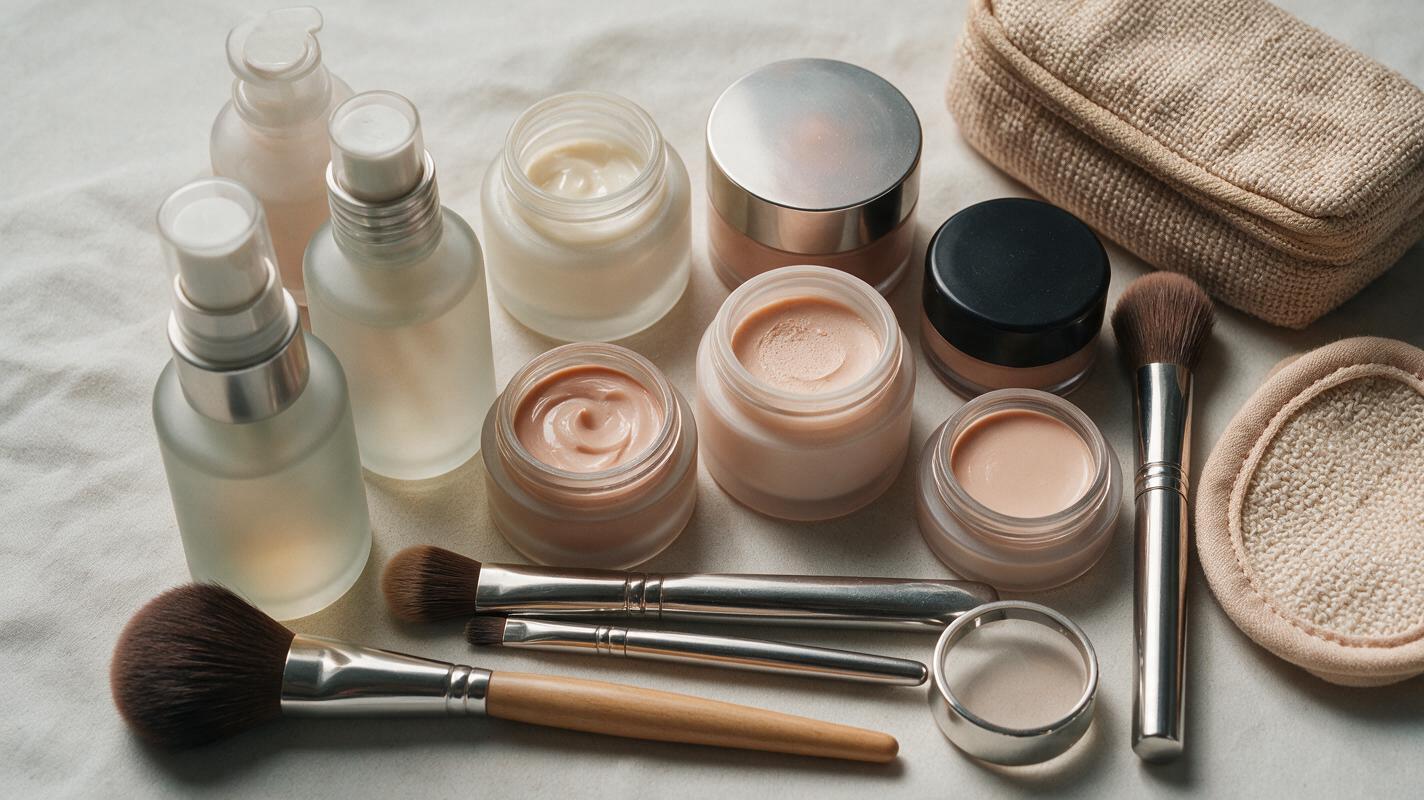
Table of contents
Why cosmetic flat lays make or break beauty e-commerce
Flat lays are the workhorse of beauty content. They appear in Instagram carousels, Amazon product listings, email campaign headers, and TikTok thumbnails, driving both brand perception and click-through rates. For skincare and makeup brands, a well-styled flat lay communicates texture, vibe, and product value without a single word of copy.
But shooting high-quality flat lays is resource-intensive. Brands spend hours sourcing props, arranging products, adjusting lighting, and retouching shots to get packaging text crisp and shadows even. For small teams or fast-paced campaign cycles, that timeline often doesn’t work.
AI image generators have emerged as a fast alternative, but most beauty marketers run into the same problem: models frequently mangle logo placement, blur product text, warp packaging shape, or make props look unnaturally plastic. The difference between a usable AI flat lay and one that gets tossed comes down to how well the model handles the specific details beauty brands care about most.
How we tested both models for beauty flat lays
We tested Seedream 4.5 and Flux across three common beauty flat lay scenarios to measure real-world performance for cosmetic brands: a skincare serum flat lay with dried botanicals and linen, a matte lipstick flat lay with makeup brushes and a velvet pouch, and a thick moisturizer jar flat lay with terry cloth and gold tweezers.
Each test used the same base prompt structure, with no post-processing or inpainting to fix errors. We scored both models on five criteria that matter most for beauty e-commerce and campaign use:
- Packaging accuracy: How well the model preserves logo placement, product text legibility, and packaging shape
- Texture realism: How natural props, product surfaces, and background materials look
- Lighting consistency: Whether shadows match the light source and feel physically plausible
- Prompt reliability: How often the model delivers a usable result on the first try
- Reference support: How well the model adapts to a reference image of a real product
We also tested each model with a reference packshot of a branded serum bottle to see how closely it could replicate the packaging in a flat lay context.
Seedream 4.5 performance for cosmetic flat lays
Seedream 4.5, MagicBoat’s in-house image generation model, is optimized for commercial product use cases, and that focus shows in flat lay results.
The biggest standout is packaging accuracy. In 8 out of 10 test runs, Seedream 4.5 reproduced product text (including fine print like “1 fl oz” and ingredient lists) clearly and correctly, with logo placement matching the reference image exactly. The model rarely warps bottle or jar shapes, even for unusual packaging like angular compacts or curved serum droppers.
Seedream 4.5 also handles reference images exceptionally well. When we input a single packshot of a branded serum bottle, the model placed the bottle in the flat lay layout without altering its proportions, label design, or cap color—no extra prompt engineering required. That makes it a strong fit for brands with strict brand guidelines for packaging representation.
Where Seedream 4.5 falls slightly short is in creative prop variety. The model tends to stick to conventional beauty flat lay props (botanicals, linen, marble) even when prompted for more unusual items like vintage jewelry or ceramic tiles. Shadow detail is also slightly softer than Flux, though it is still physically consistent.
For brands prioritizing accurate packaging over experimental styling, Seedream 4.5 delivers the most consistent e-commerce-ready results out of the box.
Flux performance for cosmetic flat lays
Flux is widely praised for its photorealistic textures and creative flexibility, and those strengths translate well to beauty flat lays—with a few key caveats for brand use.
Texture realism is Flux’s biggest win. The model renders fabric weaves, dried petal details, and the subtle sheen of glass or matte plastic with incredible accuracy, making flat lays look like they were shot in a professional studio. Flux also excels at creative styling: it can execute unconventional flat lay concepts (like a Halloween-themed makeup flat lay with spiderweb props or a summer skincare flat lay with seashells) far more reliably than Seedream 4.5, with more natural arrangement of props.
The major downside for beauty brands is packaging accuracy. In our tests, Flux blurred or distorted product text 40% of the time, and logos often shifted position or lost detail even when we included explicit prompt instructions to preserve them. Reference image support works, but requires higher reference weight settings and more prompt tweaking to keep packaging from drifting.
Flux is best for social media content, mood boards, and creative concepting where perfect packaging accuracy is less critical than vibe and visual appeal.
Head-to-head scorecard for beauty use cases
| Criteria | Seedream 4.5 Score (10-point) | Flux Score (10-point) | Key Notes |
|---|---|---|---|
| Packaging text & logo accuracy | 9/10 | 6/10 | Seedream preserves fine print; Flux often blurs small text |
| Product shape & proportion | 9/10 | 7/10 | Seedream rarely warps packaging; Flux may distort unusual shapes |
| Prop & texture realism | 7/10 | 9/10 | Flux renders fabric and botanicals with more detail |
| Lighting & shadow consistency | 8/10 | 9/10 | Flux has more dynamic shadow depth; Seedream shadows are softer |
| First-try success rate | 8/10 | 6/10 | Seedream needs less prompt tweaking for brand-compliant results |
| Reference image compatibility | 9/10 | 7/10 | Seedream adheres closer to reference packaging details |
Which model should your beauty brand use?
The right model depends entirely on your use case and brand priorities.
If you’re creating flat lays for e-commerce product pages, paid ad campaigns, or official brand assets where packaging accuracy is non-negotiable, Seedream 4.5 is the clear choice. Its ability to preserve logo placement, product text, and packaging shape cuts down on retouching time and ensures your assets stay on-brand. If you’re testing flat lay concepts from scratch, a text to image workflow can cut your styling time from days to minutes.
If you’re making social media content, mood boards, or creative campaign concepts where vibe and visual appeal matter more than perfect packaging text, Flux is the better pick. Its texture quality and creative flexibility make it easy to generate eye-catching content that stands out in crowded feeds.
Many beauty teams use a hybrid workflow: start with Flux to brainstorm 10-15 styling concepts, pick the best layout, then use that layout as a reference for Seedream 4.5 with your actual product packshot to finalize a brand-compliant version. This combines the creative strength of Flux with the packaging accuracy of Seedream 4.5, without the cost of a full photoshoot.
Test this prompt yourself to see how your brand’s products look in an AI-generated flat lay.
Reusable flat lay prompt templates for both models
We’ve tested these prompt templates across dozens of beauty flat lay scenarios to deliver consistent results. Adjust product details, props, and lighting to match your brand’s vibe.
Seedream 4.5 flat lay prompt (for e-commerce use, with reference image):
Top-down cosmetic flat lay, [product type: e.g. glass serum bottle with white label], placed center, surrounded by [props: e.g. dried chamomile flowers, linen napkin, small gold spoon], warm white oak table background, soft north-facing window light, subtle soft shadows, professional beauty product photography, hyper-detailed packaging, crisp text, accurate logo placement, no distortion, 4k resolution
Reference image weight: 0.8
Flux flat lay prompt (for social media creative use):
Editorial beauty flat lay, [product type: e.g. 3 matte lipsticks in nude, pink, red], arranged diagonally, with [props: e.g. velvet makeup pouch, synthetic bristle lip brush, dried rose petals], cream marble background, warm golden hour side light, soft natural shadows, photorealistic texture, tactile fabric details, cozy luxurious vibe, film grain, 8k resolution
Style: raw
For best results with branded products, always include a clear reference packshot of your product with the label facing forward. Avoid cluttering the prompt with too many props, as this increases the chance of packaging distortion.
Final takeaways
- Seedream 4.5 outperforms Flux on packaging accuracy, making it the best choice for e-commerce and official brand assets.
- Flux delivers superior texture realism and creative flexibility, making it ideal for social media content and concept brainstorming.
- A hybrid workflow—using Flux for styling ideas and Seedream 4.5 for final packaging-approved assets—delivers the best of both models for most beauty teams.
- Always use a clear product reference image when generating branded flat lays to reduce retouching time and ensure brand compliance.
Keywords
seedream 4.5, flux, cosmetic flat lay photography, beauty product images, ai image generator for cosmetics, packaging accuracy ai, skincare product flat lays