TikTok Shop UGC Ad Scripts Without Fake Customer Reviews
UGC-style ads can feel personal without pretending an actor is a satisfied customer. These script templates help TikTok Shop sellers pair honest hooks with real product footage, supported claims, and clearly identified speakers.
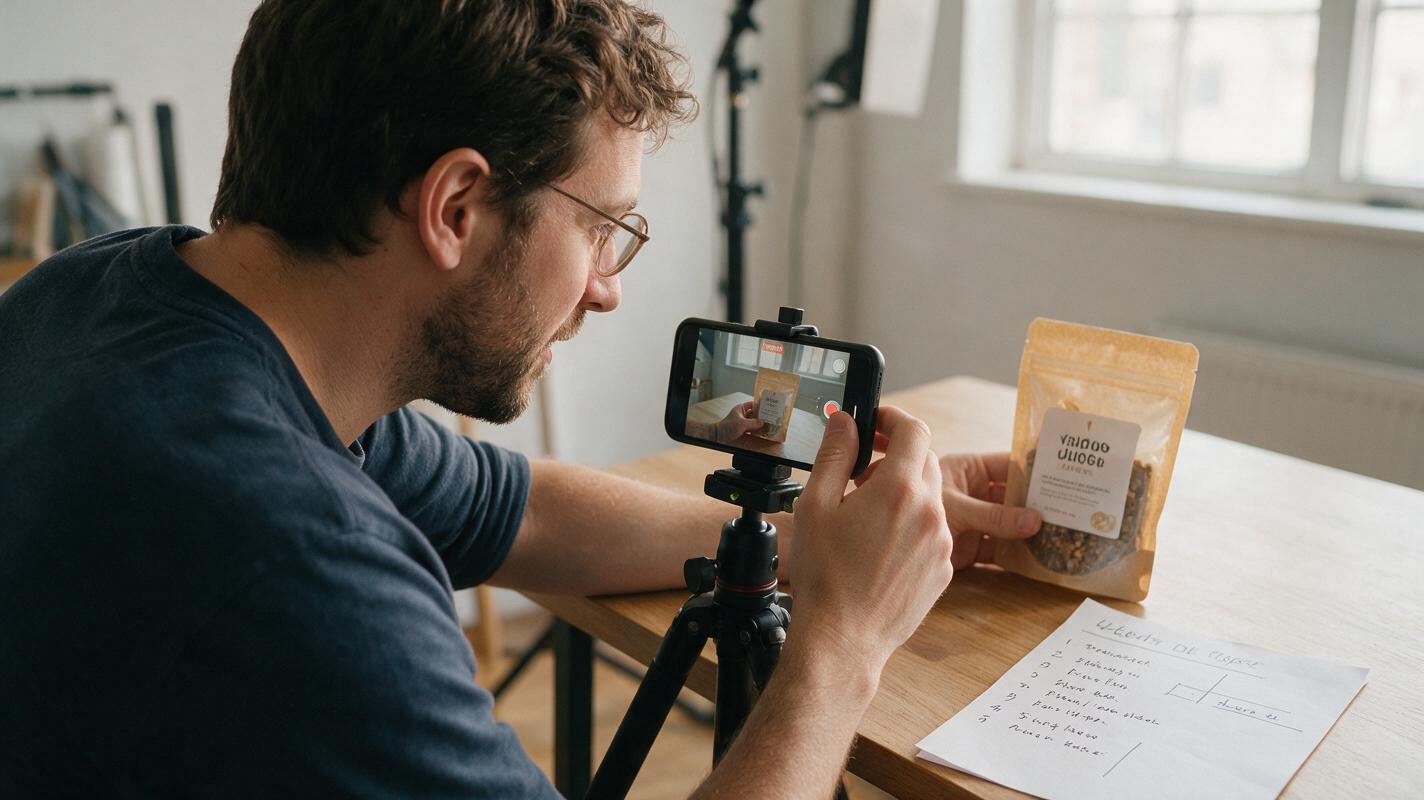
Table of contents
Make the ad feel personal without inventing a customer
A UGC-style TikTok Shop ad does not need a fabricated review to hold attention. If a founder, employee, or hired creator is speaking, give them a role they can honestly occupy. Then build the video around something viewers can actually see: the product, its contents, and a real demonstration.
The scripts below are designed for small ecommerce teams making short vertical ads. Each has a distinct hook, a filmable middle, and a closing line that does not depend on invented results or customer experiences.
Give every speaker a truthful point of view
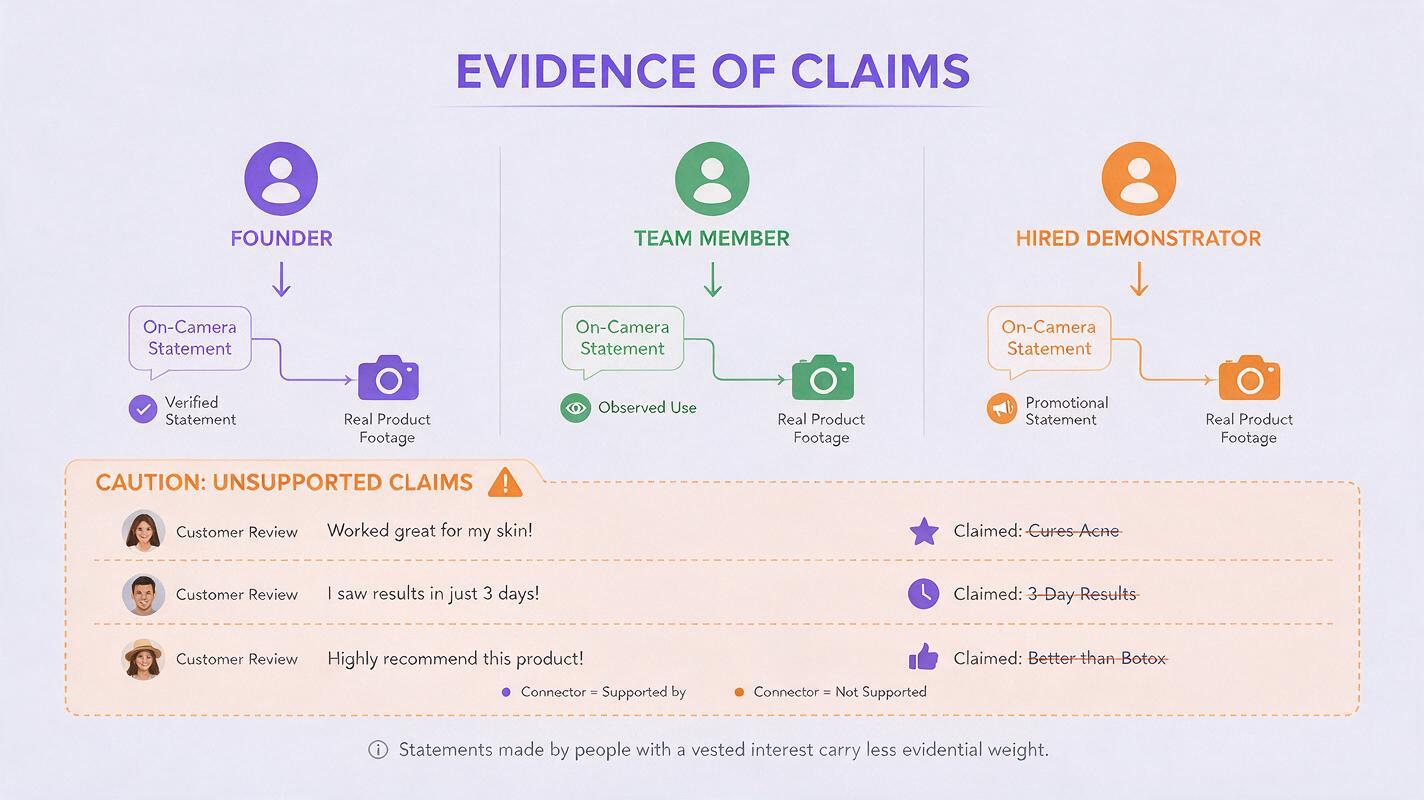
Before writing a line of dialogue, decide who is on camera. A founder can explain a design choice. A team member can show what is in the package. A hired creator can demonstrate an item they have been given to film, but should not be scripted to claim months of personal use if that did not happen.
Write down the speaker's role, the product facts you can verify, and the action you can film. This small brief keeps a natural-sounding script from drifting into an unsupported testimonial. If a creator has genuinely used the product and offers their own opinion, keep that opinion in their own words and handle any required relationship disclosures for the placement.
Script: the packaging question
Best for: products whose listing photos leave shoppers wondering what arrives in the box. Use an actual sale-ready unit, not a generated package or a collection of styling props.
Hook: “Here’s what comes with our [product name].”
Visual: Hold the sealed package in frame, then open it in one continuous shot.
Middle: “You get [verified included item], [verified included item], and [verified included item].” Point to each as it appears.
Close: “Check the listing for the current options and choose the one that fits what you need.”
Keep decorative objects off the table unless their role is unmistakable. If the package varies by option, film the option named in the video and check that its contents match the corresponding listing.
Script: the one-feature demonstration
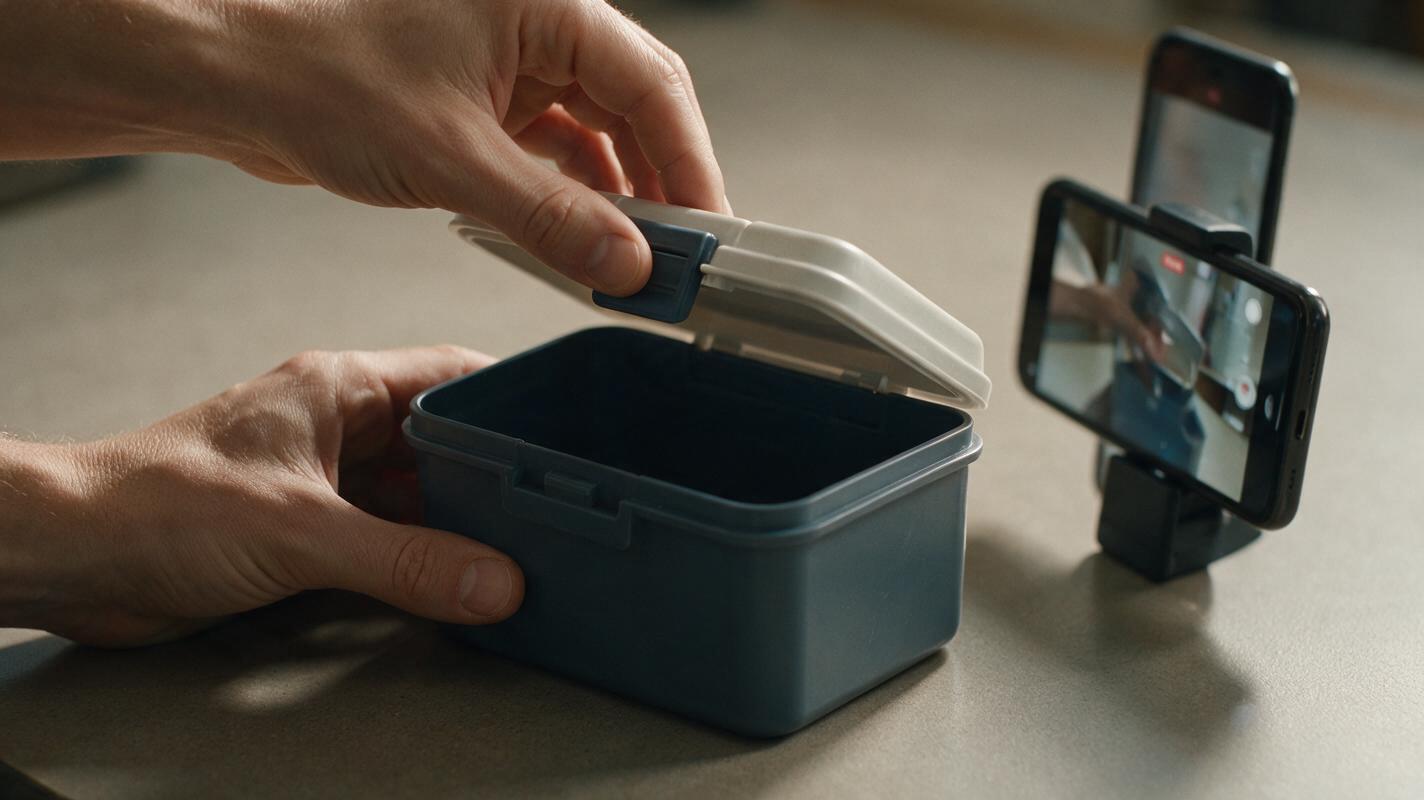
Best for: a feature a shopper can assess on screen, such as a lid opening, an organizer fitting a specified item, or an accessory attaching to its compatible product.
Hook: “Wondering how [specific feature] works?”
Visual: Show the unedited starting position and the product clearly.
Middle: “I’m going to [single physical action]. Watch [visible detail].” Perform that action at normal speed.
Close: “The listing has the measurements and compatibility details if you want to check your setup.”
Do not let a polished cut substitute for the moment that proves the feature. If the demonstration takes longer than the ad allows, show an honest excerpt and avoid implying that the full process was instantaneous. Keep claims such as “fits every phone” out of the script unless the product information supports them.
Script: the founder's design choice
Best for: a small brand that can explain a real product decision without presenting it as a customer review.
Hook: “We chose [verified material or design detail] for a reason.”
Visual: Show the actual product detail in close-up.
Middle: “We wanted [specific design goal], so this version has [visible, verified detail]. Here’s what it looks like up close.”
Close: “See the product page for the full specifications and available options.”
Only name a manufacturing reason the team can substantiate. “We chose this closure because it is easy to align” is a different claim from “this closure will never fail.” Let the close-up show the detail rather than asking an AI-rendered product to illustrate it.
Turn the script into a filmable shot list
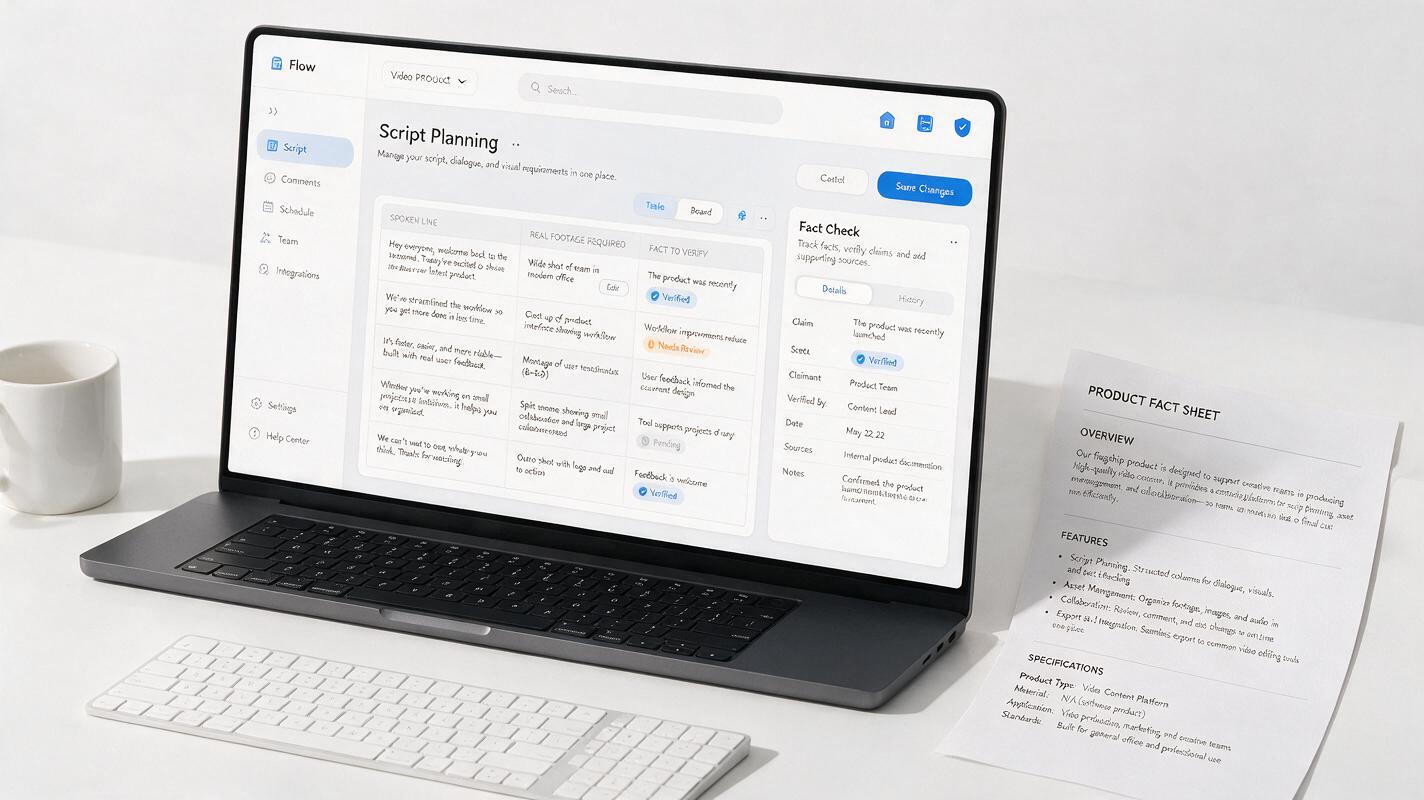
Give an ai script writer a narrow job: organize supplied facts into dialogue and shots. Do not ask it to supply customer opinions, performance numbers, or product specifications from imagination. This prompt works with any of the three formats above:
Write a 20-second vertical UGC-style product ad script.
Speaker role: [founder, team member, or hired demonstrator].
Product: [exact product and selected variant].
Verified facts: [paste approved facts only].
Available real footage: [list actions and close-ups we can film].
Shopper question: [one specific question].

Output a hook, spoken lines, matching shot descriptions, and a close.
Use only the supplied facts. Do not invent a customer experience,
review, test result, specification, or included accessory.
If a line requires evidence we have not supplied, flag it instead
of writing the claim.
Read the output against the physical product. A line is ready to film only when you can identify either its source in your approved product information or the real shot that demonstrates it.
Use generated footage for atmosphere, not evidence
A seller may want a short establishing shot before the real demonstration: a sunlit kitchen counter, for example, or a clean workbench. Seedance can be considered through an ai video generator for a product-free atmospheric clip. Cut from that clip to footage of the actual product before making a visual claim.
Avoid generating an AI hand opening your package, an AI version of your product operating, or a synthetic “customer” giving a review. Those images may look persuasive while showing events that never occurred. For a prop-free transition, specify the empty setting and leave the merchandise out of the prompt:
Short vertical establishing shot of an empty, naturally lit
kitchen countertop. Gentle movement in the window light.
No product, packaging, hands, people, text, or logos.
Leave the center clear for a cut to separately filmed product footage.
If the generated clip suggests an ingredient, accessory, or use setting that would misrepresent the item, choose a plainer setting. The real demonstration should remain the visual source for how the product looks and behaves.
Review the finished ad with the listing beside it
Watch once with sound and once muted. Check that captions identify the same items and actions visible on screen, particularly when several variants share a listing. Compare every spoken specification, included item, and compatibility statement with the selected product page. Make sure an actor is not framed as an independent customer when they are speaking for the brand.
The most useful final test is simple: could a shopper reasonably take this line or shot as proof of something the footage does not establish? If so, replace it with a narrower claim, a real shot, or a pointer to verified listing details.
Final checklist
- The speaker's role and claimed experience are truthful.
- Every stated product fact matches the item and variant being advertised.
- Real footage shows any physical action presented as a demonstration.
- Included items are distinguishable from props.
- Generated footage is atmospheric, not evidence of product performance or customer experience.
- Captions, spoken lines, and the product listing agree.
Have a product fact sheet and a few real shots ready? test this prompt yourself, then film the version whose claims you can support.
Keywords
tiktok shop ugc ads, ugc ad scripts, product video scripts, tiktok shop video, ecommerce ad creative, ai script writer, product demo video