How to Keep Two AI Video Characters Distinct in Dialogue Scenes
Reverse shots can make two AI-generated characters trade faces, clothing, or screen positions. This tutorial shows how to build separate references, stage a two-person conversation, and check each cut without losing either character’s identity.
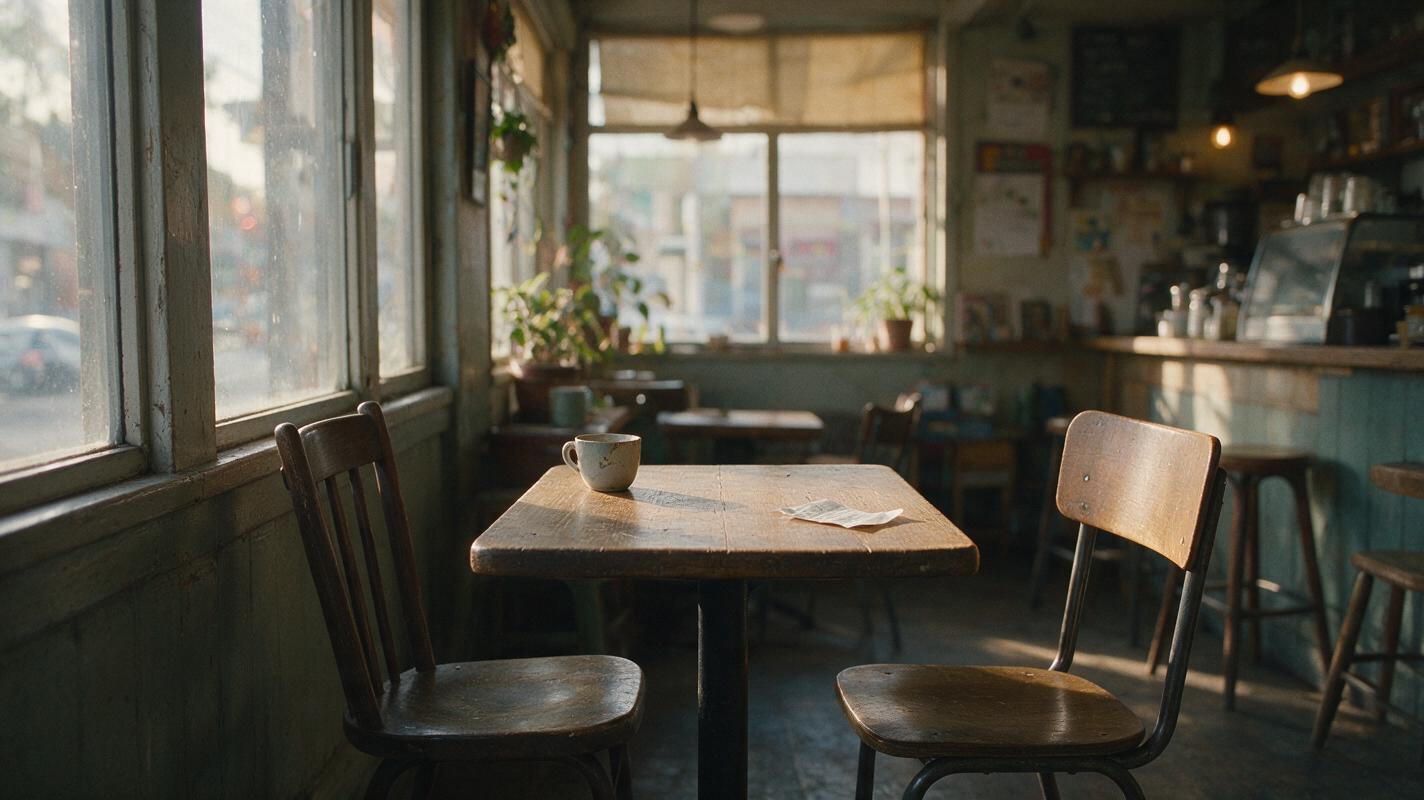
Table of contents
Keep both people recognizable—not just the person speaking
A dialogue scene can look convincing one shot at a time and still fail at the cut: the listener inherits the speaker’s face, their jackets switch, or the camera places both people on the same side of the table. The fix is to define each character separately, then carry their identities and positions into every shot reference.
This tutorial follows a fictional café exchange between Mara, in a rust-colored coat, and Ivo, in a navy overshirt. Their contrasting clothes help with identification, but the references must also preserve their faces when a coat is hidden by a close-up.
Cover visual prompt — copy and recreate:
Cinematic editorial-realism photograph, landscape 16:9. A lived-in neighborhood café in soft late-afternoon window light; two empty chairs face each other across a small wooden table, with a chipped ceramic cup near the left chair and a folded paper receipt near the right. Background patrons are distant and indistinct. MANDATORY CAMERA: eye-level wide establishing view from the end of the table, showing both chair positions and the window side clearly. Natural textures, believable film still, no people in the foreground, no text, logos, screens, or interface elements.Step 1 — Give each character a separate identity sheet
Make one three-view sheet for Mara and another for Ivo. Approve each sheet before staging the conversation. A single image containing both people can be useful for composition, but it is a weak substitute for separate identity references: when you crop it for a close-up, the other person may remain in frame or influence the result.
Use this compact character-sheet template for each person:
CHARACTER: [name]
FACE: [approximate age range, face shape, eye shape, nose, distinctive stable feature]
HAIR: [cut, color, parting]
BUILD: [height impression, posture]
WARDROBE: [specific outerwear and visible layers]
DO NOT CHANGE: [three or four identity anchors]
SHOT-SPECIFIC CHANGES ALLOWED: [expression, pose, lighting]
Keep descriptions observable. “Angular jaw and a short dark curl over the right temple” gives a better visual check than “mysterious-looking.” If a generated side or rear view contradicts the front view, revise the sheet before using it as a reference.
Mara’s three-view character sheet
Visual prompt — copy and recreate:
Photorealistic three-panel character reference sheet of one fictional woman, Mara, early 30s, oval face, warm brown skin, dark almond-shaped eyes, small mole beneath her left eye, chin-length black bob with a center part, rust-colored wool coat over a cream shirt, medium build. The SAME person and SAME outfit in all three panels. MANDATORY CAMERA AND LAYOUT: landscape 16:9; evenly sized full-body front view on the left, true side profile facing right in the center, full-body back view on the right; straight-on camera at chest height, consistent scale and neutral posture. Neutral light-gray seamless background, soft even studio light, realistic anatomy. No props, other people, writing, labels, logos, or UI.Ivo’s three-view character sheet
Visual prompt — copy and recreate:
Photorealistic three-panel character reference sheet of one fictional man, Ivo, late 30s, broad face, light olive skin, straight eyebrows, slightly crooked nose, short wavy dark-brown hair graying at the temples, navy overshirt over a charcoal T-shirt, lean build. The SAME person and SAME outfit in all three panels. MANDATORY CAMERA AND LAYOUT: landscape 16:9; evenly sized full-body front view on the left, true side profile facing left in the center, full-body back view on the right; straight-on camera at chest height, consistent scale and neutral posture. Neutral light-gray seamless background, soft even studio light, realistic anatomy. No props, other people, writing, labels, logos, or UI.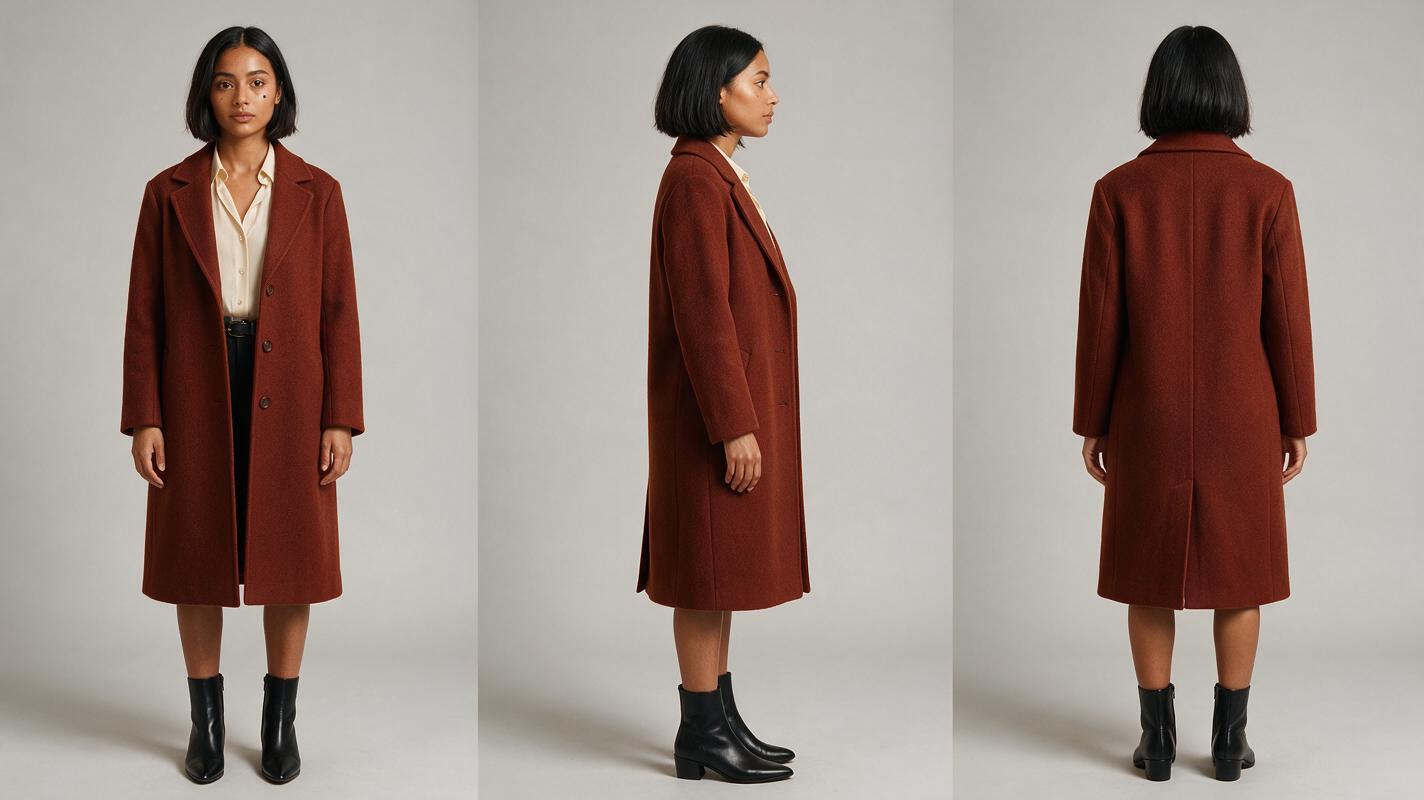
Step 2 — Lock the seating plan before generating close-ups
Choose a fixed screen direction: Mara sits camera-left, nearer the window; Ivo sits camera-right, nearer the café door. Place Mara’s cup on her side and Ivo’s receipt on his. These small objects provide continuity checks without having to rely on faces alone.
Create an establishing still that shows both characters and the table. Compare each face against its own sheet. If either face already differs, do not animate the still; correct it first with the relevant single-character reference. For subsequent image to video shots, treat this approved still as the spatial reference and the individual sheets as identity references where the chosen tool permits both. If it accepts only one image, prepare a separate approved start frame for each shot rather than assuming it will remember earlier images.
Continuity rule: A change of camera angle may change who appears on the left side of an individual frame. It must not change who sits by the window, who owns the cup, or which face belongs to each name.
Step 3 — Build a reference frame for each side of the conversation
Prepare three stills: the two-shot, Mara’s over-the-shoulder view toward Ivo, and Ivo’s reverse view toward Mara. In each reverse shot, identify the sharply focused face and the partially visible foreground shoulder. A shoulder should carry the correct coat or overshirt; otherwise, the model may blend the two identities even when the speaker looks right.
Here is a copyable prompt for Mara’s over-the-shoulder frame. Swap the names, foreground garment, and focus for the reverse:
Use the approved Mara and Ivo character references and the approved café establishing frame. Two people only. Mara remains seated beside the window in her rust-colored coat; her out-of-focus coat shoulder is in the near left foreground. Ivo remains opposite her, near the café door, in his navy overshirt. Focus on Ivo's face as he listens, one hand resting beside his folded receipt. Preserve both characters' facial structures and clothing. MANDATORY CAMERA: eye-level over Mara's shoulder, medium close-up of Ivo, consistent table axis and late-afternoon window light. Cinematic editorial realism, landscape 16:9. No extra people near the table, duplicated faces, swapped clothing, text, logos, or UI.For an ai image generator, generate these frames as stills and approve them side by side before adding motion. Keep a simple storyboard reference beside the edit: shot name, visible face, foreground shoulder, screen position, and prop owner. It can be a plain written list; no production dashboard is needed.
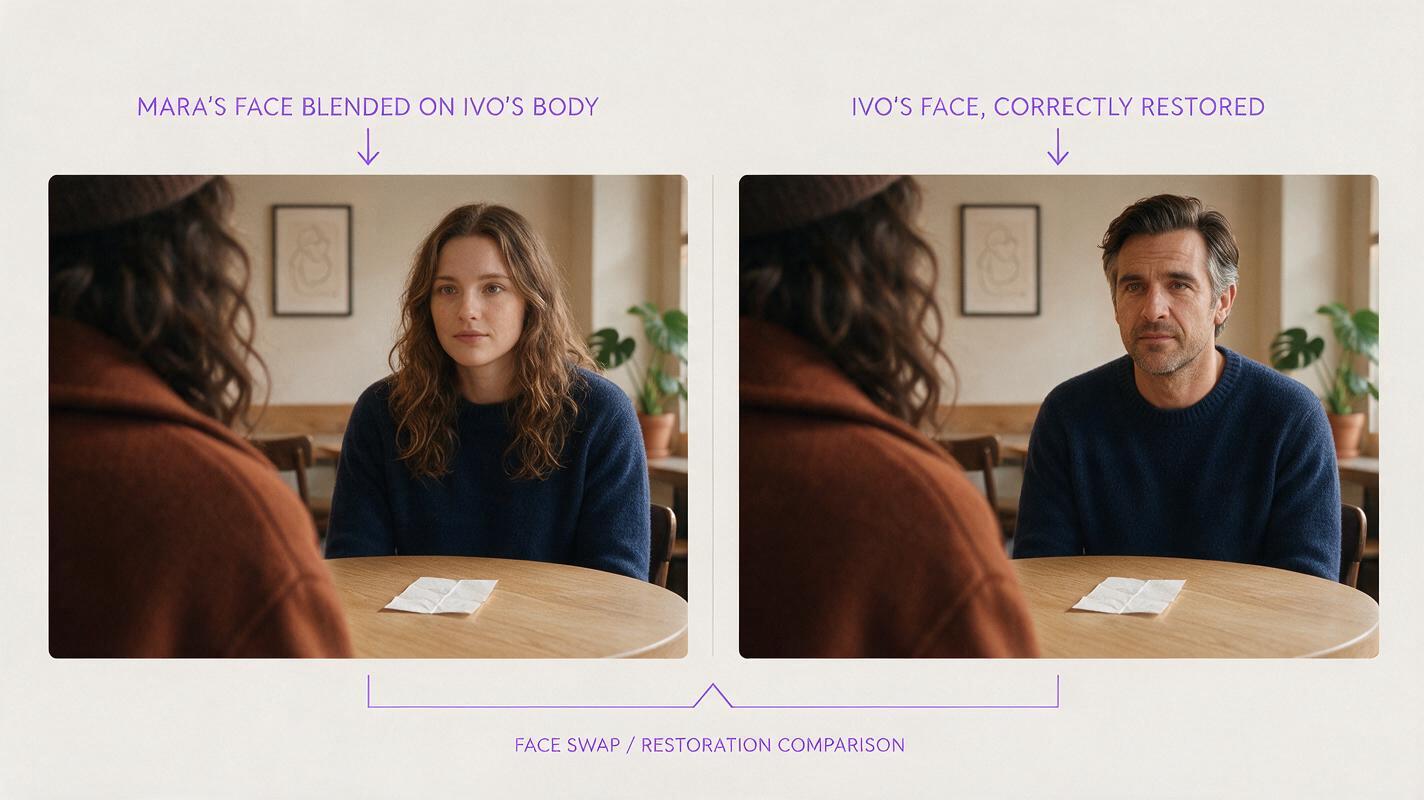
Compare the identity-swap failure with the corrected framing
Visual prompt — copy and recreate:
Neutral illustrative before-and-after photographic diptych, landscape 16:9, with two equal panels and no written labels. Both panels show the same believable neighborhood café conversation from an eye-level over-the-shoulder camera angle. Mara is an early-30s woman with warm brown skin, chin-length center-parted black bob, small mole beneath her left eye, and rust-colored coat; Ivo is a late-30s man with light olive skin, short wavy dark-brown hair graying at the temples, slightly crooked nose, and navy overshirt. LEFT PANEL, deliberate failure example: Mara's rust coat shoulder is in the foreground, but the focused person opposite has Mara's face blended onto Ivo's navy-clad body. RIGHT PANEL, correction: the same foreground shoulder belongs to Mara, while Ivo's distinct face and navy overshirt are correctly shown opposite her. MANDATORY CAMERA AND LAYOUT: matched eye-level medium close-ups, identical table geometry and lighting across both panels, visible folded receipt by Ivo. Cinematic editorial realism. No arrows, text, labels, logos, screens, or interface elements.Step 4 — Animate short beats and inspect the cuts
Animate the approved frames as separate, restrained actions: Mara asks a question, Ivo glances at the receipt, then Mara reacts. Prompts should describe motion without redefining appearance. For example:
Animate the approved over-Mara's-shoulder start frame. Ivo briefly looks down at his folded receipt, then raises his eyes toward Mara. Mara remains a soft, stationary rust-coat shoulder in the foreground. Keep both characters in their established seats; preserve Ivo's face, Mara's visible hair and coat, the receipt's position, and the café lighting. MANDATORY CAMERA: locked eye-level over-the-shoulder medium close-up; no orbit, no cut, no new person. Natural restrained movement.Inspect the first and last clear frame of each clip and the frames around every edit. Check the focused face, foreground hair and shoulder, coat color, seating direction, and ownership of the cup and receipt. A good still does not guarantee a good moving shot: a glance or head turn may be where the face begins to drift.
| What goes wrong | Likely cause | Practical fix |
|---|---|---|
| The speaker acquires the listener’s face | Both identities compete in an ambiguous reference. | Use a shot-specific approved frame with one clearly focused face; retain separate sheets. |
| The foreground shoulder wears the wrong jacket | The reverse-shot prompt identifies only the speaker. | Name the foreground person and garment explicitly. |
| Both people appear on one side of the table | Each shot was composed without a shared seating plan. | Regenerate its start frame against the establishing still and fixed prop positions. |
| A face changes during a head turn | The start frame does not sufficiently define that angle. | Create and approve an angle-matched still, then use a smaller turn. |
| A third person appears at the table | A busy location is being treated as a cast reference. | Specify two people at the table and keep background patrons distant and indistinct. |
Final checklist
- Each recurring person has a separate, approved front/side/back sheet.
- The two-shot fixes seats, light direction, and prop ownership.
- Every reverse-shot still identifies both the focused face and foreground shoulder.
- Motion prompts change actions—not facial or wardrobe descriptions.
- The first, turning, and final frames of each clip pass an identity check.
To try the same references across still and video options in one free, multi-model workspace, try these models for free.
FAQ
Can one group photo replace two character sheets?
Use a group image to establish spacing, not as your only identity reference. Separate sheets make it easier to diagnose which face changed and to prepare a close-up without the other character influencing the crop.
Should both faces be visible in every shot?
No. A reverse shot may show only one clear face and the other person’s shoulder. Specify whose shoulder it is and retain the established seating direction.
What if my video tool accepts only one reference image?
Prepare and approve a shot-specific still containing the correct face, foreground shoulder, wardrobe, and composition. Animate that still, then verify the resulting frames before editing it into the sequence.
Keywords
multi-entity consistency, character consistency, consistent character video, consistent character across scenes, character reference, storyboard reference, multi-shot