UGC-Style Product Ads Without Fake Testimonials
A UGC-style ad can feel personal without pretending that an AI-generated person bought or endorsed your product. This guide shows marketplace sellers how to build a short ad around real demonstration footage, verified claims, and optional AI-generated transitions.
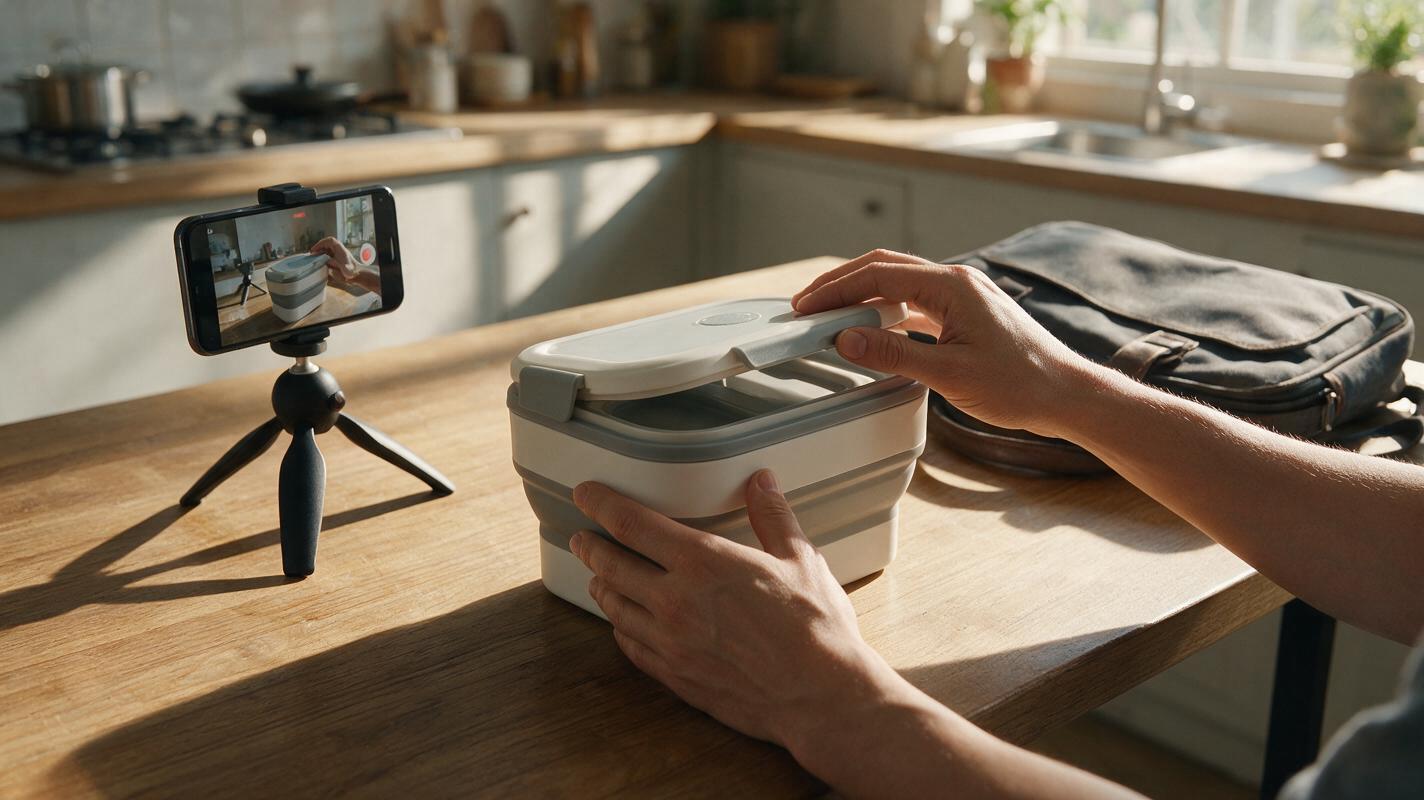
Table of contents
Make the demonstration the reason to watch
A UGC-style product ad needs a believable moment, not a fabricated customer. If you sell on TikTok Shop, Shopify, or a marketplace, the safest starting point is a real pair of hands using the actual item you ship. Build the hook, captions, and edit around that footage. Use AI to help plan the ad or create atmosphere—not to invent a buyer, a result, or a product feature.
The approach below is designed for a short vertical ad. It works particularly well when the product has a visible action: a storage item opening, a kitchen tool in use, or a bag being packed. If the benefit cannot be shown on camera, describe only what you can substantiate.
Choose a claim the camera can actually prove
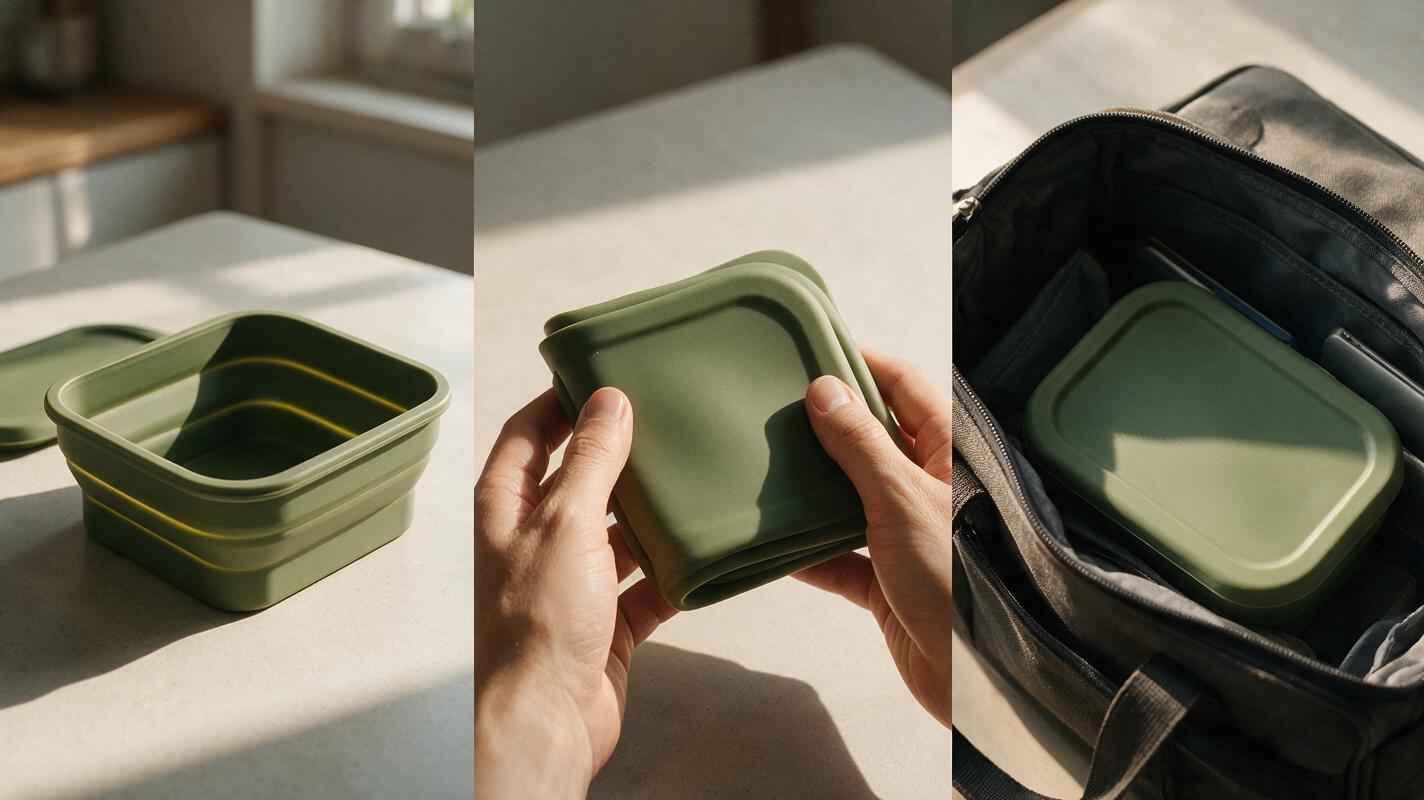
Before writing a script, place the product on a table and list what a viewer could observe in one take. For a foldable lunch container, that might be its closed shape, the way it opens, and how it fits into a bag. It would not prove that it is leakproof, dishwasher-safe, or made from a particular material.
| Possible ad line | Evidence to capture | Safer treatment |
|---|---|---|
| “Opens for lunch, folds down afterward” | Continuous footage of the actual container opening and folding | Show both actions clearly. |
| “Fits in my work bag” | The actual product placed in a representative bag | Show the bag and product together; avoid implying it fits every bag. |
| “Never leaks” | A clip cannot establish performance in every condition | Leave it out unless you have appropriate substantiation and carefully qualified wording. |
This distinction gives the ad its structure. A viewer sees the item, understands one practical benefit, and can judge the demonstration for themselves.
Write a hands-only script instead of a fictional review
A common shortcut is to ask an AI tool for a “customer testimonial.” The result may sound natural, but a first-person account becomes misleading if no customer actually said it. Write from the seller’s perspective instead, or use neutral on-screen copy that describes what the viewer is watching.
Try this planning prompt with your preferred writing tool. Replace the bracketed fields with verified product information:
Write a 20-second vertical product ad script for [product].
Audience: [specific shopper and shopping situation].
Verified facts: [facts checked against the item and listing].
Visible actions available on camera: [actions I can film with the real product].
Footage: hands-only; no actors speaking to camera.
Structure: quick visual hook, product demonstration, close-up, concise call to action.
Use seller-neutral captions, not a customer testimonial.
Do not invent performance results, materials, certifications, reviews, or comparisons.
Return a shot list with approximate durations, caption text, and the evidence needed for each line.
Read the output against your listing and the physical item. Delete any line that depends on a shot you cannot make or a claim you cannot verify. “Here’s how it folds” is useful if you can film the fold; “the last container you’ll ever need” adds little and is difficult to support.
Build a short edit around real product footage
You do not need a staged bedroom or an on-camera spokesperson. A tabletop by a window, a phone, and a few deliberate camera positions can supply the important shots. For the lunch-container example, this edit keeps each caption close to its evidence:
| Approximate time | Picture | On-screen copy |
|---|---|---|
| 0–3 seconds | Real container beside a crowded bag | “Need room after lunch?” |
| 3–8 seconds | Hands open the container and place lunch inside | “Open it for your meal” |
| 8–14 seconds | After the meal, hands fold the empty container in a clear, continuous shot | “Fold it down afterward” |
| 14–18 seconds | Real container placed in the bag | “See how it packs away” |
| 18–20 seconds | Product on a clean surface with listing-accurate name | “View the details” |
Keep the opening action readable even with the sound off. Use a close-up only when it helps viewers see a hinge, closure, texture, or other genuine detail. If your cut makes the action look effortless while hiding a necessary maneuver, use a longer take.
Give AI the atmosphere, not the evidence
Hailuo can be used as an optional creative model for a brief, product-free transition or opening mood shot. For example, you might generate an uncluttered kitchen counter with morning light before cutting to the real container. The generated shot should not contain a lookalike container, a person apparently endorsing it, or a simulated demonstration.
For a product-free clip in an ai video generator, keep the request narrow:
Vertical editorial video, a tidy everyday kitchen counter in soft morning daylight.
Slow, subtle camera movement. Clear empty space in the center for the next edit.
No products, packaging, logos, people, text, demonstrations, or branded objects.
Natural colors and realistic surfaces; brief transition shot only.
Cut directly from that atmosphere shot to footage of your actual item. If a generated result introduces a package or object that resembles your product, reject it rather than asking viewers to work out which item is real. AI footage should help set the scene, while the real footage answers the shopper’s product questions.
Useful test: if you removed every generated shot, would the ad still accurately show what the product does? If not, film more evidence.

Keep the voice and captions honest
A voiceover can explain the visible action, but it should not pose as an independent buyer if it is your brand’s script. Neutral wording such as “Watch it fold after use” fits hands-only footage. “I’ve used this every day for a year” requires a real speaker who can truthfully make that statement.
If you use an AI voiceover, check pronunciation of the product name and listen for wording that sounds like a personal endorsement. Add captions for viewers watching without audio, and review every caption against the exact shot underneath it. Where applicable, follow the current disclosure and advertising rules of the platform on which you publish.
Review the finished ad like a shopper
Watch the export once without sound, once with sound, and once paused at each product close-up. Confirm that the item’s color, included parts, size cues, and operating motion match the product and listing. Make sure the call to action leads to the same variant shown in the ad.
Then ask someone unfamiliar with the item what they think the video promises. If they infer an unverified feature—such as leak resistance from a quick bag shot—change the caption or the edit. A short, precise ad is more useful than a persuasive one that leaves the wrong impression.
Final checklist
- Film the actual item for every shot that demonstrates a feature or benefit.
- Match each claim to visible footage or other appropriate substantiation.
- Do not present AI-written lines as genuine customer testimony.
- Keep generated transitions free of lookalike products and invented demonstrations.
- Check captions, voiceover, product details, and the linked listing before publishing.
Keywords
ugc-style product ads, product demo video, tiktok shop video, ecommerce ad creative, ai product video, product ad script, hailuo video