Why Your AI Film Still Looks Fake: Camera, Lighting & Motion Fixes That Actually Help
“Cinematic” is not a magic adjective. AI films usually feel fake because the prompt is vague about shot language, lighting motivation, and human performance.
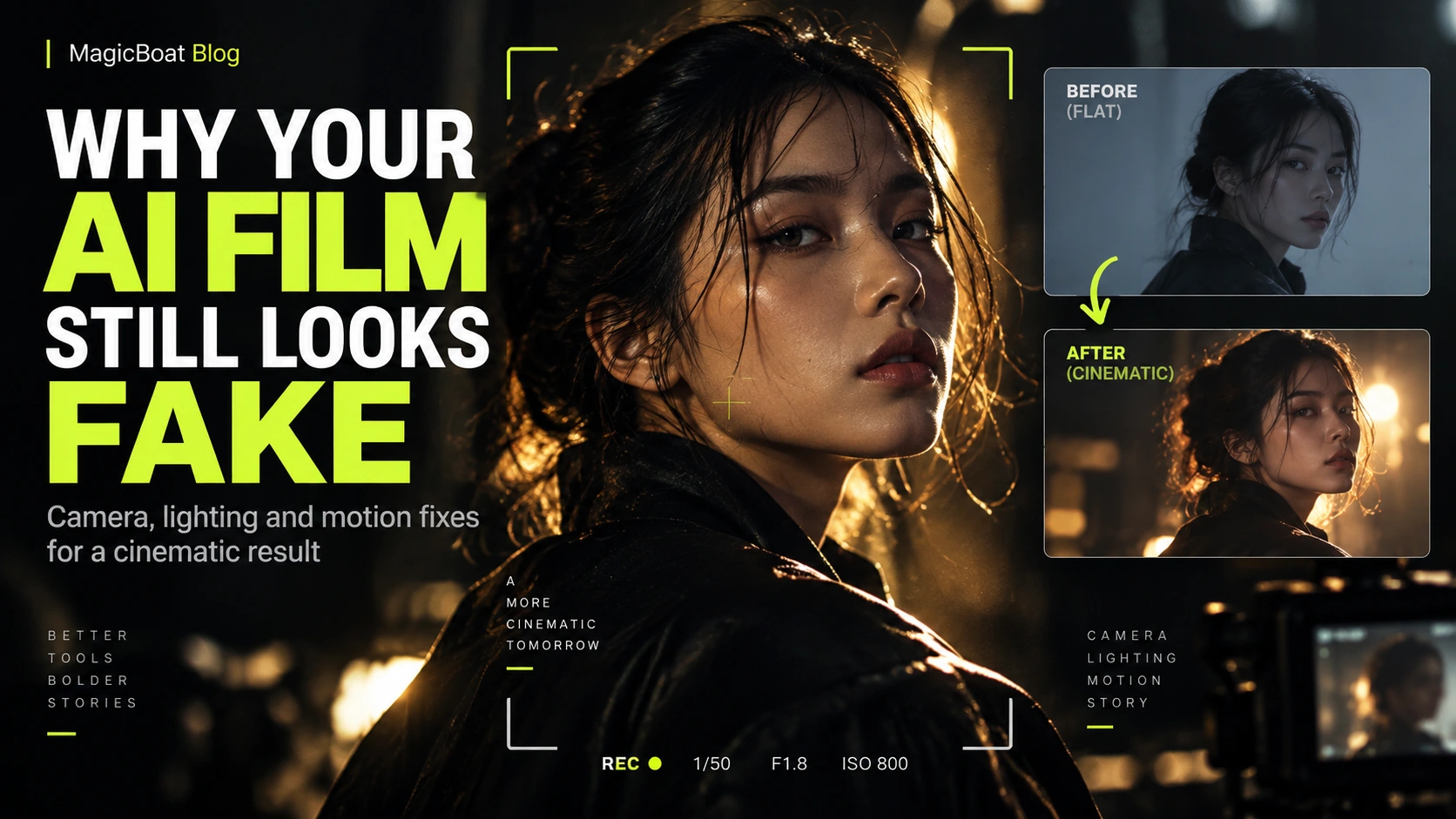
Table of contents
Quick answer
To make an AI film feel more cinematic, stop relying on generic words like:
cinematic, realistic, epic, masterpiece
Instead, define:
- shot size
- lens feeling
- camera height
- lighting source
- movement path
- emotional performance
- what should *not* happen
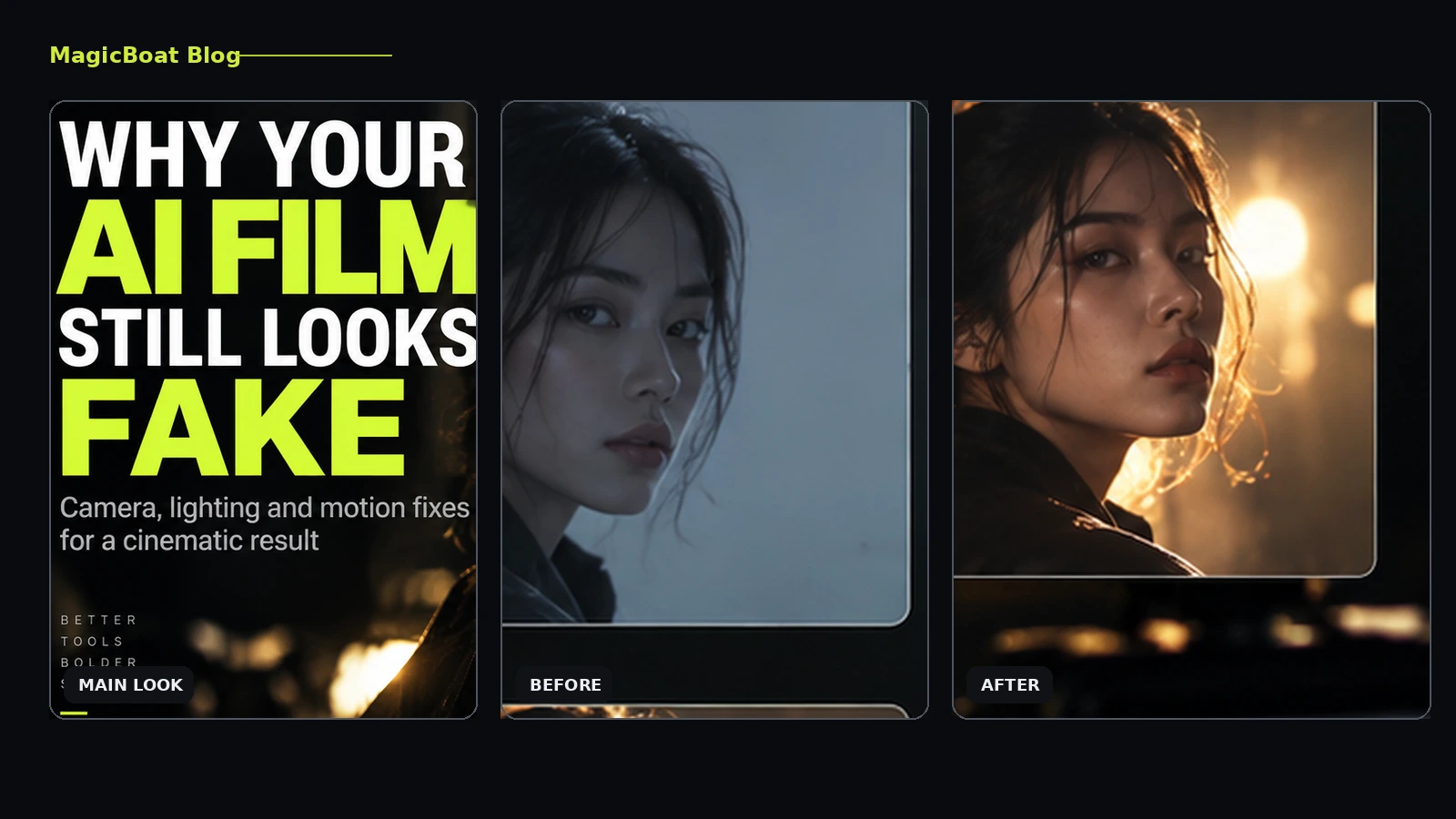
What fake usually looks like
Most “fake” AI shots share a few symptoms:
- flat lighting with no logic
- camera movement for no reason
- perfect but lifeless faces
- no emotional restraint
- every shot looking like the same lens
Use camera language, not vague style language
Better prompting starts with camera decisions.
Ask:
- close-up, medium or wide?
- eye-level or low-angle?
- static, handheld or tracking?
- 24mm, 50mm or 85mm feeling?
- should the shot observe or follow the subject?
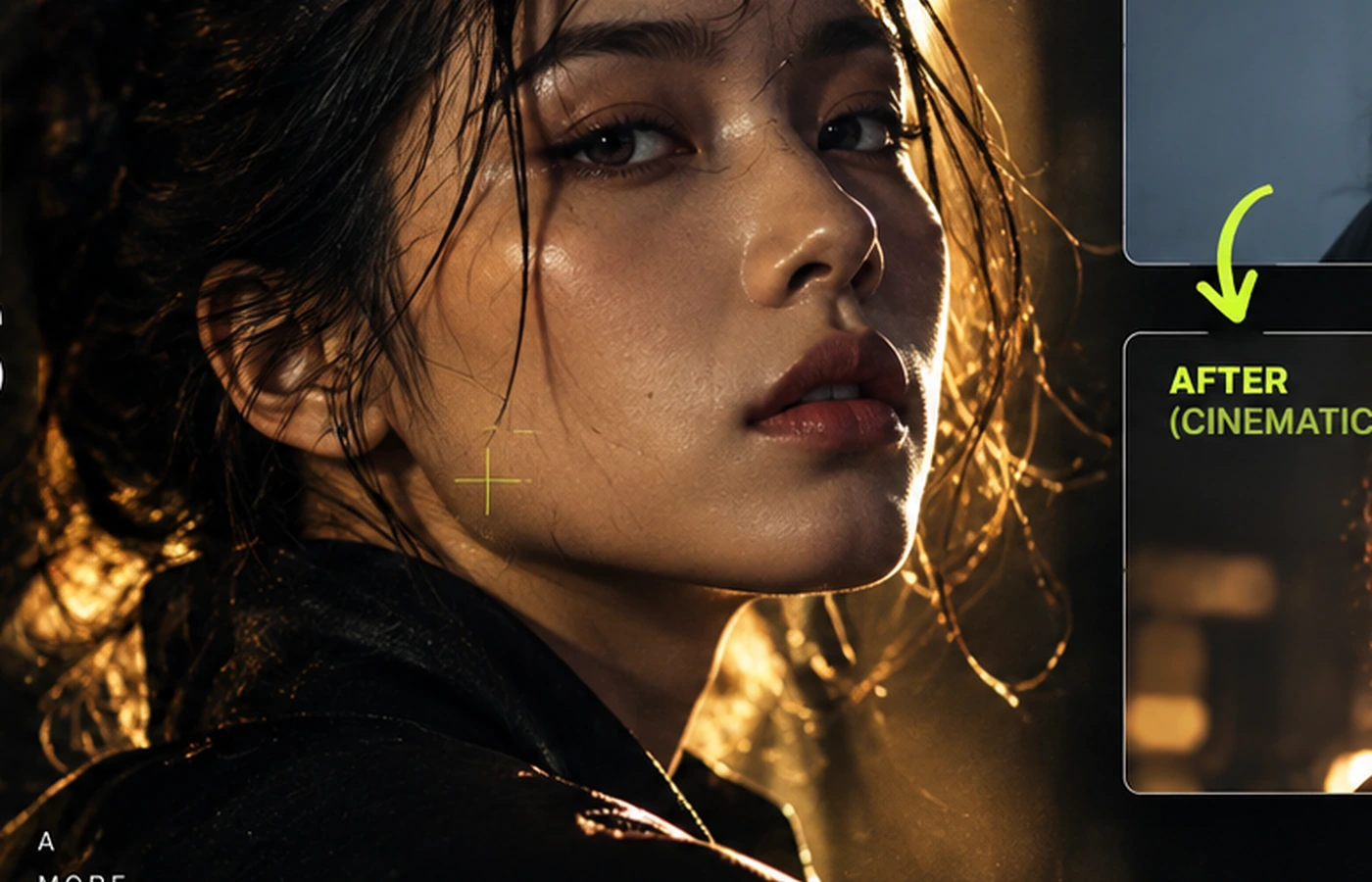
A clear camera prompt gives the model structure.
Light by cause, not by adjective
Bad:
dramatic cinematic lighting
Better:
wet night alley, warm backlight from a street lamp, cool spill from signage, soft edge light catching loose hair, dark background with selective highlights
That reads like a photographed scene, not a mood board.
Performance is part of the realism
A good-looking frame can still fail if the acting feels like a mannequin.
Add:
- where the subject looks
- how long they pause
- whether they breathe
- whether the emotion is restrained or overt
Small performance instructions matter more than people think.
Build a cinematic shot in 5 decisions
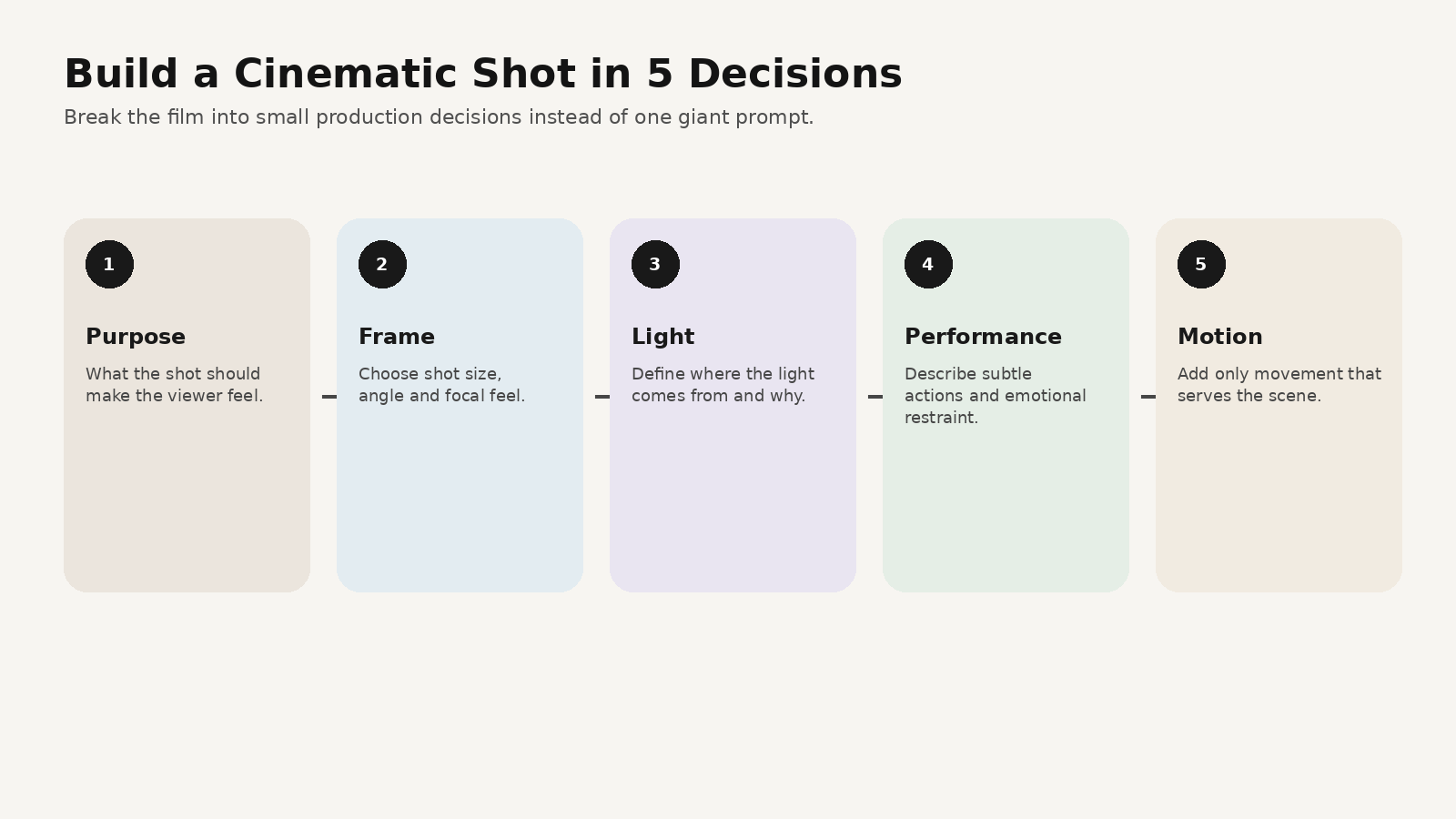
- what is the emotional purpose?
- how close should the audience feel?
- where does the light come from?
- how does the subject move?
- how does the camera react?
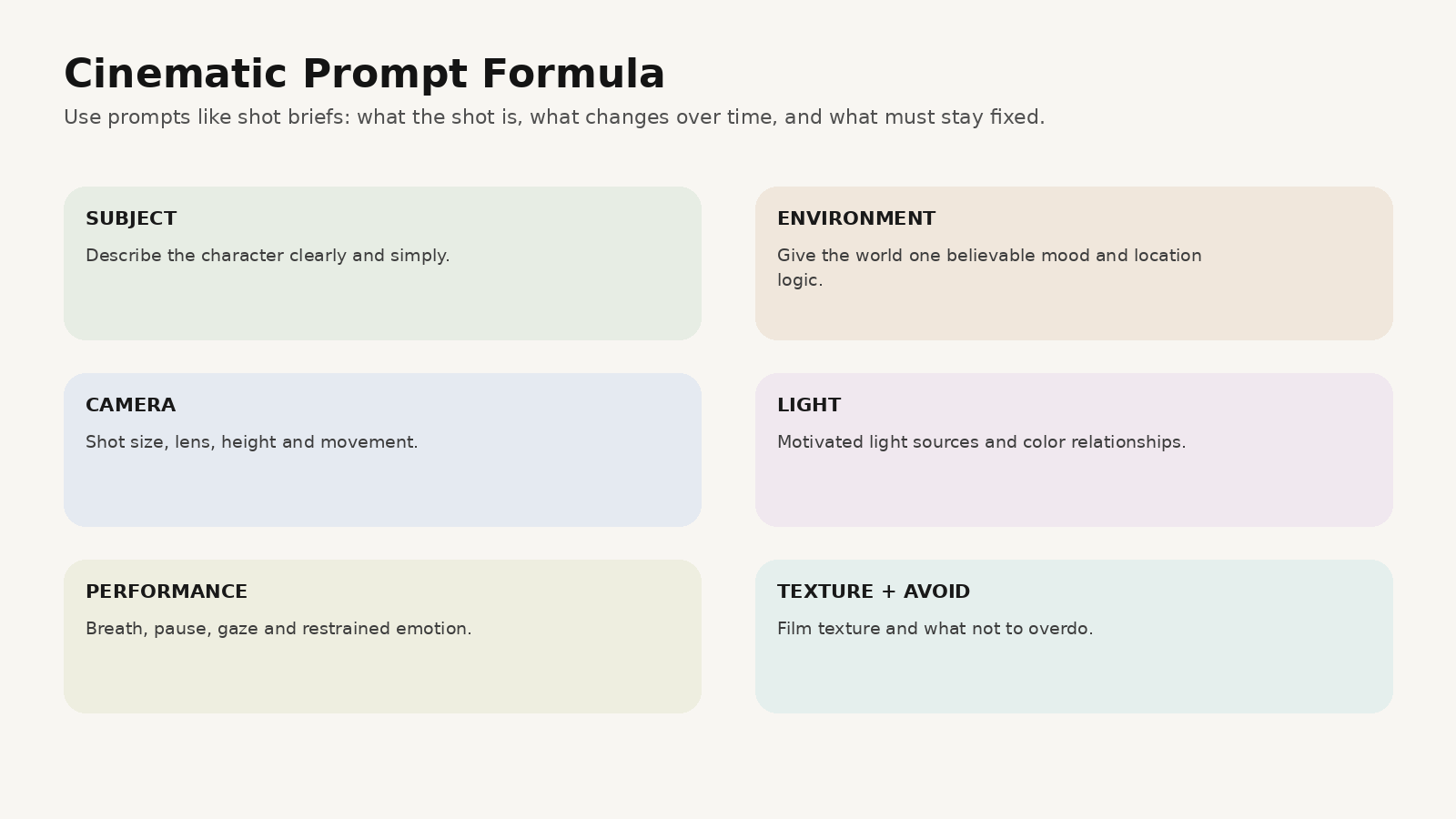
A cinematic prompt formula
SUBJECT
Young woman in a dark coat, slightly rain-soaked, standing still after turning back.

ENVIRONMENT
Night street with warm practical lights and deep background blur.

SHOT SIZE
Medium close-up.

LENS
50mm-equivalent natural perspective.

CAMERA
Very slow push from shoulder height. No orbit.

LIGHT
Warm rim light from behind, cool fill from the side, selective highlights across the cheek and hair.

PERFORMANCE
Quiet, self-contained emotion. Slight inhale. Eyes steady for one beat before shifting.

TEXTURE
Natural grain, realistic skin, no excessive beauty-filter smoothness.

AVOID
fantasy glow, over-saturated neon wash, music-video overacting, sudden impossible zoom.
Sequence makes the style believable
A cinematic film is not just one pretty shot. It is a sequence of shots with rhythm and contrast:
- wide to close
- still to moving
- light to dark
- distance to intimacy
That is why storyboarding matters even for a style article.
Where MagicBoat fits
MagicBoat’s public workflow is useful here because cinematic quality usually comes from the relationship between stages: storyboard, visual generation, motion, voice and final edit.
That makes it easier to treat the film as a system rather than a pile of random one-off generations.
Common mistakes
Every shot moves
Stillness is also cinematic.
The same lens feeling everywhere
The film loses contrast.
“Cinematic” replaces detail
Adjectives do not replace actual shot design.
Performance is ignored
The camera is not the only thing acting.
FAQ
What makes an AI film look cinematic?
Clear shot language, motivated light, believable performance and sequence rhythm.
Is shallow depth of field enough?
No. It helps, but it does not solve framing or storytelling.
Should every shot have dramatic movement?
No. Movement needs purpose.
Keywords
how to make a cinematic ai film, cinematic ai video, ai film lighting prompts, ai film camera prompts, make ai video look cinematic