Jensen Huang Resigns From Nvidia; Colette Kress Named Interim CEO
Jensen Huang has resigned from Nvidia, CFO Colette Kress has become interim CEO, and Nvidia shares fell 4.34%. The leadership change matters across the AI ecosystem, including teams that depend on reliable access to creative AI tools.
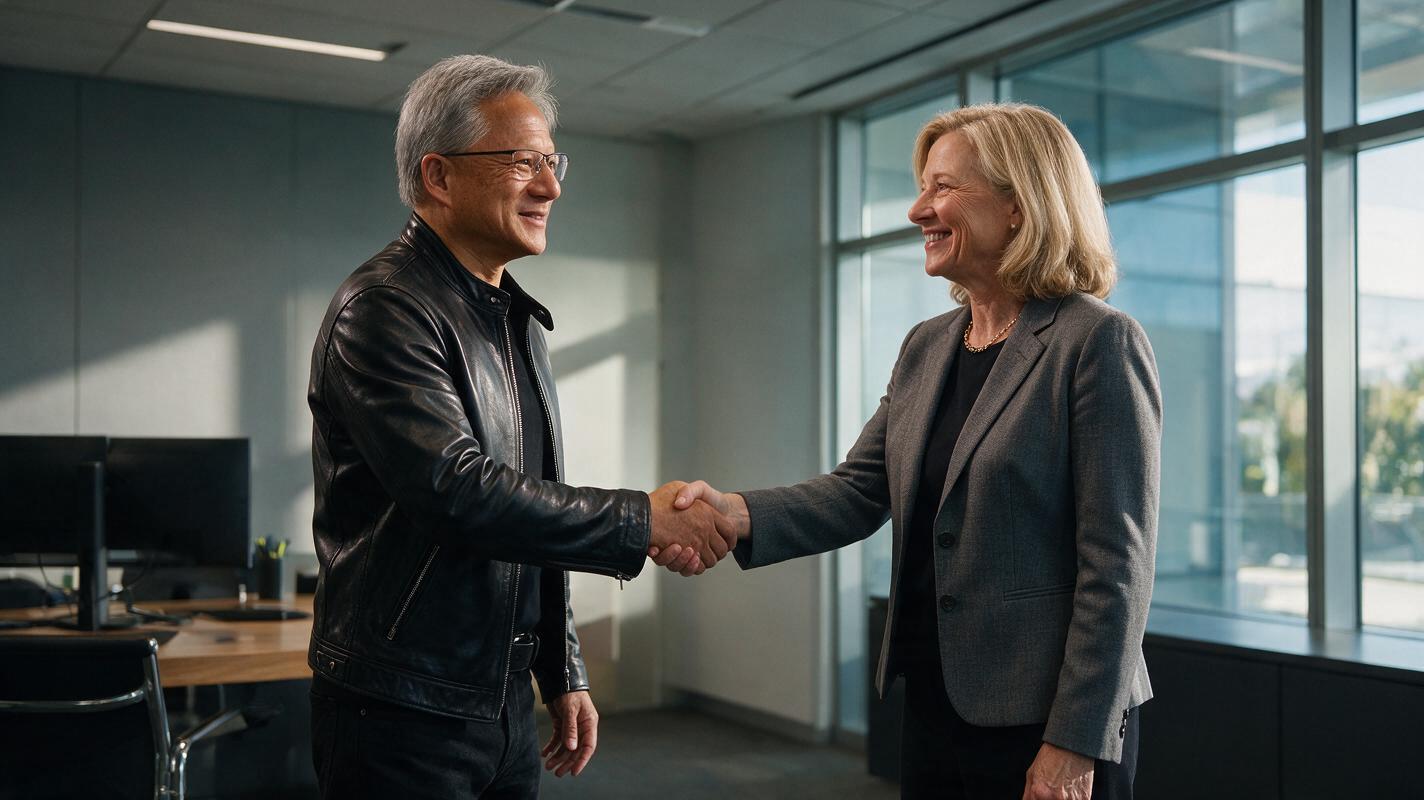
Table of contents
AI News
Jensen Huang Resigns From Nvidia; Colette Kress Named Interim CEONvidia’s leadership changed on November 13, 2026, as Jensen Huang resigned, CFO Colette Kress took over as interim CEO, and the company’s stock declined 4.34%.
Published November 16, 2026
Nvidia Announces an Abrupt Leadership Change
Jensen Huang resigned from Nvidia on November 13, 2026, marking a significant change at one of the companies most closely watched in the AI sector. Nvidia named Chief Financial Officer Colette Kress as interim CEO following his departure. The company’s shares fell 4.34% alongside the leadership news.
The available announcement identifies the resignation, the interim appointment, and the immediate stock-market movement. It does not specify why Huang resigned, how long Kress is expected to remain in the interim role, or when Nvidia intends to name a permanent chief executive. It also provides no new product, financial-guidance, or organizational details.
Those boundaries matter. A leadership transition can attract substantial speculation, but the confirmed news is narrower: Huang is no longer CEO, Kress has assumed the position on an interim basis, and Nvidia shares declined by the stated amount.
The central AI news is a change in executive leadership, not an announced change to Nvidia products, services, or technical roadmaps.
What Is Confirmed About the Nvidia Transition
| News element | Confirmed detail | Not specified |
|---|---|---|
| Leadership departure | Jensen Huang resigned from Nvidia. | The reason for the resignation. |
| Interim leadership | CFO Colette Kress became interim CEO. | The planned duration of her interim tenure. |
| Market reaction | Nvidia stock fell 4.34%. | Any longer-term market impact. |
| Future appointment | No permanent successor was identified in the announcement. | A search process or appointment timetable. |
The distinction between confirmed information and open questions is especially important during fast-moving corporate news. The 4.34% share decline records the market move reported with the announcement, but it does not by itself establish what investors expect from Nvidia over a longer period.
Why the News Matters Across the AI Ecosystem
Nvidia sits at a highly visible point in the broader AI market, so a change in its top leadership is relevant well beyond shareholders. AI developers, platform operators, businesses, and creative teams all pay attention to developments that could eventually influence the availability, cost, or direction of AI infrastructure.
However, the November 13 report does not announce any such operational change. There is no stated alteration to Nvidia’s offerings, no disclosed interruption, and no confirmed revision to its plans. The responsible interpretation is therefore to monitor the transition without turning unanswered leadership questions into unsupported product claims.
Continuity is now the key question
Colette Kress’s appointment as interim CEO provides immediate executive continuity. Beyond that, the supplied news does not define her mandate or identify the priorities she will pursue. Future company announcements will be needed to determine whether the transition leads to strategic changes.
For people following AI news, this is a useful reminder that corporate leadership, technical capability, and day-to-day product availability are related but distinct signals. A high-profile executive event deserves attention, yet users should still judge individual AI tools through observable factors such as output quality, reliability, accessibility, and suitability for a particular project.
What the Nvidia News Means for AI Content Production
Creative teams do not need to redesign active production workflows solely because an infrastructure company changes leaders. The immediate practical response is to keep watching service availability and tool performance while separating confirmed operational information from market speculation.
That approach is particularly useful for work involving an ai video generator. A campaign may include scripts, source images, motion generation, revisions, and final exports. Depending too heavily on any single company, model, or technical route can make the overall process less flexible when the AI market changes.
A multi-model environment helps users concentrate on the actual creative task rather than committing every project to one provider’s corporate trajectory. MagicBoat brings creation capabilities into one account, giving users a practical place to compare available options and continue producing content as the wider model ecosystem evolves.
Evaluate creative systems through production signals
Leadership headlines can shape sentiment, but creative decisions benefit from more direct criteria. Teams evaluating AI tools can focus on:
- Availability: whether the required capability is accessible when a project needs it.
- Reliability: whether repeated generations support a predictable production schedule.
- Output fit: whether results match the visual direction, format, and communication goal.
- Workflow flexibility: whether a team can move between capabilities without rebuilding its entire process.
- Revision efficiency: whether content can be adjusted without introducing avoidable friction.
For example, a still image prepared for a campaign may later need motion for a social clip. Access to image to video capabilities can keep that work centered on the creative asset even as the surrounding AI industry experiences leadership, pricing, or model changes.
A Broader Lesson From the 4.34% Stock Decline
Nvidia’s reported 4.34% decline shows that leadership news can generate an immediate market response. It does not reveal whether the reaction will persist, nor does it establish a direct effect on any specific creative service. Stock movement and product performance should not be treated as interchangeable measures.
For content professionals, the more durable lesson is about avoiding unnecessary concentration. AI production increasingly involves several capabilities rather than one isolated model. Writing, imagery, motion, audio, and final assembly may each have different requirements. A flexible platform can make it easier to select an appropriate capability for each part of a project.
This does not remove the need to follow major industry changes. It makes those changes easier to absorb because the creative workflow is organized around the project rather than around a single corporate leader or provider.
Key Takeaways
- Jensen Huang resigned from Nvidia on November 13, 2026.
- Nvidia CFO Colette Kress was named interim CEO.
- Nvidia stock declined 4.34% with the leadership news.
- The announcement does not state the reason for Huang’s resignation or identify a permanent successor.
- No product, service, or technical-roadmap change was included in the supplied report.
- Creative teams can prioritize observable availability, reliability, and output quality while monitoring future Nvidia announcements.
Keep Your Creative Workflow Flexible
Major AI companies will continue to experience leadership changes, market reactions, and shifting priorities. MagicBoat offers a one-account environment for exploring multiple creative capabilities without tying every project to a single industry storyline. try these models for free and choose the tools that best fit the work in front of you.
Keywords: Jensen Huang resigns, Nvidia interim CEO, Colette Kress, Nvidia stock, AI news, AI tools, AI roundup