US Tech Stocks Plunge as Meta, Nvidia and Oracle Fall; ASML Beats Q3
Meta and Nvidia fell 3% while Oracle dropped 8.8% during a US technology-stock selloff, even as ASML reported a Q3 beat and record backlog through 2030.
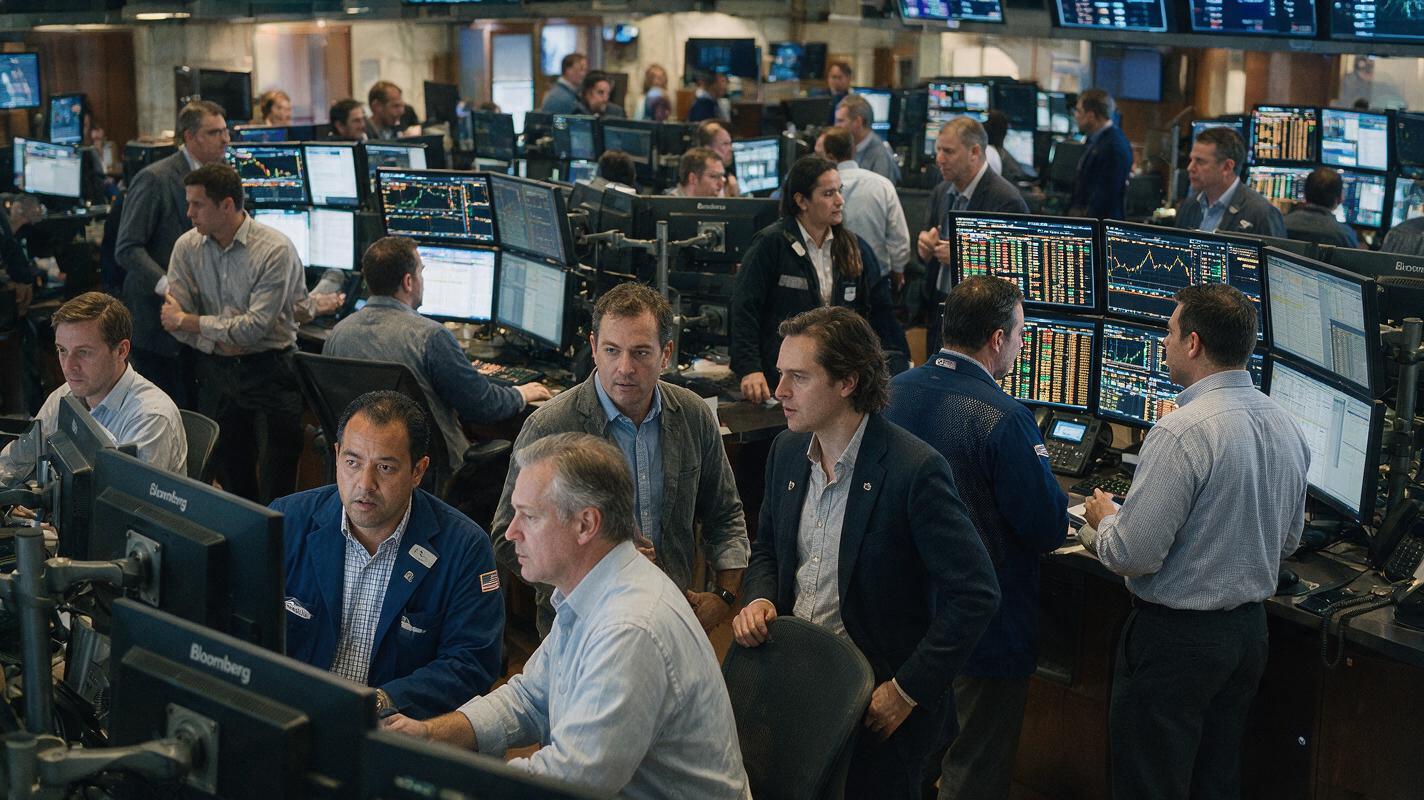
Table of contents
AI Industry News
US Tech Stocks Plunge as Meta, Nvidia and Oracle Fall; ASML Beats Q3A sharp technology-stock selloff collided with a strong semiconductor-equipment update, highlighting the market’s divided view of AI investment and infrastructure demand.
Meta, Nvidia and Oracle Lead a Technology Selloff
US technology stocks fell sharply on October 15, with Meta and Nvidia each declining 3% and Oracle dropping 8.8%. The pullback put several companies closely associated with artificial intelligence infrastructure, platforms and services under pressure during the same trading period.
The decline did not produce a uniformly negative picture across the technology supply chain. ASML reported third-quarter results that beat expectations and disclosed a record backlog extending through 2030. That contrast placed falling valuations for prominent US technology companies alongside evidence of sustained demand at a major semiconductor-equipment supplier.
The central news was therefore larger than a single stock move. Meta and Nvidia’s 3% declines, Oracle’s substantially steeper 8.8% fall and ASML’s Q3 beat illustrated how investors can remain confident in long-term semiconductor demand while reassessing individual companies exposed to the cost and execution risks surrounding artificial intelligence.
Reported figures: Meta and Nvidia fell 3%, Oracle declined 8.8%, and ASML delivered a Q3 beat with record backlog through 2030.
For content teams, the immediate lesson is not to treat a daily market decline as a verdict on AI creation. It is a reminder that the AI industry depends on expensive infrastructure, and shifts in investor expectations can affect how vendors prioritize capacity, pricing and products.
Why the ASML Backlog Changes the Reading
If the report had contained only falling share prices, it could have been read as a broad rejection of the technology sector’s AI strategy. ASML’s update complicates that interpretation. A record backlog through 2030 points to continuing equipment demand even as Meta, Nvidia and Oracle experienced significant market declines.
The distinction matters because stock prices and operating demand measure different things. A share-price move reflects changing investor expectations at a particular moment. A backlog represents business already recorded for future delivery. Neither indicator alone provides a complete forecast for the AI industry, but their coexistence shows why broad conclusions should be treated carefully.
| Company | Reported development | What it highlights |
|---|---|---|
| Meta | Shares fell 3% | Market pressure on a major AI platform company |
| Nvidia | Shares fell 3% | Changing sentiment around a company central to AI infrastructure |
| Oracle | Shares fell 8.8% | A sharper reassessment within the technology selloff |
| ASML | Q3 beat and record backlog through 2030 | Continuing long-range demand for semiconductor equipment |
The mixed picture suggests that investors were differentiating between near-term valuations and the longer investment cycle behind computing infrastructure. AI capital expenditure can remain strategically important even when individual technology stocks experience abrupt declines.
AI Capital Expenditure Is Under Closer Scrutiny
Artificial intelligence services ultimately rely on a physical chain of computing equipment, data-center capacity and supporting infrastructure. As spending rises across that chain, investors have more reason to examine whether each company can convert investment into durable demand and revenue.
That scrutiny can produce apparently contradictory market signals. Investors may continue to expect substantial semiconductor demand while becoming less willing to reward every company exposed to AI at the same valuation. ASML’s record backlog through 2030 and the simultaneous declines in Meta, Nvidia and Oracle fit that divided landscape.
Long-term confidence in AI infrastructure does not prevent short-term concern about price, spending efficiency or execution at individual companies.
This is also why AI funding and AI capital expenditure should not be treated as interchangeable with guaranteed commercial success. Capital can expand available infrastructure, but every vendor still has to translate that investment into products that customers find useful and economical.
What the Market Split Means for Content Teams
Content teams do not need to trade technology stocks to feel the effects of the underlying investment cycle. Their exposure appears through model availability, subscription decisions, generation limits and the overall cost of producing visual assets at scale.
A campaign may require scripts, images and video variations, but the ideal model can differ by assignment. A product concept could begin with an ai image generator, while a short promotional sequence may benefit from an ai video generator. Locking an entire pipeline to one vendor can make it harder to adapt when products, access conditions or economics change.
Judge Creative AI by Production Outcomes
Daily stock moves are useful signals about market sentiment, but they do not tell a team whether a model suits a particular brief. Content operations should focus on practical questions such as output quality, revision effort, consistency and the amount of usable material produced from a budget.
- Evaluate complete output cost. AI video cost includes unsuccessful generations and editing time, not merely the displayed generation price.
- Preserve model flexibility. Different visual treatments and campaign formats may call for different models.
- Keep reusable creative assets. Prompts, scripts, reference images and approved outputs should remain organized independently of any single model.
- Separate market headlines from workflow evidence. A falling stock does not automatically make a creative tool less useful, just as a strong backlog does not guarantee that every AI product will fit every assignment.
Multi-Model Access Reduces Vendor Dependence
The October 15 market split reinforces the value of maintaining options. Meta, Nvidia, Oracle and ASML occupy different positions in the wider technology economy, yet their reported developments all connect to the investment environment surrounding artificial intelligence.
For a content team, resilience comes from being able to compare outputs without rebuilding the entire workflow whenever the market or product landscape changes. MagicBoat provides a one-account, multi-model environment for creative work, allowing teams to move between supported generation options according to the project rather than tying every deliverable to one provider.
This approach does not remove the infrastructure costs shaping the AI industry. It gives creative teams a more practical way to respond to them by comparing results, choosing the right capability for each asset and avoiding unnecessary dependence on a single model.
Key Takeaways
- Meta and Nvidia each fell 3% during the reported US technology-stock decline.
- Oracle recorded the largest cited drop at 8.8%.
- ASML beat third-quarter expectations and reported record backlog through 2030.
- The contrast separates short-term market pressure from longer-range semiconductor-equipment demand.
- Content teams should measure creative AI through usable output, workflow flexibility and total production cost.
- A multi-model platform can help teams adapt as vendor products and market conditions change.
Keep Your AI Production Flexible
Build images, videos and other campaign assets without basing the entire production pipeline on one vendor’s market cycle. Explore MagicBoat and try these models for free.
Keywords
US tech stocks plunge, Meta stock, Nvidia stock, Oracle stock, ASML Q3, AI capital expenditure, AI industry