Adception Malvertising Pushes Fake Claude Installer via Google, Bing Ads
A new malvertising campaign dubbed “Adception” uses Google Ads and Bing search results to distribute a fake Claude desktop installer targeting users searching for “claude mac”. The scam puts creator data, workflow security, and sensitive content at risk of theft or disruption. Using a centralized, web-based multi-model AI platform can help creators avoid the threat of malicious desktop app downloads entirely.

Table of contents
What You Need to Know About the Adception Fake Claude Installer Campaign
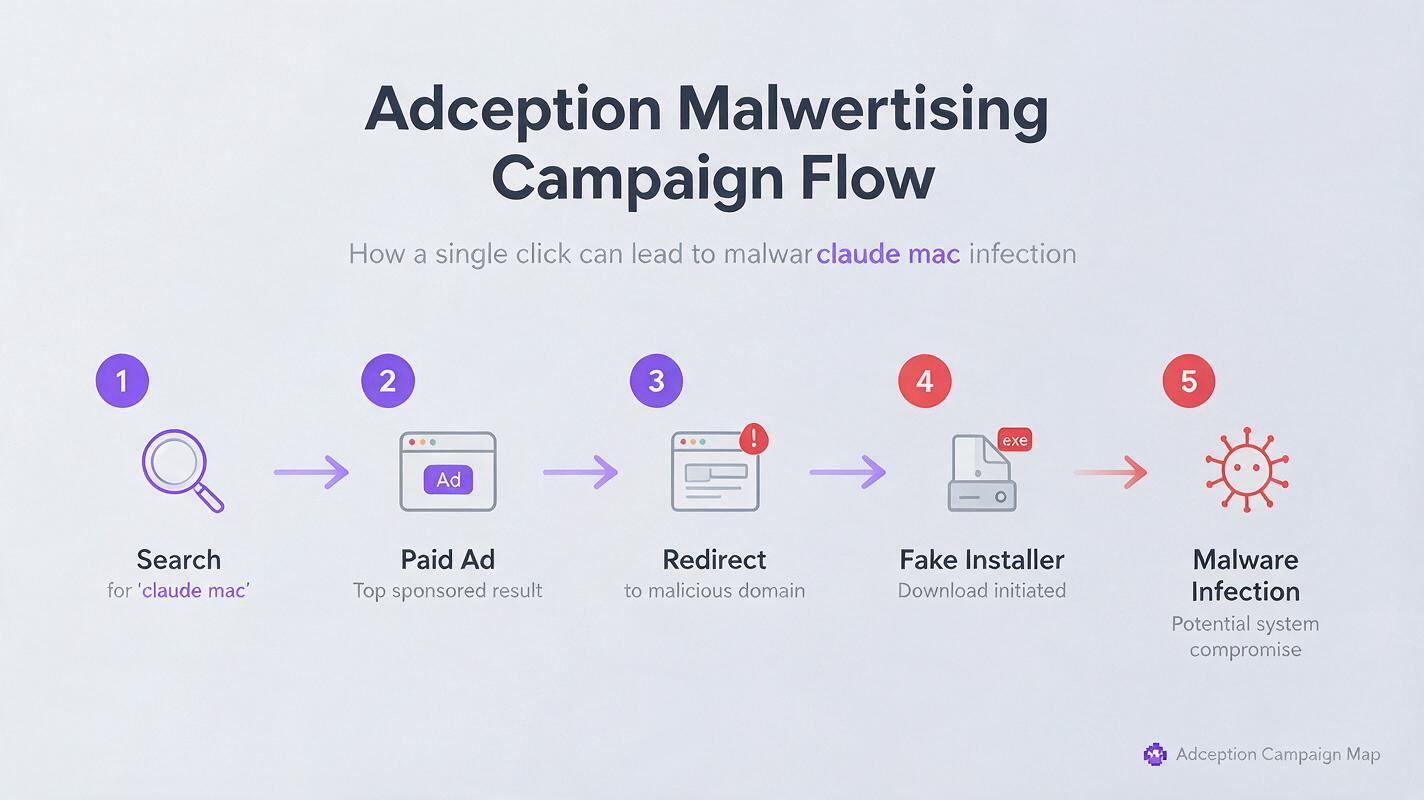
A new malvertising campaign dubbed “Adception” is exploiting search traffic for popular AI tool Claude to distribute malicious software, per an October 9 report from BleepingComputer. The campaign uses paid ads on both Google Ads and Bing search results to target users searching for “claude mac”, redirecting anyone who clicks the ad to a lookalike domain hosting a fake Claude desktop installer.
The malicious domain, listed as claude-desk-code[.]com, is designed to appear as an official download resource for Claude, the AI assistant developed by Anthropic. The campaign leverages high demand for desktop versions of leading AI tools to trick users into downloading and running unvetted software on their devices.
How the Adception Malvertising Flow Works
The scam begins when a user searches for a Mac-compatible version of Claude using Google or Bing. Paid search ads, which appear at the top of search results and often mimic official resource listings, are configured to target the “claude mac” query specifically. When a user clicks one of these ads, they are redirected away from the search engine to the malicious claude-desk-code[.]com domain.
The site is built to resemble a legitimate Claude download page, with branding and copy that mirrors official Anthropic materials. Visitors are prompted to download a “Claude Desktop” installer file, which appears to be a standard Mac application. The exact capabilities of the Adception campaign’s payload have not been fully detailed in initial reports, but fake AI tool installers commonly carry a range of malicious functionality.
Common risks associated with fake AI tool installers include theft of account credentials, keylogging, ransomware deployment, and exfiltration of sensitive files stored on the user’s device. For creators who store unreleased content, client data, and payment information on their work machines, such an infection can have severe professional and financial consequences.
Why Creators Are a High-Priority Target for AI Tool Scams
Content creators and production teams are among the most active users of AI tools today, relying on platforms like Claude for scriptwriting, research, content editing, and workflow planning. Many creators seek out desktop apps or offline access options to integrate AI tools more seamlessly into their existing production stacks, making search queries for tool-specific desktop versions a prime target for malvertising campaigns.
Because creators often work with multiple AI tools for different tasks — from writing to visual production — they may frequently search for new tools, extensions, or desktop clients, increasing their exposure to malicious ads. A single compromised device can derail weeks of production, put client confidential data at risk, and lead to lost revenue from missed deadlines.

Practical Ways to Secure Your AI Tool Workflow
There are several straightforward practices creators can adopt to reduce their risk of falling for fake AI tool installers and similar malvertising scams:
- Only download software directly from official vendor websites. Never click paid search ads to download tools; instead, navigate directly to the vendor’s official domain or use a trusted bookmark.
- Verify URL spelling and structure before downloading any file. Look for HTTPS encryption, official domain names, and no extra characters or misspellings in the address bar.
- Avoid unofficial “desktop client” or “offline version” downloads for tools that are primarily web-based. Many leading AI tools do not offer official desktop apps, so any third-party download claiming to be one should be treated as suspicious.
- Use endpoint protection software that scans downloaded files for malware before they can be executed on your device.
- Enable two-factor authentication on all AI tool and work-related accounts to limit damage if credentials are ever compromised.
How Centralized AI Platforms Reduce Download Risk
One of the most effective ways to cut down on exposure to fake AI tool installers is to use a centralized, web-based AI platform that brings multiple tools together in one secure interface. Instead of downloading separate desktop apps for writing, image generation, and video production, creators can access all the tools they need through a single browser-based account, with no additional software required.
MagicBoat offers a full suite of creative AI tools directly through its web platform, including an ai image generator for visual assets and text to video capabilities for short-form and long-form content. All tools are accessed through a single secure login, eliminating the need to download and install multiple third-party applications that could put your device at risk.
Centralized platforms also simplify account management, billing, and workflow tracking, so creators can spend less time managing tool subscriptions and more time producing content. With new AI tools and models added regularly, you can test and adopt new capabilities without the risk of downloading unvetted software from unknown sources.

Key Takeaways
- The Adception malvertising campaign uses Google and Bing paid ads to target users searching for “claude mac”, redirecting them to a fake Claude installer at claude-desk-code[.]com.
- Creators are particularly vulnerable to AI tool malvertising due to their high usage of multiple AI tools and demand for integrated desktop solutions.
- Sticking to official vendor websites, verifying URLs, and using centralized web-based AI platforms are the most effective ways to avoid fake installer scams.
- Using a single multi-tool platform like MagicBoat eliminates the need for multiple third-party downloads, reducing your overall security risk while streamlining your creative workflow.
Ready to access a full suite of secure, web-based creative AI tools without the risk of fake installers? try these models for free today.
Keywords
adception, malvertising, fake claude installer, claude mac, ai tool security, ai industry, content creator security