AI-Pharma Land Grab: Anthropic, OpenAI, Nvidia Expand Biotech Footprint
In mid-November 2026, Silicon Valley’s top AI labs accelerated their push into biotech with a flurry of acquisitions and funding rounds, including Anthropic’s purchase of Mithril Medicine, OpenAI’s acquisition of Orchestra Bio, and a $1 billion joint drug-discovery lab from Nvidia and Eli Lilly. The moves signal a growing focus on vertical-specific AI applications, with implications for both scientific research and the broader AI tool ecosystem. For AI video and image creators, this rapid expansion highlights the value of multi-model platforms that keep pace with evolving AI capabilities.
Table of contents
The AI-Pharma Land Grab: What Just Happened
In mid-November 2026, Silicon Valley’s leading AI labs kicked off a sweeping wave of investment and acquisition activity in the biotech sector, marking one of the most concentrated pushes into vertical-specific AI applications to date. Over the course of a single week, four major deals were announced spanning frontier model providers, chipmakers, and life sciences firms, collectively signaling that AI-powered drug discovery and biotech research are no longer niche side projects but core strategic priorities for the industry’s biggest players.
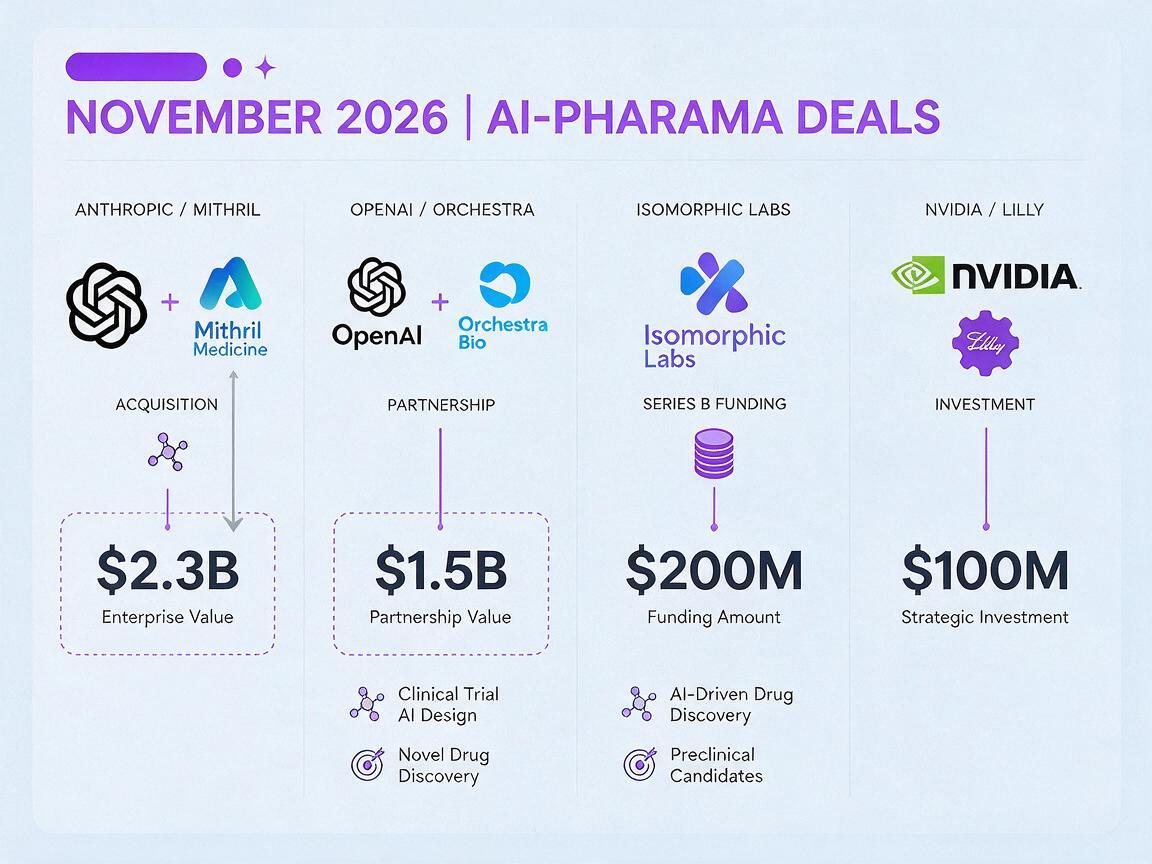
The flurry of activity includes Anthropic’s acquisition of Mithril Medicine, a small biotech startup with just one full-time employee whose founder used Claude to coordinate 11 external research labs and deliver positive mouse-test results in under 18 months. In the same week, OpenAI acquired Orchestra Bio, a drug-discovery coordination platform that will be folded into the company’s Rosalind life-science product line. Alphabet-backed Isomorphic Labs also announced a $2.1 billion Series B funding round led by Thrive Capital, bringing its total funding to roughly $2.6 billion across 17 active programs. Rounding out the wave, Nvidia and pharmaceutical giant Eli Lilly revealed plans to invest up to $1 billion over five years in a joint AI drug-discovery lab.
Each deal reflects a different approach to integrating AI with biotech research, from using frontier models to coordinate distributed lab networks to building dedicated AI-powered drug discovery infrastructure.
Breaking Down the Major Biotech AI Moves
Anthropic Acquires Mithril Medicine
Anthropic’s purchase of Mithril Medicine stands out as a testament to the productivity gains frontier AI models can deliver in biotech research. Founded by a single entrepreneur who leveraged claude opus to manage 11 outside labs, Mithril achieved positive preclinical mouse-test results in less than 18 months — a timeline that would typically require a much larger team and far higher budget. The acquisition will likely deepen Claude’s integration with life sciences workflows and expand Anthropic’s footprint in the biotech AI market.
OpenAI Acquires Orchestra Bio for Rosalind
OpenAI’s acquisition of Orchestra Bio is tied directly to its Rosalind life-science product, which focuses on AI-powered biological research and drug discovery. Orchestra Bio’s drug-discovery coordination technology will be integrated into the Rosalind platform, enhancing its ability to manage complex, multi-partner research projects. The move comes as gpt-6 family models continue to demonstrate strong performance on scientific reasoning and data analysis tasks, positioning OpenAI to compete more directly in the life sciences AI space.
Isomorphic Labs Raises $2.1B Series B
Alphabet-backed Isomorphic Labs, which builds AI models for drug discovery and molecular research, closed a $2.1 billion Series B round led by Thrive Capital. The funding brings the company’s total raised to approximately $2.6 billion, with 17 active research programs in its pipeline. The round highlights the massive investor interest in AI-powered drug discovery, even as broader AI funding has shifted toward more established, revenue-generating players.
Nvidia and Eli Lilly Launch $1B Joint Lab
Chipmaker Nvidia and pharmaceutical leader Eli Lilly announced plans to invest up to $1 billion over five years in a joint AI drug-discovery lab. The lab will combine Nvidia’s AI computing infrastructure and software tools with Lilly’s pharmaceutical research expertise to accelerate the discovery and development of new medicines. The partnership underscores the critical role of compute hardware in advancing AI biotech research, as well as the growing collaboration between semiconductor firms and life sciences companies.
Why This Wave Matters for Frontier AI
The AI-pharma land grab is more than just a series of industry deals — it signals a major shift in how frontier AI models are being developed and deployed. After years of focusing on general-purpose capabilities like text generation, coding, and creative tasks, top AI labs are now investing heavily in vertical-specific applications where AI can deliver measurable, high-value outcomes. Biotech is a particularly attractive target because of the massive potential impact on human health, as well as the high profit margins associated with successful drug discoveries.
For the broader AI ecosystem, this shift means that frontier models will continue to evolve rapidly, with new capabilities in scientific reasoning, data analysis, and complex workflow coordination rolling out at an accelerating pace. Many of these capabilities will eventually trickle down to more mainstream use cases, including creative applications like video generation, image editing, and scriptwriting. As models get better at understanding complex scientific concepts and coordinating multi-step processes, they will also become more capable of handling nuanced creative tasks that require deep context and long-term planning.
At the same time, the push into biotech highlights the growing fragmentation of the AI market, with different providers specializing in different verticals and use cases. No single model or platform is likely to dominate every application, which means users across all industries — including creative fields — will benefit from having access to multiple best-in-class models for different tasks.
What This Means for AI Video and Image Creators
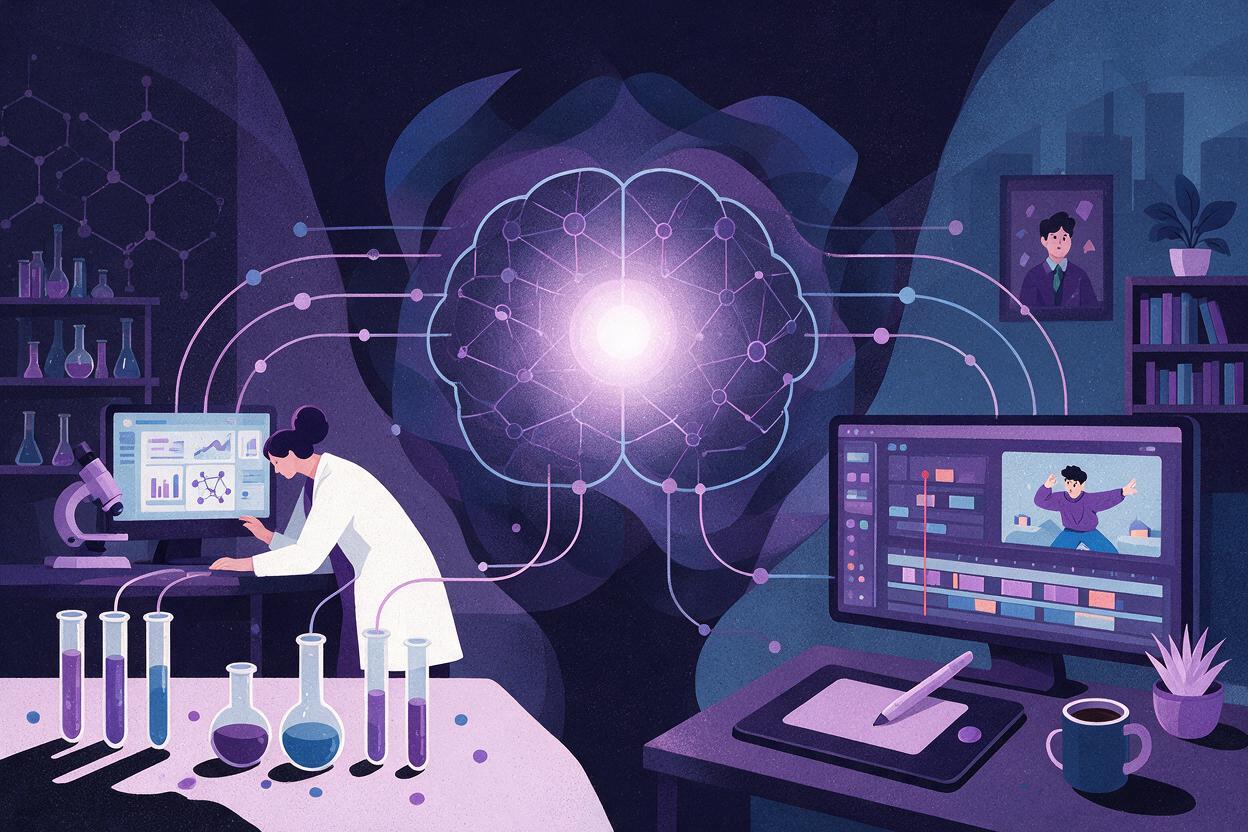
For AI video and image creators, the rapid expansion of AI into biotech and other verticals brings both new opportunities and new challenges. On the opportunity side, the growing mainstream interest in AI and biotech is driving demand for high-quality creative content that explains complex scientific concepts, showcases new AI tools, and tells stories about the intersection of technology and medicine. Creators who can produce accurate, engaging content about AI-powered biotech will find a growing audience among science enthusiasts, industry professionals, and general viewers curious about the future of medicine.
On the technical side, the evolution of frontier AI models means that creative tools will continue to improve at a rapid pace. The same reasoning and coordination capabilities that make AI models useful for drug discovery will also make them better at generating detailed storyboards, writing accurate voiceover scripts, and producing high-quality visual content for scientific and technical topics. For example, models with stronger scientific understanding can generate more accurate illustrations of molecular structures, lab environments, and biological processes, saving creators hours of research and manual editing work.
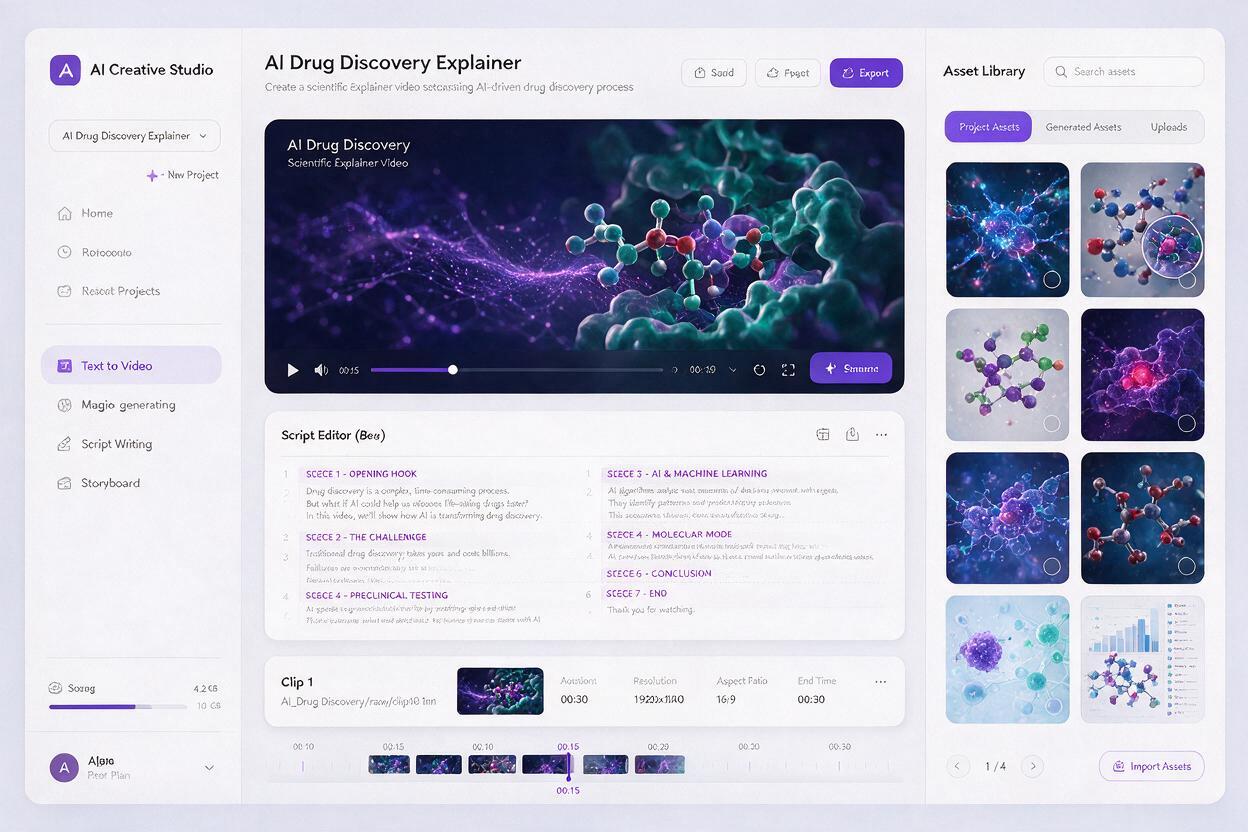
However, the rapid pace of model development and market fragmentation can also make it hard for creators to keep up with the latest tools and capabilities. With new models and features launching every month, it can be overwhelming to test every option and figure out which tools work best for specific creative tasks. That’s where a multi-model creative platform like MagicBoat comes in, giving creators access to a wide range of text to video tools, ai image generator tools, and other AI creative capabilities all in one place. Instead of managing dozens of separate accounts and subscriptions, creators can test different models, compare results, and choose the best tool for each project — all from a single dashboard.
Whether you’re creating explainer videos about AI biotech, generating scientific illustrations for a client, or experimenting with new AI creative workflows, having access to multiple best-in-class models ensures you can adapt to new developments and produce the highest quality content possible. try these models for free and see how multi-model access can elevate your creative workflow.
Key Takeaways
- Silicon Valley’s top AI labs are accelerating their push into biotech, with major acquisitions and funding rounds from Anthropic, OpenAI, Isomorphic Labs, and Nvidia in mid-November 2026.
- The shift toward vertical-specific AI applications means frontier models will continue to evolve rapidly, with new reasoning and coordination capabilities that will eventually benefit creative use cases.
- For AI video and image creators, the biotech AI wave creates new content opportunities while highlighting the value of multi-model platforms that keep pace with evolving AI tools.
- Creators can access a range of AI creative tools, from text to video to image generation, all in one place to stay ahead of the curve and produce high-quality content efficiently.
Keywords
ai pharma land grab, anthropic, openai, nvidia, gpt-6, claude opus, text to video, ai video model