Amazon's $7B India Renewable Energy Plan: AI Infrastructure Facts | MagicBoat
Amazon plans to invest $7 billion in Indian renewable energy projects by 2030, including four new wind and solar farms, to power its AWS cloud and e-commerce expansion in the region. The investment reflects a broader industry trend of tech companies locking in clean power to support surging AI capital expenditure, echoing similar moves by Microsoft and Google. For AI content creators, the expansion could lead to more stable regional cloud capacity and long-term downward pressure on AI compute costs.
Table of contents
Amazon’s $7 billion Indian renewable energy investment isn’t just a sustainability play—it’s a strategic bet on locking in the power capacity needed to scale AI infrastructure across one of the world’s fastest-growing cloud markets.
According to November 17, 2026 premarket briefs, Amazon plans to deploy the cumulative investment across four new wind and solar projects in India by 2030, tying its AWS cloud and e-commerce expansion in the region directly to long-term clean power contracts. The move fits a growing pattern of large tech companies treating energy as a core strategic input for AI workloads, rather than a variable operational cost.
As AI capital expenditure surges globally, securing reliable, affordable power has become one of the biggest bottlenecks for scaling cloud capacity. Amazon’s India plan is the latest in a string of hyperscaler moves to vertically integrate into energy infrastructure, with direct implications for the broader ai industry and the creators who rely on AI tools.
What Happened With Amazon's India Renewable Energy Plan
Amazon’s plan involves a cumulative $7 billion investment in Indian renewable energy projects before 2030, anchored by four newly signed wind and solar farms. The company is positioning the investment to support both its fast-growing AWS cloud division and its e-commerce operations in India, two segments that are seeing rising demand for AI-powered services.
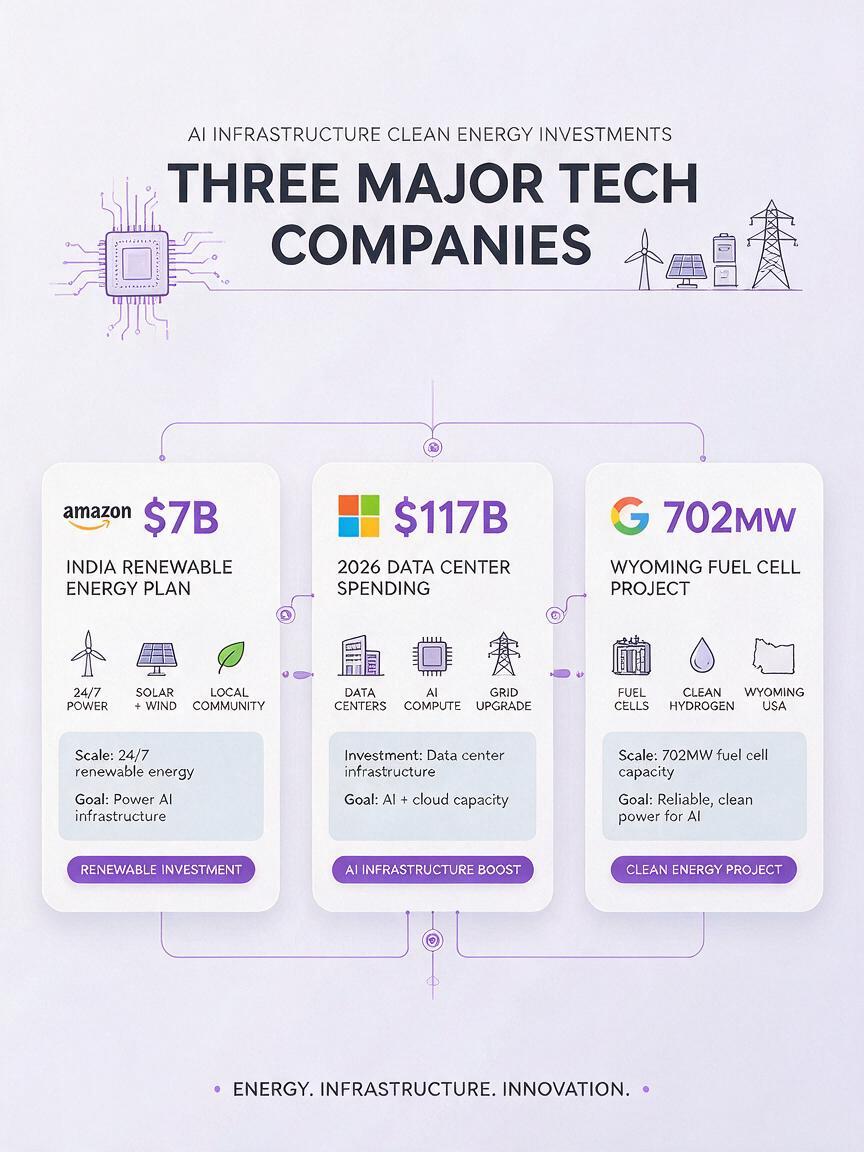
The announcement follows similar moves by other major tech players to secure dedicated clean power for AI infrastructure. Microsoft recently pledged to cover all electricity and grid upgrade costs for its own AI data centers to avoid shifting costs to other ratepayers, while Google is building a 702MW solid-oxide fuel-cell plant in Wyoming to power its data center campus there.
Several key details remain unconfirmed. Amazon has not disclosed the total generating capacity of the four new projects, nor has it mapped the investment to specific data center locations in India. The $7 billion figure is a cumulative target through 2030, not a single-year outlay, and the plan still faces tests of India’s land use policies, grid connection processes, and tariff approval systems.
Key Figures and Industry Context
To understand the scale of Amazon’s plan, it helps to frame it alongside the broader trend of hyperscaler energy investment for AI infrastructure:
- $7 billion cumulative investment target by Amazon for Indian renewable energy through 2030, across four new wind and solar projects (capacity not disclosed).
- 702MW Wyoming fuel-cell plant from Google, built and owned by American Electric Power using Bloom Energy hardware, under a 20-year power purchase agreement with full capacity by end-2028.
- $117 billion in 2026 AI and cloud data center spending planned by Microsoft, alongside its pledge to cover all power and grid upgrade costs for its AI data centers.
- Pressure on smaller cloud providers that have not secured long-term clean electricity contracts, as hyperscalers lock in lower, more predictable power costs for AI workloads.
This wave of investment reflects a fundamental shift in how ai industry players think about infrastructure. For years, cloud companies treated power as a utility they bought from local grids. Now, as AI data centers consume gigawatts of electricity each, hyperscalers are moving upstream to own or contract dedicated generation capacity, reducing their exposure to grid volatility and regulatory delays.
Why This Matters for AI Infrastructure
AI workloads — from training large language models to running inference for ai video generator tools — are extremely power-intensive. A single large AI data center can consume as much electricity as a mid-sized city, making access to reliable, low-cost power one of the most critical factors in scaling AI capacity.
By investing directly in renewable energy projects, Amazon is doing more than hitting sustainability targets. It is locking in long-term power supplies for its AWS cloud division, which is a key provider of compute for AI startups, enterprise teams, and creative tools. This reduces the risk of capacity shortages as demand for AI services grows in India, one of the world’s fastest-growing cloud markets.
The trend also puts pressure on smaller, leveraged neocloud providers that lack the capital to secure their own power generation. As ai funding costs rise with higher interest rates, these smaller players may struggle to compete on price or reliability, leading to further consolidation in the AI infrastructure space.
For India specifically, Amazon’s investment is a vote of confidence in the country’s AI growth potential, but it also tests the government’s ability to streamline permitting for renewable energy and data center projects. Delays in land acquisition or grid connections could slow the rollout of new capacity.
What This Means for AI Content Creators
For individual creators and content teams using ai video generator and ai image generator tools, the impact of Amazon’s investment will be gradual but meaningful over time.
First, more cloud capacity in India could lead to faster inference speeds and more reliable service for creators in South Asia, reducing latency for AI tools that run on AWS infrastructure. Over the long term, as hyperscalers lock in cheaper, long-term power contracts, there is potential for downward pressure on ai video cost and compute pricing, which could make AI creative tools more accessible to independent creators.
At the same time, the concentration of power and capacity among a small number of large hyperscalers underscores the importance of not relying on a single provider for your AI workflow. If one cloud vendor faces capacity constraints or price hikes, creators who use only that provider’s tools could see disruptions or higher costs.
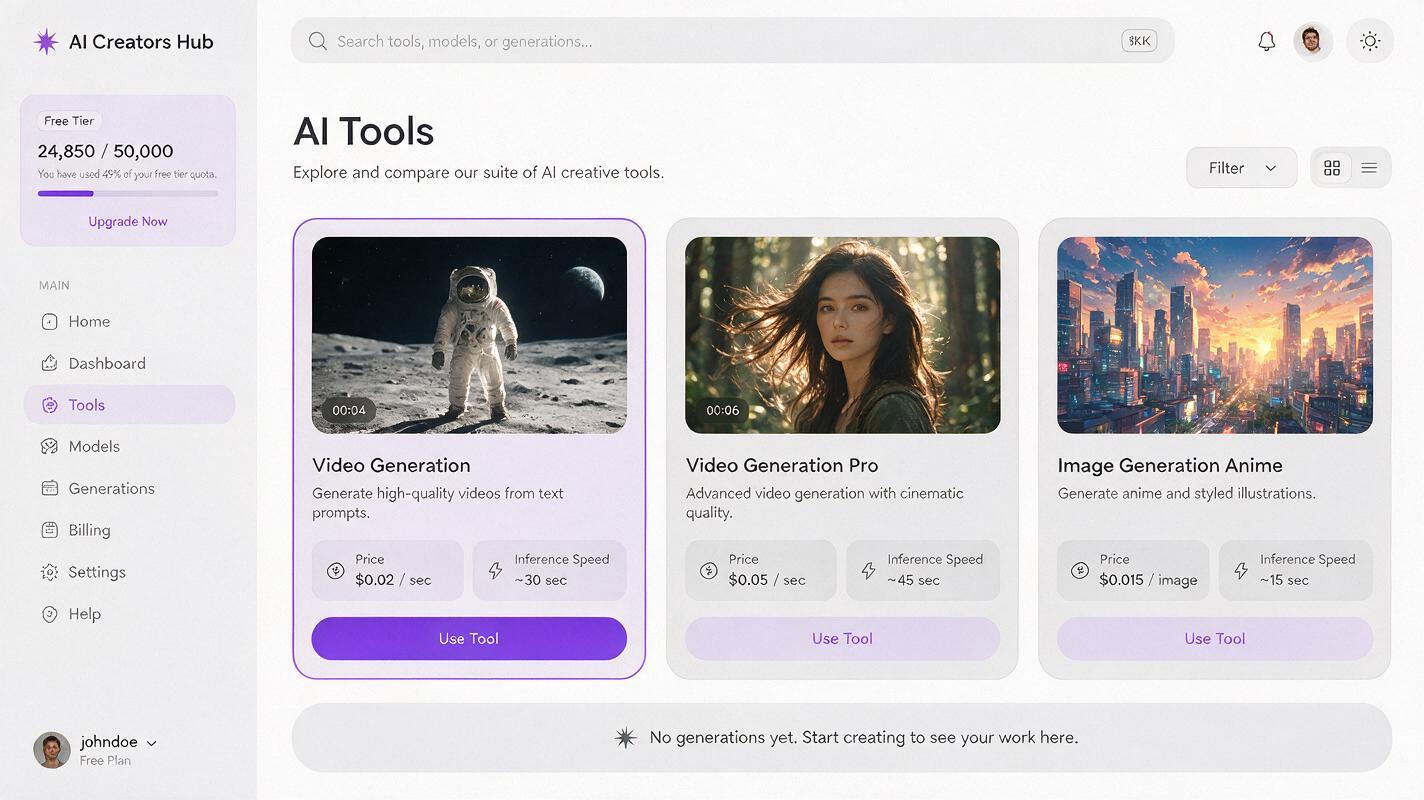
That’s where multi-model platforms like MagicBoat add value: they aggregate a wide range of AI creative tools from multiple providers, so you can switch between models and infrastructure backends without rebuilding your entire workflow. If you want to test a range of AI creative tools backed by diverse infrastructure, try these models for free.
Key Takeaways
- Amazon plans a cumulative $7 billion investment in Indian renewable energy by 2030, across four new wind and solar projects, to support AWS and e-commerce growth in the region.
- The investment is part of a broader trend of hyperscalers treating energy as a strategic input for AI capital expenditure, echoing similar moves by Microsoft and Google.
- Smaller cloud providers without long-term clean power contracts face growing competitive pressure as AI infrastructure scales and financing costs rise.
- For AI creators, the expansion signals long-term potential for more stable regional capacity and lower compute costs, though near-term impacts are limited.
- Using a multi-model creative platform helps insulate creators from single-vendor capacity or pricing shifts, with access to a range of tools under one account.
Keywords
ai capital expenditure, ai funding, ai industry, amazon renewable energy, india ai data centers, ai video cost, ai image generator