Amazon Market Cap Tops $2 Trillion for First Time, Up 3.9% on Oct 14
Amazon's market capitalization surpassed $2 trillion for the first time on October 14, 2026, with shares rising 3.9% in a single trading session, according to CNBC. The milestone reflects growing investor confidence in Amazon's broad AI ecosystem, spanning cloud infrastructure, e-commerce agent integrations, and industrial AI tools. For content creators, the valuation milestone highlights the need for flexible, multi-model AI workflows that avoid ecosystem lock-in and adapt to rapid industry changes.

Table of contents
Amazon Hits $2 Trillion Market Cap for the First Time
Amazon's market capitalization crossed the $2 trillion threshold for the first time on October 14, 2026, with shares climbing 3.9% in a single trading session, according to reporting from CNBC. The milestone makes Amazon one of only a handful of public companies to reach the $2T mark, joining the ranks of Apple and Nvidia as tech giants whose valuations have been supercharged by AI-driven growth.
The single-day gain adds tens of billions of dollars to Amazon's market value, reflecting broad investor optimism about the company's long-term positioning across cloud computing, e-commerce, and emerging AI technologies. While the immediate catalyst for the October 14 rally isn't specified in available reporting, the milestone comes amid a string of AI-focused moves from Amazon in recent months that have strengthened its position in the global AI ecosystem.
For context, Amazon's valuation growth tracks with a broader industry trend where companies with established AI infrastructure and ecosystem reach are seeing outsized investor interest. This trend is reshaping not just financial markets, but the tools and platforms that content creators rely on to produce and distribute their work.
AI Ecosystem Growth Drives Investor Confidence
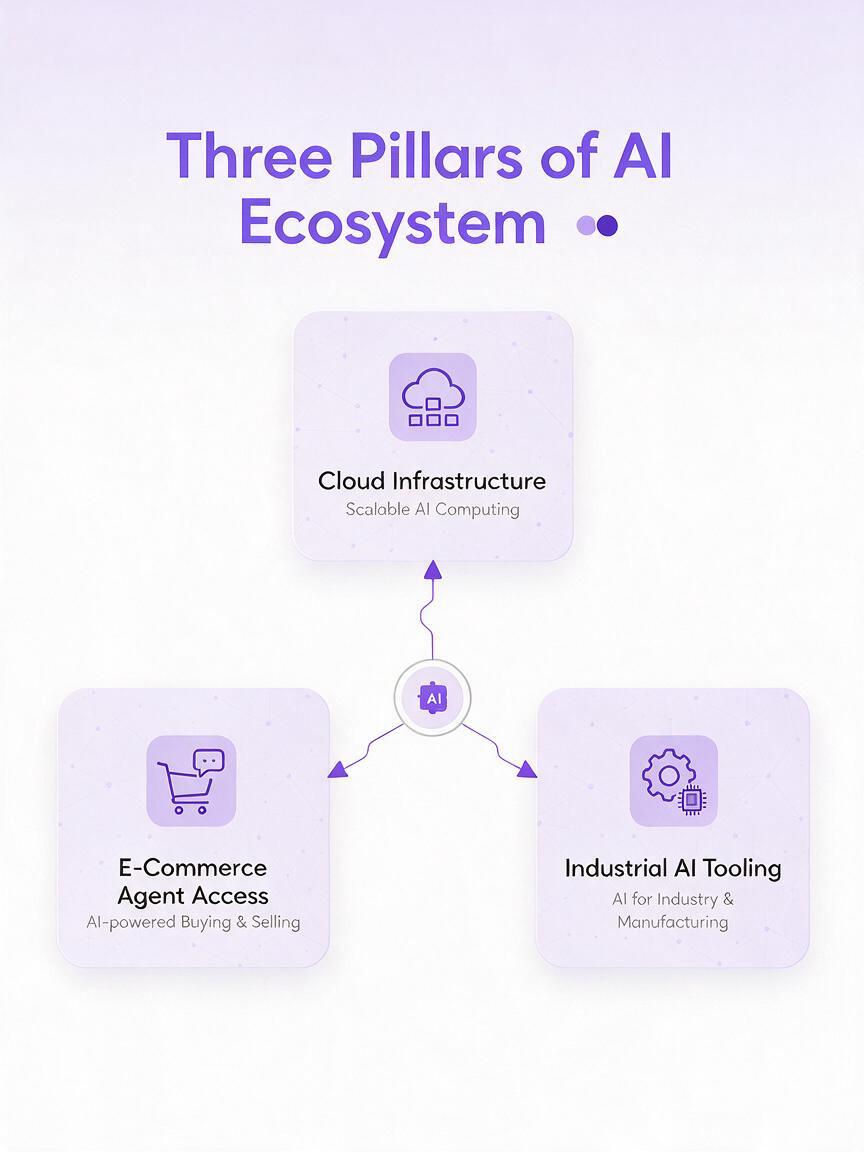
Amazon's AI strategy spans multiple business lines, from its AWS cloud infrastructure to e-commerce tools and agent integrations, creating a broad moat that has attracted significant investor interest. In late September, Amazon opened its seller tools to third-party AI agents, starting with Claude, marking a major step toward integrating AI agents directly into the world's largest online retail ecosystem. That move allows AI-powered shopping assistants to access product data, pricing, and Prime delivery information directly from Amazon's seller platform, opening up new use cases for both merchants and consumers.
More recently, reports surfaced that Amazon is near acquiring AI cloud startup Decart, a deal that would further bolster AWS's AI infrastructure capabilities and expand its suite of AI development tools for enterprise customers. AWS has also rolled out a range of AI-focused offerings in recent months, including an open-source Physical AI Toolchain for robotics and manufacturing that integrates with NVIDIA's AI stack, positioning the cloud division as a key player in industrial AI and automation.
These moves are part of a broader push by Amazon to embed AI across every layer of its business, from supply chain optimization to customer-facing search and recommendations. For investors, this widespread AI integration translates to multiple revenue streams tied to the fast-growing AI market, reducing reliance on any single product or service line and making the company's growth trajectory more predictable.
What This Milestone Means for Content Creators
For AI content creators, Amazon's $2 trillion market cap milestone is more than just a financial headline — it's a signal of how central AI will become to the platforms where creators build audiences and monetize their work. As Amazon expands its AI ecosystem, creators working in e-commerce content, product marketing, and retail media will have access to new AI-powered tools for creating product videos, social media assets, and personalized marketing content at scale.
Creators who specialize in e-commerce content, for example, may find new opportunities to build AI-enhanced product listings, automated video ad campaigns, and personalized customer experiences tied directly to Amazon's platform. These tools can reduce production time and let creators serve more clients without expanding their team size.
At the same time, the growing concentration of AI power in a small number of large tech platforms creates real risks for creators. Ecosystem lock-in, rising tool costs, and sudden changes to platform policies can disrupt workflows and cut into revenue, especially for independent creators and small studios that rely on a single platform for their work. A platform that grows as quickly as Amazon's AI ecosystem can shift its terms, access permissions, or tooling faster than many creators can adapt, leaving them vulnerable to unexpected changes.
Building Resilient AI Content Workflows
The best way for creators to navigate this rapidly changing landscape is to build flexible, multi-model AI workflows that aren't tied to any single platform or provider. A robust ai video generator that supports multiple underlying models lets creators switch between tools as needed, whether they're producing product demos for Amazon listings, social media reels, or long-form educational content. Similarly, a reliable ai image generator can handle everything from product mockups to thumbnail design without relying on a single provider's API.
Multi-model platforms like MagicBoat give creators access to a full suite of AI content tools in one place, from script writing and storyboarding to video generation and voiceover, all under a single account. This eliminates the need to manage multiple subscriptions, learn separate tools, or worry about sudden price hikes or policy changes from any one provider. Creators can experiment with different models to find the best fit for each project, and pivot quickly if a favorite tool becomes unavailable or too expensive.
For creators working with e-commerce and retail clients, this flexibility is especially valuable. As Amazon's AI ecosystem evolves, creators who can produce high-quality content optimized for multiple platforms — including Amazon, TikTok, Instagram, and YouTube — will be better positioned to win clients and grow their businesses. With a unified AI content platform, they can streamline their workflow, reduce production time, and deliver consistent results across every channel.
Building resilience also means keeping core creative assets and workflows portable, so they can be adapted to new platforms and tools as they emerge. Creators who focus on transferable skills and multi-platform workflows will be best positioned to thrive as the AI industry continues to consolidate and evolve.

Key Takeaways
- Amazon's market capitalization surpassed $2 trillion for the first time on October 14, 2026, with a 3.9% single-day gain, according to CNBC.
- The milestone reflects growing investor confidence in Amazon's broad AI ecosystem, which spans cloud computing, e-commerce agent integrations, and industrial AI tools.
- For content creators, the growth of large AI platforms brings new opportunities for e-commerce and retail content production, but also risks of ecosystem lock-in and policy changes.
- Building workflows on multi-model AI platforms helps creators stay flexible and resilient amid rapid industry changes.
- Creators can try these models for free on MagicBoat to build a diversified, reliable AI content stack.
Keywords
amazon market cap, ai ecosystem, ai agent, ai workflow, cloud ai, e-commerce ai, content creation