Amazon Market Cap Tops $2 Trillion for the First Time
Amazon’s market capitalization crossed $2 trillion for the first time after its shares gained 3.9% on October 14, according to CNBC. The milestone offers a timely lesson for AI content teams: turn fast-moving financial headlines into accurate, reusable creative assets without allowing the size of the number to overwhelm the underlying facts.

Table of contents
Amazon Crosses the $2 Trillion Threshold
Amazon’s market capitalization topped $2 trillion for the first time, CNBC reported on October 15. The milestone followed a 3.9% increase in Amazon shares on October 14, a move large enough to carry the company across one of the most closely watched valuation thresholds in public markets.
The essential news is concise but significant: this was Amazon’s first move above $2 trillion, and it came after a specific one-day share-price gain. Those two facts—the valuation milestone and the 3.9% rise—form the factual center of the story. They should remain visible even when the news is repackaged into social posts, explainers, scripts, images, or video.
For creators, the event is a useful example of why financial news demands both speed and restraint. An AI workflow can help produce multiple formats quickly, but human review remains essential when a headline contains a large valuation, a percentage move, and two different dates.
Why the Amazon Market Cap Milestone Attracts Attention
A round-number threshold such as $2 trillion gives audiences an immediate reference point. It is memorable, compact, and easy to place in a headline. The 3.9% share gain adds movement to the story, while the “first time” designation gives it historical significance within Amazon’s own market record.
That combination also creates a risk of oversimplification. Market capitalization is the central metric in this report, so it should not be casually rewritten as revenue, cash, profit, or spending power. A strong article, caption, or video should preserve the original meaning rather than replacing it with a more dramatic but inaccurate label.
The durable news formula is simple: Amazon crossed $2 trillion in market capitalization for the first time after its shares rose 3.9% on October 14.
This sentence provides a compact source of truth for an ai assistant or editorial team. Longer creative assets can add interpretation, but they should not alter those core details.
What the Headline Does and Does Not Establish
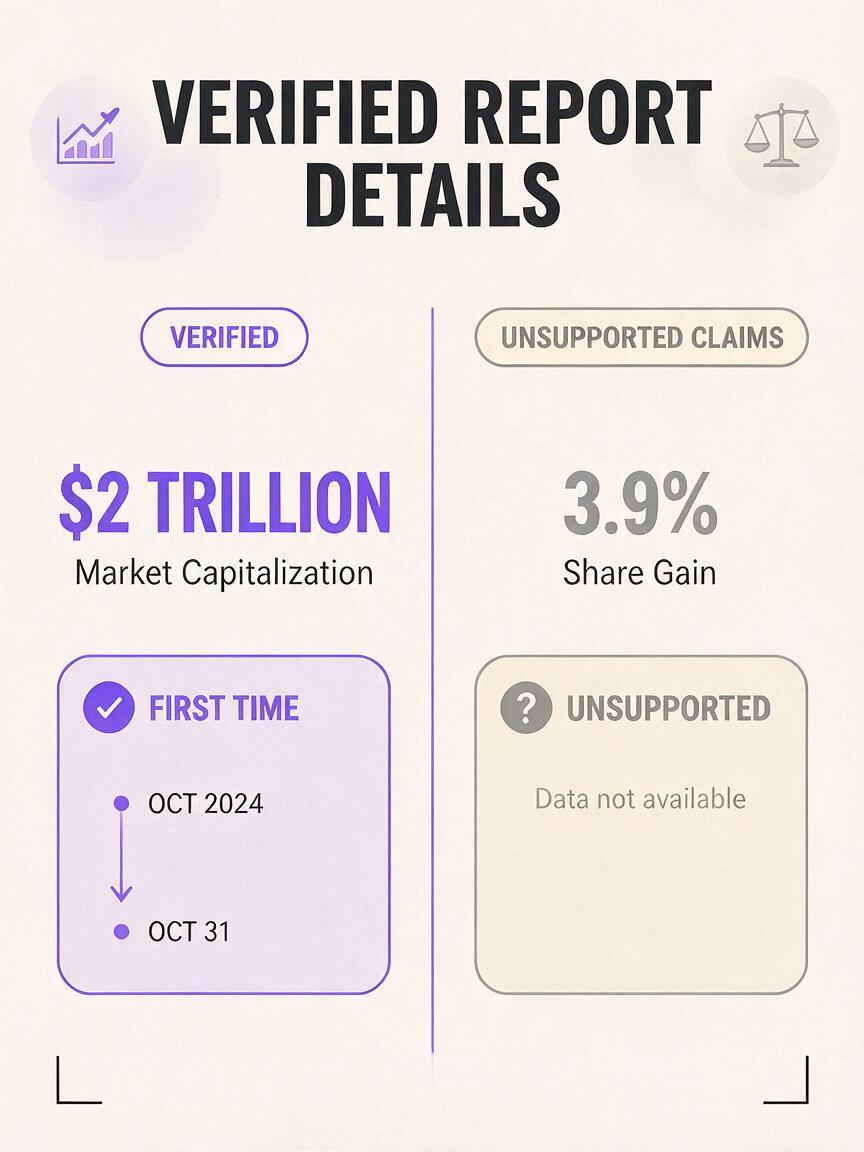
| Supported by the report | Not established by the report |
|---|---|
| Amazon’s market capitalization topped $2 trillion. | The milestone does not by itself explain every cause of the share movement. |
| This was the first time Amazon crossed that threshold. | It does not establish a new product capability or model release. |
| Amazon shares gained 3.9% on October 14. | It does not provide a forecast for later market performance. |
| CNBC reported the milestone on October 15. | It does not turn market capitalization into revenue or profit. |
This boundary is valuable when AI automation is involved. A system can expand a short brief into many assets, but unsupported explanations can multiply just as quickly as accurate facts. Keeping a compact evidence record beside every output makes review more reliable.
A Fact-Controlled AI Workflow for Fast Financial News
The most effective creative brief for this story should separate confirmed information from commentary. Confirmed fields include the company, the $2 trillion market-cap threshold, the first-time status, the 3.9% share gain, and the relevant dates. Commentary can then explore why milestone numbers resonate with audiences without pretending to identify causes not supplied by the report.
An ai agent can assist with headline variations, short summaries, narration drafts, visual concepts, and platform-specific copy. However, publication authority should stay with a human editor. That editor can confirm that every version uses “market capitalization” accurately, retains the percentage sign, and does not collapse October 14 and October 15 into one ambiguous date.
The same controlled brief can support several outputs:
- A news article centered on the first-time $2 trillion milestone.
- A short social post pairing the valuation threshold with the 3.9% move.
- A visual card that distinguishes market capitalization from the daily share change.
- A narrated clip that states the confirmed facts before offering analysis.
- An editorial comparison that labels any broader interpretation as commentary.
For visual planning, an ai storyboard can map the narrative from the October 14 share move to the October 15 report. An ai video generator can then support a concise news format built around the approved brief rather than an open-ended request for dramatic market claims.
Why Model Flexibility Matters During a News Cycle
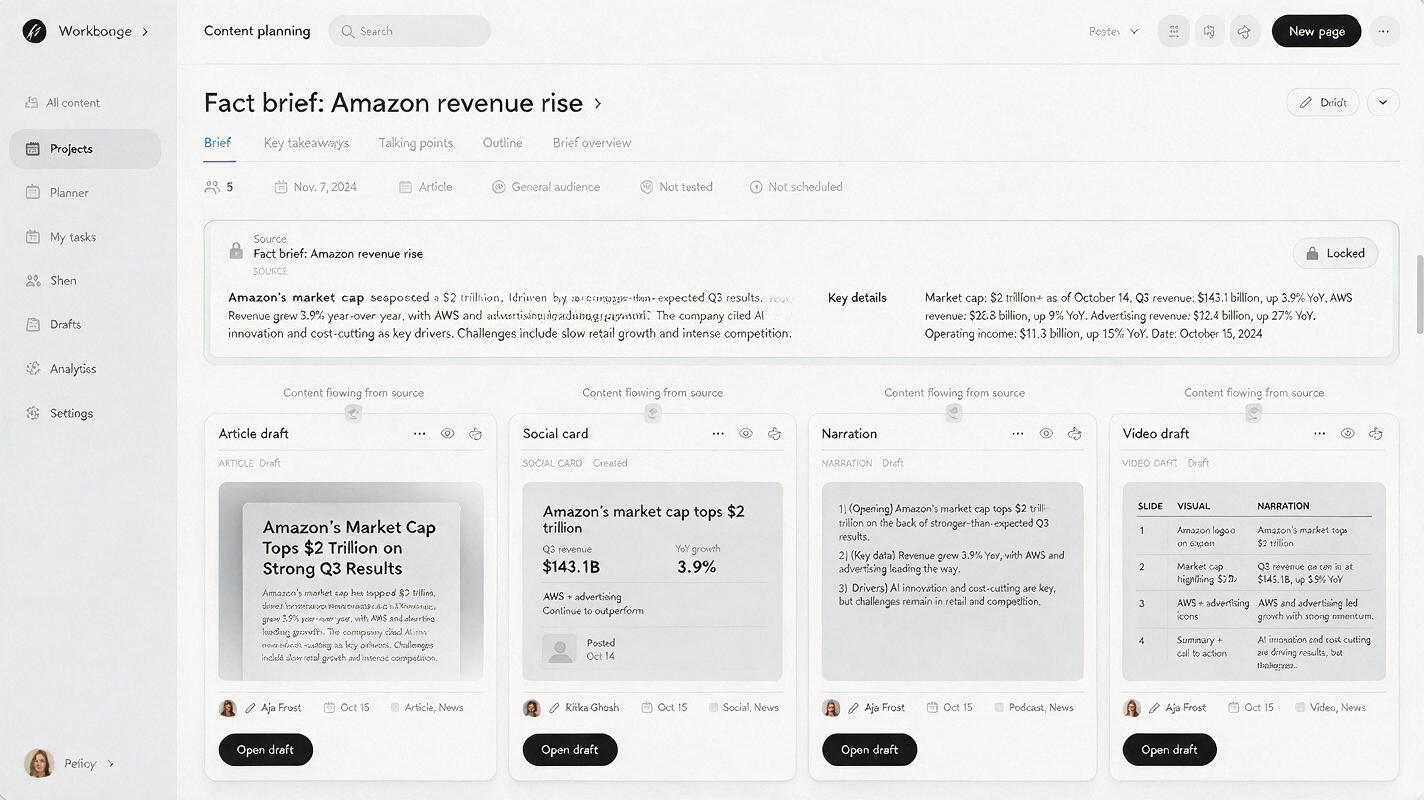
Fast-moving stories often require different kinds of generation: one model may be used for concise copy, another for visual ideation, and another for video production. The editorial record should therefore remain portable. Dates, figures, approved wording, rejected claims, and source notes should live in the project brief rather than inside one model’s conversation history.
This matters when an ai workflow is revised under deadline. If one output becomes too promotional or introduces an unsupported explanation, the team should be able to return to the verified fact set and generate a cleaner version. Model flexibility is useful only when factual control remains consistent across every handoff.
MagicBoat offers a one-account, multi-model environment for developing creative material across formats. That structure can reduce fragmentation between ideation and production while keeping the Amazon market cap brief at the center of the project. Teams can try these models for free and compare outputs without treating any single generation as publication-ready by default.
Visual Storytelling Without Exaggerating the Number
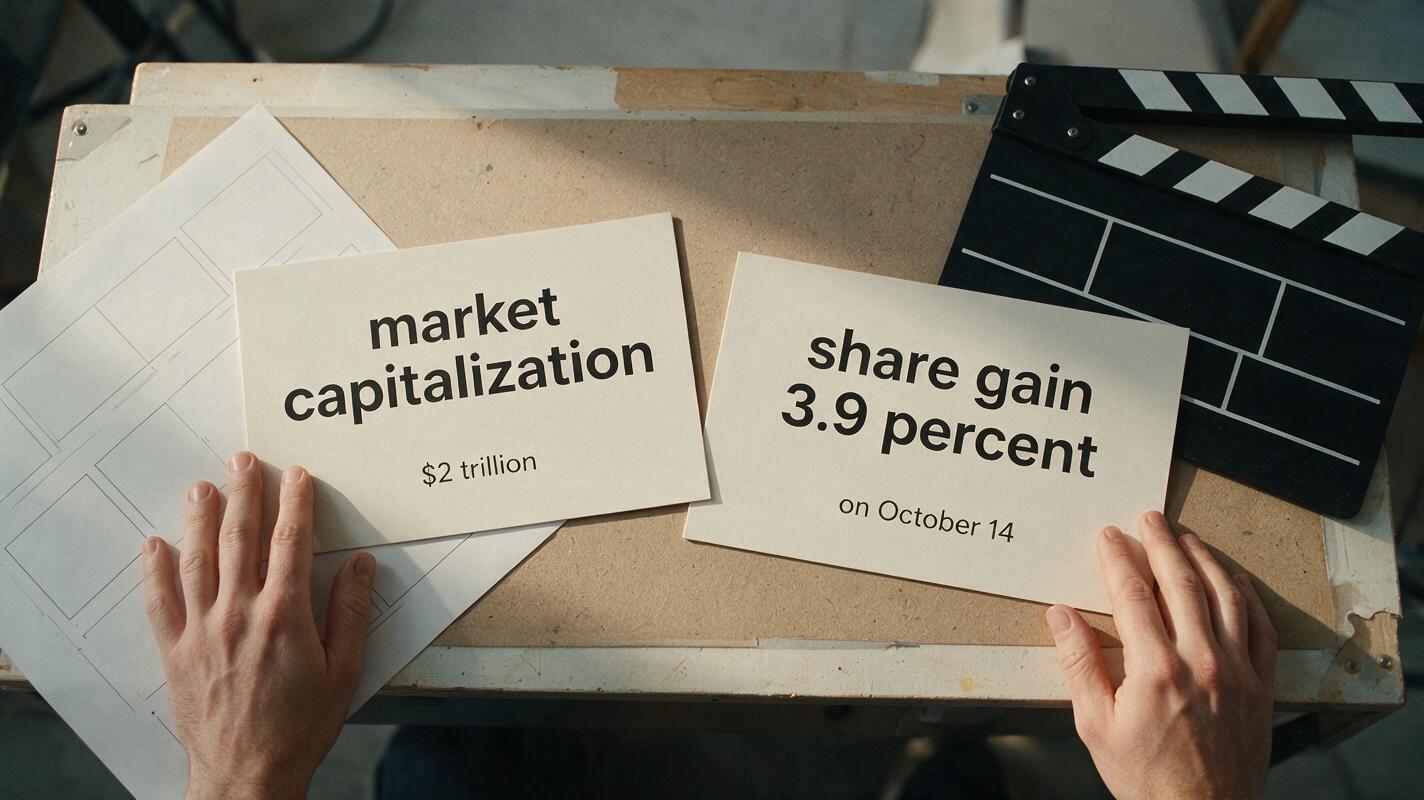
The strongest visual treatment should make the distinction between scale and movement immediately clear. The $2 trillion figure represents the market-cap milestone, while 3.9% represents the reported share gain on October 14. Presenting both figures with explicit labels prevents viewers from mistaking one for the other.
An ai video workflow could open with the 3.9% movement, transition to the $2 trillion threshold, and close on the phrase “first time.” It should avoid fabricated trading screens, invented analyst quotations, or projections beyond the supplied report. Real-world business imagery, clearly labeled typography, and restrained motion can communicate the significance without manufacturing additional evidence.
This approach also makes the asset easier to update. If later reporting changes the context, the production team can revise the commentary while preserving the original dated facts as a distinct record.
Final Checklist
- State that Amazon’s market capitalization topped $2 trillion.
- Preserve the report’s “first time” designation.
- Identify the 3.9% figure as the October 14 share gain.
- Keep the October 14 market move distinct from the October 15 report.
- Do not relabel market capitalization as revenue, profit, or cash.
- Separate confirmed facts from interpretation in every format.
- Retain human approval for headlines, visuals, narration, and publication.
Keywords
amazon market cap, amazon $2 trillion, amazon stock, ai workflow, ai agent, ai automation, ai video workflow, magicboat