Amazon Forms Personal Robotics Group Amid $33.4B Physical AI Funding Surge
Amazon has launched a new home-robotics team within its Personal Robotics Group, relocating most Astro staff and hiring an MIT robotics specialist to build on its March 2026 acquisition of Fauna Robotics. Fauna’s 3.5-foot Sprout biped robot will ship to development partners including Disney in January 2026 for approximately $50,000 per unit, as global robotics and physical-AI startups raised $33.4 billion in venture funding in H1 2026 — already surpassing full-year 2025 totals. The rapid growth in physical AI investment signals new opportunities for content creators, who can use multi-model AI platforms to prototype creative concepts and adapt to emerging tools.
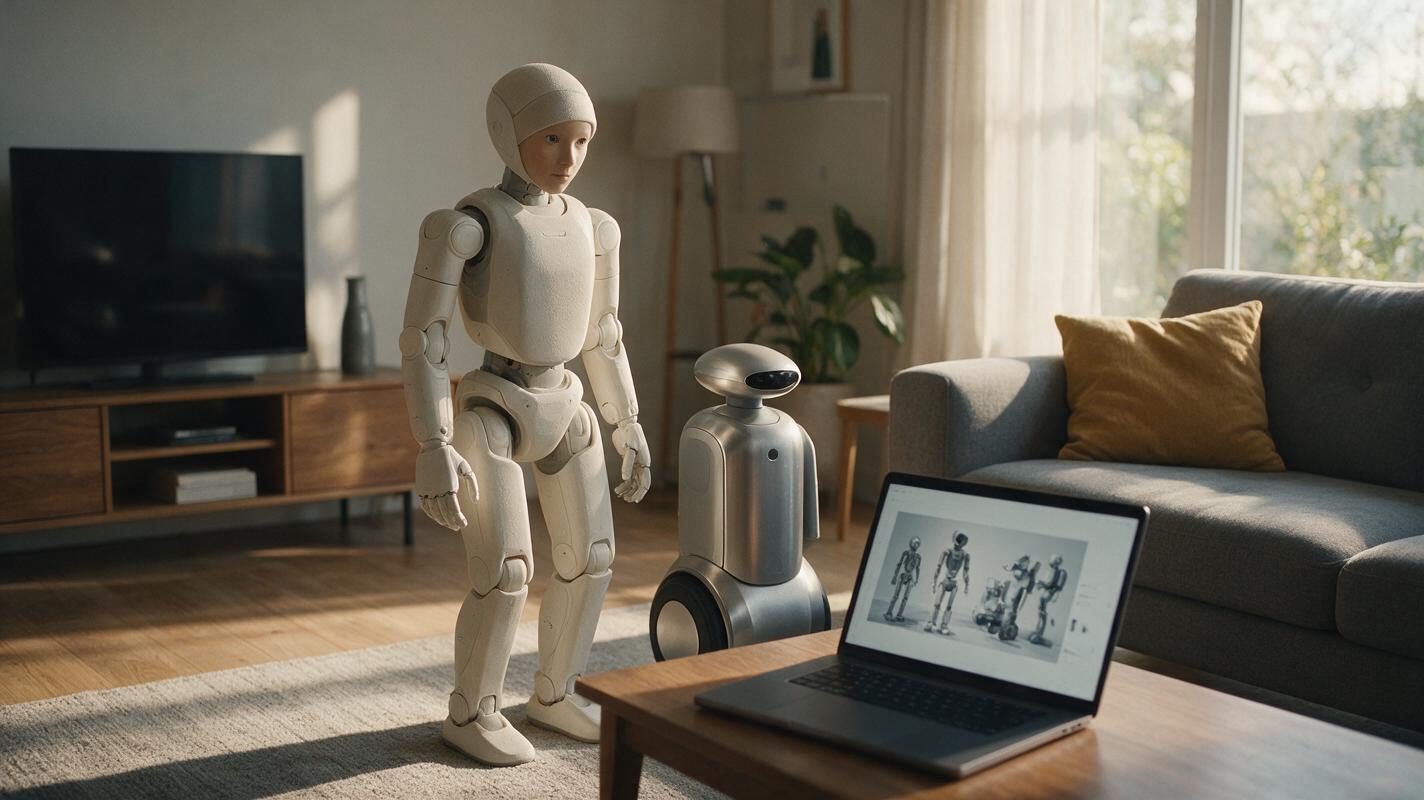
Table of contents
Amazon Forms Personal Robotics Group, Building on Fauna Robotics Acquisition
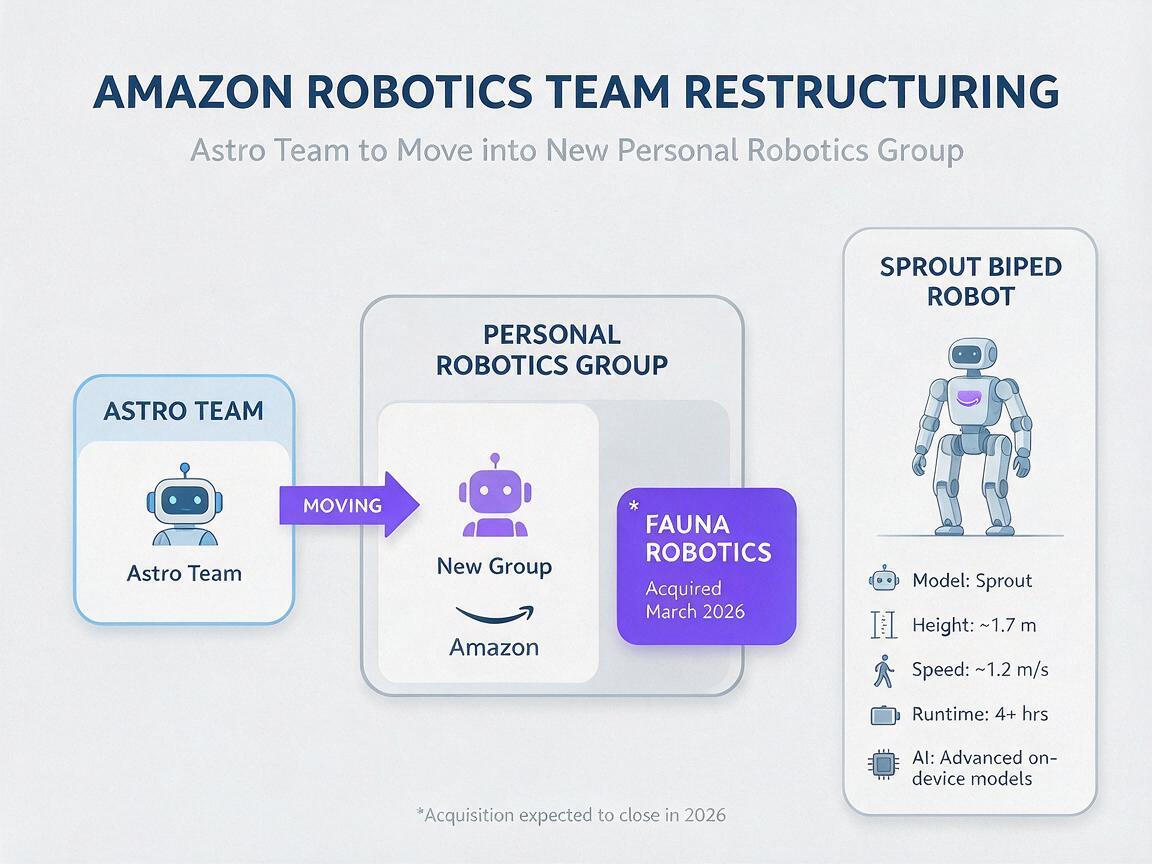
Amazon has established a dedicated new home-robotics team within its Personal Robotics Group, marking a major restructuring of its consumer robotics efforts. The company has moved most staff from its Astro home robot project to the new team, and has hired an MIT robotics specialist to lead development, building on its March 24, 2026 acquisition of Fauna Robotics, a startup with roughly 50 employees focused on bipedal robot technology.
Fauna Robotics’ flagship product, the Sprout, is a 3.5-foot-tall, 59-pound biped robot designed for home and development use. The company plans to begin shipping Sprout units to development partners in January 2026 at a price of approximately $50,000 per unit, with Disney among the early customers testing the platform.
The restructuring follows a mixed track record for Amazon’s earlier consumer robotics efforts. The $1,450 Astro home robot remained invite-only since its launch, with only a few thousand units deployed, and the 2023 enterprise edition of Astro was discontinued within a year of its release. The new team signals Amazon’s continued commitment to the category, with a renewed focus on bipedal and embodied AI technology.
The move comes amid a broader surge in investment into physical AI and robotics. In the first half of 2026, robotics and physical-AI startups raised $33.4 billion in venture capital funding, already surpassing the $28.7 billion total raised across all of 2025. The rapid growth reflects increasing investor confidence in embodied AI as the next major wave of the AI industry.
The Physical AI Funding Surge Context
The $33.4 billion H1 2026 funding total for physical AI startups highlights a dramatic shift in ai funding priorities, as capital flows beyond pure software AI models into systems that interact with the physical world. This trend is driven by advances in generative AI, improved sensor technology, and falling hardware costs, which are making robotics and embodied AI systems more practical for both consumer and industrial use cases.
Amazon’s investment in its Personal Robotics Group is part of a broader wave of ai capital expenditure across the technology industry, as major vendors compete to build integrated AI ecosystems that span both digital and physical domains. The company’s acquisition of Fauna Robotics and restructuring of its Astro team suggest it is betting heavily on bipedal robots as the future of home robotics, after its wheeled Astro platform failed to gain mainstream traction.
The funding surge is also leading to a rapidly expanding ecosystem of AI tools and platforms, with new startups launching innovative solutions at a fast pace. For content creators and creative teams, this rapid growth means more options for AI-powered production tools, but also more fragmentation and vendor lock-in risks.
What This Means for Content Creators
While physical AI and home robots may seem distant from content creation, the growing investment in embodied AI is already creating new opportunities for creators across video, design, and interactive media. Biped robots like Sprout are being used as on-screen talent for short films, branded content, and social media videos, while robotics technology is powering new virtual production tools and automated camera systems.
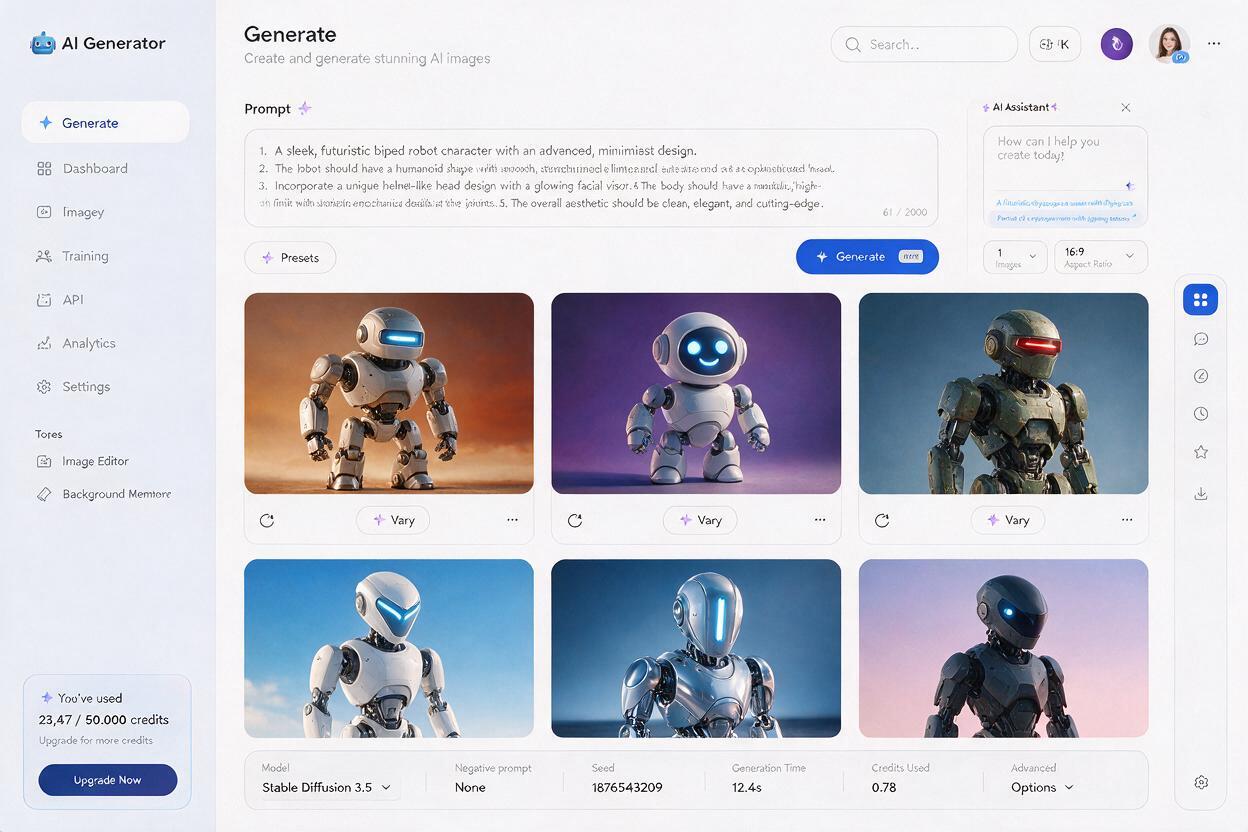
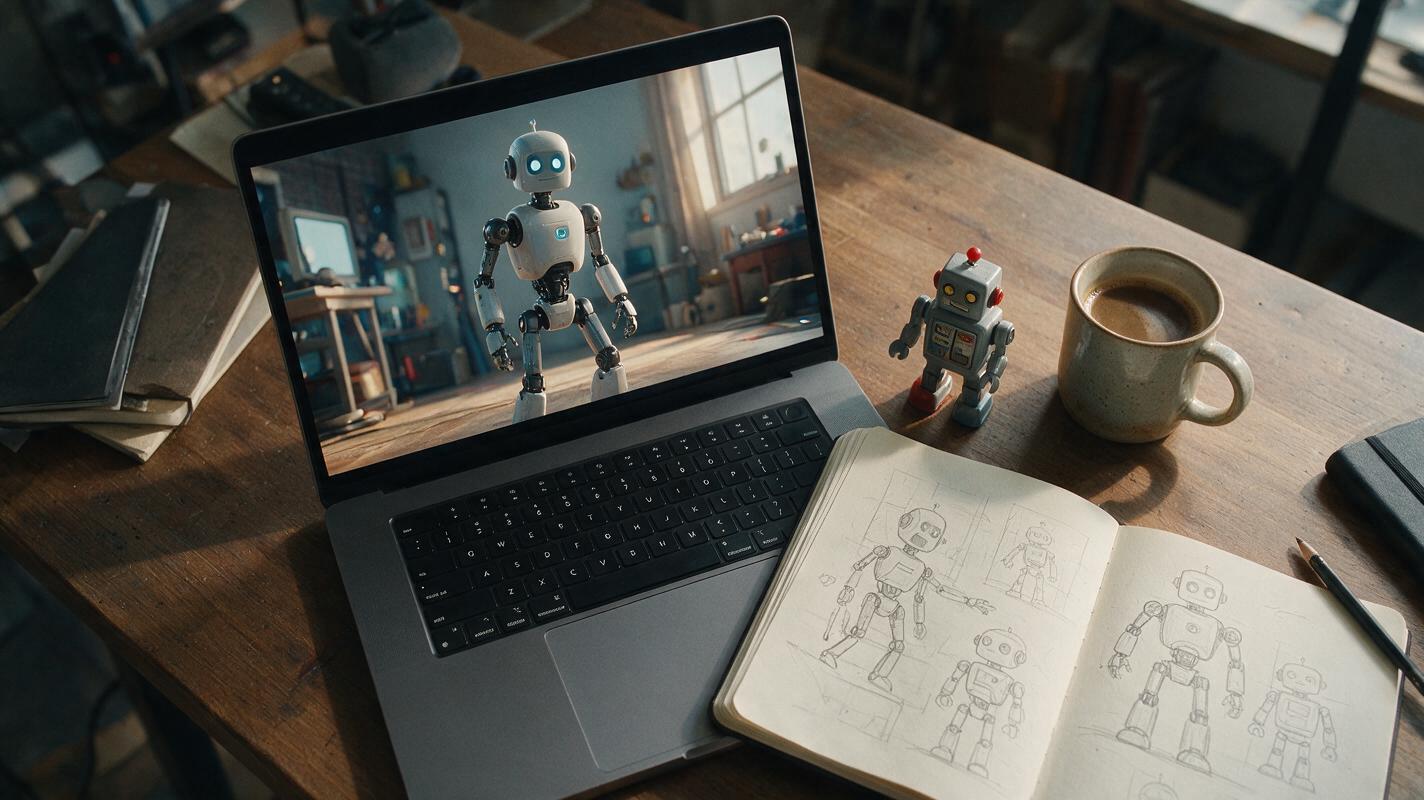
Creators can also leverage existing AI tools to prototype and develop content for the physical AI era, even without access to expensive robot hardware. For example, you can use ai image generator to design custom robot characters, set concepts, or product visuals, then turn those static designs into animated pre-visualizations with text to video. This workflow lets creators test creative ideas quickly and cheaply, before investing in physical hardware or production costs.
As more physical AI tools become available, creators who are comfortable working across digital and physical AI workflows will have a competitive advantage. The ability to generate digital concepts, test them in simulation, and then translate them to physical robots or production sets will become an increasingly valuable skill for content teams.
Adapting Your Workflow to a Fast-Changing AI Industry
The rapid growth of ai funding and new AI tools can make it challenging for creators to keep up with the latest developments, while avoiding the risk of investing in tools that may become obsolete or locked into a single vendor. One of the most effective ways to navigate this fast-changing landscape is to use a multi-model AI platform that gives you access to a range of tools from different providers in one place.
A multi-model approach lets you experiment with new tools as they launch, without managing multiple subscriptions or learning new interfaces for every vendor. It also reduces the risk of vendor lock-in, so you can switch between models or tools as your needs change, or as new and better options become available.
When building your creative workflow, focus on tools that support open standards and interoperability, and prioritize platforms that regularly add new models and features. This approach ensures you can take advantage of the latest advances in AI — from image generation to video production to physical AI tools — without overhauling your entire workflow every few months.
If you want to explore a range of AI creative tools in one unified platform, try these models for free to see how they can fit into your content production workflow.
Key Takeaways
- Amazon has consolidated its home robotics efforts into a new Personal Robotics Group, relocating most Astro team members and hiring an MIT robotics specialist to lead development.
- Fauna Robotics, acquired by Amazon in March 2026, will begin shipping its 3.5-foot Sprout biped robot to development partners including Disney in January 2026 at approximately $50,000 per unit.
- Global robotics and physical-AI startups raised $33.4 billion in venture funding in the first half of 2026, already surpassing the $28.7 billion total for all of 2025.
- Content creators can prepare for the growth of physical AI by using multi-model AI platforms to prototype digital concepts, test creative ideas, and adapt to new tools as they emerge.
Keywords
ai funding, ai industry, amazon robotics, fauna robotics, physical ai, sprout biped robot, ai image generator