AMD Launches 6th-Gen EPYC Zen 6 SP7 Server CPUs: Specs & Adoption
AMD officially launched its 6th-generation EPYC “Zen 6” SP7 server CPUs on November 11, 2026, with the flagship 256-core EPYC 9996 leading the lineup at a $14,904 price point. Microsoft Azure and Oracle OCI have already announced adoption of the new chips, while Meta is validating the platform for its AI infrastructure. The launch expands the AI compute ecosystem, with potential performance and reliability benefits for AI-powered content creation tools.
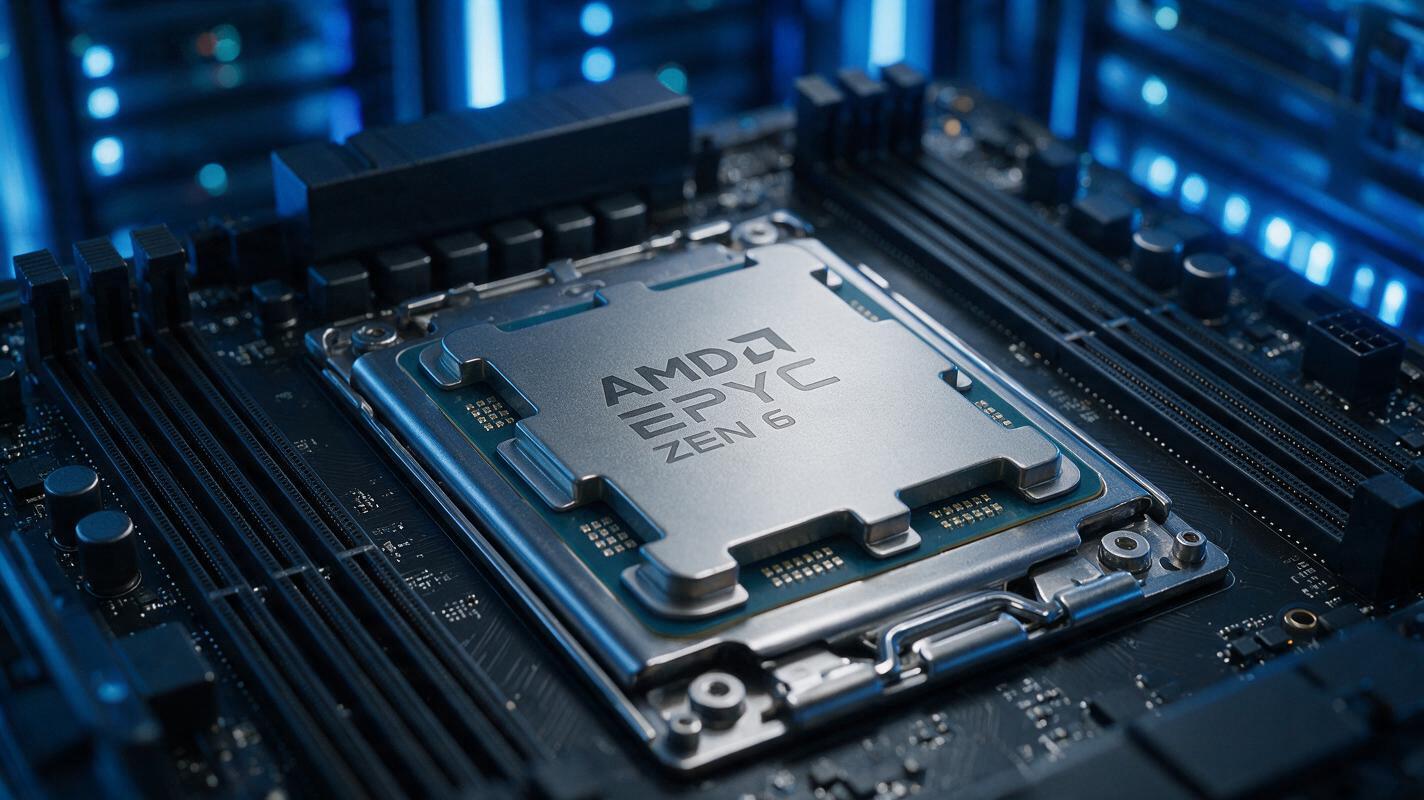
Table of contents
AMD Launches 6th-Gen EPYC Zen 6 SP7 Server CPUs
AMD officially launched its 6th-generation EPYC “Zen 6” SP7 server CPUs on November 11, 2026, marking general availability of the new chip lineup across major original equipment manufacturers and original design manufacturers. The launch follows an initial preview at AMD’s Advancing AI 2026 event in Venice and Verona back in July, with full specifications and pricing revealed in late September and a deep dive into the Zen 6 architecture from Zen architect Mike Clark at the AMD In Depth event in Las Vegas on November 4.
The lineup targets high-performance data center workloads, including AI inference and training support, cloud computing, and enterprise infrastructure. Major cloud providers have already moved to adopt the new chips, signaling a broader expansion of the AI compute supply chain beyond existing dominant architectures.
Key Specs and Lineup Details
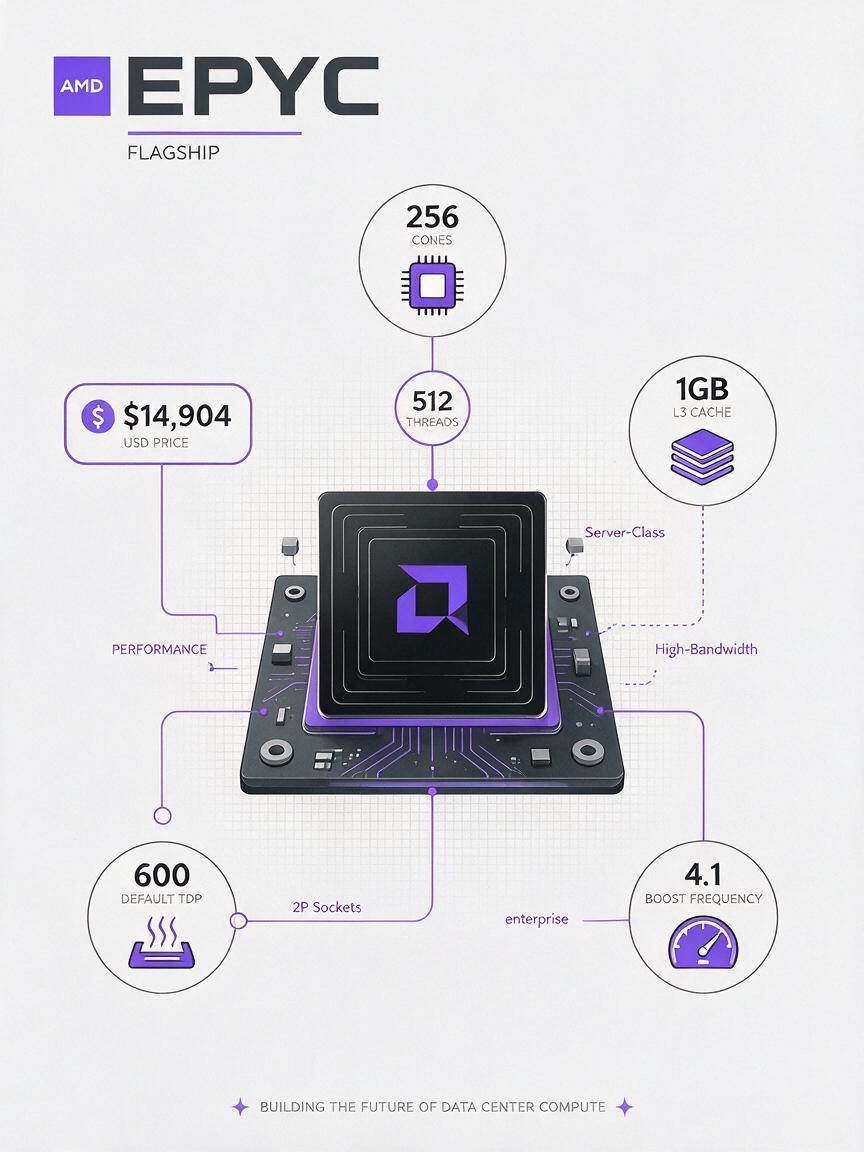
At the top of the 6th-gen EPYC stack is the flagship EPYC 9996, which packs 256 cores and 512 threads alongside 1GB of L3 cache. It has a boost clock speed of 4.1GHz, a default thermal design power of 600W, and a price tag of $14,904 USD. For workloads that prioritize higher single-core speeds, high-frequency SKUs in the lineup reach up to 5.3GHz.
AMD has published performance comparisons pitting the new EPYC lineup against Intel’s Xeon 6980P, though these benchmarks are vendor-run and have not been independently verified. The SP7 socket represents a new platform for AMD’s server chips, requiring updated motherboard and system designs to support the increased core counts and power delivery.
Cloud Provider and Industry Adoption
Two major cloud providers announced adoption of the 6th-gen EPYC Zen 6 chips alongside the launch: Microsoft Azure and Oracle Cloud Infrastructure (OCI). Both platforms will integrate the new CPUs into their cloud instance offerings, giving enterprise and AI customers access to the upgraded performance.
Meta is also in the process of validating the Zen 6 platform for its own AI infrastructure, which supports a range of internal workloads including Meta’s Muse personal AI assistant and content recommendation systems. The validation signals continued diversification of AI hardware across major tech firms, reducing reliance on a single chip vendor for critical compute capacity.
What This Means for AI Content Creators
For creators building AI-powered content, a broader selection of high-performance server CPUs in major cloud platforms translates to more reliable inference, lower latency for real-time tools, and potential cost savings passed down to end users. Whether you’re using an ai video generator for short-form social content or an ai image generator for concept art and thumbnails, underlying compute improvements directly impact how fast you can iterate on projects and scale your output.
A more diverse compute supply chain also reduces the risk of service disruptions or price hikes tied to a single chip manufacturer’s supply issues. Multi-model AI platforms that run on diversified infrastructure, like MagicBoat, are better positioned to maintain consistent performance and pricing even as the hardware market shifts. This stability is especially critical for creators who rely on AI tools as core parts of their daily production workflow.
If you want to test how today’s leading AI models perform on a diversified, high-reliability platform, try these models for free on MagicBoat.

Key Takeaways
- AMD’s 6th-generation EPYC “Zen 6” SP7 server CPUs launched on November 11, 2026, with general availability across major OEM and ODM systems.
- The flagship EPYC 9996 offers 256 cores / 512 threads, 1GB of L3 cache, a 4.1GHz boost clock, and a $14,904 USD price point, with high-frequency SKUs reaching up to 5.3GHz.
- Microsoft Azure and Oracle OCI have already adopted the new chips, while Meta is validating the platform for its AI infrastructure.
- Expanded compute supply diversity supports more reliable, cost-effective AI tools, benefiting content creators who depend on consistent AI workflow performance.
Keywords
amd epyc zen 6, server cpu, ai infrastructure, microsoft azure, oracle oci, ai compute, ai workflow