Anthropic $1B-Damage Judicial Halt Bill: What We Know
On October 17, 2026, reports emerged of a judicial halt bill targeting Anthropic with up to $1 billion in potential damages, amid a broader wave of regulatory scrutiny of leading AI labs. The bill’s full details remain unconfirmed, but it highlights the growing risk of provider-specific disruptions for creators who rely on single AI tools for their workflows. Multi-model platforms like MagicBoat help creators build resilient workflows by providing access to multiple AI tools under one account.

Table of contents
Reported Anthropic $1B-Damage Judicial Halt Bill: What’s Confirmed
On October 17, 2026, reports surfaced of a proposed judicial halt bill targeting Anthropic that includes up to $1 billion in potential damages, marking one of the most significant potential judicial actions against a leading frontier AI lab to date this year. The bill’s designation as a “judicial halt” measure indicates it would potentially authorize court-ordered pauses of specific Anthropic operations, model deployments, or product rollouts if predefined legal conditions are met, alongside the possibility of substantial financial penalties.
As of initial reporting, core details about the legislation remain unconfirmed. No public information is available about the bill’s sponsoring body, the jurisdiction it falls under, the specific allegations or incidents driving the proposed $1 billion damage figure, the timeline for legislative or judicial consideration, or the exact scope of Anthropic’s services that would be affected by a halt order. The development comes amid a broader wave of regulatory scrutiny of the AI industry, including civil subpoenas issued to both Anthropic and OpenAI the same week, and a sweeping industry-wide probe announced by the U.S. Federal Trade Commission three days later.
While the bill’s ultimate outcome is uncertain, its introduction signals a growing shift toward more aggressive regulatory and judicial oversight of large AI providers — a trend that has direct implications for anyone who relies on AI tools for creative or commercial work.

How Judicial and Regulatory Actions Impact AI Tool Users
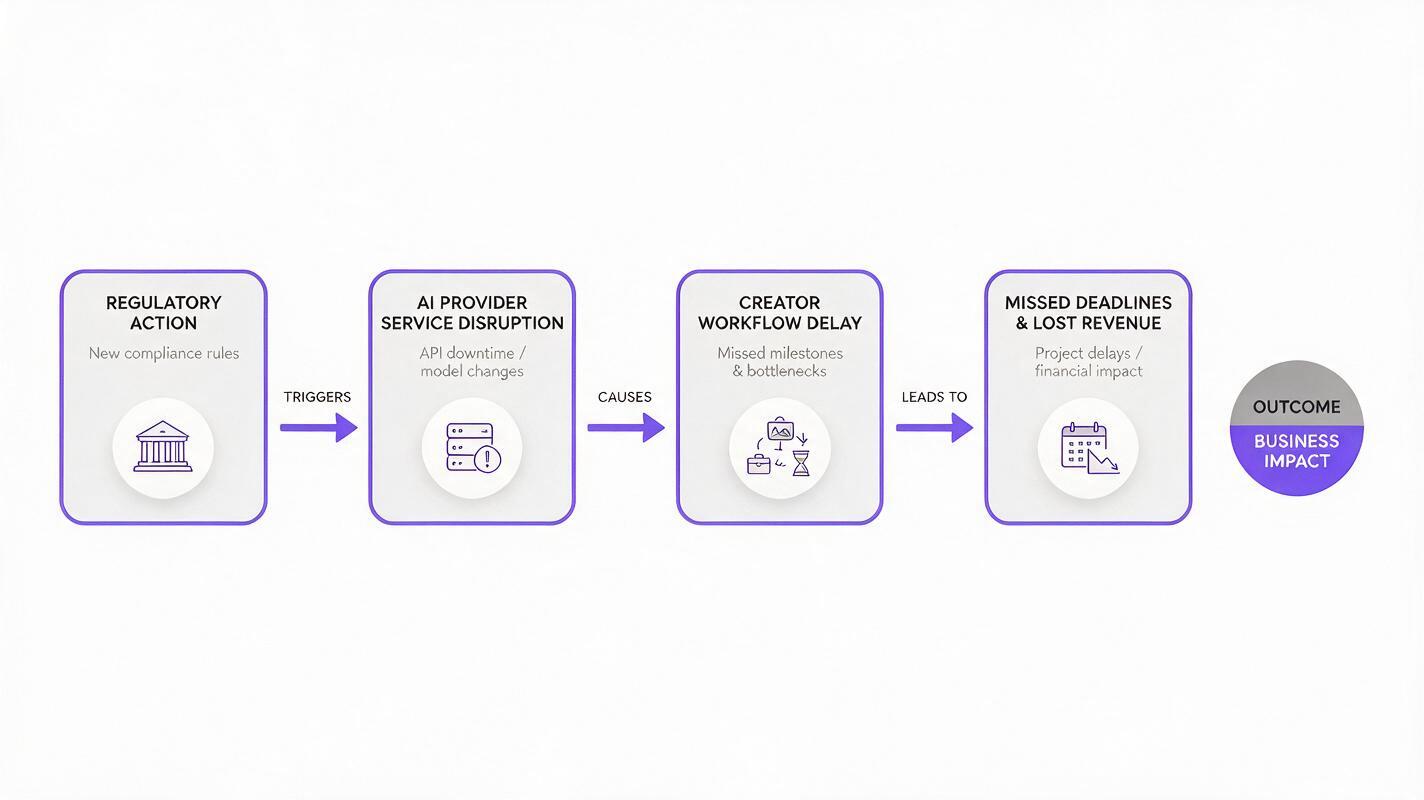
For creators, small business owners, and production teams that build their workflows around AI tools from a single provider, proposed regulations and judicial actions aren’t just distant industry news — they pose tangible risks to project timelines, budget, and output quality. Even the threat of a service disruption can lead to cascading effects on creative production.
Potential impacts of provider-specific regulatory action range from temporary service outages and reduced model access limits to permanent feature removals, sudden price hikes, or full shutdowns of certain tools. For example, a creator who uses a specific Anthropic Claude model to draft scripts, generate voiceover text, and plan video edits could find their entire production pipeline derailed if access to that model is paused or restricted without warning. Even partial restrictions can force teams to spend hours or days reworking workflows to adapt to new limitations.
This kind of volatility is not hypothetical. In October 2026 alone, GitHub Copilot announced the retirement of six underlying models in a single update, including GPT-5.5, Grok 4.5, and Gemini 3.7 Flash, forcing users to transition to newer model versions on short notice. Model retirements, pricing changes, and access adjustments are already common in the fast-evolving AI space, and increasing regulatory pressure only amplifies the likelihood of unplanned changes to the tools creators depend on.
Creators who rely on a single provider for most of their AI needs face the highest level of risk. A single regulatory action or service disruption can wipe out access to multiple tools at once, leaving teams scrambling to find alternatives and potentially missing critical deadlines.
Why Multi-Model Platforms Reduce Workflow Risk
The most effective way to mitigate the risk of provider-specific disruptions is to build a flexible, multi-model workflow that lets you switch between different AI tools and providers without losing progress or rebuilding your entire process from scratch. Multi-model platforms consolidate access to a range of AI tools from different providers under a single account, eliminating the need to manage multiple subscriptions, billing cycles, and login credentials.
For video creators, this kind of flexibility is especially valuable. A robust ai video generator platform that supports both text to video and image-to-video workflows across multiple underlying models means you can test different tools for each project, find the best fit for your specific creative vision, and switch to an alternative model immediately if one provider experiences disruptions or policy changes.
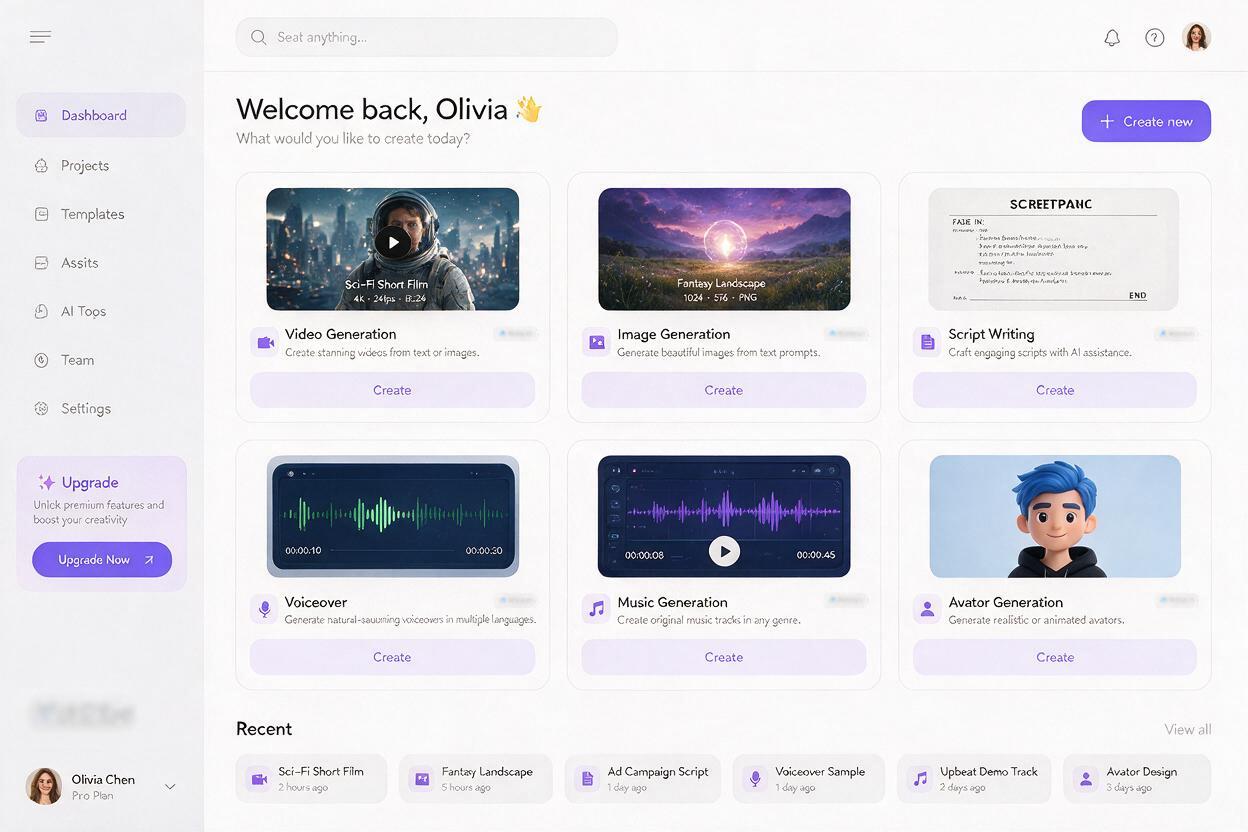
MagicBoat is designed specifically for this kind of resilient creative workflow. The platform gives you access to a full suite of AI creative tools — from image generation and script writing to voiceover, lip sync, and full video production — all under one account. Because MagicBoat integrates models from multiple leading providers, a regulatory action or service issue affecting one provider doesn’t have to stop your work. You can simply swap in an alternative model within the same interface, keeping your projects on track without missing a beat.
Beyond disruption mitigation, multi-model platforms also offer creative benefits. Different models excel at different tasks: one may produce more photorealistic video footage, while another offers better script structure or more natural voiceover. Having access to a range of tools lets you pick the best model for each part of your project, resulting in higher-quality final output.
Practical Actions for Creators to Build Resilient Workflows
You don’t have to wait for a regulatory announcement or service outage to protect your creative workflow. Taking small, proactive steps now can help you avoid costly disruptions down the line.
- Audit your current tool stack: Map out every AI tool you use for your workflow, and identify any single points of failure. If one provider went down tomorrow, which parts of your process would break? Prioritize building backups for your most critical tasks first.
- Test alternative models early: Don’t wait until you’re in a crisis to try new tools. Set aside a small amount of time each month to test alternative models for your core tasks, so you already know what works for your workflow if you need to switch quickly.
- Keep assets portable: Store your creative assets — scripts, raw footage, voiceover files, project files — in open, portable formats that aren’t locked to a single platform or tool. This makes it easy to move your work between different services as needed.
- Centralize tools on a multi-model platform: Using a single platform for all your AI creative tools reduces administrative overhead and makes switching between models fast and seamless. You can try these models for free on MagicBoat to see how a multi-model setup fits your creative process.
Key Takeaways
- A reported judicial halt bill targeting Anthropic with up to $1 billion in potential damages emerged on October 17, 2026, amid broader regulatory scrutiny of leading AI labs.
- Provider-specific regulatory and judicial actions pose real, tangible risks to creators who rely on single AI tools for their workflows, from service disruptions to unexpected pricing or feature changes.
- Building a flexible, multi-model workflow is the most effective way to mitigate these risks and keep your creative projects on track, even when individual providers face challenges.
- Multi-model platforms like MagicBoat give you access to a range of AI creative tools under one account, making it easy to switch between providers and maintain consistent production quality.
Keywords
anthropic judicial halt bill, ai news, ai tools, ai video generator, text to video, ai regulatory news, multi-model ai platform, openai safety