Anthropic Updates 2026 Usage Policy: New Claude Safety Guardrails
Anthropic has updated its 2026 Usage Policy with three core changes — a human-in-the-loop requirement for consequential decisions, constraints on physical-action Claude deployments, and a dedicated anti-deception chapter — set to take effect November 12, 2026. The update carries practical implications for AI video and image creators who use Claude models for synthetic media, scriptwriting, and workflow automation, particularly around content transparency and compliance. Multi-model creative platforms help creators adapt to provider policy changes without disrupting production workflows.
Table of contents
Anthropic has rolled out a significant update to its 2026 Usage Policy, introducing new guardrails for all Claude model deployments that take effect on November 12, 2026. The updated policy includes three core changes: a mandatory human-in-the-loop requirement for consequential decisions, new constraints on physical-action Claude implementations, and a dedicated anti-deception chapter. The changes apply across the entire Claude model lineup, including high-end tiers like Claude Opus, and reflect ongoing industry shifts toward more structured AI safety and accountability.
Key Changes in the 2026 Usage Policy
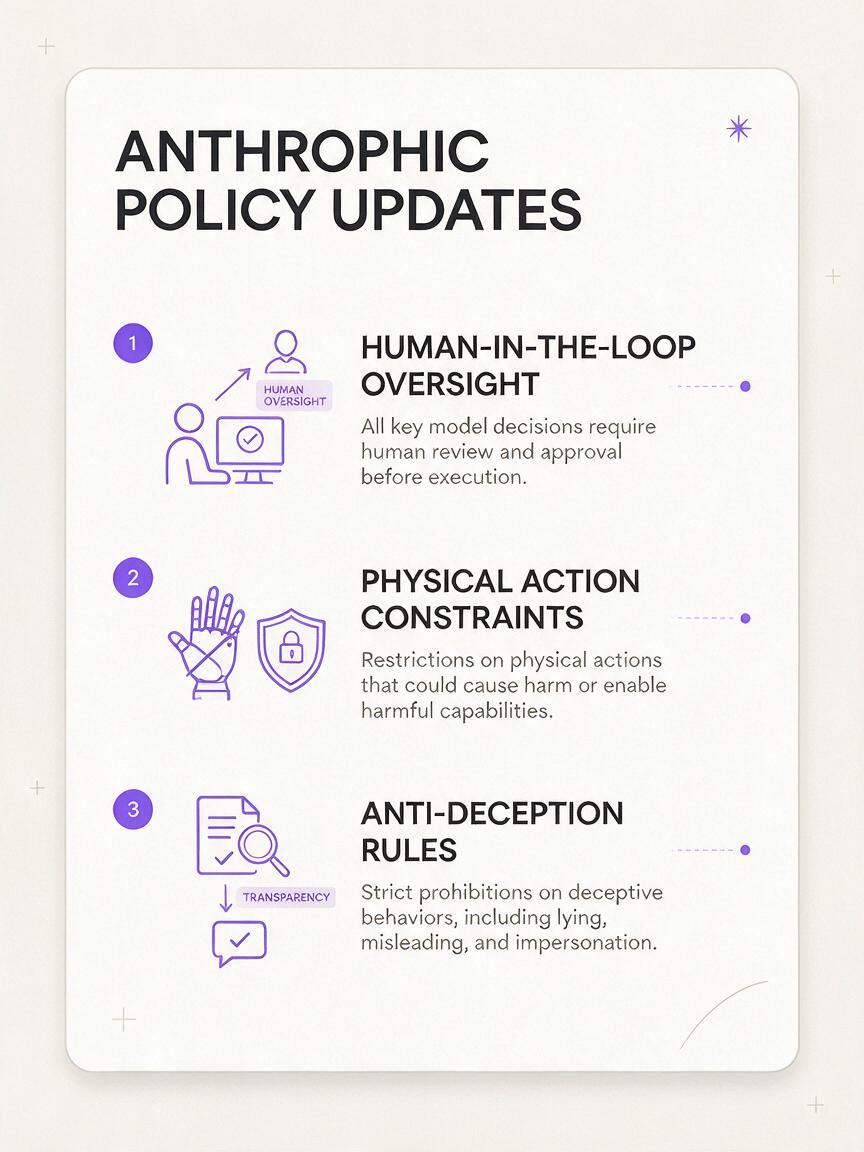
Anthropic’s updated policy outlines three core adjustments to allowed use of its Claude models, all enforceable starting November 12, 2026:
- Human-in-the-loop for consequential decisions: All use cases involving consequential real-world decisions require active, meaningful human oversight before outcomes are implemented or acted upon.
- Constraints on physical-action Claude: New limitations apply to deployments where Claude models are connected to systems that interact with the physical world, reducing risk of unintended harm from agentic physical actions.
- Anti-deception chapter: A dedicated section of the policy addresses deceptive uses of Claude, establishing formal guardrails for content and actions intended to mislead individuals or audiences.
What This Means for AI Video and Image Creators
For AI video and image creators who rely on Claude models for scriptwriting, storyboarding, concept art, and workflow automation, the policy update carries several practical implications for day-to-day production. The anti-deception chapter is particularly relevant for creators working with synthetic media, as it sets clear expectations around transparent disclosure of AI-generated content and prohibits uses that could mislead viewers about the origin or authenticity of visual material.
The human-in-the-loop requirement applies most directly to creators using Claude for high-stakes creative work, such as brand campaign assets, journalistic content, or public-facing media that could impact real-world opinions or decisions. Under the updated policy, these use cases require thorough human review before content is published, rather than fully automated end-to-end production pipelines.
While physical-action constraints are less directly tied to most creative workflows, they may affect creators experimenting with AI-controlled camera rigs, physical production equipment, or interactive installations that use Claude as a decision-making layer. These deployments will need to be re-evaluated against the new policy to ensure compliance before the November 12 effective date.
Reducing Workflow Disruption With Multi-Model Platforms
Policy updates from individual model providers can create unexpected disruptions for creators who rely on a single tool for their core workflow. A sudden shift in allowed use cases or compliance requirements can force creators to rebuild pipelines, rework existing assets, or find alternative tools on short notice, potentially delaying projects and increasing operational costs.
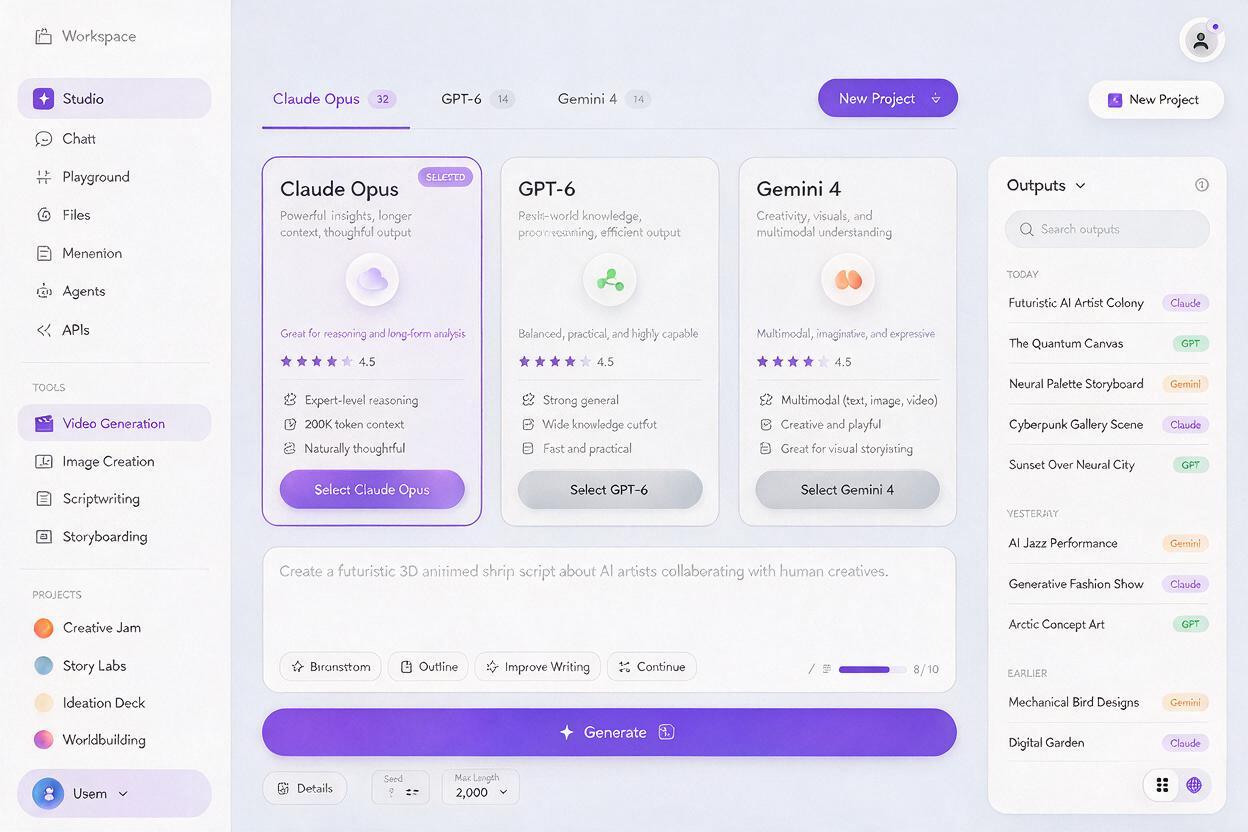
Multi-model creative platforms like MagicBoat mitigate this risk by giving creators access to a range of leading AI models through a single account, including Claude Opus, GPT-6, and Gemini 4. This means if one model’s policy changes affect your workflow, you can switch to another model with compatible capabilities without rebuilding your entire production stack. For example, if you use text to video workflows for social media content, you can compare output from multiple models and choose the one that best aligns with both your creative goals and compliance needs.
MagicBoat also integrates ai video generator tools, image generation, scriptwriting, and storyboarding features in one unified workspace, making it easier to maintain consistent oversight across all stages of production — a key requirement for meeting human-in-the-loop policy expectations. You can review, edit, and approve all AI-generated content in the same platform where you create it, streamlining compliance without slowing down your creative process.
Ready to build a more flexible, resilient creative workflow? try these models for free and see how a multi-model platform can support both your creative and compliance needs.
Key Takeaways
- Anthropic’s 2026 Usage Policy update takes effect November 12, 2026, with three core changes: human-in-the-loop for consequential decisions, physical-action Claude constraints, and a dedicated anti-deception chapter.
- AI video and image creators should review their current Claude workflows to ensure compliance, particularly around synthetic media disclosure and human oversight for high-stakes public content.
- Using a multi-model platform reduces the risk of workflow disruption from individual provider policy changes, while centralizing review and approval processes to simplify compliance.
Keywords
anthropic 2026 usage policy, claude opus, ai video generator, text to video, image to video, free ai tools, ai content compliance