Anthropic Expands Cyber Verification Program Ahead of 2026 US Midterms
Anthropic expanded its Cyber Verification Program in October 2026 as part of preparations for the 2026 US midterm elections, amid growing industry attention to AI-driven election security and misinformation risks. The announcement adds to a wave of AI safety and governance updates from major labs in the second half of 2026. This article breaks down the confirmed details of the expansion and explains what it means for AI content creators navigating evolving safety and compliance landscapes.

Table of contents
Introduction
Anthropic’s expanded Cyber Verification Program marks the latest major AI lab initiative to address election-related AI risks in the lead-up to the 2026 US midterm elections.
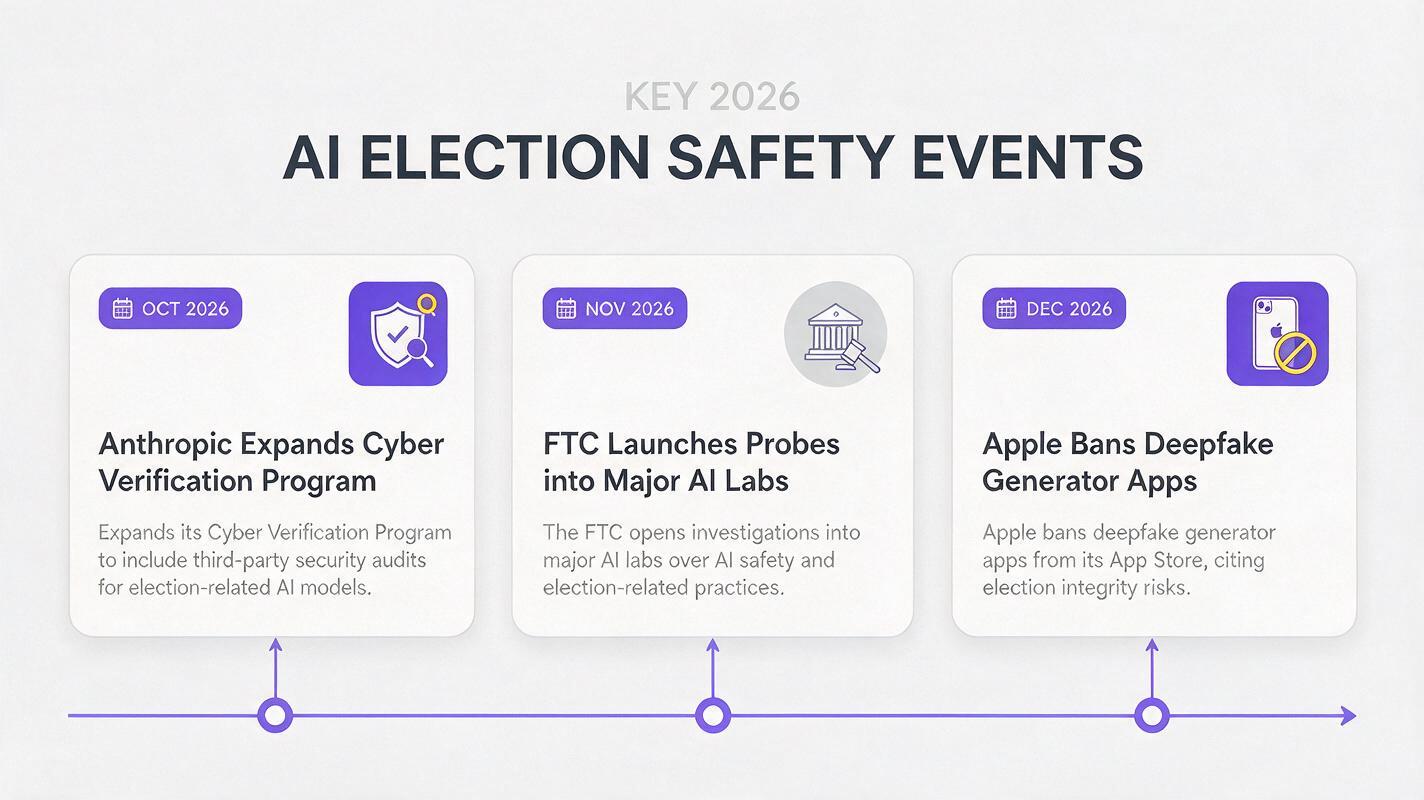
According to an October 15, 2026 industry update, Anthropic is expanding its existing Cyber Verification Program as part of broader preparations for the 2026 US midterms. The program, which focuses on identifying and mitigating AI-related cyber and misinformation risks, is being scaled to address expected increases in AI-generated election content in the coming year.
Specific details about the expansion—including new verification tools, eligibility for program access, partnerships with election officials, and exact rollout timelines—have not been publicly disclosed in available reporting. The announcement aligns with a wider trend of AI labs updating safety and governance frameworks amid growing regulatory scrutiny of frontier AI systems.
What We Know About the Cyber Verification Program Expansion
The October 15 update confirms two core details: the Cyber Verification Program is being expanded, and the expansion is explicitly tied to 2026 US midterm election preparations. Anthropic first launched the Cyber Verification Program to help organizations detect AI-generated cyber threats and malicious content, with a focus on reducing harm from frontier AI models like the Claude series.
While full specifics remain unannounced, the expansion likely includes updates to content detection capabilities, increased support for election-related stakeholders, or enhanced safeguards for Claude model outputs tied to political content. The move follows a series of safety-focused announcements from major AI labs in the second half of 2026, as regulators and policymakers raise concerns about AI’s potential impact on electoral processes.
Recent months have seen a flurry of related activity across the AI industry, including FTC civil subpoenas sent to both OpenAI and Anthropic, a sweeping FTC probe of multiple AI labs, and Apple’s removal of deepfake generator apps from the App Store. Together, these developments point to a rapidly evolving landscape for AI safety and content governance that affects both developers and end users.
Election AI Risks and Industry-Wide Response
The expansion comes amid widespread concern about the role of AI in upcoming elections, particularly the potential for AI-generated deepfakes, fake campaign content, and targeted misinformation to disrupt electoral processes. AI labs, tech platforms, and regulators have all taken steps to address these risks in 2026, with varying approaches across the industry.
For AI developers, election preparedness often involves updating content policies, improving detection tools for AI-generated political content, and partnering with election security organizations. For platforms that distribute AI tools, changes may include new restrictions on political content generation or enhanced verification features for users creating election-related material.
While these measures are designed to reduce harm, they can also create uncertainty for content creators who rely on AI tools to produce a wide range of content, from educational videos to marketing material. Policy changes can roll out quickly, and sudden restrictions or model updates can disrupt established workflows if creators are tied to a single AI provider.
What This Means for AI Content Creators
For AI content creators, the expansion of Anthropic’s Cyber Verification Program is a reminder that AI safety and content policies are continuing to evolve, especially around sensitive topics like elections. Even creators who do not make explicitly political content may feel the effects of broader policy changes, as model guardrails are updated to reduce election-related harm.
Creators who use ai video generator tools to produce social media content, explainer videos, or other material may encounter changes to allowed content types, output restrictions, or verification requirements across different platforms. Relying on a single AI provider for all content production can leave teams vulnerable to sudden policy shifts or service disruptions that delay projects or increase operational costs.
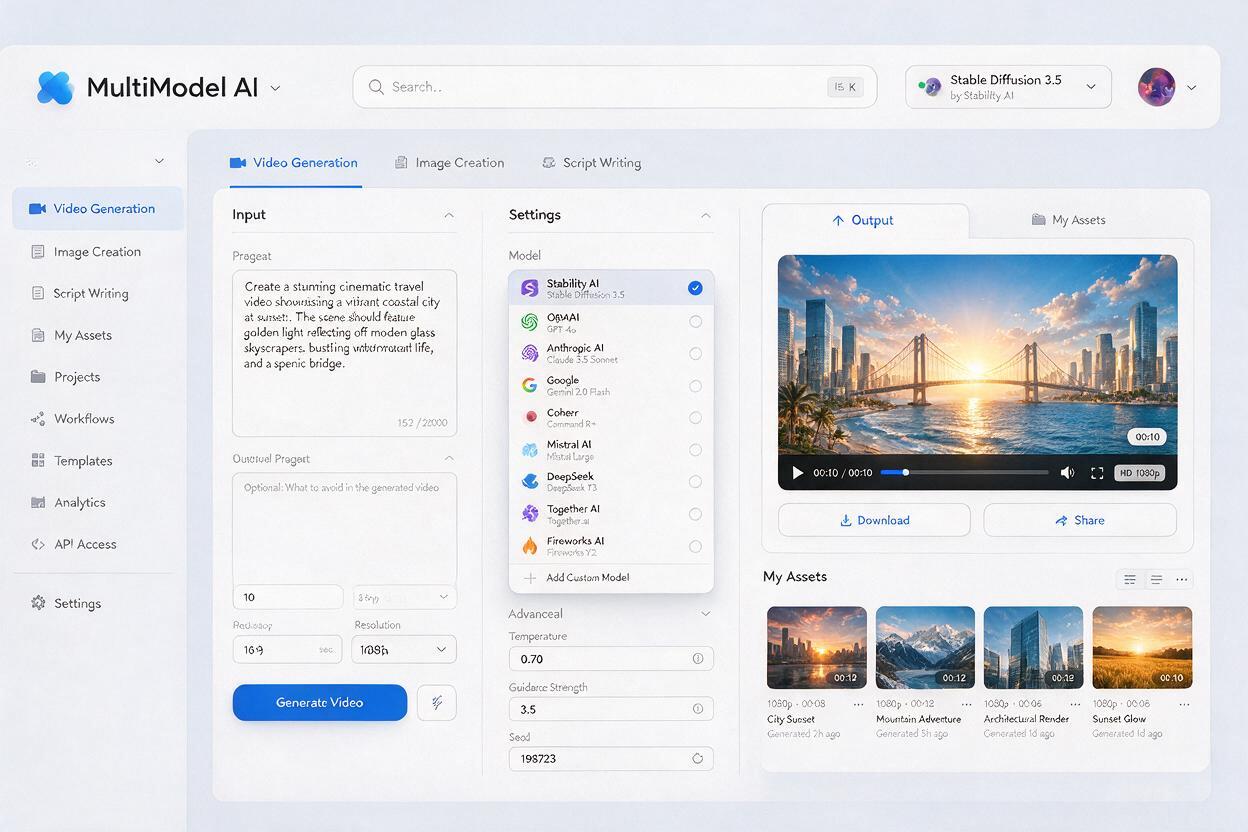
Multi-model AI platforms like MagicBoat help creators navigate these changes by providing access to a wide range of AI tools through a single, consistent interface. Whether you use text to video capabilities to produce short-form content or other AI tools for scriptwriting and image generation, a multi-model setup lets you switch between providers quickly if one platform’s policies change, without rebuilding your entire workflow from scratch.
This flexibility is especially valuable as the AI landscape grows more competitive. With Google, Meta, OpenAI, and Anthropic all updating their models and policies on a regular basis, having access to multiple tools lets creators choose the best model for each specific task while maintaining compliance with evolving guidelines. You can explore a full suite of AI content tools and try these models for free to build a flexible, resilient content workflow that adapts to changing AI policies and capabilities.
Key Takeaways
- Anthropic expanded its Cyber Verification Program on October 15, 2026, as part of preparations for the 2026 US midterm elections.
- Full details of the expansion, including new features, eligibility criteria, and rollout timelines, have not been publicly disclosed in available reporting.
- The announcement is part of a broader wave of AI safety and regulatory activity in 2026 that affects both AI labs and content creators of all types.
- Creators can reduce workflow disruption risk by using a multi-model AI platform that provides access to multiple tools through a single, unified interface.
Keywords
anthropic cyber verification program, ai news, ai tools, ai safety, 2026 us midterms, election security ai, ai content creation