Anthropic IPO Valuation Could Top $1 Trillion as Q3 Revenue Surges 45% YoY
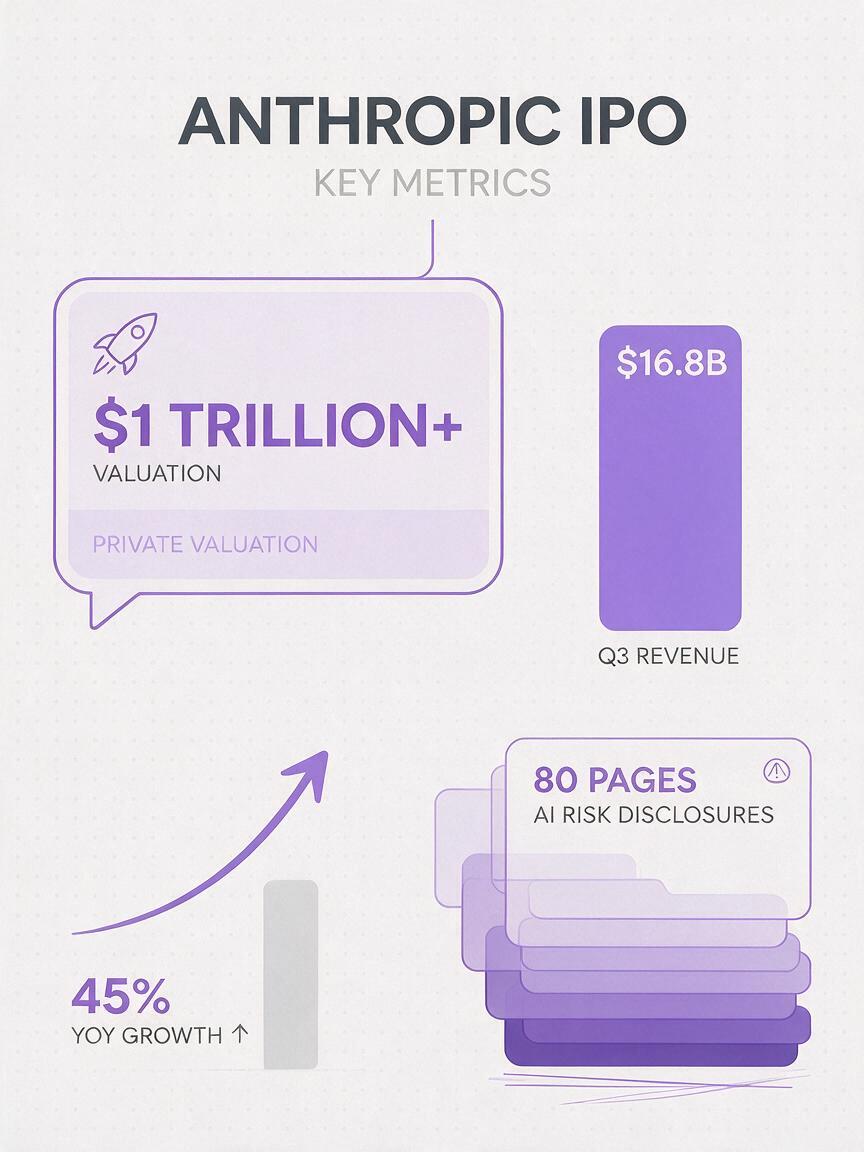
Anthropic is advancing toward an initial public offering that could value the AI lab at more than $1 trillion, with newly disclosed financial data showing third-quarter revenue through September rose 45% year-over-year to $16.8 billion. The company’s 261-page IPO prospectus dedicates roughly 80 pages to catastrophic and existential AI risk disclosures, an unusually large section reflecting its safety-focused mission. The announcement carries meaningful implications for AI video and image creators relying on Claude family models for production workflows.
Table of contents
Anthropic IPO: $1 Trillion Valuation and Record Q3 Revenue
Anthropic is advancing toward an initial public offering that could value the AI research lab at more than $1 trillion, making it one of the largest tech IPOs in history. The announcement comes alongside newly released financial data showing third-quarter revenue through September rose 45% year-over-year to $16.8 billion, reflecting explosive demand for the company’s Claude family of models including Claude Opus, Sonnet, and Haiku.
The 261-page IPO prospectus offers a rare window into the company’s operations and risk posture, with roughly 80 pages dedicated to catastrophic and existential AI risks — an unusually large section for a tech IPO filing. The extensive risk disclosures highlight the company’s public-benefit orientation even as it pursues public market status, and they signal ongoing uncertainty about the long-term trajectory of frontier AI development.
Key Financial and Prospectus Details
Several standout figures from the prospectus paint a picture of rapid growth paired with deliberate caution around AI safety:
- Projected valuation could exceed $1 trillion, placing Anthropic among the most valuable AI companies in the world alongside OpenAI and Google’s DeepMind division.
- Q3 revenue through September hit $16.8 billion, a 45% year-over-year increase driven by enterprise adoption of Claude models for coding, content creation, and agent workflows.
- The 261-page filing devotes approximately 30% of its total page count (80 pages) to catastrophic and existential AI risk disclosures, far more than typical tech IPO filings.
- The company has not yet announced a formal IPO date or share price range, but the push toward public listing follows months of speculation about Anthropic’s long-term capital structure.
The revenue growth figure is particularly notable for creators, as it reflects expanding investment in model development, infrastructure, and new capabilities that could eventually support more advanced creative workflows.
What the Extensive AI Risk Disclosures Signal
The 80-page risk section covers a range of potential harms from frontier AI, including catastrophic misuse, unintended agent behavior, and systemic risks from widespread AI deployment. For context, most tech IPOs dedicate only a handful of pages to general risk factors, with minimal discussion of existential-level threats tied to core product development.
Anthropic’s decision to include such detailed risk disclosures aligns with its longstanding public-benefit mission, which recently led to the creation of a Public Benefit Fund funded by 5% of company shares. For users of Claude models, the focus on safety suggests the company will continue to prioritize controlled deployment and guardrail development even as it faces public market pressure to grow revenue quickly.
It also signals that regulatory scrutiny of AI labs is unlikely to slow down, as public companies face more rigorous disclosure requirements and oversight from financial regulators. This could lead to changes in model access, usage policies, or feature rollouts over time as the company balances growth with compliance.
Implications for AI Video and Image Creators
For AI video and image creators who rely on Claude models for scriptwriting, concept generation, asset description, or text to video workflow planning, the IPO announcement raises several practical considerations.
First, the massive revenue growth suggests continued investment in Claude model capabilities, which could lead to better multimodal performance, faster generation speeds, and lower costs over time. This is good news for creators who use Claude alongside models like GPT-6 and Gemini 4 to refine creative prompts, edit scripts, or troubleshoot production issues.
Second, the public listing could bring changes to pricing tiers, API rate limits, or free access options as the company faces pressure to deliver consistent revenue growth to shareholders. Creators who rely on free ai tools or low-cost tiers for their work may want to diversify their model stack to avoid disruptions if pricing or access policies shift.
Third, the focus on safety and risk mitigation could lead to stricter content policies or moderation for creative use cases, particularly for synthetic media. While these changes are often designed to reduce harm, they can sometimes create unexpected friction for legitimate creative projects, from historical reenactments to fictional narrative content.
Why Multi-Model Platforms Reduce Workflow Risk
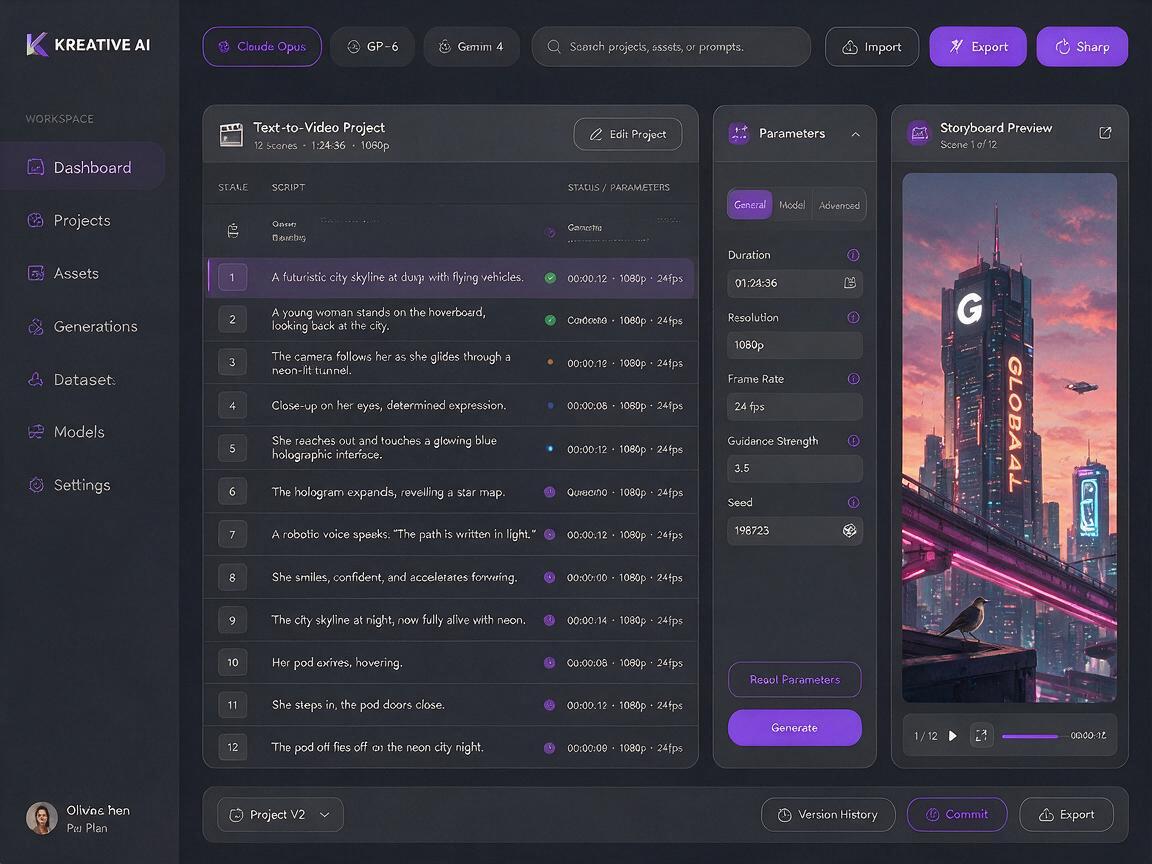
As the AI industry continues to evolve rapidly — with IPOs, regulatory changes, and model updates shifting the landscape on a near-weekly basis — relying on a single model provider for core creative work introduces unnecessary risk. A unified ai video generator platform that aggregates top models from multiple providers eliminates the need to juggle separate accounts, API keys, and billing setups.
Multi-model platforms like MagicBoat give creators the flexibility to switch between Claude Opus, GPT-6, Gemini 4, and other leading models in seconds, depending on the specific task at hand. If one provider changes its pricing, updates its content policies, or experiences an outage, creators can seamlessly shift to another model without pausing their project timeline.
You can try these models for free on MagicBoat to build a resilient, multi-provider creative workflow that adapts to changes across the AI industry. This flexibility is especially valuable for independent creators and small studios that operate on tight budgets and tight deadlines, as it reduces dependency on any single company’s roadmap or business decisions.

Key Takeaways
- Anthropic’s upcoming IPO could value the company at over $1 trillion, with Q3 revenue rising 45% year-over-year to $16.8 billion.
- The 261-page prospectus dedicates 80 pages to catastrophic and existential AI risks, reflecting the company’s safety-focused mission and growing regulatory pressure.
- Creators using Claude models may see continued capability improvements, but should prepare for potential pricing, access, or policy changes post-IPO.
- Building a multi-model workflow is the most reliable way to protect creative projects from provider-specific disruptions.
Keywords
anthropic ipo, claude opus, gpt-6, ai video model, text to video, ai regulation, 1 trillion valuation, q3 revenue