Apple Hits $5 Trillion Market Cap, Second After Nvidia
Apple became the second public company in history to close with a $5 trillion market capitalization on October 15, 2026, trailing only Nvidia’s earlier milestone. The record reflects growing investor confidence in Apple’s expanding AI ecosystem, including Apple Intelligence, the HomeView smart-home hub, and upcoming M5-powered Macs. For AI content creators, the milestone underscores the mainstream arrival of consumer AI tools and the importance of building flexible, platform-agnostic content workflows.

Table of contents
The $5 Trillion Apple Milestone: What You Need to Know
Apple’s historic $5 trillion market cap close on October 15, 2026, marks a major milestone for both the tech giant and the broader consumer AI industry.
Apple became only the second public company ever to end a trading session with a $5 trillion market capitalization, placing it in an exclusive club previously occupied only by Nvidia. The record caps a weeks-long rally driven by strong investor sentiment around Apple’s expanding AI product lineup and ecosystem expansions, according to market reports from JinRongJie.
The milestone comes just one day after Apple hit a new all-time stock high following its “Welcome home” smart-home event, which showcased new AI-powered hardware and accessories. The $5 trillion threshold is widely seen as a validation of Apple’s long-term strategy to integrate AI across every layer of its hardware and software ecosystem, from iPhones and Macs to smart home devices.
For AI content creators, the milestone is more than a financial headline — it signals that consumer AI tools are moving from niche experiments to mainstream, platform-defining products. That shift creates new opportunities for reaching audiences through AI-powered surfaces, but also new challenges for creators navigating a rapidly evolving ecosystem landscape.
Why AI Is Driving Apple’s Record Valuation
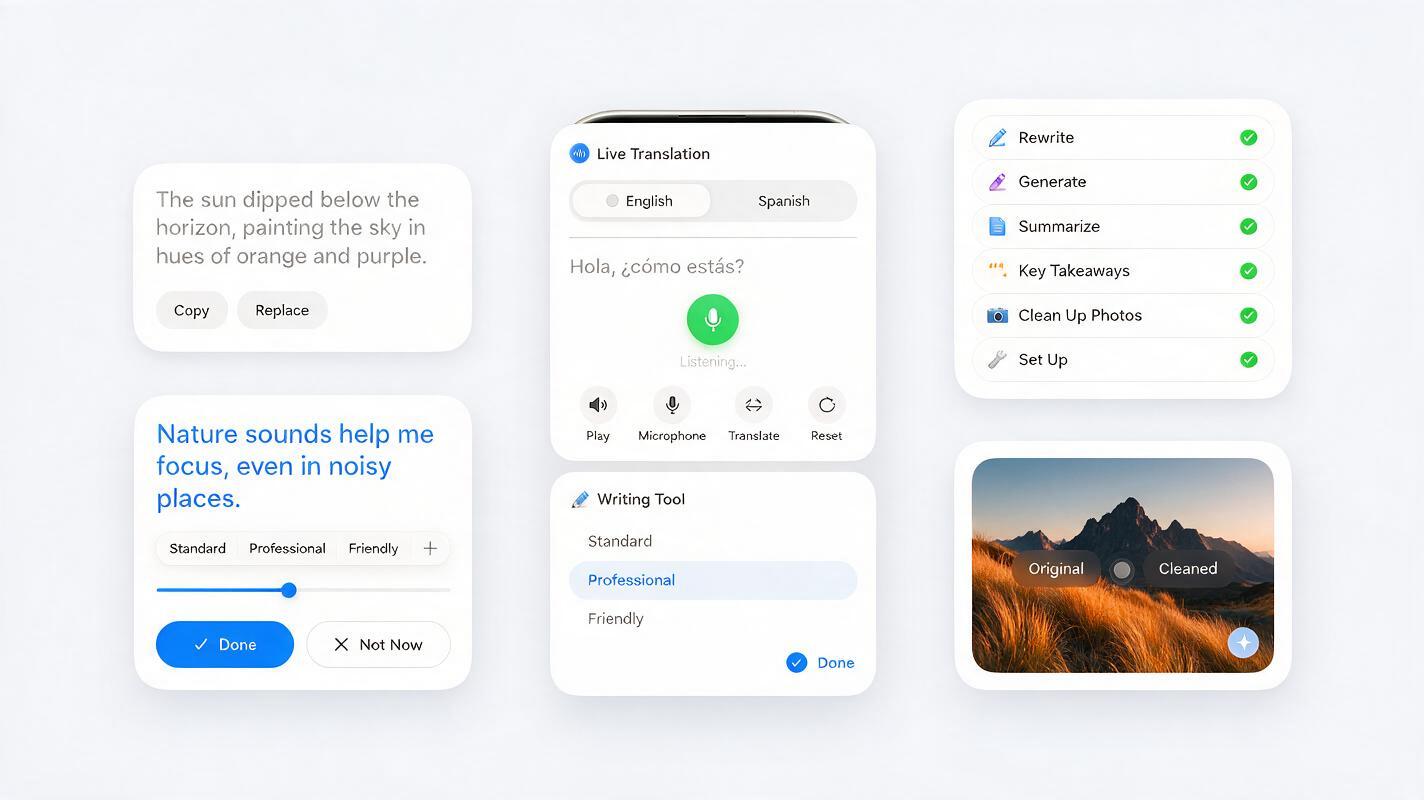
Investor enthusiasm for Apple’s AI strategy has been building throughout 2026, as the company rolls out AI features across its entire product lineup. Apple Intelligence, the company’s native AI assistant suite, recently received approval for a beta launch in China built on Alibaba’s Qwen model, with a full rollout planned for later in October. The beta includes live translation, writing tools, and photo cleanup features, though Siri AI is not included in the first batch of releases.
The October 13 “Welcome home” event also showcased Apple’s push into AI-powered smart home devices, led by the $299 HomeView hub with a 7-inch square display and Siri AI integration. The event, which also introduced an updated HomePod mini and Apple TV 4K, was met with positive investor reaction as analysts highlighted the potential for AI to expand Apple’s reach in the smart home market.
More AI-driven product launches are on the horizon for 2026. Apple is reportedly planning its final 2026 event for October 27–28, where it is expected to unveil an iPad mini 8 and three new Macs. Leaked Geekbench benchmarks for the upcoming M5 Pro chip, featured in a 14-inch MacBook Pro 2026 model, show a 15-core CPU and 48GB of RAM, hinting at significant on-device AI performance gains for creative professionals who rely on Apple hardware for video, design, and production work.
The Broader AI Market Rally Context
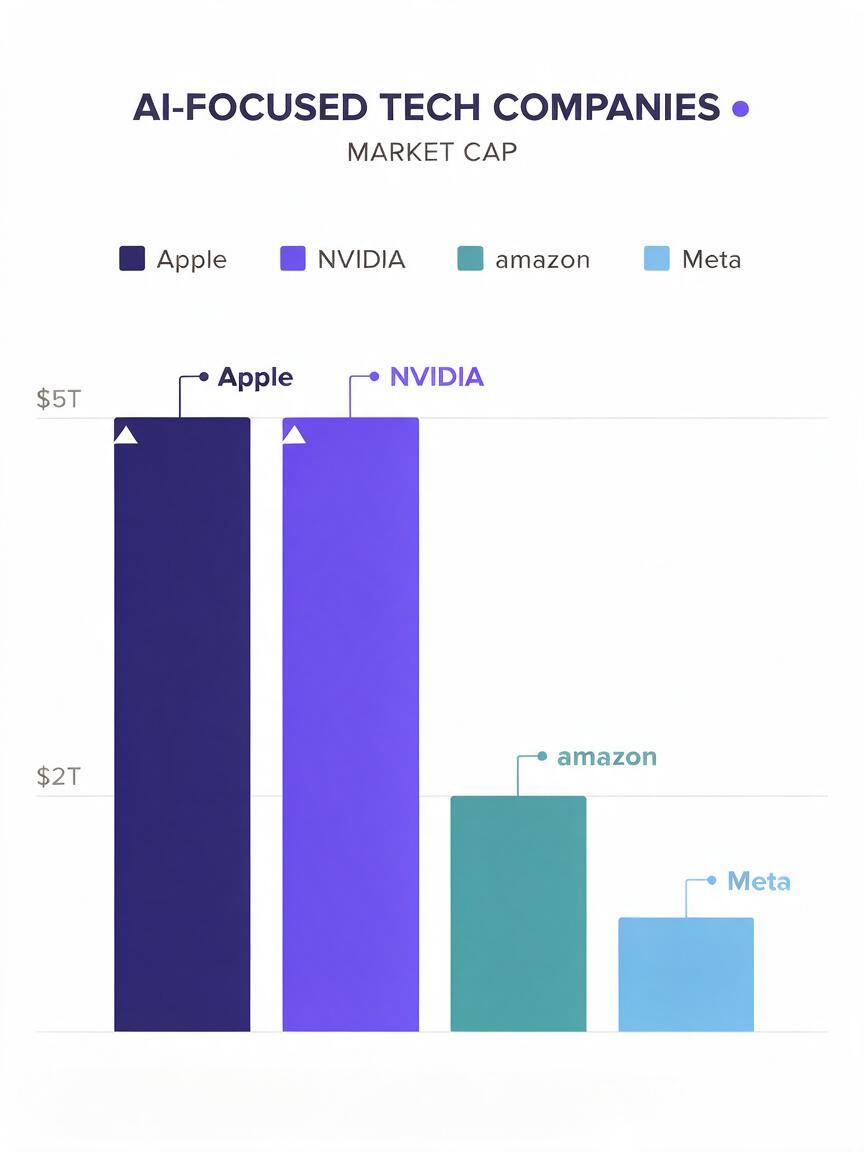
Apple’s $5 trillion milestone is not an isolated event — it is part of a broader market-wide rally driven by AI innovation across the tech sector. Amazon also recently crossed a major valuation threshold, topping $2 trillion in market cap for the first time on October 14 after a 3.9% daily gain, as investors bet on the company’s AI cloud and e-commerce agent strategies.
Meta, meanwhile, has seen surging investor interest in its Muse AI assistant, with Citi estimating the personal ai agent could generate over $27 billion in revenue by 2030 as a leading “front door” to the internet for consumers. The projection has helped lift Meta’s stock as the company positions Muse as a core part of its future ecosystem.
Nvidia, the first company to reach a $5 trillion market cap, has benefited from its dominant position in AI semiconductor manufacturing, with ASML reporting a record backlog of chip equipment orders stretching through 2030 as demand for AI hardware continues to surge across the industry. Across the board, investors are betting that AI will redefine how consumers interact with technology, and companies with strong, integrated AI ecosystems are being rewarded with record valuations.
What This Means for AI Content Creators
For content creators working with AI tools, Apple’s milestone highlights two key trends shaping the future of the industry. First, AI is becoming deeply integrated into the consumer tech ecosystem, meaning content will increasingly be discovered, consumed, and even generated through AI-powered interfaces like Apple Intelligence, Muse, and other personal ai assistant tools. Creators who optimize their content and ai workflow for these AI-driven surfaces will have a competitive edge in reaching new audiences in the coming years.
Second, the growing dominance of large ecosystem players like Apple, Meta, and Amazon creates a tangible risk of vendor lock-in for creators who build their entire operation around a single company’s tools. Changes to platform policies, algorithm updates, or pricing structures can disrupt a creator’s entire content pipeline overnight, making it critical to build flexible, platform-agnostic content workflows that can adapt to shifting market conditions.
Many creators are already diversifying their toolkits to include multiple AI models and platforms, ensuring they can repurpose content across ecosystems without starting from scratch. For example, using an ai video generator that supports multiple output formats and model options lets creators adapt content for Apple’s ecosystem, social media platforms, and AI assistant results all from a single source file.
Similarly, an ai image generator with cross-platform compatibility makes it easy to create visuals optimized for every device and interface, from HomeView display widgets to mobile AI assistant search results. This diversified approach reduces reliance on any single platform and gives creators more control over their content and revenue streams.
Building a Resilient Multi-Model Content Workflow
A resilient AI content workflow starts with choosing tools that prioritize portability and multi-model access, rather than tying you to a single company’s ecosystem or hardware lineup. MagicBoat is a one-account multi-model AI platform that gives creators access to a wide range of AI tools for video, image, audio, script, and short drama creation, all in a single unified dashboard.
With MagicBoat, you can build content workflows that work across every major platform and device, without being locked into a single company’s AI ecosystem or hardware requirements. The platform supports a variety of leading AI models, so you can switch between tools as needed to get the best results for your specific project, whether you’re creating short-form social content, long-form video, or visual assets optimized for AI-powered discovery surfaces.
You can try these models for free to see how a multi-model platform can make your content workflow more resilient and adaptable to the fast-changing AI landscape.

Key Takeaways
- Apple became the second public company ever to close with a $5 trillion market cap on October 15, 2026, following Nvidia’s earlier milestone.
- The record valuation is driven by investor enthusiasm for Apple’s expanding AI product lineup, including Apple Intelligence, the HomeView smart-home hub, and upcoming M5-powered Macs.
- The broader AI market rally is lifting valuations across the tech sector, with Amazon topping $2 trillion and Meta’s Muse AI assistant projected to generate $27 billion in revenue by 2030.
- For AI content creators, the shift to mainstream AI ecosystems creates new audience opportunities but also risks of vendor lock-in, making diversified, platform-agnostic workflows essential.
- Multi-model AI platforms like MagicBoat help creators build flexible, resilient content pipelines that adapt to changing market conditions and ecosystem updates.
Keywords
apple 5 trillion market cap, ai agent, ai workflow, ai automation, ai assistant, ai content creation, nvidia market cap