Apple Prices $7.5B Seven-Tranche Bond for Buybacks and Refinancing
Apple priced a $7.5 billion seven-tranche bond on November 9, 2026, with maturities ranging from 2028 to 2036 and yields between 4.65% and 5.35%, to fund share buybacks, refinancing, and general corporate purposes. The offering comes amid record ai capital expenditure across the tech industry, as major firms invest heavily in AI infrastructure to meet growing demand for generative AI tools. For content creators, rising infrastructure costs are putting upward pressure on ai video cost and image generation pricing, making multi-model platforms a valuable tool for cost control and workflow resilience.
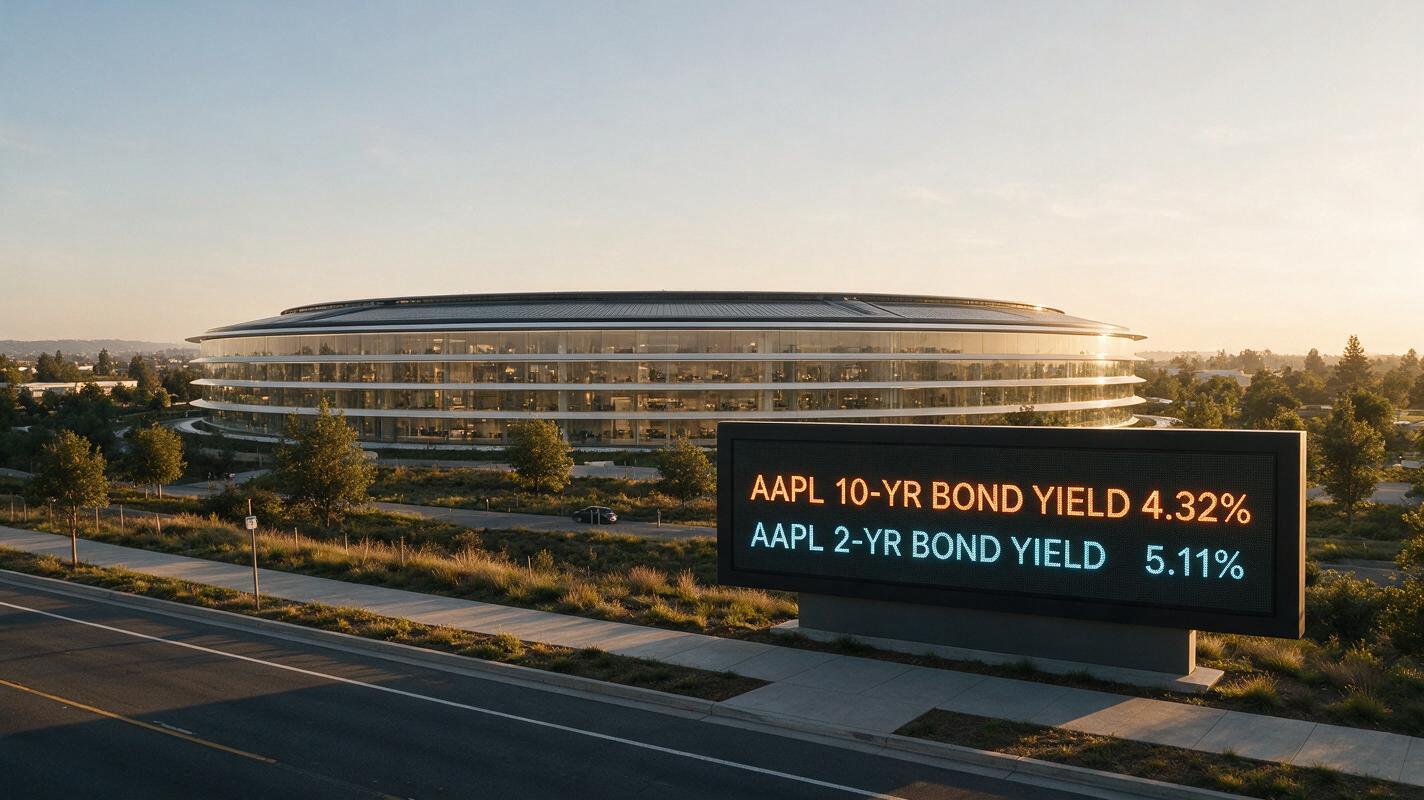
Table of contents
Apple’s $7.5B November 2026 Bond Issuance: Full Details
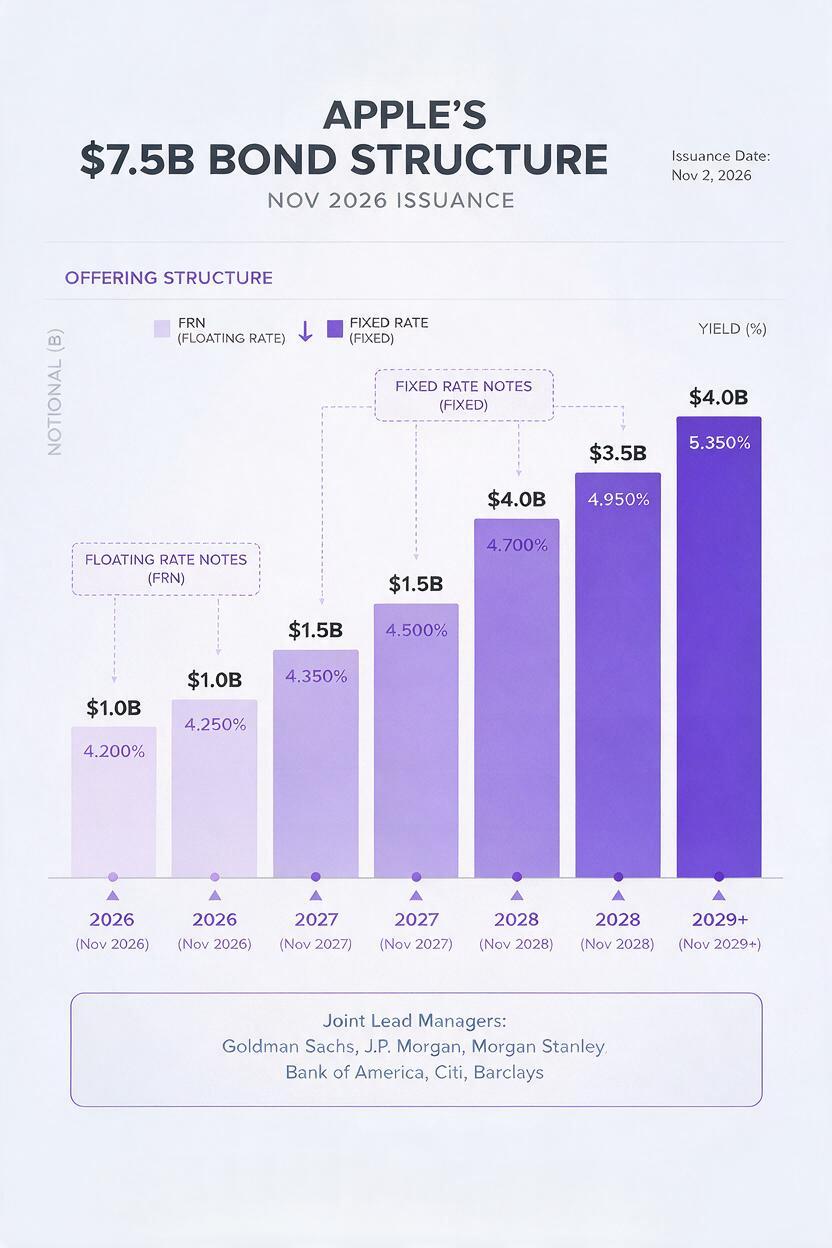
Apple priced a $7.5 billion dollar bond on November 9, 2026, split across seven separate tranches to fund general corporate purposes including share buybacks and refinancing. The offering includes two floating-rate tranches maturing in 2028 and 2029, plus five fixed-rate tranches with maturities ranging from 2028 to 2036.
Fixed tranche yields range from 4.65% to 5.35%, with the longest-dated 2036 tranche pricing at roughly 80 basis points over comparable U.S. Treasury securities. The deal was led by Goldman Sachs, Bank of America, Deutsche Bank, and JPMorgan, consistent with Apple’s usual roster of top-tier investment banks for large capital markets transactions.
At the end of September 2026, Apple held $136.9 billion in cash and marketable securities on its balance sheet. The company repurchased $85.8 billion of its own stock and paid out $15.7 billion in dividends during fiscal year 2026. This latest bond follows a smaller $4.5 billion offering in May 2026 that drew roughly $10 billion in investor orders, signaling strong ongoing demand for Apple’s debt.
What the Offering Signals About Big Tech Capital Strategy
While Apple’s bond proceeds are earmarked for general corporate use rather than direct AI infrastructure investment, the offering sits against a backdrop of unprecedented ai capital expenditure across the largest U.S. technology firms. Major vendors are pouring record sums into data centers, chip procurement, and AI model training to keep pace with demand for generative AI tools, from consumer assistants to enterprise-grade creative platforms.
For context, recent industry data shows combined capital spending by the five largest U.S. tech firms has outpaced their operating cash flow for the first time since 2011, as companies prioritize long-term AI capacity over short-term shareholder returns. Apple’s decision to issue debt for buybacks and refinancing instead of drawing down its cash reserves reflects a strategy of preserving liquidity for strategic investments while taking advantage of still-manageable borrowing costs.
The broader ai funding landscape also remains robust, with startups and established vendors alike raising large rounds to expand compute capacity, develop new models, and roll out consumer and enterprise features. This sustained investment is driving rapid innovation in creative AI tools, but it is also putting upward pressure on ai video cost and image generation pricing as demand for high-performance compute outpaces near-term supply.
What This Means for AI Content Creators and Teams
For independent creators and content teams, the wave of big tech capital spending on AI infrastructure has both upsides and downsides. On one hand, increased investment in AI research and compute capacity is leading to faster model improvements, better output quality, and new creative capabilities across ai image generator tools, video platforms, and audio production systems.
On the other hand, the high cost of building and operating AI data centers is gradually being passed through to end users in the form of higher subscription fees, pay-per-use rate increases, and tighter usage limits on consumer and pro tiers. This makes it harder for small teams and solo creators to predict monthly ai video cost and budget for ongoing creative production, especially when relying on a single vendor for all their AI tooling.
Apple’s strong balance sheet and consistent capital allocation also signal that large tech platforms will continue to play a dominant role in the AI ecosystem, both as developers of on-device AI features and as operators of cloud-based AI services. This concentration of power means creator workflows tied to a single platform’s tools may face sudden changes in pricing, feature availability, or terms of service with little warning.

How Multi-Model Platforms Reduce Workflow Risk
One way creators can insulate themselves from pricing volatility and platform-specific changes is by using a multi-model AI creative platform that aggregates tools from multiple vendors in a single interface. This approach lets content teams compare output quality, test new models as they launch, and switch between providers for different tasks without managing separate subscriptions or billing accounts.
For example, a creator working on a social media campaign might use one model for concept art, another for high-resolution asset generation, and a third for video clips, all within the same platform. This flexibility not only helps keep ai video generator costs predictable by letting teams pick the most cost-effective tool for each job, but also reduces the risk of workflow disruption if a single vendor raises prices or changes its feature set.
Multi-model platforms also make it easier to scale production up or down based on project needs, without locking into long-term contracts with individual AI providers. This is especially valuable for small teams and freelance creators who need to balance high-quality output with tight, variable budgets.

Key Takeaways
- Apple priced a $7.5 billion seven-tranche bond on November 9, 2026, with maturities from 2028 to 2036 and yields between 4.65% and 5.35%, to fund share buybacks, refinancing, and other general corporate purposes.
- The offering comes amid record ai capital expenditure across the tech industry, as major firms invest heavily in data centers and AI model development to meet growing demand for generative AI tools.
- Rising infrastructure costs are putting upward pressure on ai video cost and image generation pricing for end users, making single-vendor workflow reliance riskier for creators.
- Multi-model AI creative platforms give creators more flexibility, better cost control, and reduced vendor lock-in compared to relying on a single AI tool provider.
- Creators can try these models for free on MagicBoat to build a more resilient, cost-effective creative workflow.
Keywords
apple bond issuance, ai capital expenditure, ai industry, ai funding, ai video cost, ai image generator, share buybacks