Apple Prices $7.5B Bond Sale Across Seven Tranches
Apple priced a $7.5 billion dollar bond sale on November 9 across seven tranches, ranging from floating-rate notes due in 2028 and 2029 to fixed-rate debt maturing through 2036. The financing, intended for general corporate purposes including buybacks and refinancing, arrives despite Apple holding $136.9 billion in cash and securities at the end of September.

Table of contents
Apple’s $7.5 Billion Return to the Bond Market
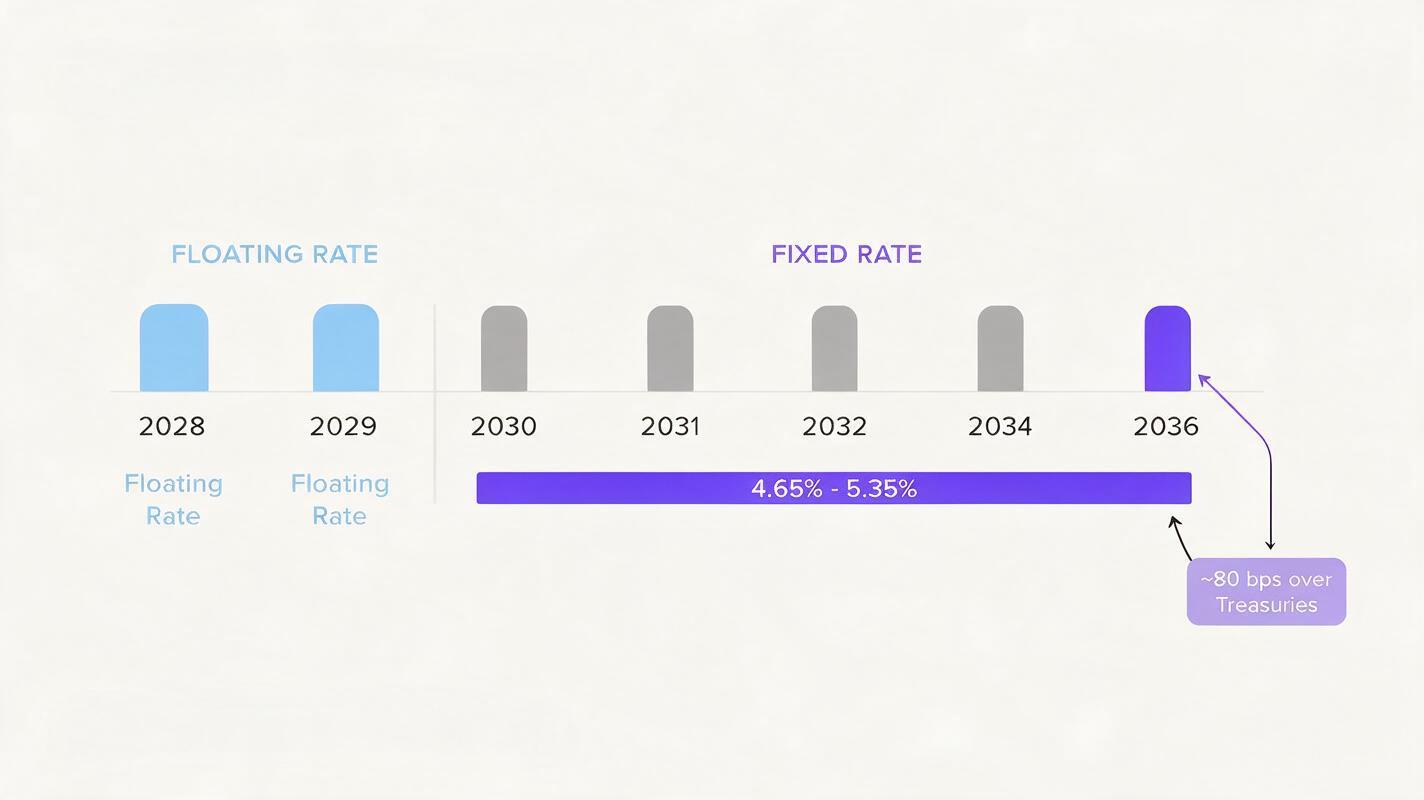
Apple priced a $7.5 billion dollar bond sale on November 9, dividing the offering into seven parts with maturities extending from 2028 through 2036. The structure includes two floating-rate tranches due in 2028 and 2029, alongside five fixed-rate tranches carrying interest rates between 4.65% and 5.35%.
The longest portion, due in 2036, was priced at approximately 80 basis points above comparable US Treasuries. Goldman Sachs, Bank of America, Deutsche Bank and JPMorgan led the transaction. Apple said the proceeds are for general corporate purposes, including share repurchases and refinancing, rather than identifying a single operating project or acquisition.
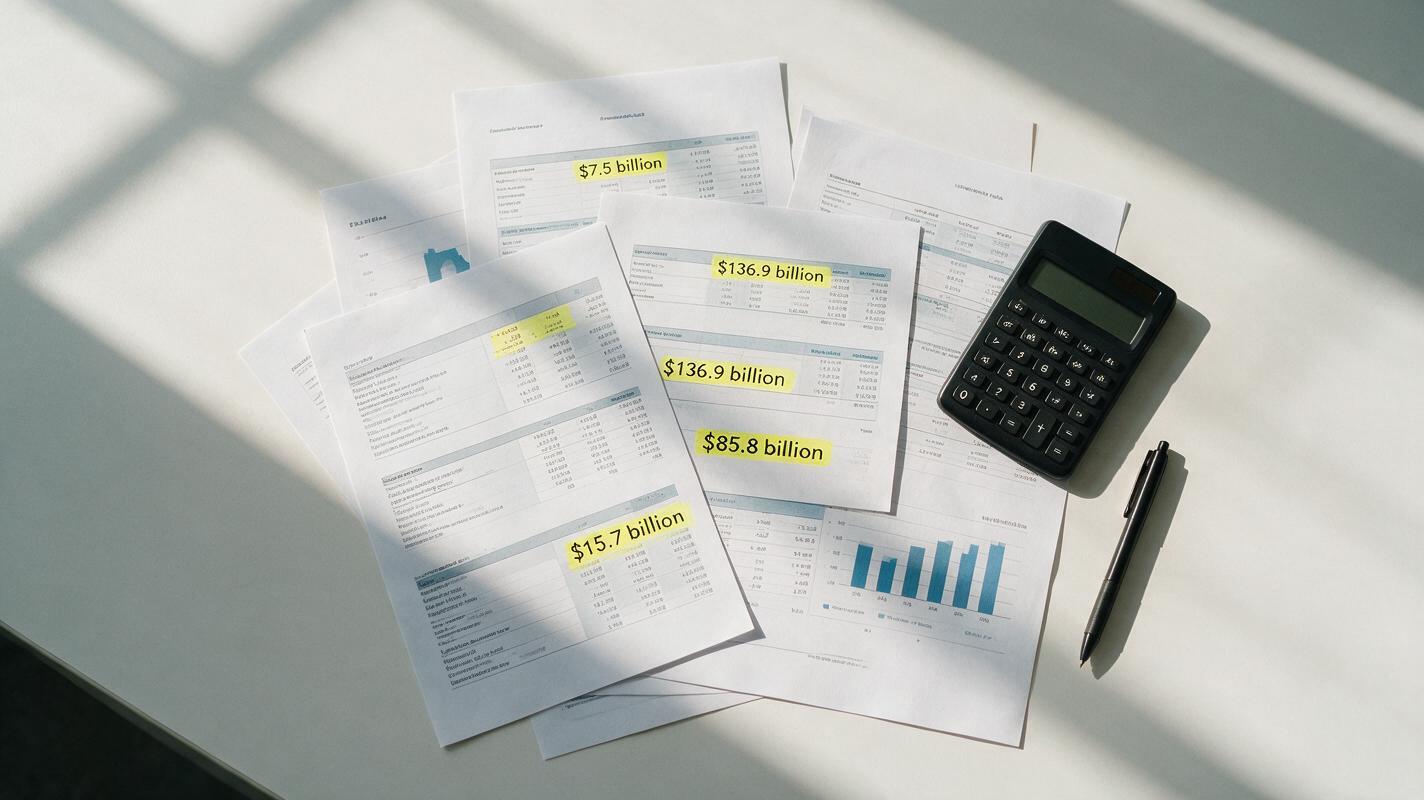
The size of the Apple bond sale is especially notable because the company held $136.9 billion in cash and securities at the end of September. During fiscal 2026, Apple repurchased $85.8 billion of its shares and paid $15.7 billion in dividends. The November financing also follows a $4.5 billion bond deal in May that reportedly attracted roughly $10 billion in orders.
For people producing business, technology or AI commentary, the offering provides a useful case study in separating verified financing details from speculation. It also shows why a repeatable AI workflow should preserve exact figures, distinguish stated uses of proceeds from assumptions and adapt one factual narrative into multiple formats without changing its meaning.
What Apple Included in the Seven-Part Offering
The bond sale combines shorter floating-rate securities with fixed-rate debt extending to 2036. That structure gives Apple several maturity dates rather than concentrating the entire $7.5 billion repayment obligation in one year.
| Offering detail | Reported information |
|---|---|
| Total size | $7.5 billion |
| Number of parts | Seven |
| Floating-rate portions | Two, due in 2028 and 2029 |
| Fixed-rate portions | Five, due from 2028 through 2036 |
| Fixed interest-rate range | 4.65% to 5.35% |
| Longest maturity | 2036, approximately 80 basis points over Treasuries |
| Lead banks | Goldman Sachs, Bank of America, Deutsche Bank and JPMorgan |
| Stated purpose | General corporate purposes, including buybacks and refinancing |
The reported use of proceeds matters. Apple did not designate the offering as financing for a named AI system, device, data center or content platform. Describing it as a dedicated AI bond would therefore go beyond the available information. The accurate framing is that Apple raised corporate funding that can support broad purposes, with buybacks and refinancing explicitly included.
The central news is not that Apple lacked cash. It is that the company chose to add $7.5 billion of dollar-denominated debt while maintaining substantial liquid holdings and returning large amounts of capital to shareholders.
Why Apple Can Borrow While Holding $136.9 Billion
Cash on hand and debt issuance are not opposites. In Apple’s reported case, the company entered the market with $136.9 billion in cash and securities while continuing a capital-return program that included $85.8 billion of fiscal 2026 share repurchases and $15.7 billion in dividends.
The stated purposes offer the clearest explanation available from the reported details. Refinancing can replace or reorganize existing obligations, while share repurchases require capital. Issuing multiple maturities also distributes the financing across different repayment dates. Beyond those points, claims about undisclosed projects or motives would be speculative.
The May transaction supplies additional context. That earlier $4.5 billion offering reportedly drew approximately $10 billion in orders. The November sale is $3 billion larger and once again uses a multi-part structure. Together, the two transactions show Apple accessing the dollar bond market more than once during 2026, but the supplied figures do not establish how demand for the November deal compared with May.
What the Bond Sale Does and Does Not Say About Apple AI
Apple’s broader position in technology makes almost any major financing event likely to generate AI-related interpretations. Yet the documented announcement supports a narrower conclusion: the bonds were issued for general corporate purposes, including buybacks and refinancing.
That distinction is valuable for anyone covering fast-moving technology markets. A reliable financial explainer should separate three categories:
- Confirmed terms: the amount, tranche structure, maturities, rates and participating banks.
- Confirmed corporate context: Apple’s cash and securities, repurchases, dividends and earlier May offering.
- Unconfirmed interpretation: any assertion that the money is earmarked for a particular AI product, infrastructure program or acquisition.
An AI assistant can help organize a large set of figures, but human editorial review remains important when the difference between “general corporate purposes” and a named investment thesis changes the entire headline. Good AI automation should make factual boundaries easier to preserve, not encourage unsupported certainty.
Turning Financial News Into Clear Visual Content
The Apple bond sale is well suited to visual reporting because its core facts have a natural hierarchy. A concise presentation can begin with the $7.5 billion total, show the split between two floating-rate and five fixed-rate portions, and finish with the 2028-to-2036 maturity range. A second visual can place the financing beside Apple’s $136.9 billion in cash and securities, $85.8 billion in repurchases and $15.7 billion in dividends.
Writers can use an ai script generator to structure those verified figures into narration before moving the approved copy into an ai video generator. The editorial goal is not to add drama through invented motives, but to make the relationships among debt, liquidity and capital returns understandable.
A strong short-form version could use these factual beats:
- Apple priced $7.5 billion of dollar bonds on November 9.
- The offering contains seven parts spanning 2028 through 2036.
- Five fixed-rate portions carry rates from 4.65% to 5.35%.
- The 2036 portion was priced about 80 basis points above Treasuries.
- Apple still held $136.9 billion in cash and securities at the end of September.
- The stated purposes include buybacks and refinancing.
This format can support an article, narrated clip, infographic or social post while keeping the same source-bound language across every output.

Why Multi-Model Production Matters for Market Coverage
Financial and technology news often combines dense numbers, corporate terminology and visual storytelling. One model may be useful for condensing a transaction, while another may be preferred for revising narration or preparing visual concepts. Keeping those tasks in one account can reduce the friction of moving a project among disconnected tools.
MagicBoat provides a practical place to develop a multi-format content package around a verified brief. Editors can preserve a common set of approved numbers, compare creative outputs and adjust the presentation without turning an ordinary corporate financing into an unsupported AI claim.
To develop your own factual business-news package, try these models for free and keep the confirmed bond terms at the center of every format.
Final Checklist
- State that Apple priced a $7.5 billion bond offering on November 9.
- Identify all seven parts: two floating-rate and five fixed-rate tranches.
- Keep the reported maturity range of 2028 through 2036.
- Use the documented fixed-rate range of 4.65% to 5.35%.
- Describe the 2036 pricing as approximately 80 basis points over Treasuries.
- Include Apple’s $136.9 billion in cash and securities only with its end-of-September context.
- Attribute the proceeds to general corporate purposes, including buybacks and refinancing.
- Avoid labeling the transaction as dedicated AI financing.
Keywords
apple bond sale, apple debt offering, seven-part bond, corporate bonds, apple cash, ai workflow, financial content creation