Apple Closes at $5 Trillion Market Cap for First Time
Apple closed at a $5 trillion market capitalization for the first time on October 15, becoming the second company after Nvidia to reach that threshold. The milestone highlights the value markets place on major technology ecosystems while offering content teams a timely lesson in separating confirmed news from speculative narratives.

Table of contents
Apple Reaches a Historic $5 Trillion Close
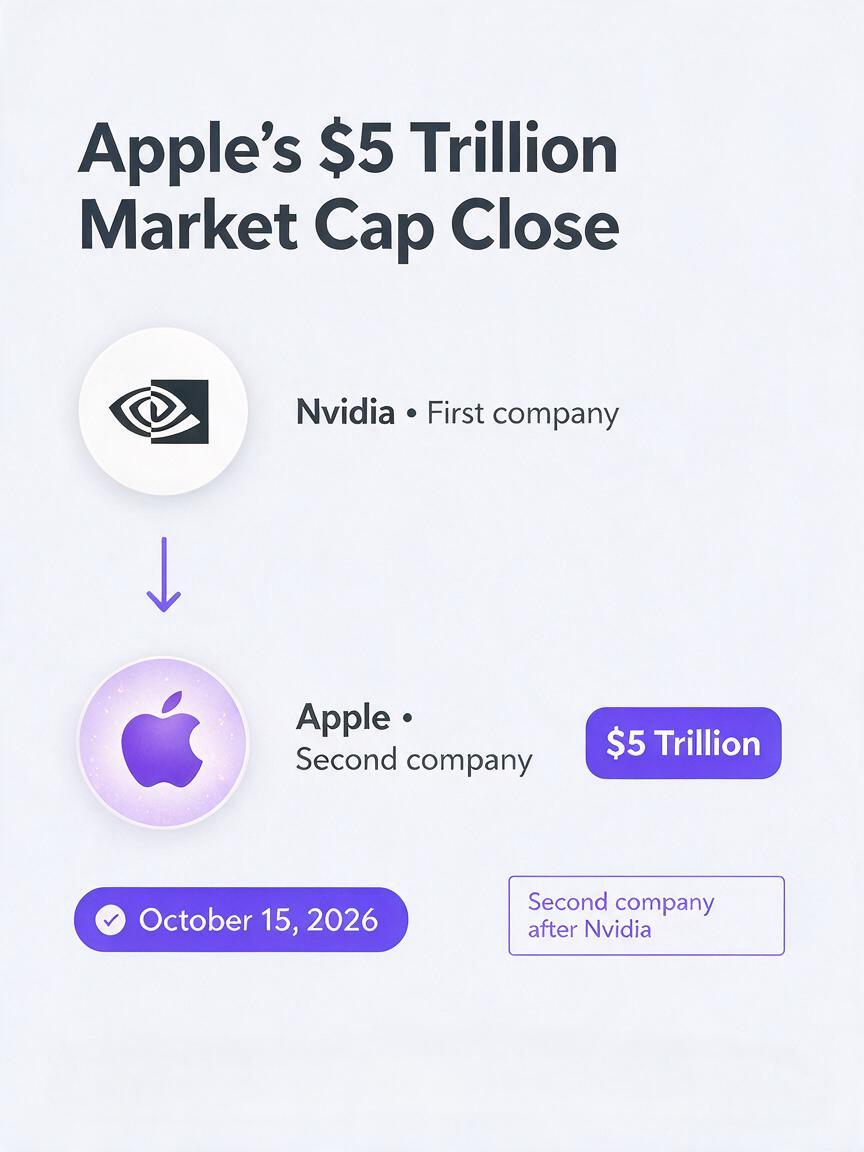
Apple closed at a market capitalization of $5 trillion for the first time on October 15, 2026. The close made Apple only the second company to reach that threshold, following Nvidia.
The significance of the event lies in the scale and finality of the milestone: this was Apple’s first close at $5 trillion, not merely a momentary market move. It also placed the company in an extremely small group, with Nvidia identified as the only earlier member.
For content teams, a landmark valuation can trigger a rush of commentary, explainers, short videos, and social posts. The opportunity is substantial, but so is the need to distinguish the two confirmed facts—the $5 trillion close and Apple’s position behind Nvidia—from assumptions about why the market moved.
What the $5 Trillion Close Actually Confirms
The core Apple market cap story is concise. That makes disciplined framing especially important: limited source facts should not become a license to add unsupported product, financial, or AI claims.
| Question | What the news establishes |
|---|---|
| What happened? | Apple closed at a $5 trillion market capitalization. |
| When did it happen? | October 15, 2026. |
| Was this a first for Apple? | Yes, it was Apple’s first close at that level. |
| Which company reached the threshold earlier? | Nvidia. |
| What was Apple’s position? | Apple became the second company to reach the milestone. |
Everything beyond those points requires additional reporting. The milestone does not, by itself, establish which product, service, market, or strategic decision was responsible. A reliable article or video should keep confirmed information visually and verbally separate from interpretation.
A large number can carry a story, but it should not carry claims the reporting does not support.
Why the Milestone Matters Beyond a Market Headline
Apple’s first $5 trillion close is also an ecosystem story. A valuation milestone of this scale attracts attention not only to a company but to the broader network of products, services, audiences, and expectations associated with its name.
That attention creates several editorial possibilities. A publication can focus narrowly on the record close, compare the order in which Apple and Nvidia reached the threshold, or examine what major technology ecosystems mean to audiences. Each angle remains distinct, and each needs its own evidence boundary.
The same principle applies to AI production. An AI assistant can help organize a brief, explore possible headlines, or reshape a script for different formats, but human editors still need to decide which claims belong in the final piece. AI automation should increase production capacity without weakening factual control.
Turning a Short News Item Into Responsible Creative Work
A concise event can support a complete creative package without embellishment. The key is to expand the presentation rather than inflate the facts. A content team might develop a news article, a market-milestone graphic, a short narration, and a social caption around the same verified core.
An ai script generator can help organize that material into a clear narrative: the October 15 close, the first-time achievement for Apple, and Nvidia’s earlier place in the sequence. Commentary can then be labeled as analysis rather than blended into the reported event.
Useful creative treatments include:
- A concise news brief centered on the closing milestone.
- A visual comparison showing Apple as the second company after Nvidia.
- A narrated short explaining why the phrase “first close” matters.
- An editorial commentary about the attention generated by major technology ecosystems.
- A social package that preserves the same wording and numbers across formats.
This is where a well-structured ai workflow becomes valuable. The underlying fact sheet can remain fixed while the tone, length, and presentation change for each channel.
Building a More Durable AI Workflow
Fast-moving market news places pressure on production teams to publish quickly. That pressure can encourage fragmented work: one tool drafts the article, another produces images, another handles video, and separate documents hold approvals. Every transfer creates another opportunity for a number, date, or qualification to drift.
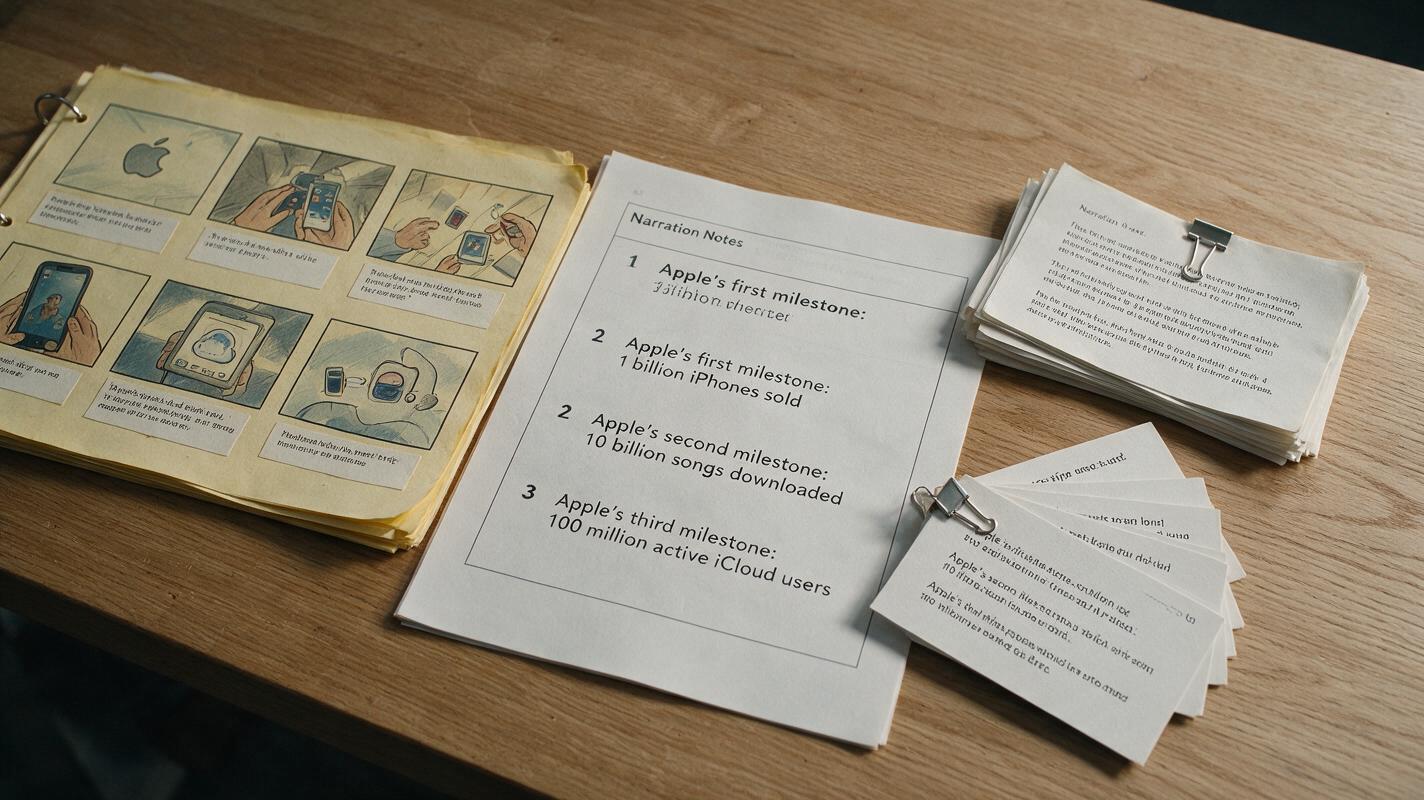
A stronger ai video workflow keeps a compact source record attached to the project. For this story, that record should preserve the exact milestone, date, and company sequence. Scripts, captions, visual labels, and voiceovers can then be reviewed against the same factual reference.
MagicBoat supports this kind of unified production approach by bringing multiple creation capabilities into one account. Teams can move from an approved brief into an ai video generator while retaining human review over what is ultimately published.
Model flexibility also matters. Market stories have short attention windows, and a creative pipeline should not depend entirely on one AI model being available for every task. A multi-model environment gives teams more room to continue drafting and producing when a preferred option is unavailable or unsuitable.
Human Review Remains the Publication Boundary
AI can propose variations, but it should not decide that an unsupported explanation is true. Before release, an editor should compare every factual sentence with the approved news record and remove any causal language that cannot be traced to reporting.
The same review applies to visuals. A graphic can present “$5 trillion,” “Apple,” and “second after Nvidia,” but it should not imply additional rankings, stock movements, product launches, or revenue figures that are absent from the source material.
That boundary allows an AI workflow to remain fast without becoming careless. Automation assists with transformation across formats; people retain authority over accuracy, framing, and publication.

What This Signals for AI Content Production
The Apple $5 trillion market cap milestone demonstrates how a short, high-impact news item can become a major content cycle. The advantage does not belong to the team that produces the most speculation. It belongs to the team that can create clear, consistent material quickly while preserving the limits of what is known.
For writers, video producers, and social teams, the practical lesson is to treat verified facts as reusable production assets. A single approved record can support scripts, storyboards, graphics, and narration without changing the underlying claim.
That approach also makes correction and revision easier. When facts are centralized, every output can be checked against the same reference rather than reconstructed from memory or copied from earlier drafts.
Editorial Checklist
- State that Apple closed at a $5 trillion market capitalization for the first time.
- Use October 15, 2026, as the date of the milestone.
- Identify Apple as the second company to reach the threshold.
- Name Nvidia as the company that reached it earlier.
- Keep interpretation clearly separate from confirmed reporting.
- Review scripts, captions, graphics, and narration against one approved fact record.
- Avoid adding unsupported causes, financial figures, or product claims.
To turn verified news into scripts, visuals, and videos within one flexible production environment, try these models for free.
Keywords
apple $5 trillion market cap, apple valuation, nvidia, technology ecosystem, ai workflow, ai assistant, ai video workflow