Apple Reaches $5 Trillion Market Cap, Second After Nvidia
Apple closed at a $5 trillion market capitalization for the first time on October 15, 2026, becoming the second company after Nvidia to reach the milestone. The valuation highlights the market power of major technology ecosystems while giving AI content teams a reason to prioritize portable, platform-independent production workflows.

Table of contents
Apple Enters the $5 Trillion Club
Apple closed at a $5 trillion market capitalization for the first time on October 15, 2026, becoming only the second company after Nvidia to reach that valuation.
The milestone places Apple alongside Nvidia in a remarkably small group of technology companies. It also underlines how strongly financial markets value businesses capable of becoming enduring gateways to computing, communication, entertainment and digital services.
The reported figure is a market-capitalization milestone, not a measure of annual revenue, cash on hand or profit. Market capitalization reflects the total value assigned to a public company’s outstanding shares. Crossing $5 trillion therefore represents investor valuation at a particular point in time rather than money directly entering Apple’s accounts.
For creators and production teams, the larger message is not about reacting to a single stock-market close. It is about recognizing the growing influence of a few technology ecosystems while keeping content, prompts and production assets portable enough to survive changes in devices, platforms and AI services.
Why the $5 Trillion Valuation Matters
Apple’s first close at this level is notable for both its scale and its rarity. According to the reported October 15 item, Nvidia reached the threshold before Apple, making Apple the second company to do so.
That comparison also reflects the breadth of the current technology market. Apple is associated with an integrated consumer-device and software ecosystem, while Nvidia occupies a central position in the computing environment surrounding AI. Their presence at the same valuation landmark shows how both user-facing ecosystems and the infrastructure behind modern computing can command exceptional market attention.
A record valuation can signal confidence in an ecosystem, but it does not guarantee that every product, platform decision or AI service will fit every production workflow.
The distinction matters because valuation headlines often encourage exaggerated conclusions. Apple reaching $5 trillion does not, by itself, prove that a particular device will improve a video project or that one platform should control an entire creative operation. It is better understood as evidence of the extraordinary economic weight now attached to leading technology ecosystems.

Market Capitalization Is Not a Creative Benchmark
Content teams frequently encounter technology news through dramatic numbers: company valuations, model sizes, benchmark results and investment totals. Those figures can provide useful context, but they answer different questions from the ones that determine whether an AI workflow succeeds.
A practical production review should focus on matters such as:
- Output suitability: whether the generated material matches the intended format, tone and visual direction.
- Workflow continuity: whether briefs, scripts and references remain usable when a preferred tool changes.
- Revision control: whether a team can preserve approved facts and creative decisions across multiple drafts.
- Human oversight: whether important claims, visual details and final outputs receive appropriate review.
- Platform flexibility: whether the production process can continue without being locked to one device or model.
These criteria are more directly relevant to daily content operations than a company’s market value. A record-setting ecosystem may offer significant reach and influence, but the best production environment is still the one that reliably supports the project at hand.
What the Milestone Signals for AI Content Production
Apple and Nvidia reaching the same rare valuation threshold from different positions in the technology landscape illustrates an important pattern: AI creation depends on multiple layers. Devices provide access and local working environments, computing infrastructure supports demanding workloads, and software platforms turn those resources into usable creative tools.
Creators do not need to reproduce that complexity inside every project. They do, however, benefit from separating the durable parts of their work from the platform that happens to process them. A reusable creative package can include the factual brief, audience definition, approved terminology, visual references, script versions and final editorial decisions.
That separation makes an AI workflow easier to adapt. If a model changes, a device is replaced or a platform alters its availability, the project retains its essential context. AI automation can then accelerate production without becoming the only place where creative intent is stored.
For visual projects, a browser-based ai video generator can help reduce dependence on a single local machine. Teams developing narrative campaigns can also keep ideation and production connected through an ai story generator, while retaining human control over facts, sequencing and final publication.
A Portable Workflow Is Stronger Than Ecosystem Dependence
The scale represented by Apple’s $5 trillion close may tempt teams to organize every task around one ecosystem. That can be convenient, but convenience should not be confused with resilience. A production system becomes fragile when its prompts, drafts, references and approvals cannot move beyond one application or device.
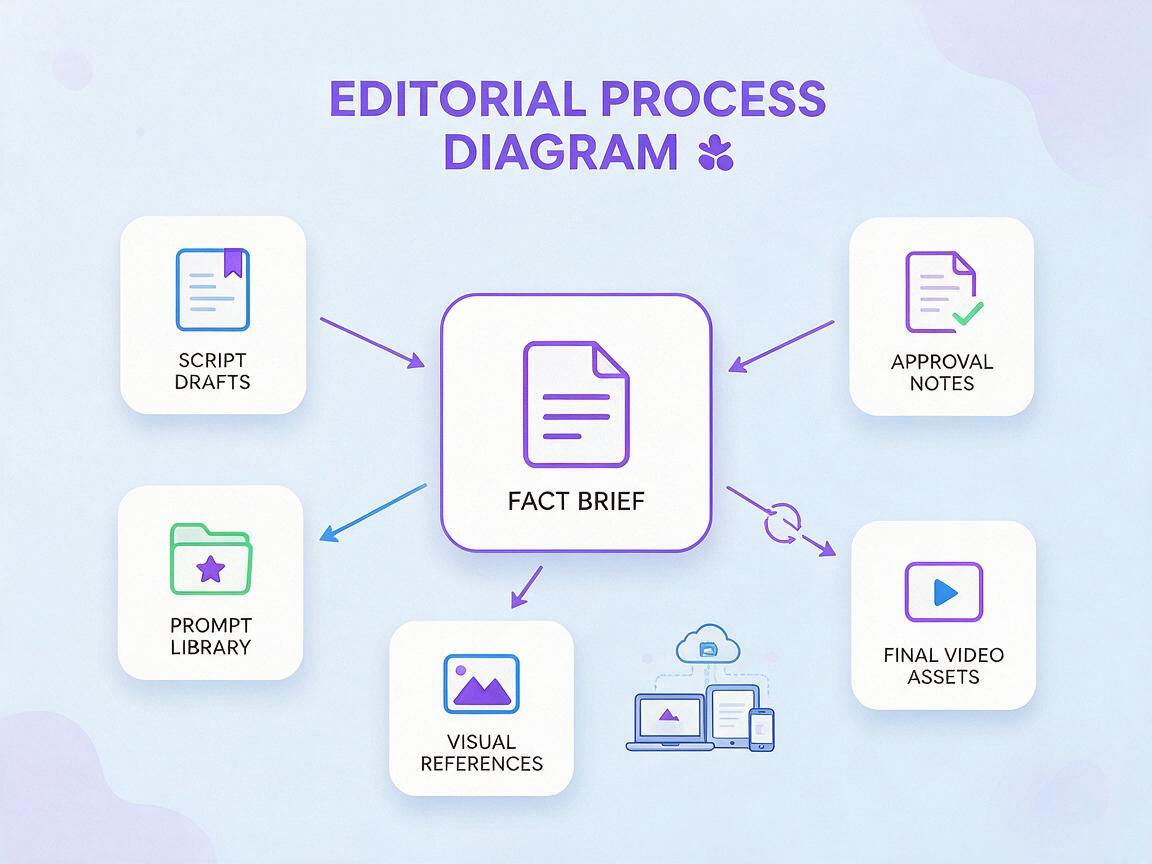
Portable content operations treat the core brief as an independent asset. The brief establishes what is known, what remains uncertain and which language is approved. It can then support several outputs without requiring every version to be rebuilt from memory.
| Production asset | Why it should remain portable |
|---|---|
| News facts | Prevents unsupported claims from entering later formats |
| Prompt library | Preserves tested creative direction when tools change |
| Visual references | Maintains continuity across images, video and campaign assets |
| Script drafts | Keeps revisions accessible outside one generation session |
| Approval notes | Records human decisions before publication |
This structure is useful for a solo creator, a marketing department or a distributed studio. It supports experimentation without forcing every project to depend permanently on the same technology provider.
How MagicBoat Fits the Multi-Platform Era
MagicBoat offers a practical environment for moving from an idea to visual and narrative output without making a single hardware ecosystem the center of the entire process. The value of that approach becomes clearer as technology platforms grow larger and AI tools evolve more quickly.
A creator can preserve the central concept, compare possible outputs and develop assets for different channels while maintaining one coherent editorial direction. The purpose is not to chase every market headline. It is to build a production process capable of adapting when the surrounding technology landscape changes.
This also encourages better human review. Market commentary, product reporting and AI-generated visuals can each introduce different kinds of error. Keeping the source facts separate from creative interpretation makes it easier to verify the article, revise the script and approve the final visual sequence.

Key Takeaways
- Apple closed at a $5 trillion market capitalization for the first time on October 15, 2026.
- It became the second company after Nvidia to reach the milestone.
- Market capitalization is an investor valuation, not annual revenue, profit or cash.
- The headline demonstrates the growing economic influence of major technology ecosystems.
- Creative teams should evaluate tools by output quality, continuity and portability rather than corporate valuation alone.
- Reusable briefs, references and approval records make AI content workflows more resilient.
Build a More Flexible AI Workflow
Record valuations will change, and the balance among devices, infrastructure and AI platforms will continue to move. Your creative context should remain usable through those shifts. Bring a clear brief, preserve the decisions that matter and try these models for free on MagicBoat.
Keywords
apple $5 trillion market cap, apple stock, nvidia, ai workflow, ai automation, ai content creation, magicboat