Apple HomeView Anchors a New Smart-Home Strategy
Apple’s reported smart-home plan puts a display hub at the center of a wider lineup spanning HomePod mini, Apple TV, and accessories from LG and Schneider.
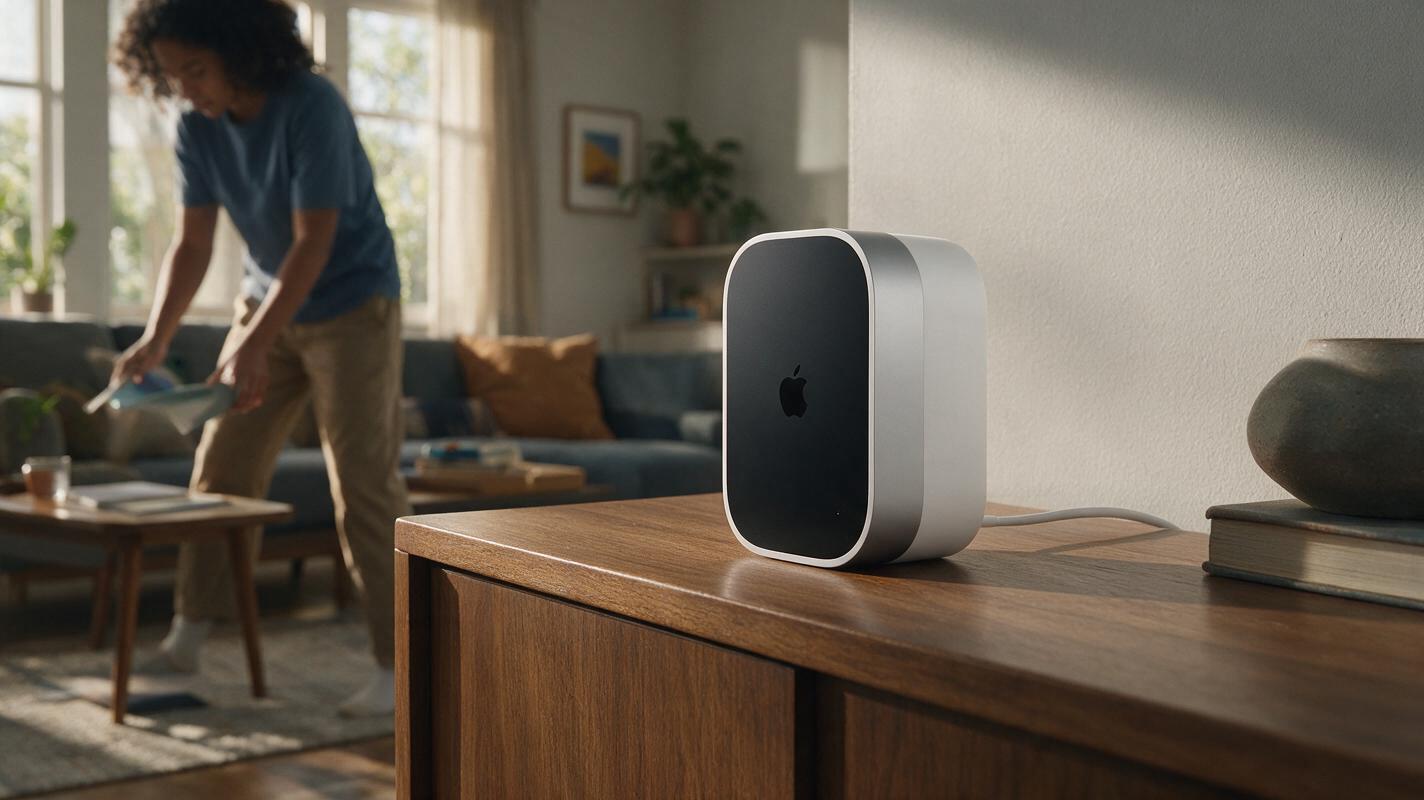
Table of contents
Apple smart-home news
Apple HomeView Anchors a New Smart-Home StrategyApple’s reported smart-home plan puts a display hub at the center of a wider lineup spanning HomePod mini, Apple TV, and accessories from LG and Schneider.
Apple’s Reported HomeView Plan
Bloomberg reported on October 11 that Apple’s smart-home strategy is centered on a display hub called HomeView. The reported plan extends beyond a single new device: HomeView sits alongside HomePod mini and Apple TV, with accessories from LG and Schneider also forming part of the strategy.
The important news is therefore not simply the appearance of another Apple product name. It is the shape of the reported portfolio. A central display hub, familiar Apple home devices, and accessories from outside manufacturers together suggest a broader smart-home lineup rather than an isolated hardware release.
The report identifies the components of that strategy but does not provide pricing, availability, technical specifications, or a release schedule. It also does not detail how HomeView would interact with the named devices and accessories. Those omissions matter: they separate what Bloomberg reported from assumptions about how the eventual experience might work.
For content teams, the announcement is relevant because a new display-centered product category can create fresh demand for launch explainers, product comparisons, social visuals, and short-form video. The safest response is to build adaptable campaign concepts around the confirmed product lineup while leaving unannounced features out of scripts and artwork.
Why HomeView Is the Headline
HomeView is the focal point because Bloomberg described Apple’s smart-home strategy as being centered on the display hub. HomePod mini and Apple TV are included in the reported lineup, while LG and Schneider extend the story into accessories.
That structure gives the news three distinct layers:
- A central product: HomeView is the named display hub at the heart of the strategy.
- Apple’s wider home lineup: HomePod mini and Apple TV are part of the reported plan.
- Accessory participation: LG and Schneider are the outside brands named in connection with the strategy.
The defensible story is that Apple’s reported strategy connects HomeView, HomePod mini, Apple TV, and accessories from LG and Schneider. Pricing, timing, specifications, and detailed product behavior remain outside the supplied report.
This distinction is especially important in the AI industry, where rapid content production can amplify unsupported details just as quickly as verified ones. A polished render or confident voice-over can make speculation appear official. Editorial controls therefore need to remain in place even when generative tools make production faster.
What the Report Confirms—and What It Does Not
| Topic | Reported information | Content implication |
|---|---|---|
| HomeView | A display hub at the center of Apple’s smart-home strategy | Suitable as the primary subject of news headlines and concept visuals |
| Apple devices | HomePod mini and Apple TV are included in the reported strategy | Can support ecosystem-oriented commentary without claiming new functions |
| Accessories | LG and Schneider accessories are named | Broadens the story beyond Apple-branded hardware |
| Commercial details | No price or availability information is stated in the supplied report | Campaign copy should avoid purchase claims and launch countdowns |
| Technical details | No specifications or detailed interactions are stated | Visuals should be labeled as concepts rather than product demonstrations |
This evidence boundary still leaves substantial room for useful commentary. A publication can explain why a display hub changes the framing of Apple’s home strategy, compare the roles of the named product categories, or examine why accessory participation matters. It simply should not transform those observations into unreported product promises.
What It Means for Content Teams
A portfolio story creates more editorial angles
A report involving four named parts—HomeView, HomePod mini, Apple TV, and third-party accessories—supports more than one asset. A content team could prepare a straight news brief, a lineup graphic, an ecosystem commentary piece, and a short video that separates confirmed details from unanswered questions.
The most reliable creative brief would treat HomeView as the lead subject and use the other named products as context. That hierarchy reflects the report rather than letting a visually familiar product, such as Apple TV, take over the story.
Concept imagery needs visible boundaries
Because no official design details are included in the supplied information, generated images should not be presented as accurate depictions of HomeView. Teams using an ai image generator can instead create clearly labeled editorial concepts: for example, a neutral household scene organized around a generic central display, with captions explaining that the image is illustrative.
The same discipline applies to video. A short sequence can communicate the reported portfolio without inventing screen layouts, commands, dimensions, or device behavior. When using an ai video generator, prompts should focus on the strategic relationship among a display hub, home media devices, and accessories rather than attempting to simulate an unreleased interface.
Fast production should preserve revision flexibility
News-driven assets often need to change when pricing, availability, or specifications become public. Modular production makes that easier. A voice-over, product-name card, accessory scene, and closing summary can remain separate so editors can revise one element without rebuilding an entire campaign.
This is also a practical way to manage AI video cost. The lowest generation price is not necessarily the lowest production cost if every factual update forces a complete rerender. Content teams should evaluate the cost per approved asset, including corrections and revisions, rather than looking only at the price of an initial output.
How MagicBoat Fits the News Cycle
Apple’s reported smart-home strategy illustrates a recurring challenge for modern content operations: the story arrives before every product detail does. Teams need to publish while the topic is timely, but they also need assets that can evolve as more information becomes available.
MagicBoat supports that kind of flexible production by bringing AI creation options into one account. A team can develop story concepts, still visuals, and video assets without binding the entire campaign to one output format or one creative direction. That flexibility is useful when a headline is confirmed but the surrounding commercial and technical details remain incomplete.
The platform approach also makes experimentation more practical. Editors can compare visual treatments for HomeView coverage, test whether an ecosystem graphic communicates the news better than a lifestyle concept, and reserve higher-cost video work for ideas that have already passed editorial review.
Key Takeaways
- Bloomberg reported on October 11 that Apple’s smart-home strategy centers on a HomeView display hub.
- The reported lineup also includes HomePod mini, Apple TV, and accessories from LG and Schneider.
- The supplied information does not state a price, release schedule, technical specifications, or detailed product interactions.
- Content teams can cover the portfolio strategy while clearly separating reported facts from illustrative concepts.
- Modular image and video production can reduce revision work when additional details emerge.
- AI production budgets are more useful when measured by approved assets rather than first-generation output alone.
Build Adaptable Assets for Fast-Moving News
Turn a verified headline into flexible visual and video concepts while keeping unconfirmed details out of the final edit.
try these models for freeKeywords: Apple HomeView, Apple smart home, HomePod mini, Apple TV, LG accessories, Schneider accessories, ai image generator, ai industry