Apple HomeView Reportedly Anchors a New Smart-Home Strategy
Bloomberg reports that Apple’s smart-home strategy centers on a HomeView display hub supported by HomePod mini, Apple TV, and accessories from LG and Schneider. The reported ecosystem approach offers a useful lesson for AI content teams: dependable workflows come from coordinating specialized tools rather than forcing one product to handle everything.

Table of contents
Apple’s Reported HomeView Strategy Comes Into Focus
Apple HomeView could become the center of a broader smart-home ecosystem rather than arriving as an isolated display.
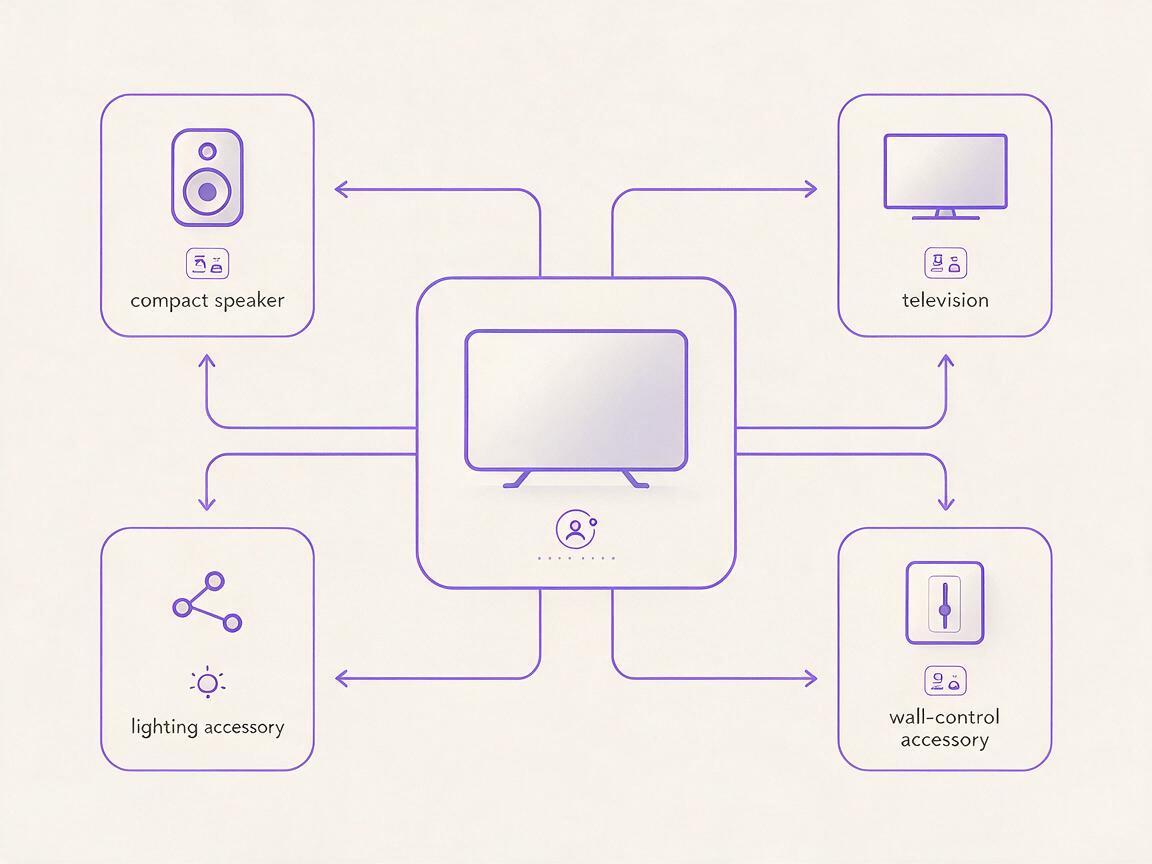
On October 11, 2026, Bloomberg reported that Apple’s smart-home strategy is centered on a display hub called HomeView. The reported plan also brings HomePod mini and Apple TV into the picture, while accessories from LG and Schneider extend the ecosystem beyond Apple’s own hardware.
Those are the key elements disclosed in the report: HomeView as the central display hub, familiar Apple products around it, and accessory support involving outside manufacturers. No additional HomeView specifications, price, release schedule, or detailed feature list were stated in the available report summary, so the important news is the structure of the strategy itself.
For content teams, that structure is more relevant than it may initially appear. Modern production increasingly depends on an ai assistant, specialized generation tools, review points, and reusable assets working together as one coordinated ai workflow.
HomeView Appears to Be an Ecosystem Play
The reported strategy places HomeView at the center, but it does not describe a smart-home plan built around the display alone. HomePod mini, Apple TV, and LG and Schneider accessories are all named as parts of the surrounding strategy.
That distinction matters. A central interface can provide a consistent place to interact with a system, while the wider ecosystem supplies the individual products and connections that make the system useful. Apple’s reported direction therefore points toward coordination: one central hub connected to several product categories.
| Reported component | Place in the strategy | Broader workflow lesson |
|---|---|---|
| HomeView | Central display hub | A clear control point can organize a wider system |
| HomePod mini | Named Apple ecosystem product | Existing tools can remain part of a new structure |
| Apple TV | Named Apple ecosystem product | Connected experiences do not have to begin from zero |
| LG and Schneider accessories | Named third-party accessories | External components can expand an ecosystem |
The table separates reported facts from their broader workflow implications. It does not establish unannounced HomeView capabilities. Instead, it highlights why the reported collection of products matters strategically.
Why the Hub Model Matters for AI Production
AI content production has a similar coordination problem. A campaign may involve script development, image generation, video creation, voice work, revisions, and final approval. Treating each output as a disconnected task often creates duplicated briefs and inconsistent decisions.
A hub-oriented approach keeps the creative intent in one place while allowing different tools to contribute. A team might preserve the campaign premise, audience, visual direction, required language, and approval status as shared context. Individual outputs can then be produced without repeatedly reconstructing that context.
The strategic value of a hub is not that every component becomes identical. It is that different components can contribute without fragmenting the overall experience.
This principle also helps teams think more carefully about ai automation. Automation is most useful when it moves approved material between clearly defined production activities. It becomes less dependable when an ai agent is allowed to reinterpret the campaign objective at every handoff.
A Shared Brief Can Function as the Creative Center
For an AI production team, the closest equivalent to a central display hub is often the approved brief. It should remain stable while scripts, visual concepts, clips, and audio assets evolve around it.
- Core message: the idea every asset must preserve.
- Audience: the intended viewer and relevant context.
- Visual direction: the approved setting, tone, and continuity rules.
- Output requirements: the formats needed for the campaign.
- Review status: what is exploratory, approved, or ready for publishing.
This approach prevents a tool change from becoming a complete restart. It also gives human reviewers a stable reference when deciding whether an image, scene, or voice treatment belongs in the same campaign.

One Interface Does Not Mean One Tool
Apple’s reported inclusion of HomePod mini, Apple TV, and accessories from LG and Schneider suggests an ecosystem containing multiple components. The parallel for AI creation is straightforward: a coherent experience does not require every production activity to use the same generation method.
Writers, editors, marketers, and filmmakers may need different capabilities at different moments. An ai image generator can support visual exploration, while an ai video generator can support motion-based outputs. The shared campaign brief and review framework keep those activities connected.
This is where a multi-model platform can reduce workflow friction. Rather than scattering creative context across unrelated accounts, teams can use MagicBoat as a common production environment and select the appropriate available capability for each asset. The emphasis is not on pretending that every model is interchangeable; it is on making model choice part of a controlled workflow.
Reliability Becomes Part of the Creative Decision
Model selection is often discussed in terms of output quality, but availability and continuity also matter. A strong result is less valuable if the surrounding production process cannot be repeated, reviewed, or transferred when requirements change.
A resilient ai video workflow therefore separates the durable parts of a project from the tool used for a particular output. Briefs, prompts, reference decisions, approved frames, and feedback should remain understandable even if a team chooses another model for a later revision.
This structure supports three practical goals:
- Creative direction remains consistent across different asset types.
- Teams can compare outputs without rewriting the entire brief.
- Human approval remains visible instead of disappearing inside ai automation.

What the Apple HomeView Report Signals
The HomeView report is notable because it frames Apple’s smart-home ambitions as a coordinated strategy. The central display hub is only one part of the picture; HomePod mini, Apple TV, and accessories from LG and Schneider are also specifically included.
For AI teams, the comparable opportunity is to build around a stable creative center. Models and generation tools can remain specialized, while the brief, asset history, and approval logic hold the project together.
MagicBoat applies that platform-oriented idea to AI content creation by giving teams one place to explore different production capabilities. To begin building a more connected creative process, try these models for free.
Final Checklist
- Keep one approved campaign brief as the source of creative direction.
- Assign specialized tools to clearly defined production activities.
- Preserve prompts, references, and review notes between model changes.
- Make human approval visible at important handoffs.
- Evaluate reliability and workflow continuity alongside output quality.
Keywords
apple homeview, apple smart home, homepod mini, apple tv, ai workflow, ai automation, ai assistant