Apple Intelligence Approved for China Beta, Built on Alibaba Qwen
Apple has secured regulatory approval to launch a beta version of Apple Intelligence in China, with the service built on Alibaba’s Qwen large language model and a rollout planned for later in October 2026. The initial beta includes live translation, writing tools, and photo cleanup features, with Siri AI not included in the first batch, marking a key milestone for Apple’s consumer AI strategy in one of its largest global markets.
Table of contents
Apple Intelligence Approved for China Beta Launch
Apple has received regulatory approval to launch a beta version of its Apple Intelligence service in China, according to a mid-October 2026 report from IT Times. The service will be built on Alibaba’s Qwen large language model, marking a significant partnership between the U.S. tech giant and one of China’s leading AI developers. A rollout of the beta is expected to begin later in October, bringing Apple’s first consumer AI features to users in one of its largest global markets.
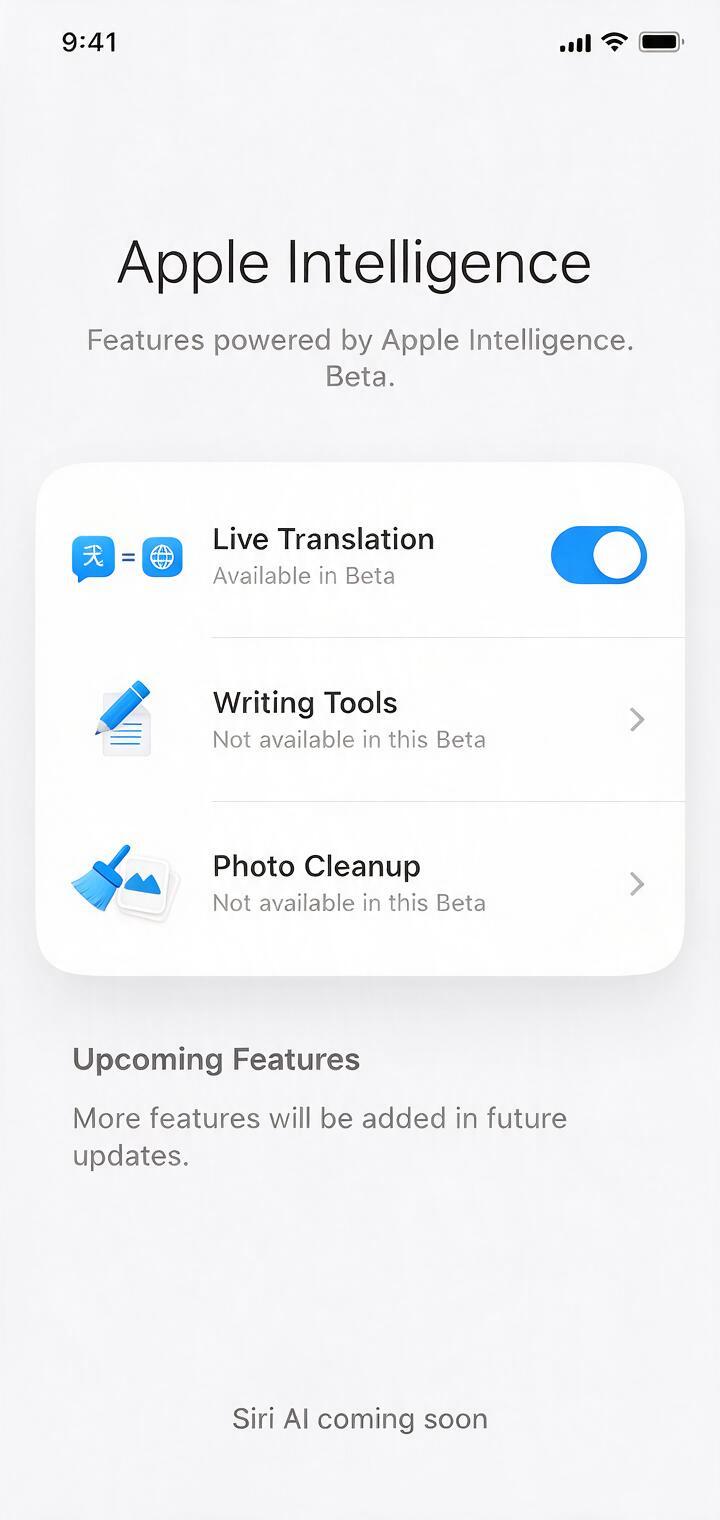
The initial beta launch will focus on three core feature sets: live translation, writing tools, and photo cleanup. Notably, Siri AI will not be included in the first batch of the beta, with no timeline provided for a wider rollout of Siri-specific AI features in the Chinese market. The use of a local LLM partner is widely seen as a necessary step for foreign tech firms to comply with China’s data security and content regulations, which require that sensitive user data be processed within the country.
Key Details of the Initial Beta Rollout
The Apple Intelligence beta’s feature lineup is tailored to common user needs while adhering to local regulatory requirements. Live translation will support real-time language conversion across multiple languages, a useful tool for both personal and professional use cases. Writing tools will offer grammar correction, style suggestions, and content drafting capabilities, similar to the features available in other markets. Photo cleanup will let users remove unwanted objects, adjust lighting, and enhance images directly through the Photos app using AI processing.
By building the service on Alibaba’s Qwen, Apple gains access to a model trained extensively on Chinese language data and compliant with local data residency rules. Qwen is one of the most widely used open-source LLMs in China, with support for a broad range of enterprise and consumer use cases. The partnership also sets a precedent for how foreign technology companies can launch AI services in the Chinese market by collaborating with local AI providers.
Why This Matters for the AI Industry
The approval of Apple Intelligence in China is a major development for the global ai industry, as it opens up a massive consumer market to Apple’s AI ecosystem and signals a clear path for foreign AI services to enter the country through local partnerships. China is already one of the world’s largest AI markets, with heavy investment in both model development and consumer-facing AI products.
The approval comes amid a surge in ai funding across China’s AI sector, with firms like DeepSeek reporting annualized revenue of roughly $1 billion and raising approximately $7.5 billion at a $74 billion valuation, according to recent reports. This investment growth aligns with broader global trends, as Goldman Sachs estimates that five major cloud giants will see their ai capital expenditure grow more than 50% to $1.2 trillion next year, underscoring the scale of investment pouring into AI infrastructure and product development.
The launch also intensifies competition in China’s consumer AI assistant market, which is currently dominated by domestic players including Alibaba’s Tongyi Qianwen, Baidu’s Ernie, and Tencent’s Hunyuan. Apple’s entry with a tightly integrated on-device and cloud AI service could shake up the market, particularly given Apple’s large installed base of iPhone and Mac users in China.
Implications for AI Content Creators
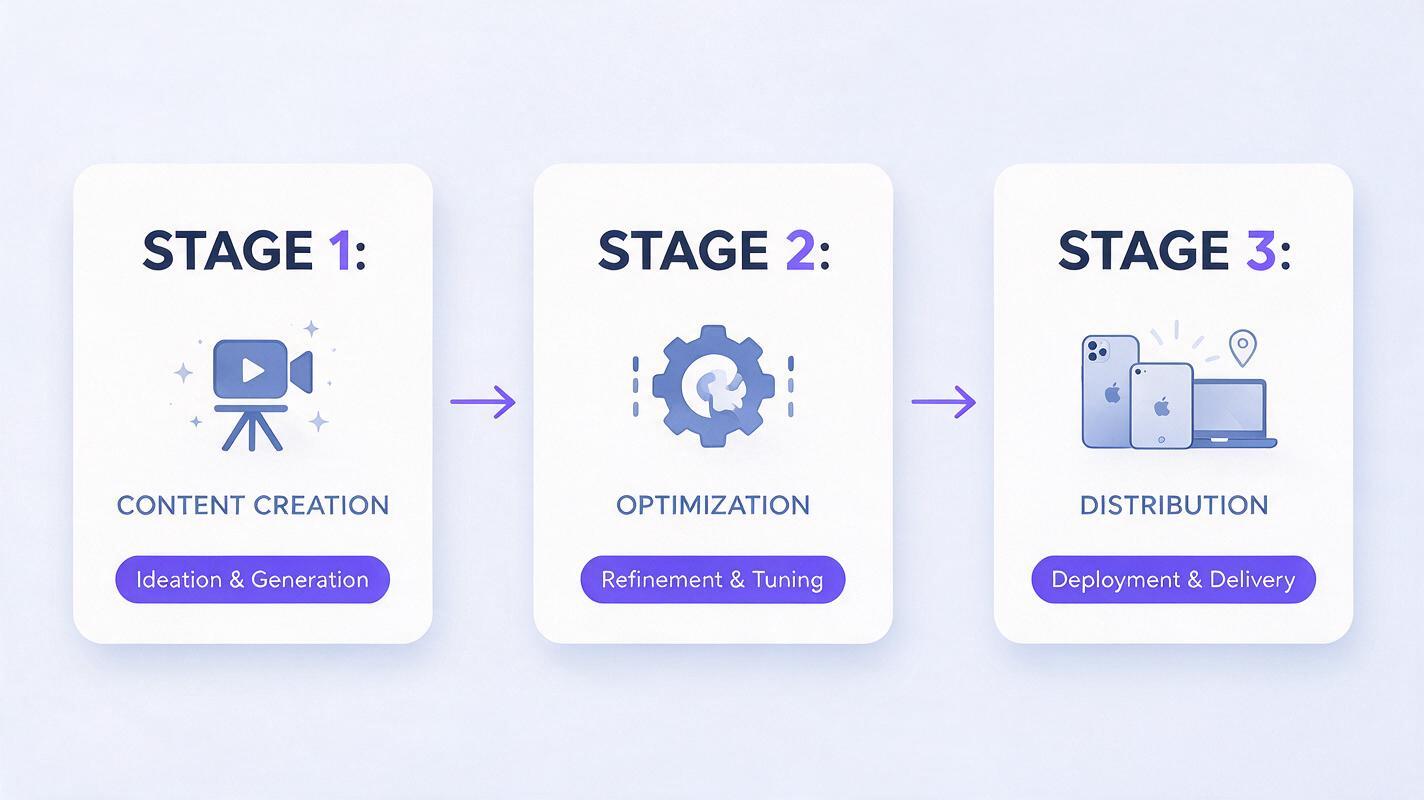
For content creators and content teams targeting Chinese audiences, the rollout of Apple Intelligence brings both new opportunities and important considerations. As AI assistants become a more common entry point for content consumption, creators will need to optimize their content for discovery and summarization by these tools, particularly for written and visual content that appears in Apple’s ecosystem.
Visual content creators, for example, can leverage an ai image generator to produce high-quality, optimized visuals that align with the photo processing and display capabilities of Apple devices. Similarly, short-form video creators can use an ai video generator to produce content tailored for mobile consumption, which will be increasingly surfaced through AI-driven recommendation and assistant features.
The rollout also highlights the importance of maintaining flexible, multi-model workflows for content production. As new AI features and platforms launch across different markets, creators who rely on a single vendor’s tools may face compatibility issues, feature gaps, or unexpected cost changes. A multi-model platform lets teams switch between models, test new tools, and manage production costs more effectively, regardless of which tech giants are launching new features in any given market.
For teams creating content for multiple global markets, this kind of flexibility is even more critical. Local AI regulations, model availability, and feature sets can vary widely between regions, and a platform that supports a broad range of models and use cases makes it easier to adapt content strategies to local conditions without rebuilding entire workflows.
Key Takeaways
- Apple Intelligence has received regulatory approval for a beta launch in China, built on Alibaba’s Qwen large language model, with a rollout expected later in October 2026.
- The initial beta includes live translation, writing tools, and photo cleanup features, with Siri AI not available in the first batch of the release.
- The launch signals growing competition in China’s consumer AI market and sets a precedent for foreign tech firms partnering with local AI providers to meet regulatory requirements.
- Content creators targeting Chinese audiences should optimize their content for AI-assisted consumption and use multi-model platforms to maintain flexibility and control over production costs.
- Interested in testing a range of AI creative tools for your content workflow? try these models for free on MagicBoat.
Keywords
apple intelligence, alibaba qwen, deepseek, ai industry, ai funding, ai capital expenditure, ai image generator