Apple Cuts iPhone Pro Orders 15%+ Amid AI-Driven Memory Chip Shortage
Apple has reportedly cut new iPhone Pro orders by at least 15% amid an AI-driven global memory chip shortage pushing component prices higher. The shortage, fueled by cloud AI server and consumer device demand, has direct implications for content creators relying on AI tools and mobile production workflows.

Table of contents
Apple’s iPhone Pro Order Cuts and the AI Memory Chip Shortage
A new report from Fortune claims Apple has slashed new iPhone Pro orders by at least 15%, a move driven in large part by a global AI-driven memory chip shortage that is pushing component prices steadily higher. The production adjustment marks one of the most significant shifts to Apple’s flagship smartphone line in recent years, as the tech industry grapples with unprecedented demand for AI-related hardware.
Fortune’s report notes that Apple’s new iPhone Pro order cuts amount to at least 15% of previously planned production, with AI-fueled memory chip supply constraints cited as a core driver of the decision.
Unlike past component shortages tied to manufacturing disruptions or logistics delays, this shortage is rooted in structural demand shifts across the tech industry. The iPhone Pro line, Apple’s premium offering, has increasingly focused on on-device AI features that require fast, high-capacity memory chips to run smoothly — features that have become a key selling point for flagship devices. As Apple and other device makers race to add more AI capabilities to their products, competition for limited memory chip supply has intensified, driving up costs and constraining production volumes.
For content creators who rely on both mobile production tools and cloud-based AI services, the shortage sends a clear signal: AI-related hardware costs are rising, and workflow flexibility will be key to managing expenses and maintaining output in the coming months.
Why AI Is Driving Memory Chip Demand to New Highs
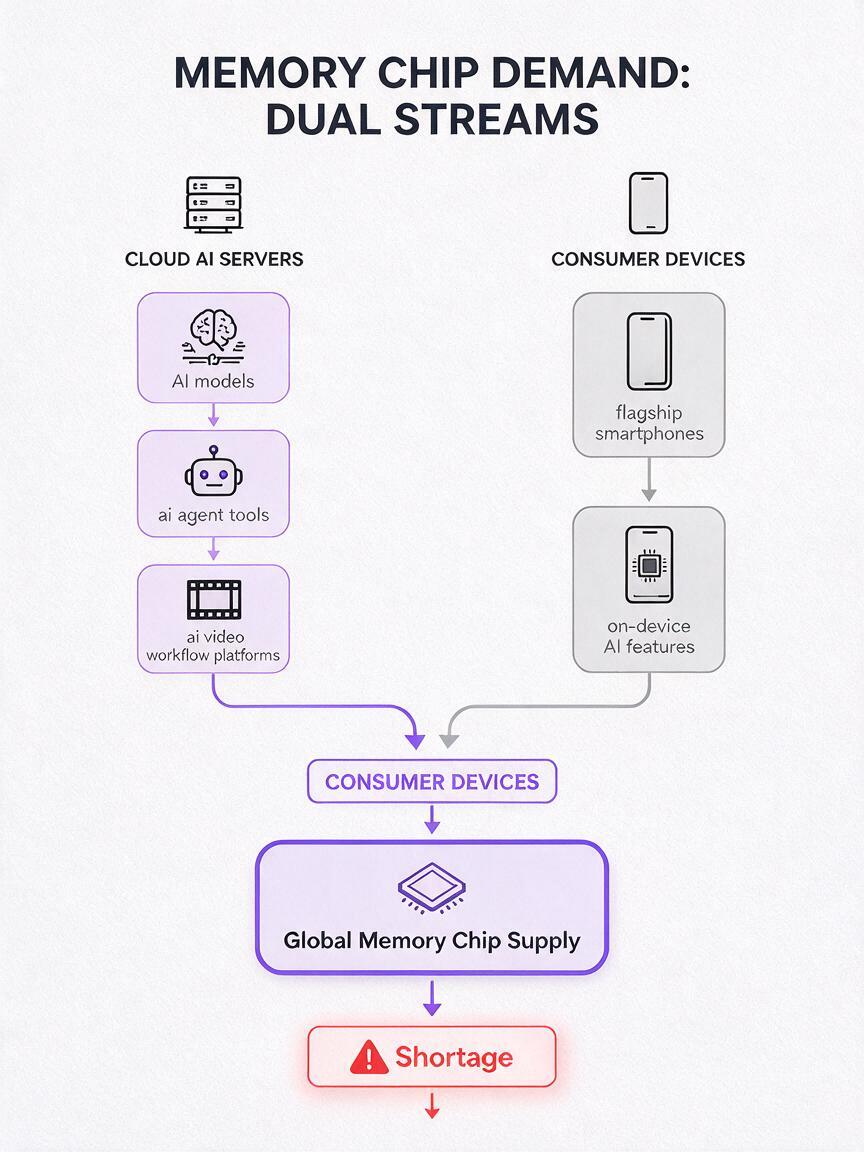
The AI boom has reshaped the global semiconductor market, with memory chips emerging as one of the most constrained components. AI servers, which power everything from large language models to ai video workflow tools, require far more high-bandwidth memory than traditional cloud servers, as they process massive datasets and run complex model inferences. Even popular AI models and tools like Claude, which power many ai agent workflows, rely on memory-intensive cloud infrastructure that is affected by the shortage.
On the consumer side, flagship devices like the iPhone Pro are packing more on-device AI features, from advanced photo and video editing to ai assistant functionality, which demands larger, faster memory chips to run without constant cloud connectivity. This dual demand from cloud infrastructure and consumer devices has outpaced memory chip manufacturers’ ability to ramp up production, leading to tighter supply and higher prices across the board.
The ripple effects extend far beyond hardware makers. Cloud service providers are facing higher costs for AI-capable servers, which can translate to higher pricing for AI tools and services that creators use daily. Even ai automation tools, which run on cloud infrastructure, are affected by the rising cost of memory and compute, as providers pass along a portion of their increased expenses to customers.
What This Means for Content Creators Using AI Tools
For creators who have integrated AI into their production pipelines, the memory chip shortage has several immediate and long-term implications that span both cloud-based tools and on-device production workflows.
Higher Costs for Cloud AI Services
As cloud providers pay more for AI server hardware, those costs are likely to be passed down to users of AI tools over time. Creators who use ai video generator platforms, AI image tools, or AI writing assistants may see subscription price increases, usage-based rate hikes, or reduced free tier allowances in the coming quarters. Tools that process large video or image files, which are especially memory-intensive, are most likely to see cost shifts as providers adjust to higher infrastructure expenses.
Constrained On-Device AI Performance and Upgrades
Creators who use mobile devices like the iPhone Pro for on-the-go content creation and editing may face two key challenges: higher prices for new flagship devices, and slower rollouts of advanced on-device AI features that require more memory. Upgrading to the latest model may also take longer, as production constraints lead to longer wait times for premium configurations with larger storage and memory capacities.
Unpredictable AI Workflow Reliability
For creators running ai automation pipelines that depend on cloud AI services, capacity constraints tied to hardware shortages could lead to slower inference times or occasional service limits during peak usage periods. This can disrupt tight production schedules, especially for time-sensitive content like social media videos, marketing campaigns, or client deliverables with hard deadlines.

Building Resilient AI Workflows Amid Supply Uncertainty
The best way for creators to mitigate the impact of memory chip shortages and rising AI costs is to build flexible, multi-tool workflows that don’t rely on a single provider or hardware ecosystem. Diversifying your AI tool stack helps you avoid being locked into price increases or service disruptions from any one platform.
Using a unified AI creation platform like MagicBoat gives creators access to a wide range of AI tools, from ai video generator and ai image generator tools to AI script writing and voiceover, all under one account. This means if one tool sees price increases or performance dips, creators can easily switch to alternative models or tools without disrupting their overall ai workflow.
MagicBoat’s platform is designed to adapt to changing market conditions, with regular updates to add new models and tools as they become available. This eliminates the need for creators to manage multiple subscriptions or learn new tools every time a service changes its pricing or features, saving both time and money over the long term.
Whether you’re producing short-form social content, marketing videos, or personal creative projects, having a flexible, all-in-one AI creation stack helps you stay productive and keep costs predictable, even when global supply chains are volatile. try these models for free and explore the full range of AI tools available on MagicBoat.
Key Takeaways
- Apple has reportedly cut new iPhone Pro orders by at least 15% amid an AI-driven global memory chip shortage pushing component prices higher.
- The shortage is fueled by dual demand from cloud AI servers (which power most AI tools) and consumer devices with on-device AI features like the iPhone Pro.
- Creators may face higher costs for AI services, slower on-device AI feature rollouts, and occasional workflow disruptions as the shortage persists.
- Building a flexible, multi-tool AI workflow with a unified platform helps mitigate cost and reliability risks for long-term production stability.
Keywords
ai memory chip shortage, iphone pro order cuts, ai workflow, ai video workflow, ai automation, ai agent, apple ai