Apple M5 Pro Benchmark Surfaces on Geekbench Ahead of Late-October Event
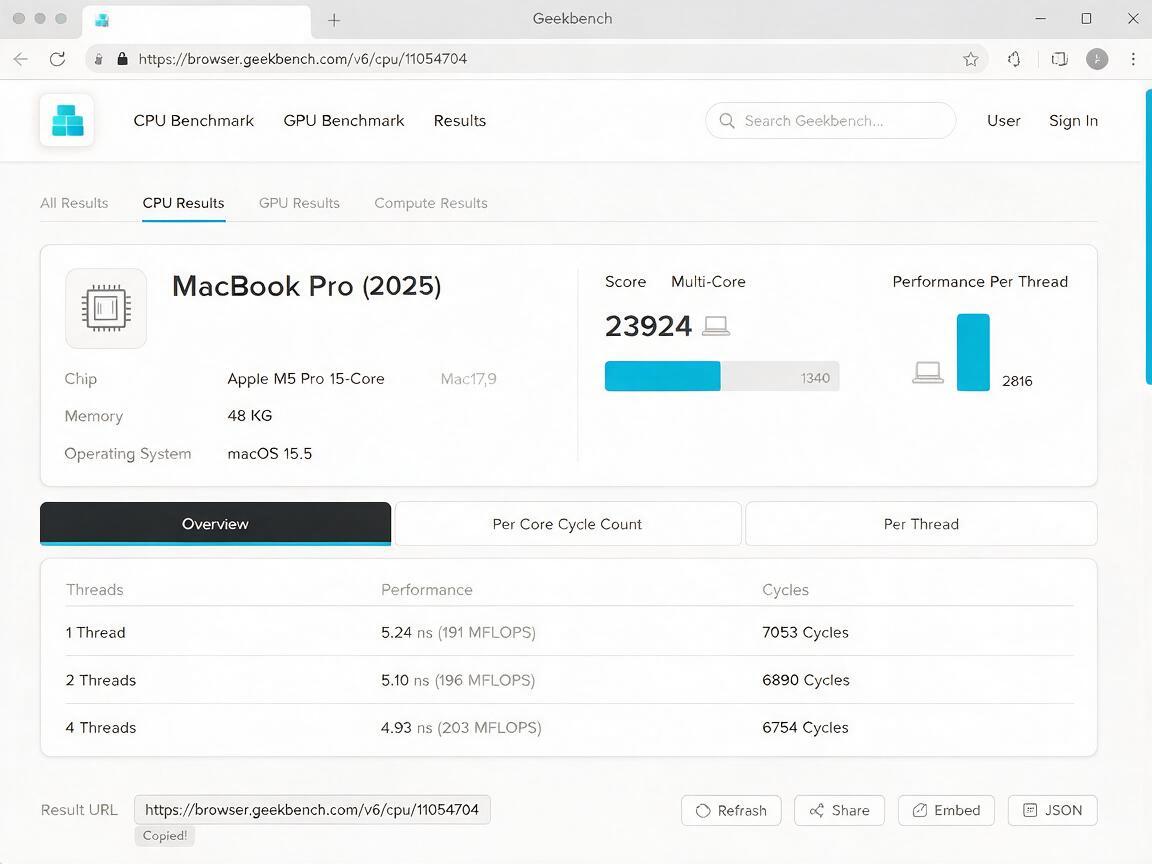
A new Geekbench listing has revealed preliminary specs for Apple's upcoming M5 Pro chip, spotted in a 2026 14-inch MacBook Pro (Mac17,9) with a 15-core CPU and 48GB of RAM. The leak teases Apple's rumored late-October hardware event, where new Mac models and iPads are expected to launch. For AI content creators, the M5 Pro signals improved on-device AI performance, but cloud-based multi-model platforms remain a more flexible, cost-effective option for heavy production workloads.
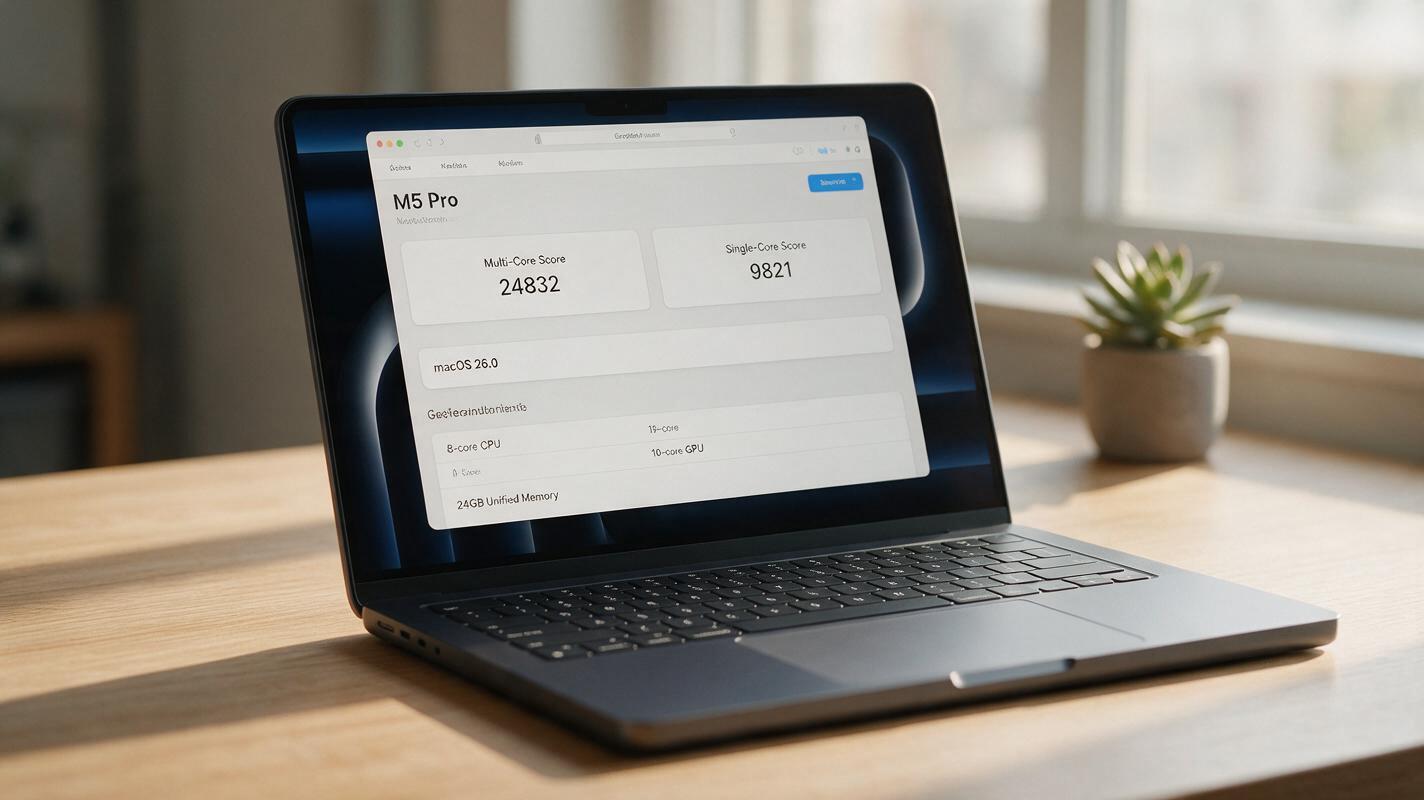
Table of contents
The Apple M5 Pro Geekbench Leak: What We Know
On October 20, 2026, a preliminary benchmark listing for Apple’s upcoming M5 Pro chip surfaced on Geekbench, offering an early look at the specs of the next-generation 14-inch MacBook Pro. The listing, attributed to a device identified as Mac17,9 (the expected model identifier for the 2026 14-inch MacBook Pro), shows a 15-core CPU and 48GB of RAM, marking a notable update to Apple’s professional laptop lineup. The leak arrives just weeks ahead of Apple’s rumored late-October hardware event, where the company is expected to unveil a new lineup of Macs and iPads.
While full benchmark scores were not detailed in the initial listing, the core count and RAM configuration align with broader industry expectations for Apple’s M-series roadmap, which has steadily increased compute resources with each generation to support more demanding workloads, including on-device AI. The timing of the Geekbench appearance is consistent with Apple’s typical pre-launch testing pattern, where prototype devices appear on benchmark platforms as engineers finalize software and hardware optimizations ahead of an official announcement.
Context for Apple’s Late-October Hardware Event
The M5 Pro leak teases what is expected to be Apple’s final major product launch event of 2026, reportedly scheduled for October 27–28 according to Bloomberg’s Mark Gurman. The event is rumored to feature four new products: the iPad mini 8 and three new Mac models, including updated MacBook Pro variants powered by the M5 Pro chip. Separate reports from MacDailyNews also suggest Apple is preparing its first touch-screen MacBook as part of a second major October launch, alongside a new iPad model.
This flurry of hardware activity follows Apple’s earlier October “Welcome Home” event, which focused on smart-home products including the $299 HomeView hub with Siri AI, an updated HomePod mini, and a new Apple TV 4K. The shift back to Mac and iPad hardware underscores Apple’s strategy of updating its core computing lineup annually, with a growing emphasis on AI capabilities baked into both hardware and software.

What This Means for AI Content Creators
For content creators and content teams that rely on AI tools, the M5 Pro’s rumored specs signal continued improvements in on-device AI performance, which could speed up lightweight tasks like photo editing, basic text generation, and local model inference. A 15-core CPU paired with 48GB of RAM would support running smaller AI models locally, reducing reliance on cloud connectivity for quick, low-stakes tasks.
However, for heavy AI production workloads—such as generating high-resolution assets via ai image generator or rendering full-length clips via ai video generator—on-device hardware still faces significant limitations. Even with top-tier consumer chips, generating high-fidelity AI video, running multiple large models simultaneously, or processing large batches of assets can take hours on local hardware, and upgrading to the latest M5 Pro MacBook represents a substantial upfront cost that many freelance creators and small teams cannot justify.
This is where the flexibility of cloud-based multi-model platforms becomes particularly valuable. Instead of being tied to the capabilities of a single device, creators can access a wide range of state-of-the-art AI models on demand, paying only for the compute they use. This model eliminates the need for costly hardware upgrades every 1–2 years, and ensures consistent performance regardless of the local device a creator is using.

Why Multi-Model Cloud Platforms Outpace Single-Device Workflows
The gap between on-device AI and cloud-based AI is only likely to widen as AI models grow more capable and require more compute power. While Apple’s M-series chips are impressive for consumer hardware, they cannot match the scale of cloud infrastructure that powers the latest generative AI models. For example, generating a minute-long high-resolution AI video can require dozens of gigabytes of VRAM and hours of compute time—resources that are simply not available on even the highest-end consumer laptops.
This vertical integration trend is playing out across the ai industry, with both chip designers and cloud providers investing heavily in custom hardware to support growing AI demand. Analysts at Goldman Sachs estimate that ai capital expenditure from the five largest cloud giants will grow more than 50% next year to reach $1.2 trillion, underscoring the massive scale of investment required to power state-of-the-art AI models. While consumer chips like the M5 Pro will continue to improve, they will remain a fraction of the compute power available in cloud data centers.
Platforms like MagicBoat solve this problem by giving creators access to a curated suite of AI tools, including ai image generator and ai video generator capabilities, all through a single account. Instead of managing multiple subscriptions, downloading large model files, or worrying about local hardware limitations, creators can focus on their work and iterate quickly. This is especially beneficial for teams that collaborate across multiple devices, or for creators who need to switch between different model types for different parts of a project.
Another key advantage is cost predictability, which makes it easier to manage ai video cost and other AI production expenses. Upgrading to a new high-end MacBook represents a large upfront investment that takes months or even years to recoup for many creators. In contrast, cloud-based AI platforms operate on a pay-as-you-go model, letting creators scale their spending up or down based on their current workload, rather than paying for unused compute capacity built into a local device.
Key Takeaways
- A Geekbench listing for Apple’s M5 Pro chip has surfaced, showing a 15-core CPU and 48GB RAM in a 2026 14-inch MacBook Pro prototype (Mac17,9).
- The leak teases Apple’s rumored late-October hardware event, where new Mac models and iPads are expected to launch.
- On-device AI performance will continue to improve with the M5 Pro, but heavy production workloads still rely on cloud infrastructure for speed and scale.
- Cloud-based multi-model platforms offer more flexibility, lower upfront costs, and access to more powerful models than single-device workflows.
- Creators can try these models for free on MagicBoat to compare performance and find the best tools for their workflow.
Keywords
apple m5 pro, geekbench, macbook pro 2026, ai industry, ai capital expenditure, ai video cost, ai image generator