Apple M5 Pro Benchmark Leaks on Geekbench Ahead of Late-October Event
A newly surfaced Geekbench listing reveals a purported Apple M5 Pro configuration for the 14-inch MacBook Pro 2026 (Mac17,9) with a 15-core CPU and 48GB of RAM, teeing up Apple’s late-October 2026 hardware event. The leak offers early insight into the next-generation Apple Silicon’s core and memory specs, which carry significant implications for creators running local AI workflows and resource-intensive content production tools.
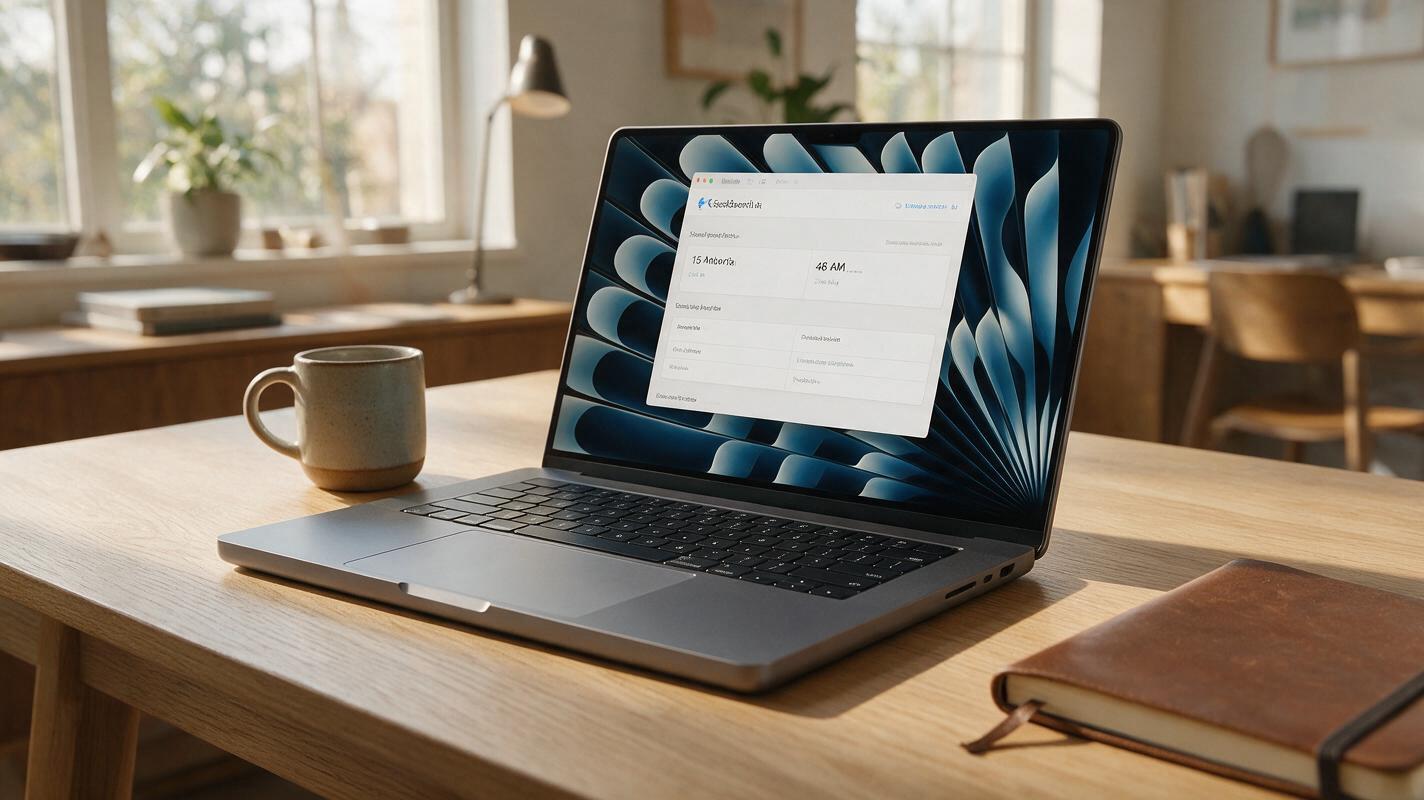
Table of contents
What the Geekbench Leak Reveals About the Apple M5 Pro
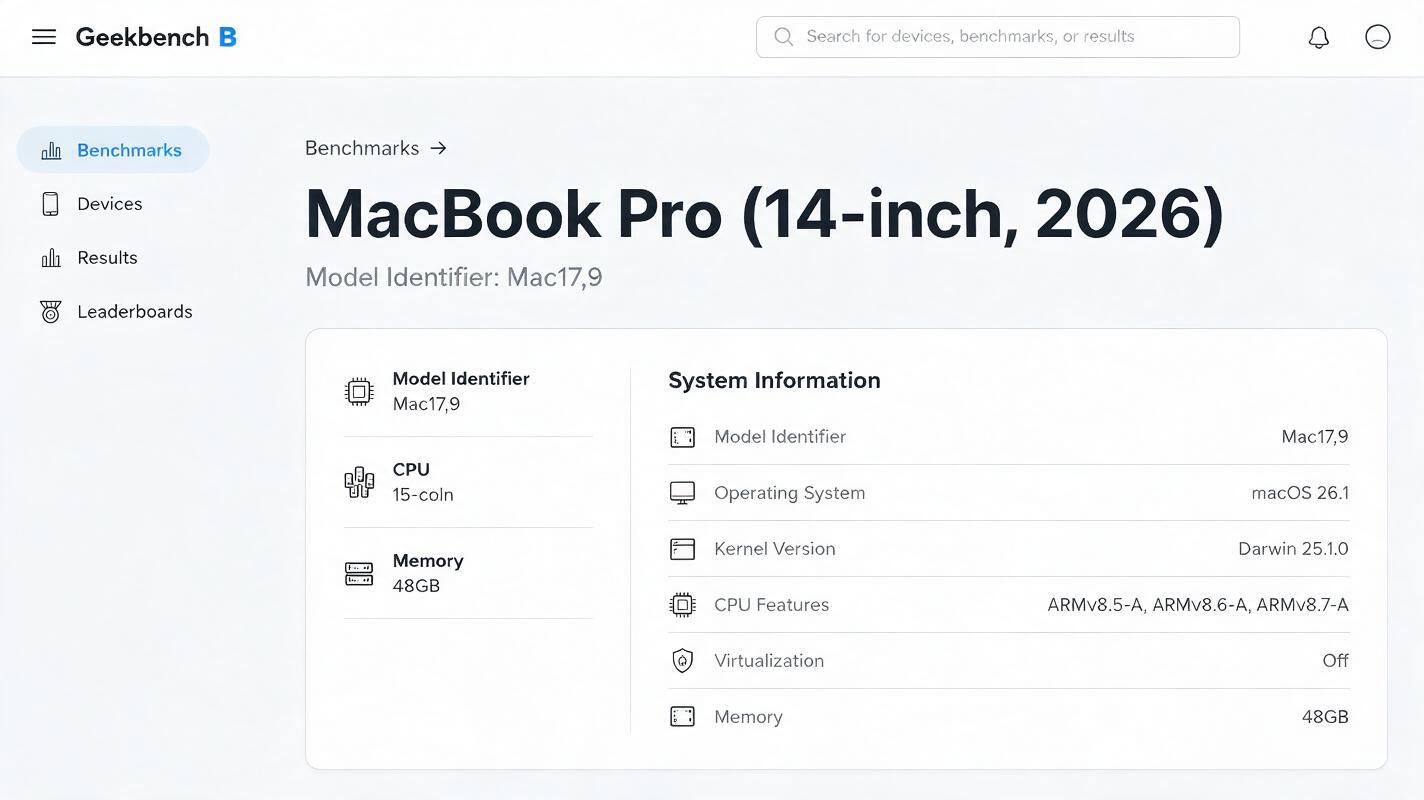
A newly surfaced Geekbench listing is offering an early glimpse at Apple’s upcoming M5 Pro chip, teeing up the company’s late-October 2026 hardware event. The listing corresponds to a 14-inch MacBook Pro 2026 with the model identifier Mac17,9, as documented in the public Geekbench database entry.
According to the benchmark listing, the test unit is configured with a 15-core CPU and 48GB of RAM — a high-end configuration for the 14-inch MacBook Pro form factor. Geekbench listings for unannounced Apple devices frequently surface in the weeks leading up to official product announcements, as pre-production units are tested by developers, supply chain partners, and regulatory bodies. The listing does not include publicly available details about GPU core count, neural engine specifications, or raw performance scores at this time.
The timing of the leak aligns with widespread expectations that Apple will hold its final 2026 product event in late October, with new Mac models expected to be among the announcements. The 14-inch MacBook Pro is one of Apple’s most popular devices for creative professionals, so any updates to its chip configuration carry significant weight for content creators working with AI-powered tools.
Why RAM and Core Count Matter for AI Content Creators
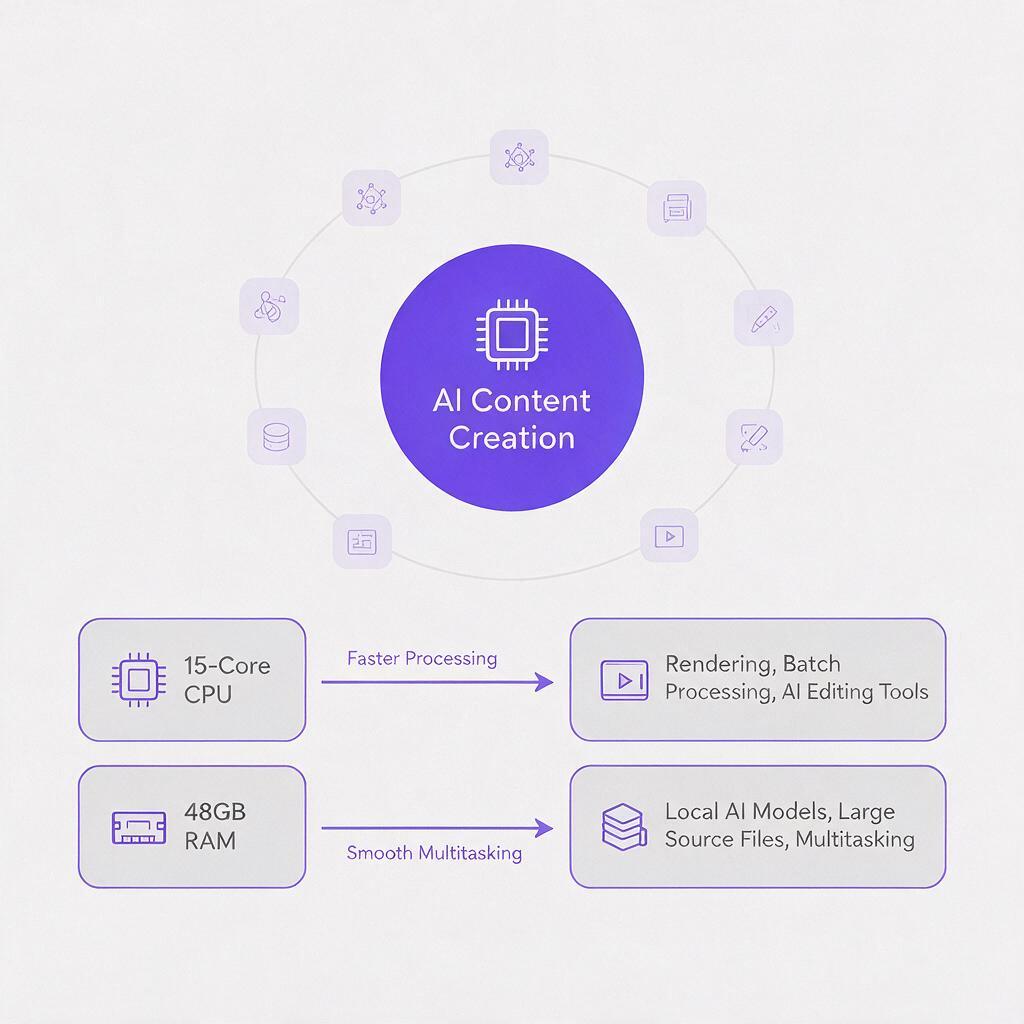
For creators building AI-assisted content pipelines, two hardware specs have the biggest impact on workflow speed and flexibility: CPU core count and system RAM. Both directly affect how well a machine can handle the resource demands of AI tools, along with traditional content creation software like video editors, graphic design suites, and digital audio workstations.
A higher CPU core count enables faster parallel processing, which translates to quicker rendering times for video and 3D projects, smoother batch processing of image assets, and more responsive performance when running multiple AI tools at once. For creators using AI-powered editing features like object removal, scene detection, and automatic transcription, more cores mean less time waiting for tools to process and more time focused on creative work.
RAM capacity is even more critical for creators working with local AI models. Larger AI models require more memory to run effectively — a medium-sized language model may need 16GB of RAM on its own, while a high-quality image generation model can require 32GB or more. With 48GB of RAM, creators can run larger AI models locally, work with higher-resolution source files, and keep multiple resource-heavy applications open simultaneously without experiencing slowdowns or crashes.
Local AI processing also offers privacy benefits for creators working on sensitive projects, such as unreleased marketing campaigns, proprietary character designs, or confidential client work. Running models on a local machine means project assets never leave the device, eliminating the risk of data leaks or unauthorized access during cloud processing.
The Case for Hybrid Local + Cloud AI Workflows
While powerful local hardware like the purported M5 Pro 14-inch MacBook Pro offers clear benefits for on-the-go work and privacy-sensitive projects, cloud-based AI platforms remain an essential complement for most creator workflows. Even the most high-end consumer laptops have physical limits to their compute power and memory, and upgrading hardware requires a significant upfront investment that can quickly become outdated as AI models grow larger and more demanding.
Cloud platforms eliminate these constraints by giving creators on-demand access to the latest AI models and scalable compute power, no hardware upgrade required. An ai video generator running on cloud infrastructure can handle 4K video generation, multi-scene projects, and batch rendering far faster than most consumer laptops, while an ai image generator can produce dozens of high-resolution assets in the time it takes a local model to generate just one or two.
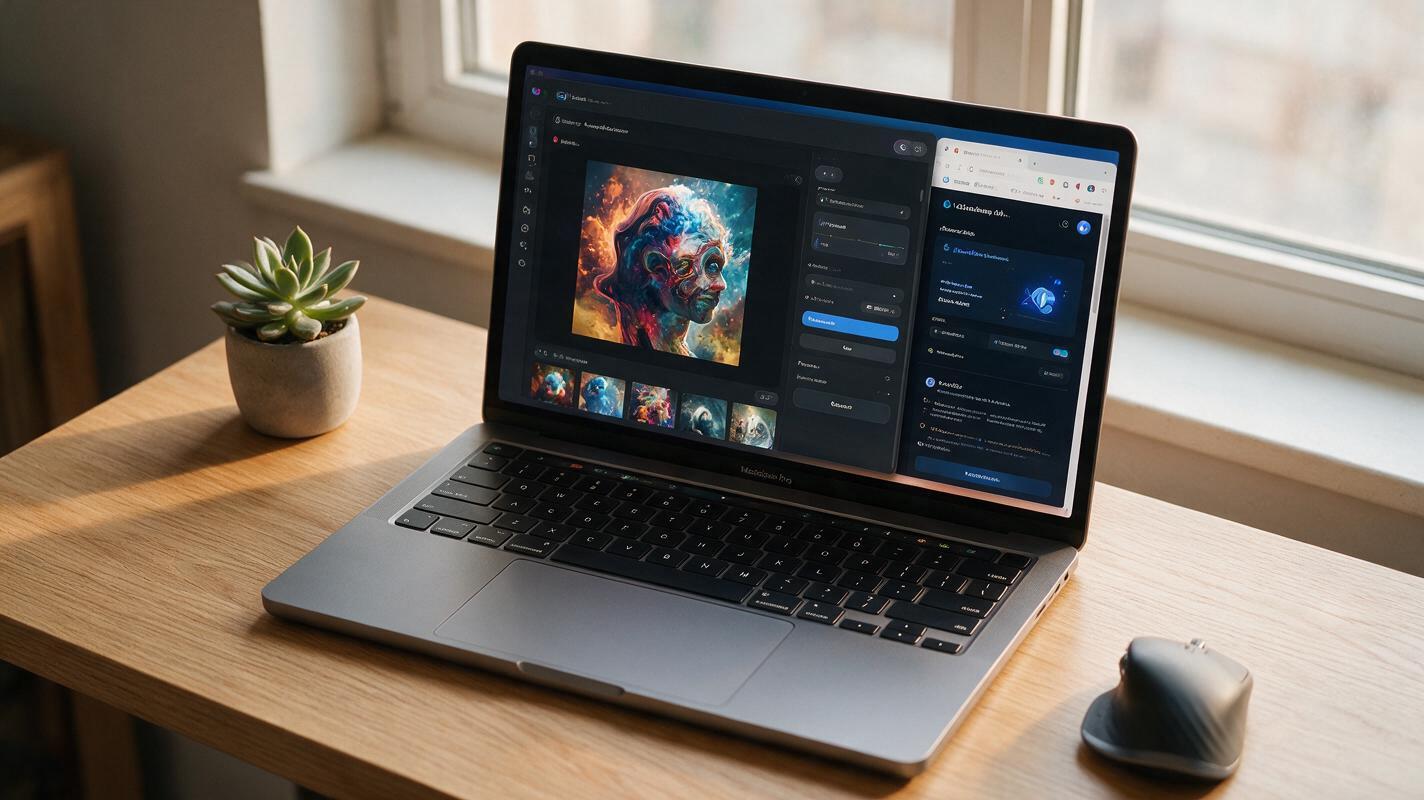
Hybrid workflows that combine local processing with cloud-based tools give creators the best of both worlds. For example, a creator might use their local MacBook to draft a script with a small on-device language model, generate quick concept art drafts with a local image model, then upload their assets to a cloud platform to run higher-quality generation, full video rendering, and batch processing that would take hours on a laptop. This approach balances speed, privacy, and scalability, while also future-proofing workflows against hardware obsolescence.
For creators looking to build a flexible, hybrid AI workflow, MagicBoat offers a single browser-based platform with access to a full suite of AI content creation tools, from text-to-image generation to full AI film production. The platform works seamlessly on any device with an internet connection, including the latest MacBooks, so creators can start a project on their local machine, pick up where they left off on the cloud, and export final assets without being tied to a single piece of hardware.
Creators can try these models for free to see how cloud-based AI tools can complement their local hardware setup and streamline their content production pipeline.
Key Takeaways
- A Geekbench listing for a 14-inch MacBook Pro 2026 (Mac17,9) has surfaced, revealing a 15-core CPU and 48GB of RAM in the purported M5 Pro test configuration.
- The leak tees up Apple’s upcoming late-October 2026 hardware event, where new Mac models are expected to be officially announced.
- Higher CPU core counts and increased RAM benefit AI content creators by enabling faster local processing, support for larger on-device AI models, and smoother multitasking across creative tools.
- Hybrid workflows that combine local hardware with cloud-based AI platforms offer the most flexibility, scalability, and future-proofing for content creators of all sizes.
Keywords
apple m5 pro benchmark, geekbench, macbook pro 2026, apple silicon, ai workflow, local ai, apple october 2026 event