Apple Reportedly Plans First Touch-Screen MacBook and New iPad
Apple is reportedly preparing a second major launch later in October 2026 featuring its first touch-screen MacBook and a new iPad. The report raises important questions about how touch input could reshape creative production across Apple’s laptop and tablet categories, although product specifications and launch details remain unconfirmed.
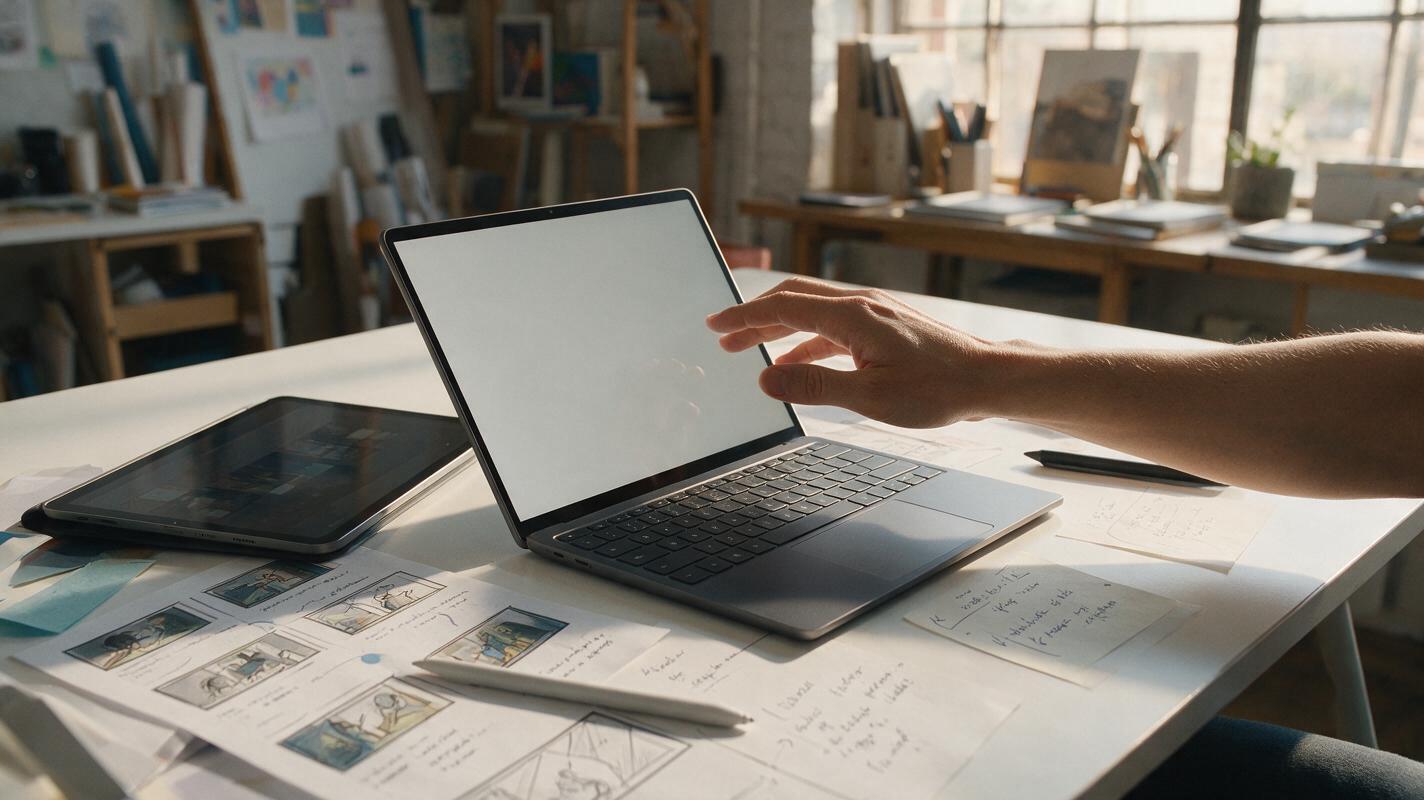
Table of contents
Apple’s Reported Second Major Launch Puts Touch at the Center
Apple is reportedly preparing a second major product launch for later in October 2026, with its first touch-screen MacBook and a new iPad expected to headline the announcement. The report surfaced on October 16 and describes a potentially significant expansion of touch input into Apple’s laptop category.
The central news is not simply that another MacBook may be approaching. It is that the reported machine would be Apple’s first touch-screen MacBook, bringing an input method already associated with the iPad into the company’s laptop lineup. A new iPad is also reportedly part of the same launch, placing the two product categories side by side at a moment when their interaction models could become more closely aligned.
The available report does not identify the MacBook’s exact model, display size, processor, price or release date. It also does not specify which iPad will appear. The confirmed scope of the report is narrower: Apple is said to be preparing a second major launch later in October, and the expected hardware includes a first touch-screen MacBook plus a new iPad.
For creative professionals, that possibility matters because touch input can affect how visual material is reviewed, arranged and approved. It could also influence how teams think about moving an AI workflow between laptop and tablet environments, even though Apple has not confirmed the reported products or their creative capabilities.
Why a Touch-Screen MacBook Would Be a Notable Apple Shift
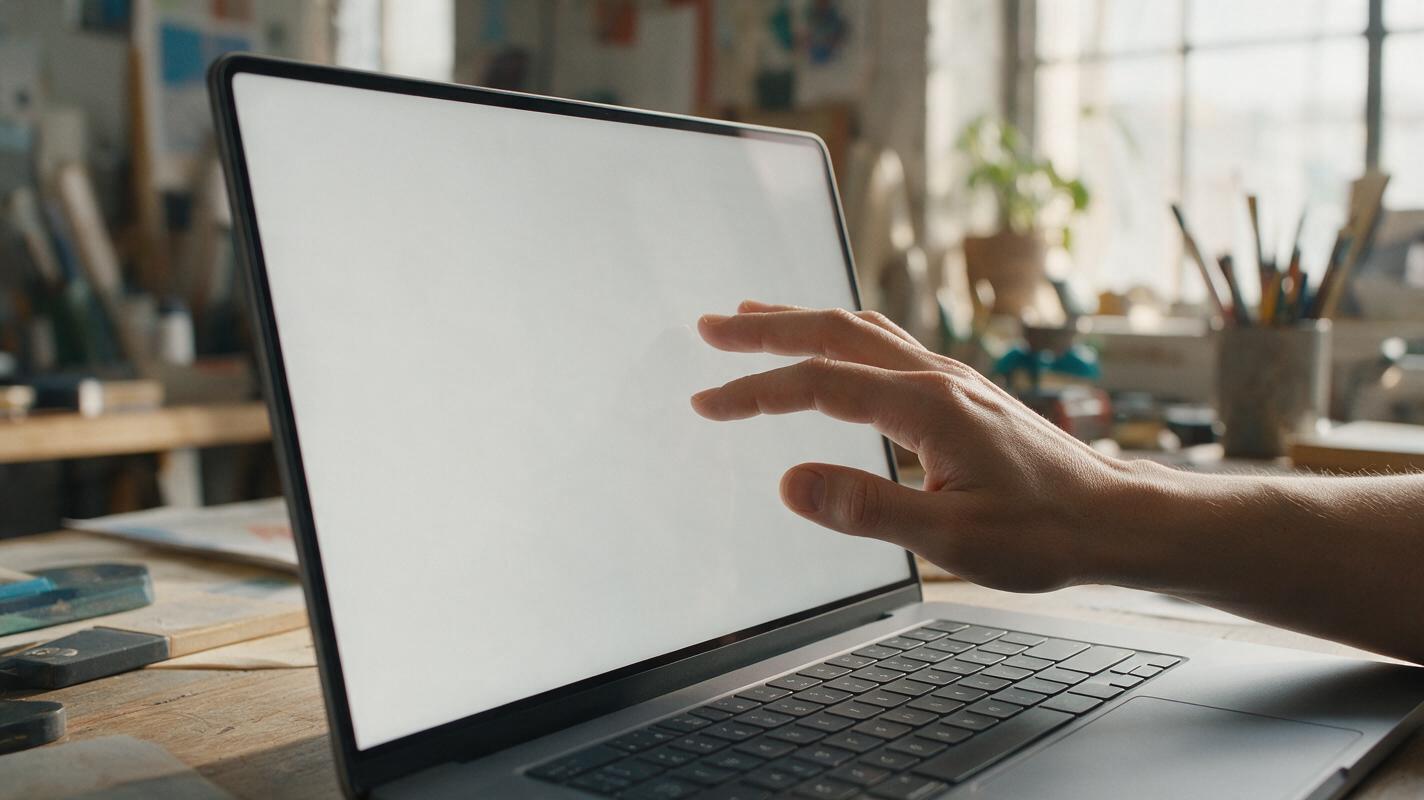
The MacBook and iPad have traditionally represented distinct interaction patterns. A laptop is organized around a keyboard and trackpad, while a tablet places direct screen interaction at the center. The reported launch would make that boundary more important to watch because Apple would be introducing touch to the MacBook category for the first time.
That does not establish what the machine will look like or which applications will support touch. It does, however, create a clear editorial question: whether the reported product is intended to supplement familiar laptop controls or signal a broader convergence between MacBook and iPad working styles.
The most important distinction is between what has been reported and what remains unknown. The report identifies a first touch-screen MacBook and a new iPad, but it does not provide technical specifications or confirmed workflow features.
This distinction is especially useful in fast-moving launch coverage. Predictions about stylus support, convertible hardware, operating-system changes or application redesigns would go beyond the available information. Responsible coverage can explain why direct screen input is significant without presenting speculation as product fact.
The New iPad Makes This an Ecosystem Story
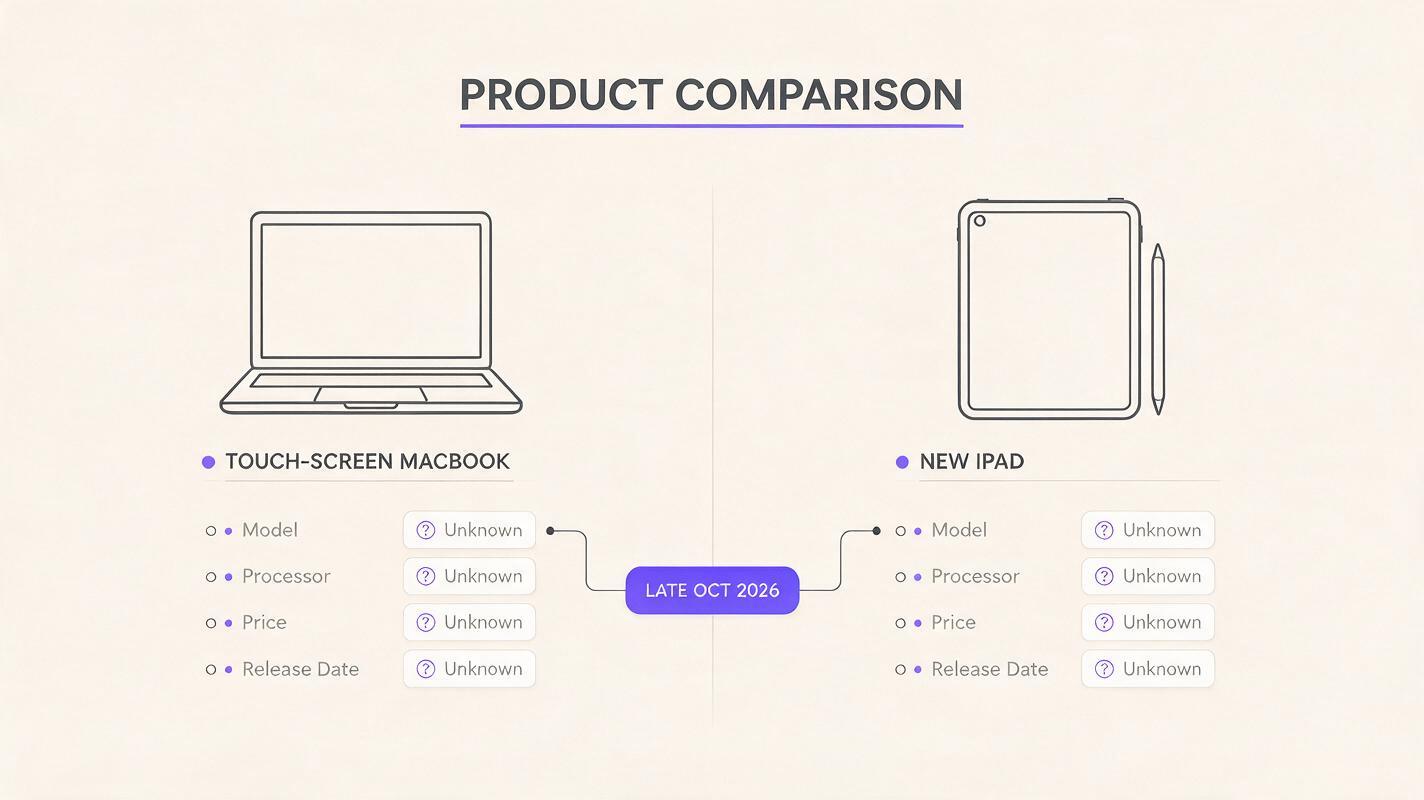
The inclusion of a new iPad turns the report into more than a single-device story. Apple is reportedly placing a touch-screen laptop and a tablet within the same late-October launch window. That pairing naturally invites comparison, but the lack of model and specification details means the comparison should remain focused on product roles rather than assumed performance.
| Reported product | Known from the report | Still unknown |
|---|---|---|
| Touch-screen MacBook | Described as Apple’s first MacBook with a touch screen | Model, size, processor, price and availability |
| New iPad | Expected alongside the MacBook in the reported launch | Model, specifications, price and availability |
| Launch timing | Reported for later in October 2026 | Exact announcement and release dates |
For editors and production teams, this framing supports accurate launch-day coverage. A reported product can be introduced through its confirmed category and timing, while later announcements can fill in processor, display, software and pricing information. This keeps the core article useful without attaching unsupported details to an unreleased device.
What the Report Means for AI Content Production
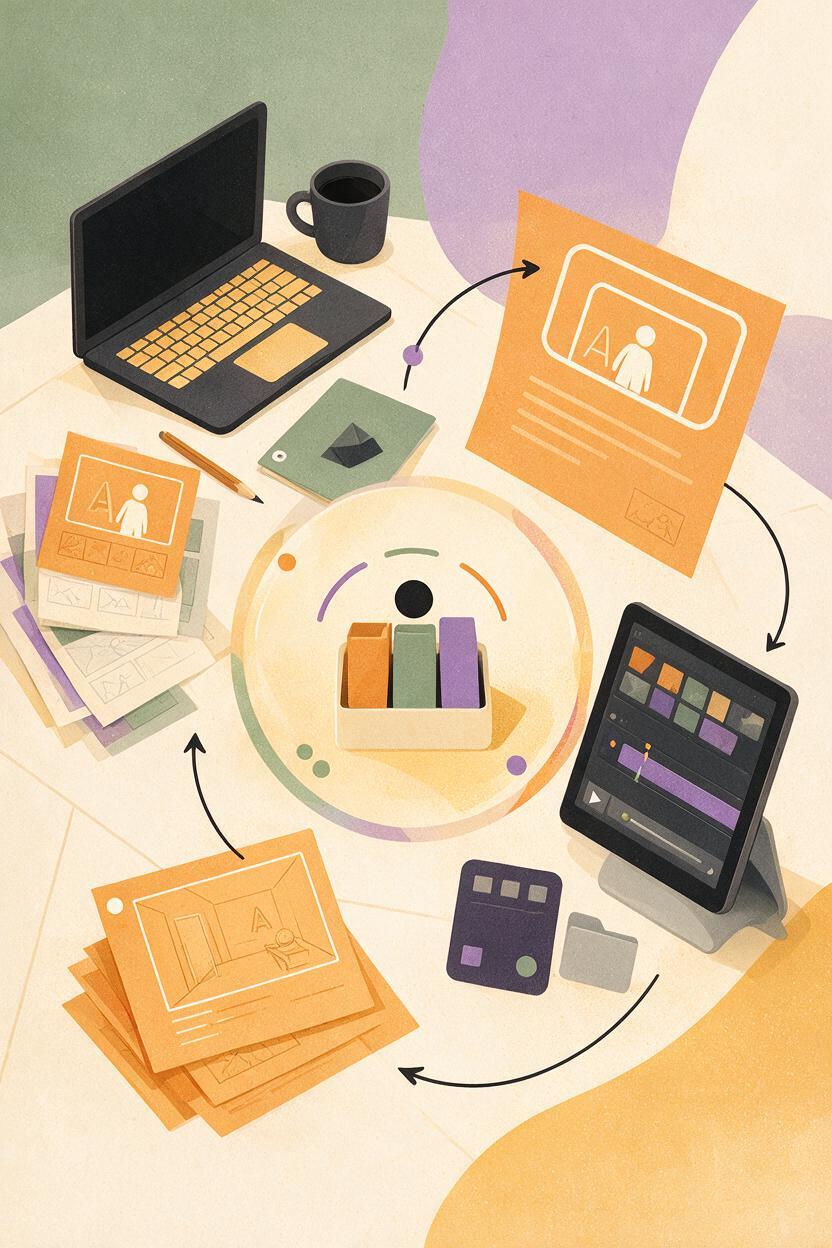
AI-assisted production increasingly combines writing, image development, storyboarding, video generation and review. Hardware affects where those activities happen, but the underlying production plan should remain portable. A team may draft on a laptop, review visual frames on a tablet and approve a final sequence from another device.
A touch-screen MacBook could offer another direct-input surface for these activities, but its practical value will depend on details Apple has not yet announced. Rather than assuming a particular capability, creative teams can prepare by separating their assets from any single device: scripts, prompts, references, shot descriptions and approved outputs should remain organized and reusable.
This approach is particularly relevant to an AI video workflow. A hardware launch may change how material is reviewed, but it does not replace the need for consistent source files, clear version control and reliable access to production tools. The same principle applies to an ai storyboard: the creative structure should remain available whether the user is working from a conventional laptop, a touch-enabled computer or a tablet.
Keeping the Creative Workflow Independent of One Device
Apple’s reported launch highlights a broader issue in modern content production: new hardware can attract attention before teams know whether it materially improves their daily work. A touch display may change interaction, but production continuity still depends on access to projects, prompts and outputs across environments.
MagicBoat provides a unified place for AI-assisted production rather than requiring every project decision to depend on one local device. Teams can develop concepts, organize visual directions and use an ai video generator as part of a broader content pipeline. That gives hardware flexibility a practical purpose: the device becomes an access point to the work instead of the sole location where the work can continue.
For launch coverage, this model also makes it easier to produce multiple formats from a controlled fact set. The reported facts can support a concise news post, a social visual, a narrated video or a comparison graphic without adding unconfirmed specifications. When Apple publishes more information, the same project can be updated with verified details rather than rebuilt around earlier assumptions.
How to Cover the Launch Without Overstating the Report
The strongest editorial angle is the arrival of touch input in the MacBook category, not an imagined specification sheet. Headlines and scripts should preserve attribution by using language such as “reportedly preparing” until Apple confirms the products.
- Lead with the reported change: Apple’s first touch-screen MacBook is the defining subject.
- Keep the iPad connected: The new iPad makes the expected announcement a two-category hardware story.
- Preserve the timing: The report places the second major launch later in October 2026.
- Label unknowns clearly: Models, processors, prices and exact release dates were not provided.
- Avoid assumed features: Do not claim specific creative controls, accessories or software behavior without confirmation.
This fact-controlled approach is useful for both search visibility and audience trust. It lets publishers respond to the news while leaving room for a separate, fully sourced article after the official announcement.
From Hardware News to a Reusable Production Brief
A compact production brief can keep every format aligned around the same verified information. The central statement is that Apple reportedly plans a second major launch later in October featuring its first touch-screen MacBook and a new iPad. Supporting commentary can examine why touch input matters while explicitly identifying all missing product details.
From there, a creative team can build visual coverage around real working contexts rather than invented product interfaces. Appropriate scenes include hands reviewing a storyboard on a laptop display, a tablet beside printed shot notes or an editor comparing layout options across two device categories. Avoid fabricated dashboards, unannounced device designs and fake Apple screens.
MagicBoat can help turn that controlled brief into a connected production project. To explore the available creative tools within one account, try these models for free and keep the reported facts consistent across scripts, images and video concepts.
Final Checklist
- Identify the touch-screen MacBook as a reported product, not a confirmed release.
- State that it would be Apple’s first touch-screen MacBook.
- Include the reported new iPad without inventing its model.
- Use later October 2026 as the reported launch window.
- Exclude unsupported prices, processors, display sizes and release dates.
- Keep prompts, scripts and visual references portable across devices.
- Update coverage only when additional product details are verified.
Keywords
touch-screen MacBook, new iPad, Apple October launch, Apple hardware, AI workflow, AI video workflow, content creation