Apple Welcome Home Event Unveils HomeView, HomePod Mini and Apple TV 4K
Apple’s October 13, 2026 “Welcome home” event introduced the HomeView display hub alongside a new HomePod mini and Apple TV 4K. The connected-home lineup highlights how AI interfaces are expanding beyond phones and computers, creating new formats and audience contexts for digital content.
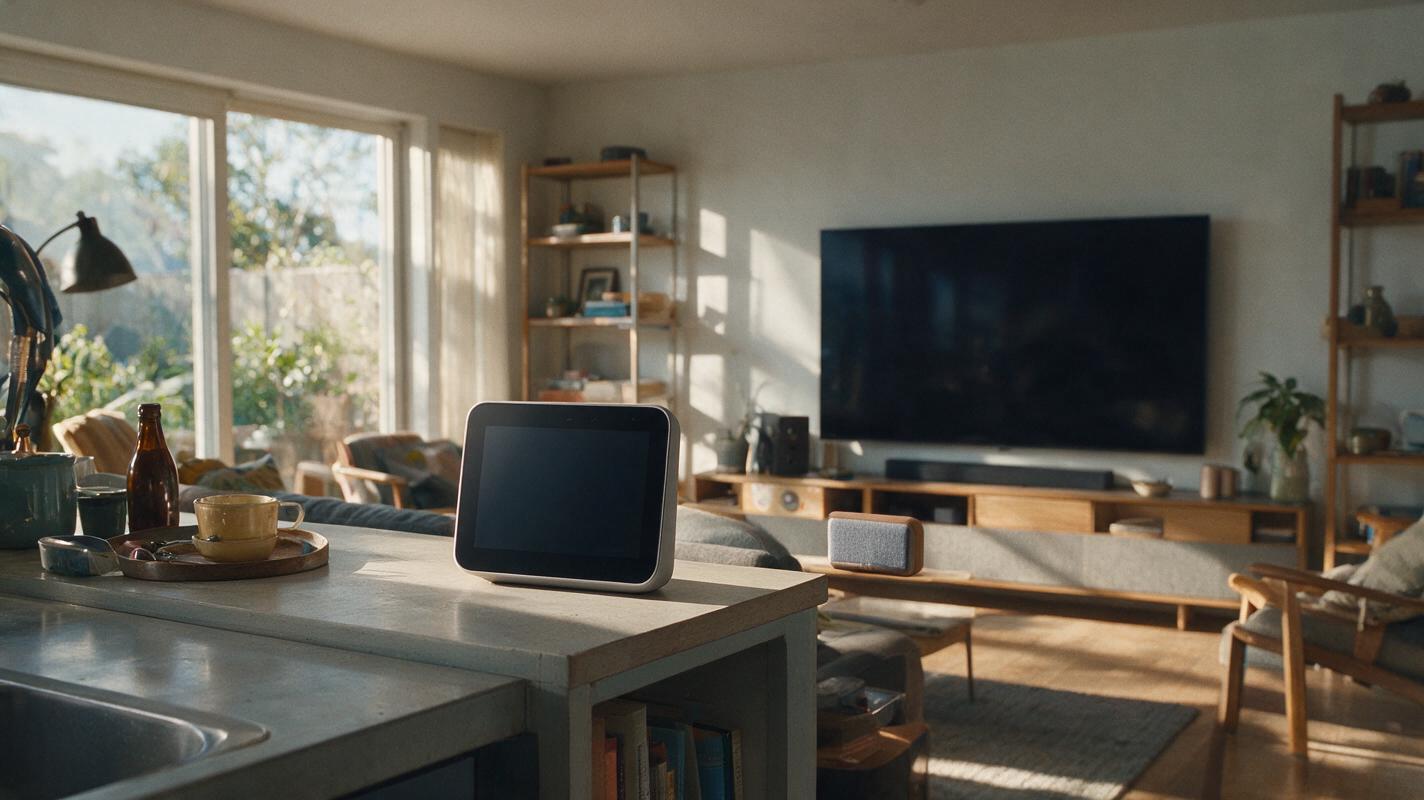
Table of contents
Apple Expands Its Smart-Home Lineup at the Welcome Home Event
Apple held its “Welcome home” smart-home event on October 13, 2026, unveiling the HomeView display hub, a new HomePod mini and a new Apple TV 4K. The event placed a dedicated screen at the center of Apple’s home strategy while surrounding it with updated audio and television hardware.
HomeView subsequently launched at $299 with a 7-inch square display and Siri AI. Apple also introduced Apple Home Collection accessories alongside the hub, broadening the announcement from a single device into a connected-home lineup.
The significance of the event is therefore larger than another hardware refresh. Apple presented multiple surfaces through which people may view, hear and interact with digital material around the home. For creators, that raises practical questions about whether a message remains clear when it moves from a personal screen to a shared display, television or voice-oriented environment.
Apple’s Welcome home event framed HomeView, HomePod mini and Apple TV 4K as parts of one home-focused product story rather than isolated announcements.
What Apple Announced
The three headline products occupy distinct positions within the lineup. HomeView is the central display hub, HomePod mini represents the audio side of the home, and Apple TV 4K addresses television viewing. The available reporting does not establish every technical detail for the refreshed devices, so the clearest reading is based on the roles and facts explicitly attached to the announcement.
| Product | Confirmed event detail | Content context |
|---|---|---|
| HomeView | $299 hub with a 7-inch square display and Siri AI | Shared, glanceable visual and assistant interaction |
| HomePod mini | New model announced at the event | Home audio and voice-oriented communication |
| Apple TV 4K | New model announced at the event | Large-screen television viewing |
| Apple Home Collection | Accessories introduced with HomeView | A broader connected-home setting |
HomeView stands out because it combines a fixed home display with Siri AI. Its 7-inch square format is notably different from the widescreen canvas associated with television and the vertical format common on phones. That difference matters when visual assets, headlines and short videos are expected to work across several destinations.
Why HomeView Is the Center of the Announcement
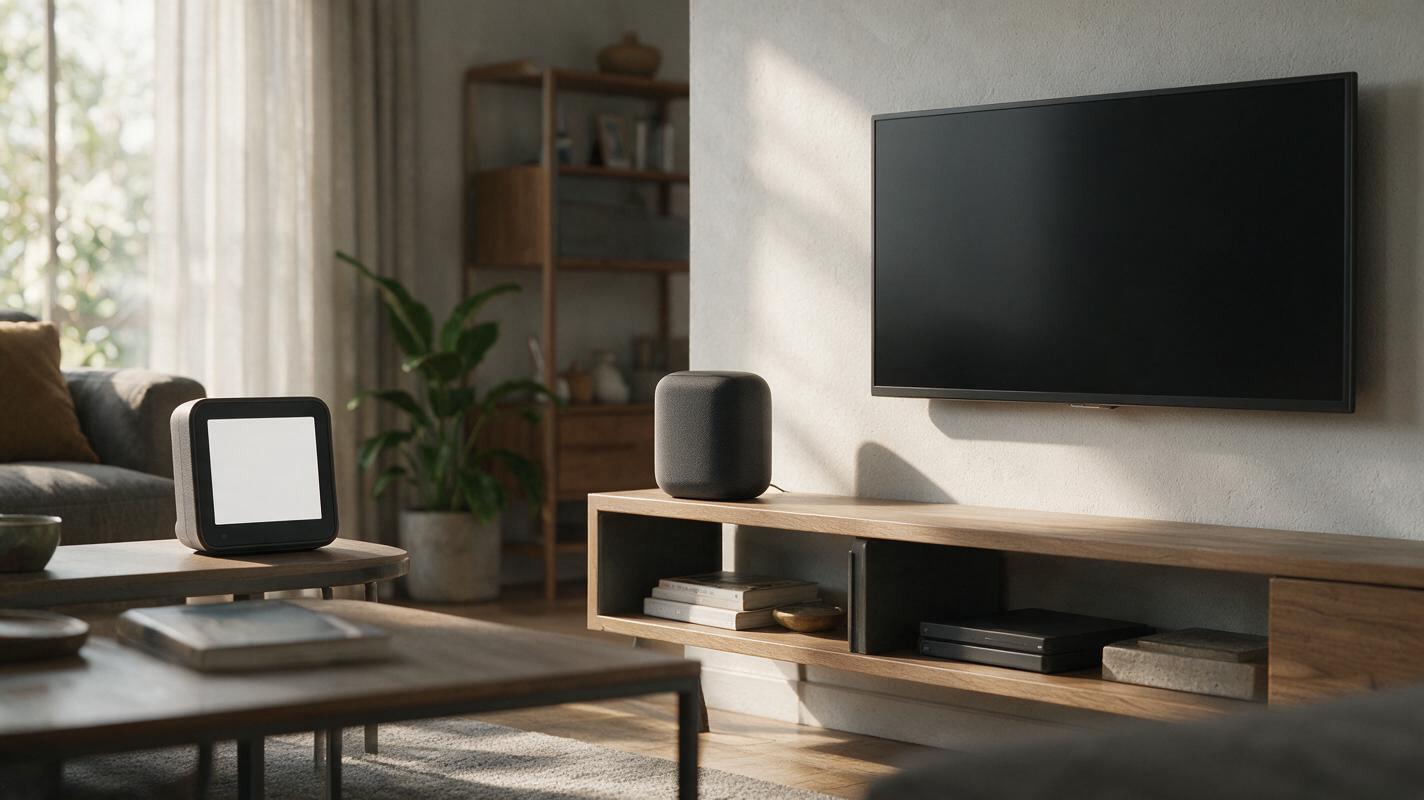
A new HomePod mini and Apple TV 4K extend familiar Apple product categories, while HomeView adds a distinct screen to the company’s home lineup. Its $299 price, square display and Siri AI positioning give the event a visible focal point.
The announcement also illustrates the changing role of the AI assistant. Instead of being confined to one personal device, an assistant can become part of a shared household interface. A fixed display may favor concise information, immediately recognizable imagery and layouts that can be understood from a distance. Television remains better suited to longer and more cinematic presentation, while an audio device emphasizes spoken clarity.
These are format implications rather than claims about unannounced HomeView functions. The confirmed news establishes the devices and their place in Apple’s connected-home push; it does not justify assuming unsupported applications or media capabilities.
A Multi-Surface Content Environment
The event points toward a home in which one subject may need several treatments. A product launch, entertainment update or educational concept might appear as a square visual summary, a spoken segment and a widescreen video. Reusing the same asset unchanged can leave important text cropped, make compositions feel empty or bury the main idea.
That makes planning increasingly important. An ai storyboard can help map a narrative across scenes before visual production begins, while an ai video generator can support the production of video variations for different viewing contexts.
What the Event Means for AI Content Production
Apple’s lineup reinforces a broader principle: distribution surfaces shape creative decisions. A connected-home display is not simply a smaller television, and a voice-led device is not merely a screen without an image. Each context changes how quickly an audience understands the content and which elements carry the message.
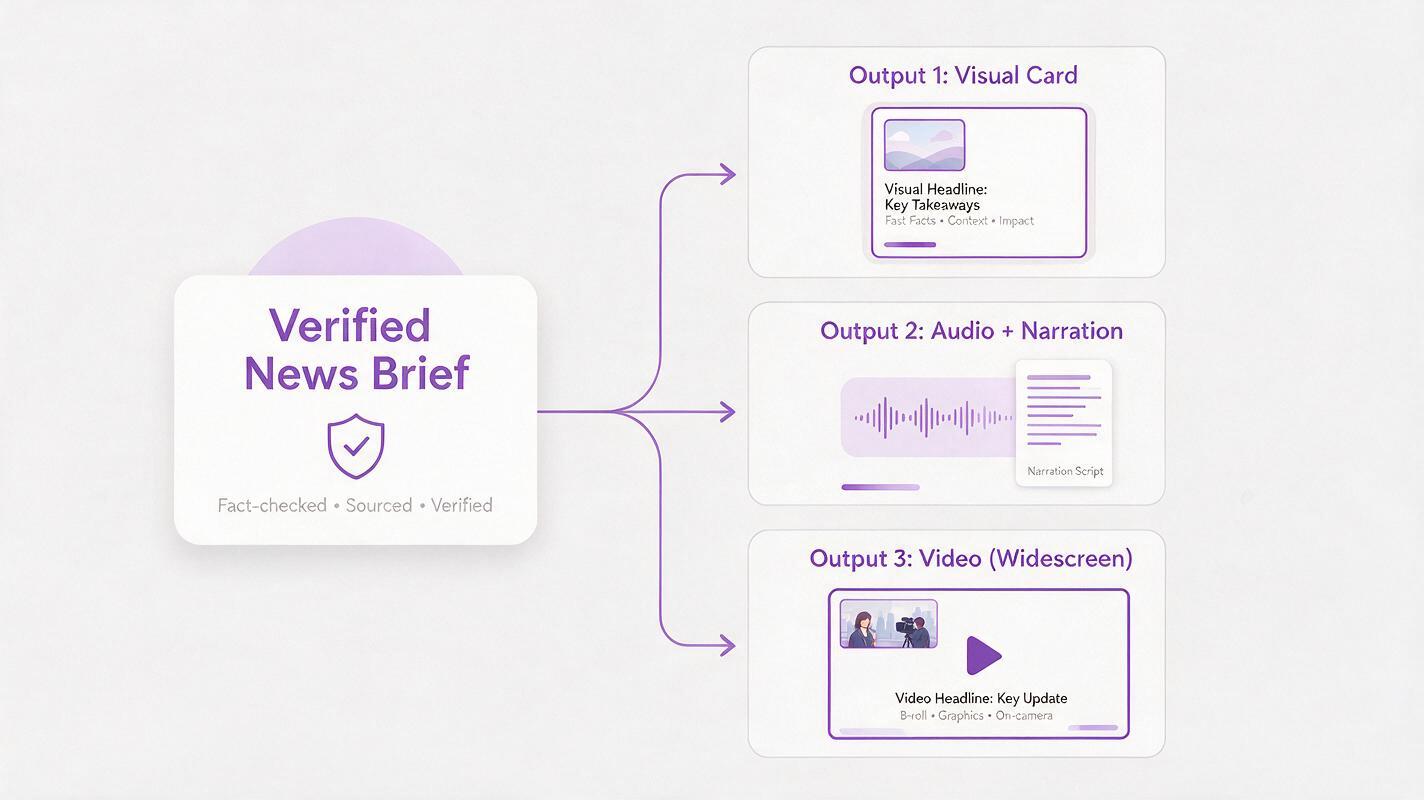
For an AI workflow, the useful response is to preserve one factual core while adapting its expression. The same announcement can support a compact visual card, a narrated update and a longer video without changing the underlying claims. This is especially important in news-driven production, where unsupported embellishment can spread rapidly across every derivative asset.
- Square display context: Favor a clear focal subject, short copy and generous spacing.
- Audio context: Write sentences that remain understandable without accompanying graphics.
- Television context: Use widescreen composition and pacing appropriate for viewing at a distance.
- Cross-format consistency: Keep names, prices and confirmed specifications identical in every version.
In this case, that factual core includes the October 13 Welcome home event, HomeView, the new HomePod mini and the new Apple TV 4K. HomeView’s confirmed details include its $299 price, 7-inch square display and Siri AI, while Apple Home Collection accessories form part of the wider launch.
Building a More Flexible AI Video Workflow
A multi-device announcement is a useful reminder that content production should not depend on one output format or one AI model. Different models may be appropriate for outlining, image development, scene planning, video generation or voice work. Keeping those activities accessible through one account can reduce the friction of moving a project between disconnected services.
MagicBoat brings AI creation capabilities into a unified environment for developing ideas across formats. That can help a team move from a factual news brief to visual concepts and video assets while retaining the same approved information throughout the project.
The goal is not to predict unsupported HomeView behavior. It is to prepare content that can remain legible and coherent as audiences encounter information through more screens, speakers and AI-assisted interfaces. Apple’s event makes that challenge more visible by placing a square Siri AI display beside home audio and television hardware.

Key Takeaways
- Apple held its Welcome home smart-home event on October 13, 2026.
- The event introduced HomeView, a new HomePod mini and a new Apple TV 4K.
- HomeView launched at $299 with a 7-inch square display and Siri AI.
- Apple Home Collection accessories broadened the announcement into a connected-home lineup.
- The three device contexts highlight the value of adapting one verified story for visual, audio and television formats.
- A consolidated multi-model environment can make an AI video workflow more flexible without changing its factual foundation.
Create Across More Than One Format
As smart-home interfaces diversify, adaptable production becomes more valuable than content built for only one screen. Explore MagicBoat and try these models for free to develop visual and video versions of your next story in one creative environment.
Keywords
apple welcome home event, apple homeview, homepod mini, apple tv 4k, siri ai, ai assistant, ai video workflow