Apple Welcome Home Event Features HomeView, HomePod Mini and Apple TV 4K
Apple’s Welcome Home event centered on the HomeView smart-home hub, a new HomePod mini and a new Apple TV 4K. The product lineup signals a more coordinated home ecosystem and gives AI content teams another reason to design media for connected screens, speakers and television environments.

Table of contents
Apple’s Welcome Home Event Expands Its Smart-Home Lineup
Apple held its “Welcome Home” smart-home event on October 13, 2026, placing three connected-home products at the center of the announcement: the HomeView display hub, a new HomePod mini and a new Apple TV 4K. The event presented these devices as a coordinated home lineup rather than isolated hardware releases.
HomeView was the most significant addition because it introduced a dedicated display hub to Apple’s home strategy. The accompanying product information identifies it as a $299 smart-home hub with a 7-inch square display and Siri AI. The HomePod mini and Apple TV 4K extend that lineup into audio and television, giving Apple multiple surfaces through which people can interact with media and connected-home services.
The immediate news is about hardware, but the broader implication concerns distribution. Content increasingly reaches audiences through an interconnected collection of displays, speakers, televisions and AI-assisted interfaces. For creative teams, that makes adaptable assets and a flexible AI workflow more valuable than production designed around one screen.
Why HomeView Is the Event’s Central Product
The Welcome Home event grouped HomeView with two established Apple product categories. That positioning matters: instead of entering the home as a standalone experiment, the display hub arrives alongside the HomePod mini and Apple TV 4K.
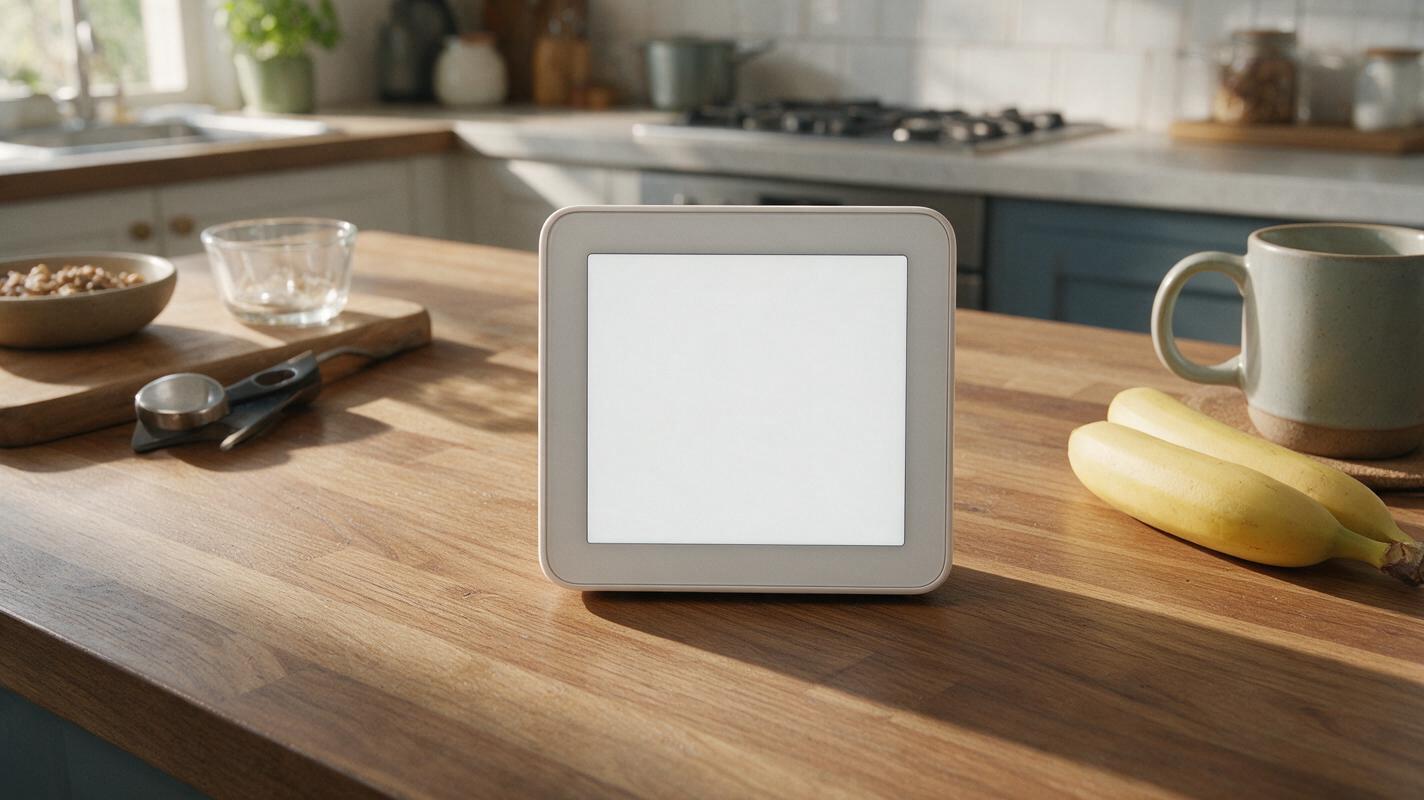
Its documented specifications establish a clear role. HomeView is a $299 hub with a 7-inch square display and Siri AI. Those details distinguish it from an audio-only speaker or a television device, while placing it within the same connected environment.
The important shift is not simply the arrival of another screen. It is Apple’s presentation of display, audio, television and AI assistance as parts of one home experience.
A square hub display also creates a different media context from a phone, laptop or widescreen television. Headlines, artwork, thumbnails and short visual sequences may need to remain legible when viewed briefly and at a distance. This does not establish any unannounced HomeView content features, but it does illustrate why format-aware production is becoming increasingly important.
HomePod Mini and Apple TV 4K Complete the Home Story
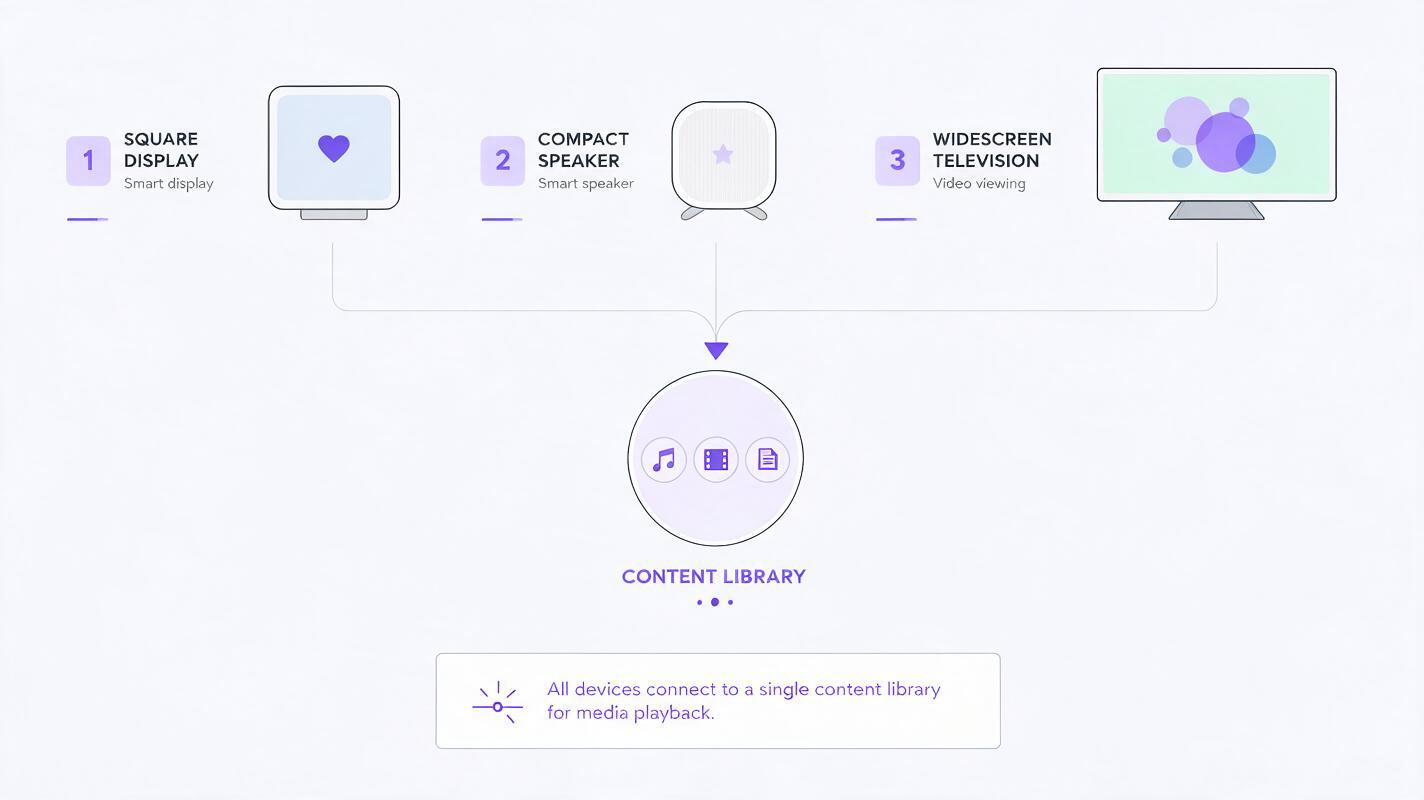
The new HomePod mini and Apple TV 4K broaden the event beyond a single hub. Together, the three announced products represent distinct home media environments: a compact display, an audio device and a television platform.
| Product | Role in the announced lineup | Content consideration |
|---|---|---|
| HomeView | $299 hub with a 7-inch square display and Siri AI | Compact, glanceable visual presentation |
| HomePod mini | New smart-home audio product | Clear spoken and music-led assets |
| Apple TV 4K | New television product | Large-screen video and cinematic presentation |
The table reflects the products named in the event coverage while keeping practical interpretation separate from confirmed specifications. Apple did not need to announce identical functions across all three devices for the combined lineup to carry strategic weight. Their presence at one event is enough to show a coordinated emphasis on the home.
For publishers and brands, this makes asset reuse more complicated. A widescreen video that works on a television may not translate cleanly to a compact square display. An audio segment may require a different opening than a visual advertisement. A production system that preserves the underlying idea while allowing the presentation to change is therefore increasingly useful.
What the Event Means for AI Content Production
The Apple Welcome Home event arrives as AI assistants and connected devices are becoming more prominent entry points to information and entertainment. When an AI assistant mediates an experience, content may be selected, summarized or presented in a context that differs from the page or application for which it was originally produced.
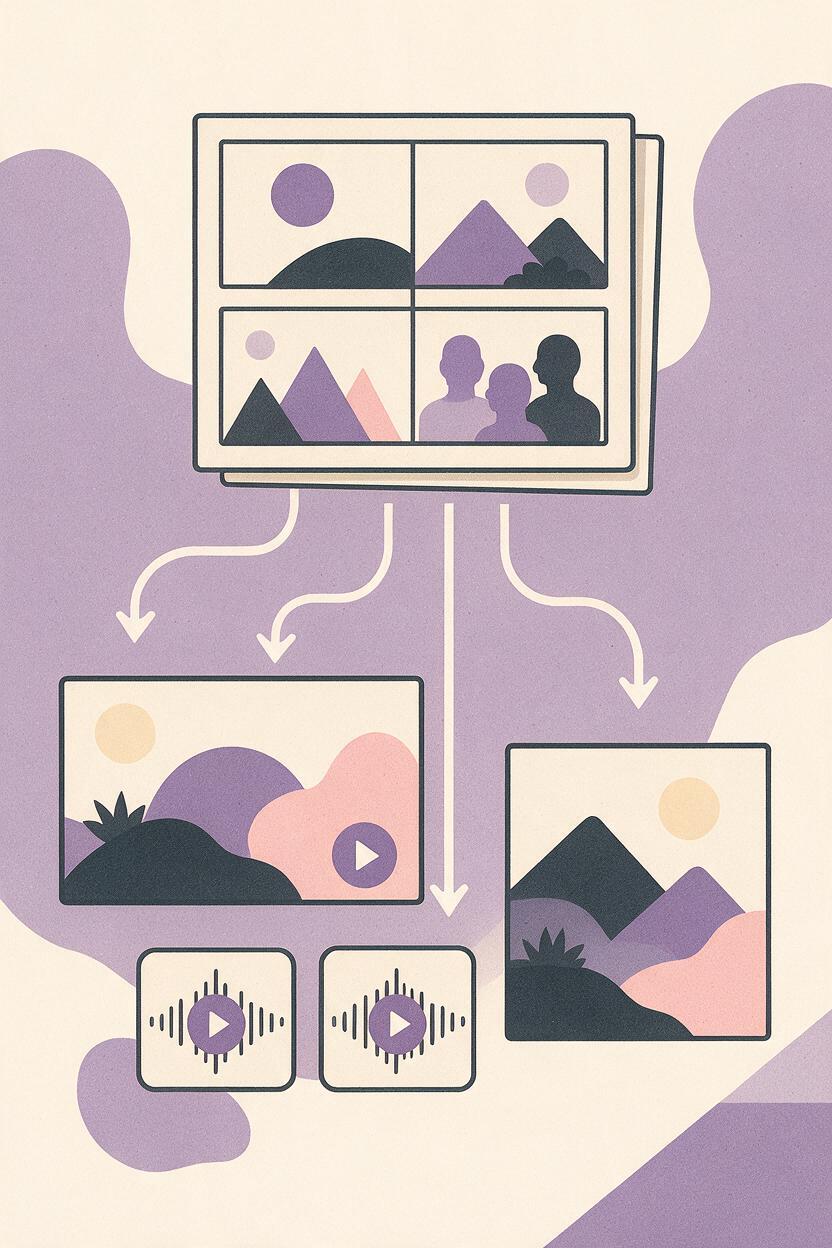
Creative teams can respond by treating each campaign as a collection of related assets rather than one finished file. A single concept might support a television sequence, square key art, a concise spoken introduction and a short social edit. An ai storyboard can help organize those variations around one narrative before production branches into separate formats.
This approach also keeps human review central. AI automation can accelerate ideation and variation, but teams still need to verify product claims, inspect framing, check text legibility and ensure that audio makes sense without accompanying visuals. That editorial layer becomes more important when the same campaign may appear across multiple connected-home contexts.
- Lead with a durable concept: Build the campaign around a message that can survive changes in screen size and media type.
- Separate visual and spoken information: Avoid placing every essential detail in only one channel.
- Preserve editable source assets: Reframing is easier when text, characters, backgrounds and audio remain modular.
- Review each destination independently: A television composition and a compact square composition should not be assumed to perform identically.
MagicBoat Supports a Format-Flexible Creative Workflow
MagicBoat provides a unified environment for moving from an idea into scripts, storyboards, imagery and video. That structure is relevant to the connected-home direction highlighted by Apple’s event because it helps teams retain one creative foundation while developing multiple outputs.
For example, a team can establish the narrative and shot structure first, then use an ai video generator to explore motion-based versions. Square promotional art, wide video compositions and voice-led variants can remain connected to the same campaign rather than becoming unrelated production jobs.
A multi-model environment also reduces dependence on a single AI assistant or production route. If output requirements change as a campaign moves between social feeds, compact displays and television screens, teams can evaluate different creative options without rebuilding the entire project around another account or disconnected toolset.
This does not depend on assuming capabilities for Apple’s devices that were not included in the announcement. It is a practical response to the confirmed lineup: HomeView, HomePod mini and Apple TV 4K represent visibly different media surfaces, and resilient content production should account for that diversity.
The Bigger Smart-Home Ecosystem Signal
Apple’s decision to frame the event around the home is strategically notable. The company did not introduce only HomeView; it paired the hub with refreshed audio and television products. That makes the announcement an ecosystem story about how separate devices may occupy complementary positions in a household.
For content teams, ecosystem expansion can create opportunity as well as fragmentation. More surfaces may offer more moments for audiences to encounter a story, but each context places different demands on pacing, framing and clarity. The strongest response is not to predict unsupported device behavior. It is to maintain production assets that can be revised efficiently as distribution requirements become clearer.
Apple’s Welcome Home event therefore offers a straightforward message beyond the hardware itself: connected-home media is becoming more varied. Teams that can reshape one idea for visual, audio and television contexts will be better prepared than those that publish only one fixed format.
Key Takeaways
- Apple held its Welcome Home smart-home event on October 13, 2026.
- The event featured the HomeView display hub, a new HomePod mini and a new Apple TV 4K.
- HomeView is identified as a $299 hub with a 7-inch square display and Siri AI.
- The lineup spans compact display, audio and television environments.
- Creative teams benefit from modular assets that can be adapted without changing the central message.
- Human review remains essential when AI-generated material is reformatted for different media contexts.
To develop scripts, storyboards, images and adaptable video concepts in one workspace, try these models for free on MagicBoat.
Keywords
apple welcome home event, apple homeview, homepod mini, apple tv 4k, siri ai, smart home hub, ai content workflow