BIS Closes Cloud Compute Backdoor With New AI Chip Export Rule
The US Commerce Department’s Bureau of Industry and Security issued an interim final rule on November 15, 2026, closing the cloud compute backdoor by requiring licenses for advanced AI chip exports to data centers in five countries and restricted remote compute access. Aimed at preventing unauthorized access via third-country data centers, the rule triggered immediate declines of 2-6% across major Asian tech and semiconductor indexes. The change carries implications for AI industry supply chains, ai capital expenditure, ai video cost, and creator access to flexible multi-model AI platforms.

Table of contents
The BIS Interim Final Rule: Closing the Cloud Compute Backdoor
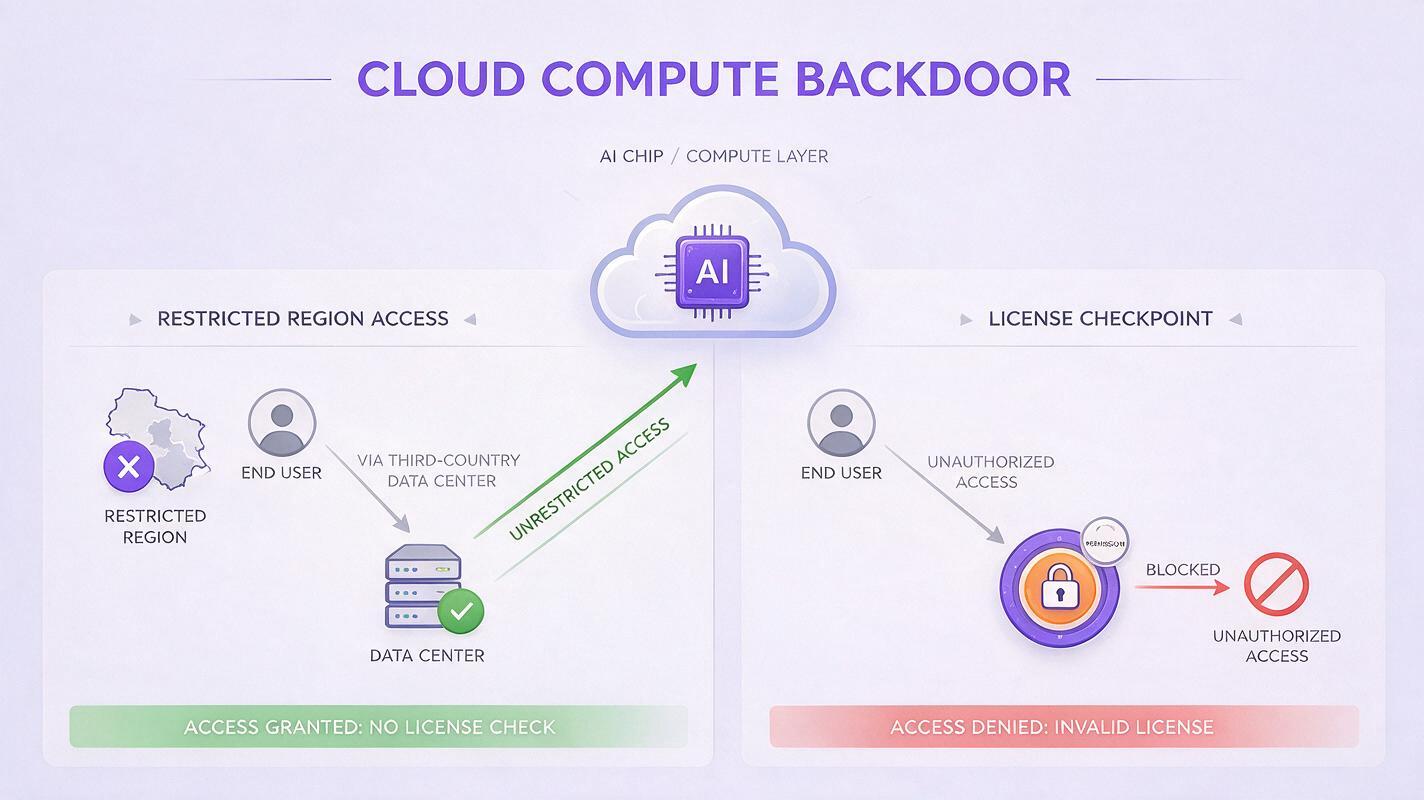
On November 15, 2026, the US Commerce Department’s Bureau of Industry and Security (BIS) issued an interim final rule targeting a long-standing loophole in AI chip export controls known as the “cloud compute backdoor.” The rule expands existing export licensing requirements to cover two key areas previously unregulated: the export of advanced AI chips to data centers located in five specified countries, and the provision of restricted AI compute capacity to users in those countries via remote access.
The stated goal of the rule is to prevent firms from routing restricted AI compute access to Chinese entities through third-country data centers, a workaround that had allowed some organizations to bypass prior chip export bans by renting cloud compute resources instead of purchasing physical chips. The interim final rule takes effect immediately, following the standard process for BIS export control updates.
How the Rule Reshapes Cross-Border AI Compute Access
Prior to the rule, US export controls focused primarily on the physical shipment of advanced AI chips to restricted jurisdictions. The cloud compute backdoor allowed entities in those jurisdictions to access the same level of compute power by renting server time from data centers in third countries, without ever taking physical possession of the chips.
The new rule closes this gap by requiring export licenses for both the physical delivery of advanced AI chips to data centers in the five targeted countries, and the remote provision of compute powered by those chips to users in the same jurisdictions. This means cloud providers, colocation operators, and AI inference services must now verify the location of end users and obtain appropriate licenses before granting access to restricted compute tiers.
For AI firms based in or serving markets targeted by the rule, the change could limit access to high-end GPU and AI accelerator capacity, particularly for smaller players that rely on third-party cloud providers rather than owning their own data center infrastructure. Companies like DeepSeek, which has seen rapid growth in API usage and global user adoption, may face higher costs or reduced access to overseas compute resources depending on how the rule is enforced.
Immediate Market Impact Across Asian Tech Hubs
News of the rule triggered sharp selloffs across Asian technology and semiconductor markets before US markets opened on November 16, reflecting investor concern about the impact on global AI supply chains and chip demand.
Taiwan’s Taiex index fell 6.03%, led by semiconductor stocks that are critical to the global AI chip supply chain. South Korea’s Kospi dropped 3.59%, dragged down by memory chip makers that produce high-bandwidth memory (HBM) used in advanced AI accelerators. Japan’s Nikkei 225 declined 2.42%, with losses spread across semiconductor equipment and tech hardware firms.
The market reaction underscores how tightly integrated the global AI supply chain remains, and how regulatory changes in one region can ripple across hardware makers, cloud providers, and AI service operators worldwide. The selloff also coincided with broader AI industry volatility tied to Nvidia leadership changes and upcoming earnings, amplifying downward pressure on semiconductor and AI infrastructure stocks.

What This Means for AI Content Creators
For content creators and creative teams that rely on AI tools, regulatory changes to global compute access can translate to tangible shifts in pricing, availability, and feature rollouts across the platforms they use. AI tools depend on large pools of advanced compute to run model inference and training, so restrictions on cross-border compute access can push up ai video cost and slow the launch of new features for users in affected regions.
Many popular creator tools, from ai image generator platforms to video editing suites with built-in AI features, rely on distributed cloud infrastructure spanning multiple regions. When regulatory rules restrict compute routing, providers may need to shift workloads to approved data centers, which can increase operational costs that get passed along to end users in the form of higher subscription fees or pay-as-you-go rates.
This is where a multi-model creative platform like MagicBoat adds value: by aggregating a wide range of AI models and compute providers under one account, it reduces reliance on any single infrastructure provider or regional data center network. Whether you’re using text to video tools for short-form content or generating custom visuals for a campaign, a multi-provider setup can help insulate creators from sudden regulatory shifts or regional supply chain disruptions. You can try these models for free to explore the full range of available tools without being locked into a single provider.
Key Takeaways
- The BIS interim final rule closes the cloud compute backdoor by requiring licenses for advanced AI chip exports to five countries and remote access to restricted compute from those jurisdictions.
- The rule triggered immediate 2-6% declines across major Asian tech and semiconductor indexes, reflecting broad supply chain concerns.
- AI content creators may see higher ai video cost or reduced availability of some tools if regulatory restrictions tighten global compute supply.
- Multi-model platforms that aggregate multiple providers can help creators mitigate the risk of single-region or single-provider disruptions.
- The rule adds another layer of regulatory uncertainty to ai capital expenditure and ai funding trends, as firms weigh the cost of compliance against global expansion plans.
Keywords
bis ai chip rule, cloud compute backdoor, ai industry, ai capital expenditure, ai video cost, ai image generator, deepseek