Blue Eye Samurai Season 2 Adds Jonathan Pryce, Joel Kim Booster and Sherry Cola
Blue Eye Samurai Season 2 has added Jonathan Pryce, Joel Kim Booster and Sherry Cola to its voice cast. The casting announcement offers a timely lesson in how distinctive voices can strengthen character identity across animation, AI film and short-form drama.
Table of contents
Blue Eye Samurai Season 2 Expands Its Voice Cast
Blue Eye Samurai Season 2 has added Jonathan Pryce, Joel Kim Booster and Sherry Cola to its voice cast, giving the next season three newly confirmed performers with notably different screen and vocal identities.
The casting update confirms all three names as additions to the second season. It does not identify their characters or provide further role details, leaving the dramatic function of each performer open for now. Even without those assignments, the announcement gives audiences a fresh reason to watch the production as it develops.
For independent filmmakers and animation teams, the news is also a reminder that character design does not end with appearance. Voice, rhythm and delivery can become defining parts of an animated personality, especially when a story must distinguish multiple characters quickly.
What the Announcement Confirms
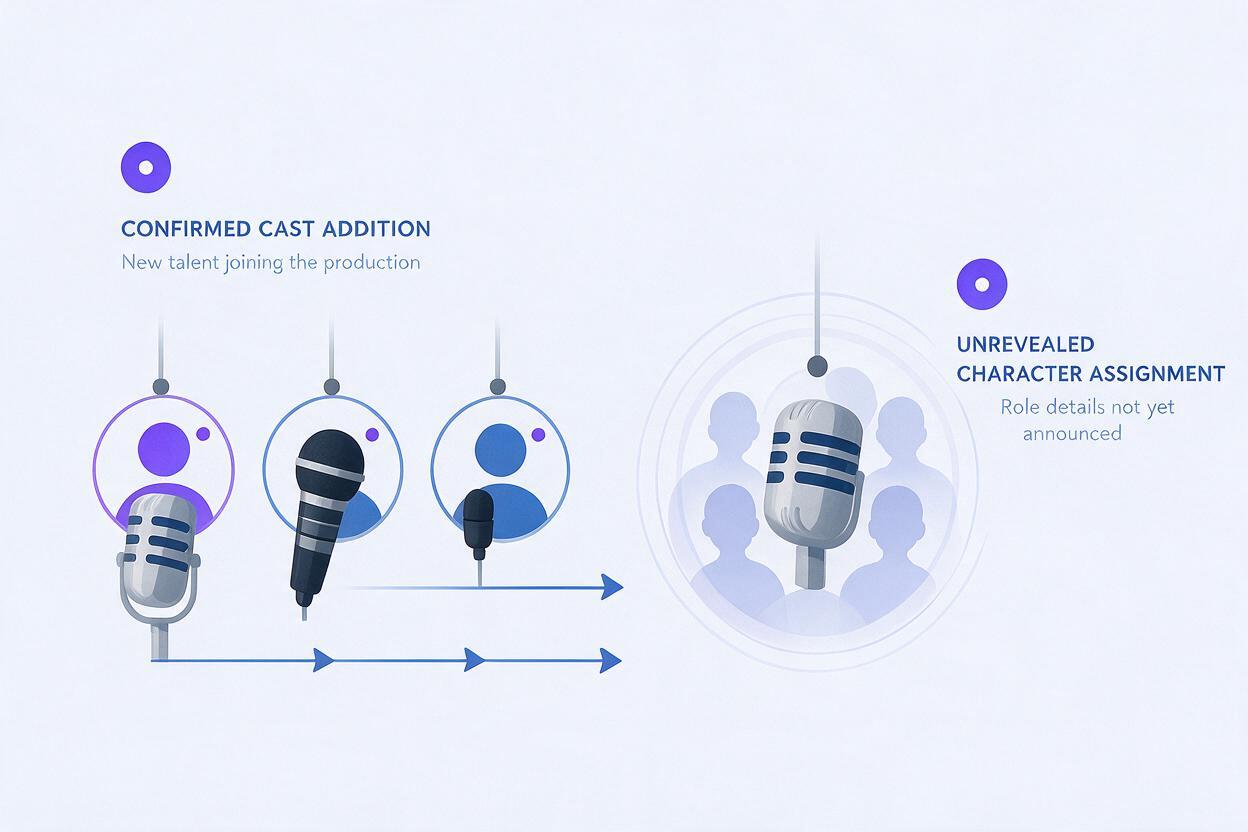
The confirmed news is concise but significant: Jonathan Pryce, Joel Kim Booster and Sherry Cola are joining Blue Eye Samurai Season 2. Because no character assignments were included in the announcement, speculation about heroes, villains or supporting roles would run ahead of the available information.
| New cast member | Confirmed information | Unannounced information |
|---|---|---|
| Jonathan Pryce | Added to the Season 2 voice cast | Character and role details |
| Joel Kim Booster | Added to the Season 2 voice cast | Character and role details |
| Sherry Cola | Added to the Season 2 voice cast | Character and role details |
That distinction matters in entertainment reporting. A casting announcement can create anticipation without revealing plot mechanics, and the absence of named roles preserves room for later character introductions and promotional reveals.
A strong casting update can generate interest before audiences know exactly where each new voice fits into the story.
Why Three New Names Matter
Voice-cast additions are especially important for animation because audiences encounter a character through two closely connected layers: visual performance and vocal performance. Silhouette, costume, expression and movement establish what viewers see, while cadence, emotional intensity and timing shape how that character feels.
The three confirmed additions also demonstrate the promotional value of announcing an ensemble rather than a single name. Each performer brings a separate point of recognition, allowing the same production update to reach overlapping groups of viewers without revealing story details.
For anyone developing an original AI film or animated short, the practical lesson is not to treat voice as a final accessory. A character may look compelling in a concept frame yet remain indistinct if the vocal direction has no defined personality. Conversely, a precise vocal brief can influence facial expressions, shot length and even the pacing of an edit.
Voice Identity Begins Before Recording
A useful character brief should describe more than age or accent. It can establish emotional restraint, tempo, conversational energy and the contrast between public and private behavior. Those choices give performers or synthetic voices a dramatic target while helping writers keep dialogue consistent.
An original project might distinguish its ensemble through contrasts such as:
- Measured versus impulsive delivery: one character leaves space between thoughts while another responds immediately.
- Formal versus conversational language: vocabulary can communicate status, background or emotional distance.
- Controlled versus expressive emotion: the degree of vocal restraint can reveal what a character is trying to conceal.
- Stable versus changing rhythm: a voice can evolve as pressure, confidence or relationships change.
These are general development choices rather than assumptions about the newly announced Blue Eye Samurai roles. Until character details are released, the only responsible conclusion is that Season 2 has expanded its confirmed voice ensemble.
Building a Voice-First Development Workflow
AI content creation can help small teams test the relationship between dialogue, imagery and pacing before committing to a finished production. An ai storyboard can organize character entrances, reaction shots and scene transitions, while an ai voice generator can help evaluate whether lines are too dense, too similar or poorly timed.
This kind of exploration is most useful when it supports original characters and responsibly sourced voices. It should not be used to imitate Jonathan Pryce, Joel Kim Booster, Sherry Cola or any other performer without authorization. The creative goal is to find a distinctive voice profile for a new project, not to reproduce someone else's identity.
Early audio testing can reveal issues that are difficult to detect on the page. Two characters may use similar sentence structures, a dramatic exchange may run longer than expected, or a supposedly energetic scene may feel static once spoken aloud. Identifying those problems early can improve the script before visual production expands.
Matching Visual Direction to Dialogue
Once a character's vocal rhythm is defined, visual decisions can respond to it. Short, forceful lines may suit tighter cuts and direct compositions. Reflective dialogue may benefit from longer holds, environmental details and quieter reaction shots. In an ai short drama, where every second carries narrative weight, that coordination can make the difference between a clear character entrance and a confusing one.
The same principle applies to ai video and text to video development. Visual prompts should reflect the emotional purpose of a scene rather than merely listing costumes and locations. A scene built around suspicion needs different framing and movement from one built around relief, even if both feature the same characters and setting.
The MagicBoat Bridge for Original Projects
MagicBoat brings story planning, visual development, video generation and voice tools into one creative environment. That can help an independent team compare scene ideas without separating every experiment across unrelated services.
A voice-centered project can begin with an original character brief, move into storyboard planning and then test visual rhythm against temporary dialogue. The aim is not to reproduce Blue Eye Samurai, its characters or the newly announced performers. It is to apply the broader production insight behind the news: memorable animated storytelling depends on alignment between casting, writing, vocal direction and images.
This approach can support an original ai film, a compact animated pilot or a recurring ai short drama. It also encourages creative teams to evaluate characters as complete performances rather than isolated images.

What to Watch as Season 2 Develops
The most important future information will be the character assignments for Jonathan Pryce, Joel Kim Booster and Sherry Cola. Those details will show how the new voices connect to the season's dramatic structure and whether the additions represent individual roles or a broader expansion of the ensemble.
Until then, the casting announcement succeeds on its own terms. It places three recognizable names around Blue Eye Samurai Season 2 while keeping their precise narrative functions concealed. That balance gives the production new momentum without requiring a plot reveal.
Key Takeaways
- Blue Eye Samurai Season 2 has added Jonathan Pryce, Joel Kim Booster and Sherry Cola to its voice cast.
- The announcement does not identify their characters, so role speculation remains unconfirmed.
- Voice identity should influence writing, timing, storyboards and visual direction from early development.
- AI tools are most valuable when used for original characters and responsibly sourced vocal material.
- To explore story, voice and visual concepts in one place, try these models for free.
Keywords
Blue Eye Samurai Season 2 cast, Jonathan Pryce, Joel Kim Booster, Sherry Cola, voice cast, ai content creation, ai film, ai storyboard