China Expands AI Export Controls as GlobalFoundries Fab Advances
China expanded export controls covering solar and AI-related items on October 19, 2026, while GlobalFoundries’ New York fab project advanced with Japanese financing support. Together, the developments highlight how policy, financing and infrastructure can influence the environment surrounding AI production and creative workflows.

Table of contents
China’s AI Export Controls Expand as a New York Fab Moves Forward
China expanded export controls covering solar and AI-related items on October 19, 2026, adding a fresh policy development to the global competition surrounding advanced technology. The same news entry reported that GlobalFoundries’ New York fab project was advancing with Japanese financing support.
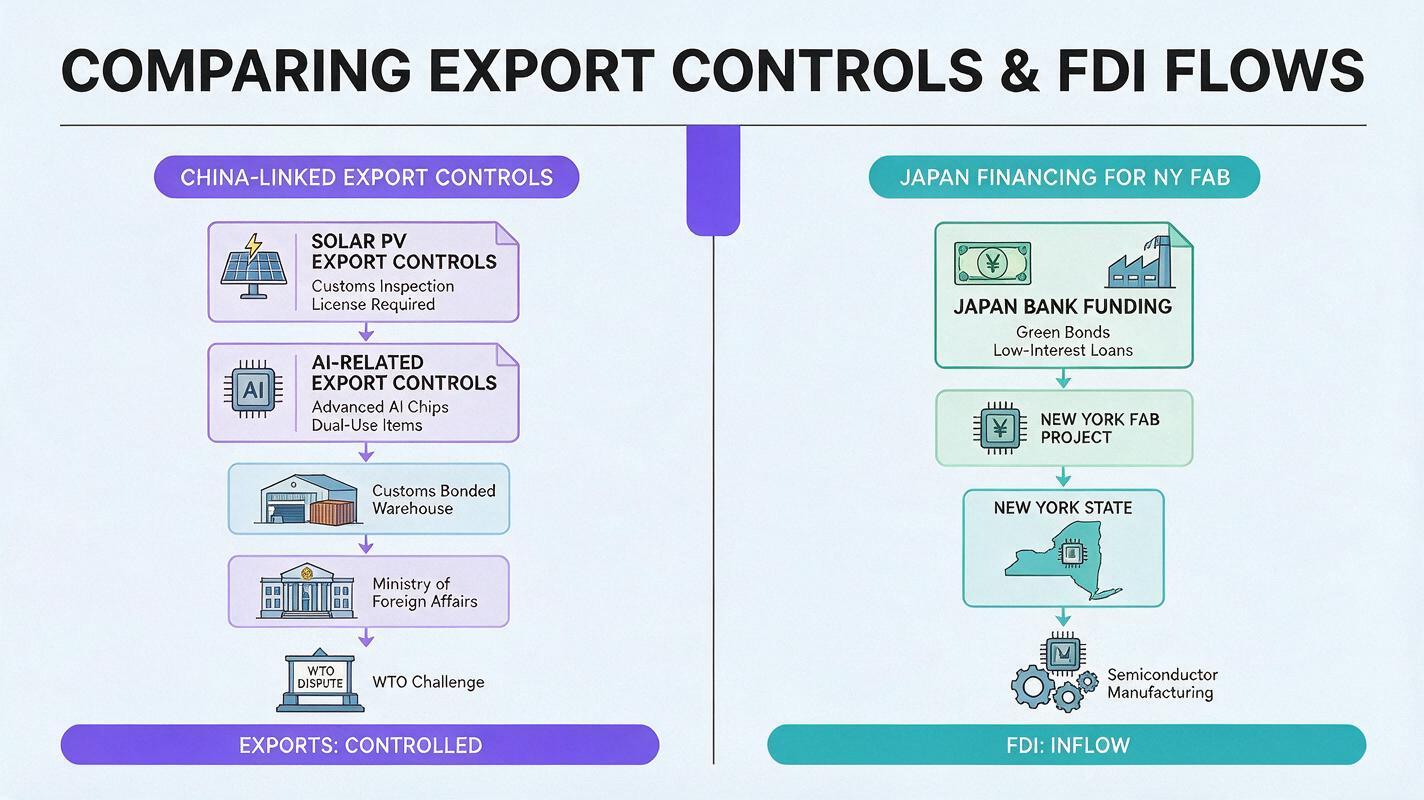
The two developments concern different countries, organizations and policy mechanisms. China’s action involves tighter control over exports in specified technology-related categories, while the GlobalFoundries project concerns the progress of a New York fab with financing support from Japan. They should not be treated as a single coordinated event, but their appearance together illustrates how regulation, manufacturing projects and international financing are all shaping the broader AI infrastructure environment.
For content teams, the immediate lesson is not that a particular creative model or service has changed. It is that the AI tools used for writing, imagery and video operate within a much larger physical and political system. A resilient AI workflow should therefore avoid depending too heavily on one device, one production route or one creative capability.
What the China Export-Control Expansion Actually Says
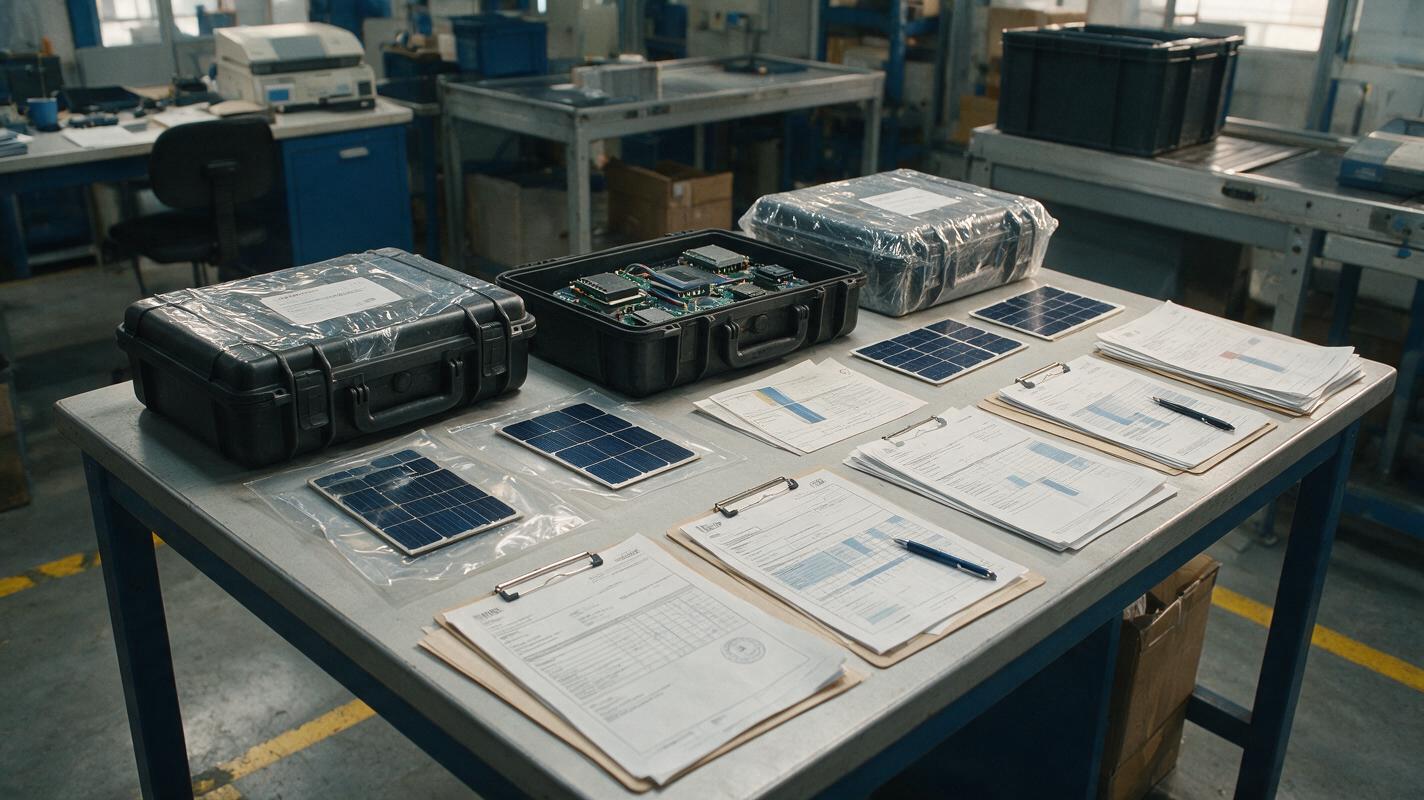
The confirmed development is narrow but significant: China expanded export controls on solar and AI-related items. The available report does not specify the individual products, technical thresholds, licensing procedures or implementation schedule involved, so those details should not be inferred.
That distinction matters in fast-moving technology coverage. “AI-related items” is a broad description, not evidence that every AI model, creative application or computing product is affected. Responsible reporting should preserve the boundaries of the source rather than turning a policy headline into an unsupported prediction about specific services.
The verified point: China expanded export controls covering solar and AI-related items. Claims about individual products, companies or creative platforms require additional public evidence.
This is especially important when an ai assistant is used to summarize developing news. AI automation can accelerate drafting, but it can also make an unsupported connection sound authoritative. Editors should separate the reported event from interpretation and label any forward-looking analysis accordingly.
Why the GlobalFoundries New York Fab Is a Separate Signal
Alongside the export-control news, the GlobalFoundries New York fab project advanced with Japanese financing support. The report establishes the project’s progress, its New York location and the presence of Japanese financing support. It does not provide a financing amount, completion date, production target or direct connection to China’s policy change.
The value of this second development lies in what it demonstrates about technology infrastructure: large projects can involve support that crosses national borders. Manufacturing capacity is not shaped only by engineering decisions. Financing and international cooperation can also affect which projects move forward.
| Development | Confirmed detail | What remains unspecified |
|---|---|---|
| China export controls | Controls expanded to solar and AI-related items | Individual controlled products, thresholds and implementation details |
| GlobalFoundries project | New York fab project advanced with Japanese financing support | Financing amount, production schedule and output targets |
Keeping those columns separate protects accuracy. It also prevents a common news-commentary error: presenting two simultaneous developments as proof of direct cause and effect when the source establishes no such relationship.
AI Creation Still Depends on Physical Infrastructure
Generative AI can feel entirely digital. A person enters a prompt, receives an image or video and publishes the result without seeing the infrastructure behind the interaction. Yet every AI workflow ultimately depends on physical computing resources, functioning devices, network access and organizations capable of sustaining those systems.
That context makes infrastructure news relevant to creative teams even when it does not announce a new model. Policy changes can alter the business environment around technology, while fab investment can shape longer-term capacity. Neither development guarantees an immediate effect on an individual creative service, but both belong to the underlying landscape in which AI products operate.
Editorial teams can respond without speculating. They can preserve source files, maintain reusable prompts, keep scripts independent from one output tool and avoid building a campaign around an unverified assumption. For example, a team using an ai image generator can retain the original concept brief and visual references so the work remains adaptable across later production decisions.
What This Means for an AI Video Workflow
The practical issue is continuity. If a creative process is tied to one local machine or one isolated application, any change in access, performance or availability can interrupt the entire campaign. A more portable ai video workflow keeps the narrative, prompts, reference assets and approved outputs organized independently of a single production path.
This does not mean reacting to every export-control headline by abandoning existing tools. The current report does not establish that any named creative model is unavailable. Instead, it supports a broader operational principle: infrastructure and policy conditions can change, so valuable creative work should remain transferable.
MagicBoat brings multiple creation capabilities into one account, allowing teams to move from planning and imagery toward an ai video generator without scattering every phase across unrelated services. That kind of consolidation can reduce workflow friction while teams continue to make their own editorial and model-selection decisions.
Portable Creative Assets Matter More Than Predictions
Forecasting the exact downstream effect of a policy announcement is difficult when the report does not identify controlled products or affected services. Portable assets offer a more concrete response. A campaign brief, character description, shot list or approved image can remain useful even if the preferred production method changes.
- Keep claims bounded: Do not name affected tools unless a public source does.
- Preserve editable materials: Retain prompts, scripts, references and source images.
- Separate production layers: Treat planning, image creation and video generation as connected but replaceable parts of the workflow.
- Review developing coverage: Update published commentary when specific control lists or financing details become available.

Accuracy Is Part of Workflow Resilience
This story also shows why content operations need more than speed. A rushed ai agent could easily merge the China policy development and Japanese financing support into a dramatic geopolitical narrative. The source only confirms that both developments were reported together; it does not establish coordination or causation.
A reliable editorial workflow records which statements are facts and which are analysis. In this case, the factual foundation is concise: China expanded export controls on solar and AI-related items, and the GlobalFoundries New York fab advanced with Japanese financing support. Broader conclusions about supply, pricing or specific AI services would require further evidence.
That evidence-first approach can coexist with fast production. Teams can draft a factual core, prepare adaptable visual assets and expand the story only when verified details emerge. To explore a centralized creative workflow while keeping your project materials reusable, try these models for free.
Key Takeaways
- China expanded export controls covering solar and AI-related items on October 19, 2026.
- GlobalFoundries’ New York fab project advanced with Japanese financing support.
- The report does not establish that the two developments caused one another.
- No individual controlled products, financing amount or project schedule was specified.
- Creative teams can improve resilience by keeping prompts, scripts and visual assets portable.
- AI-assisted reporting should clearly separate confirmed facts from interpretation.
Keywords
china ai export controls, globalfoundries new york fab, japanese financing, ai infrastructure, semiconductor supply chain, ai workflow, ai automation